
 𝛼SK
𝛼SKAFC Vietnam Fund March 2022 Report
Dear Research Team,
Market Developments
Turbulent political times lead to volatile markets – that is to be expected. But less expected was the strong recovery in most markets in March – but at the end of the day it is better to have much less volatility in the first place – as was the case in Vietnam.
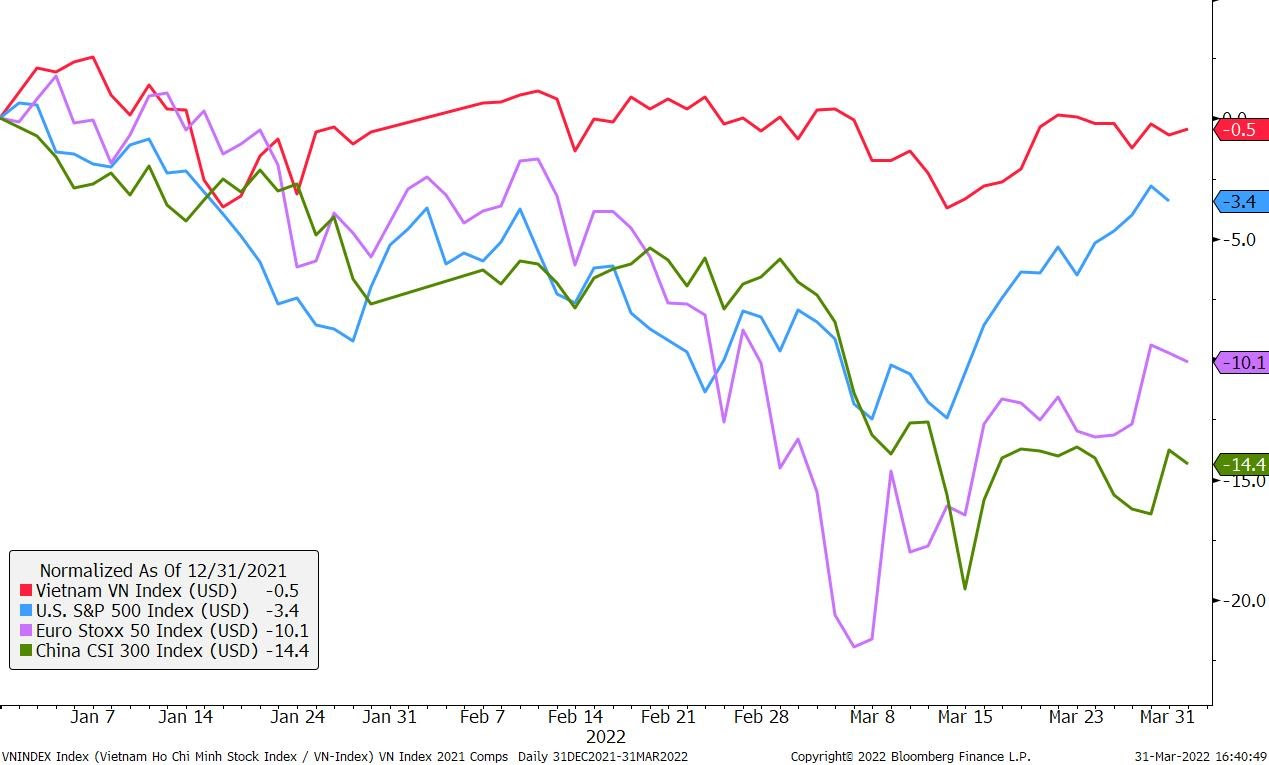
(Source: Bloomberg)
We are deeply concerned and shocked about the gravity and tragedy of events in Ukraine, which is an extreme external shock that will have many geopolitical and economic ramifications over the next few decades. The transition from neo-liberalism to state-sponsored capitalism has just accelerated dramatically, starting with the intervention in 2009 to avoid a financial meltdown, 2011 to avoid a Euro-crisis, and now again where it seems to reach almost every corner of the economy, from business owners to the regular citizen. COVID-19 business support, energy bottlenecks, etc.
In order to absorb some of the economic shocks of the war in Ukraine, the world needs to ensure a robust supply of raw materials. Regions and countries are differently affected by skyrocketing price increases of gas, fertilizers, and many other materials. In fact, many farmers, especially in poor areas in Africa, are on the edge of giving up as they do not see any prospect of making money without any government support as in developed countries.
Urea prices over the past 30 years (1992-2022)
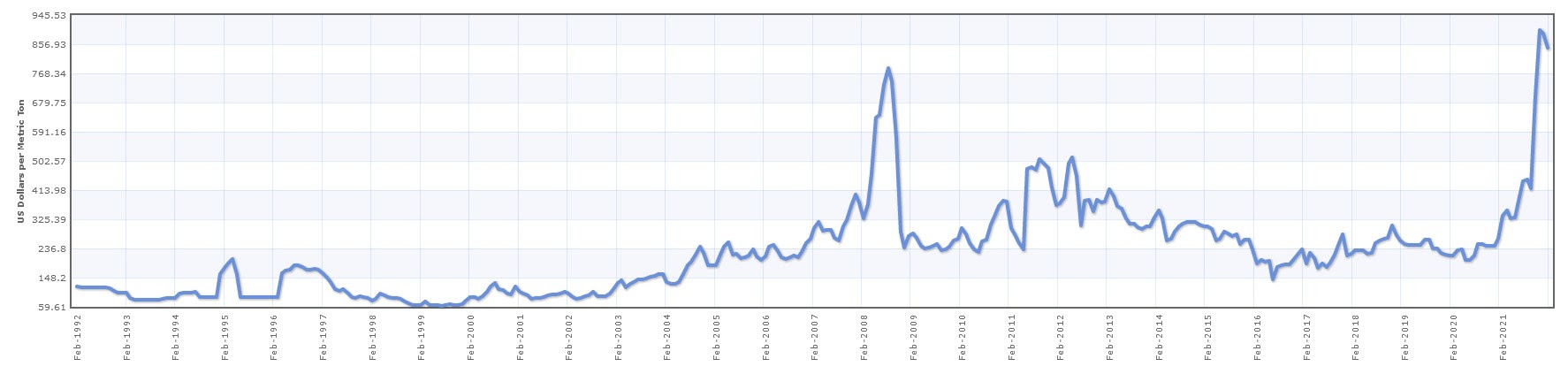
(Source: IndexMundi)
Farmers are unable to raise their product prices the same as their input costs are surging, after fertilizer prices jumped to new all-time highs. The impact could therefore be dramatic for these nations, and it will take at least one harvest season to adjust to the new situation and to reduce the risk of a worldwide food crisis. On the other hand, if we compare the current prices for certain agricultural commodities with the prices from 10-12 years ago, we realize that we have seen these levels before – not even taking into account any inflation adjustments over the years.
Long term prices for Wheat, Corn and Soybeans (1998-2022)

(Source: Finviz)
Unlike in Europe or the US, consumer sentiment is still rising in Vietnam with overall inflation concerns mostly limited to higher energy prices, while the Russian-Ukraine conflict will most likely have little impact on the economy otherwise. Russia contributed only 0.95% of total export revenues in 2021, equivalent to USD 3.2 bln and 0.69% of total import value, equivalent to USD 2.3 bln. Ukraine plays an even smaller role in the Vietnamese trade balance, equivalent to just 0.1% of total trade in 2021. Consequently, both Russia and Ukraine contributed only 1% of total trade of the nation in 2021.
Russia and Ukraine contributed only 1% of total Vietnamese export revenue in 2021
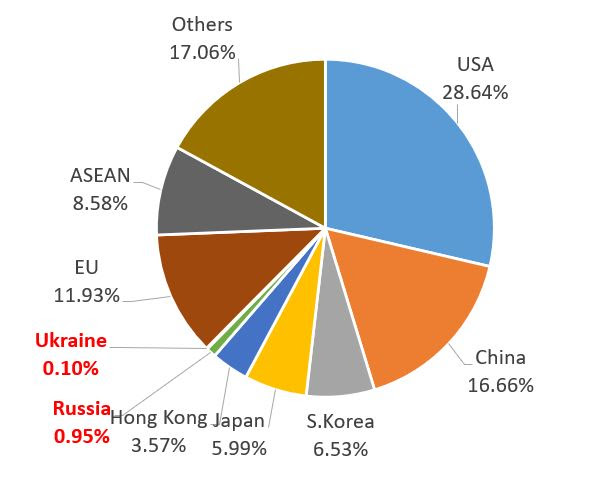
(Source: GSO, AFC Research)
What also impacts Vietnam are the effects of the special financial operation of the West which led to export stops of many Russian goods desperately needed in agriculture and for industrial production. The long-term inflationary impact for the world is currently a guessing game which will be the result of the totally unknown outcome of this conflict. Gasoline prices in Vietnam for example, were adjusted 10 times in 2022 to the historical record level of VND 29,820 per liter. Given that Vietnam is one of the fastest growing countries in the world, its energy consumption also grows strongly. Vietnam explores for its own oil and gas, but given its ever rising energy appetite, it became a net oil importer in 2015.
Oil & petrol trade in Vietnam (USD bln)
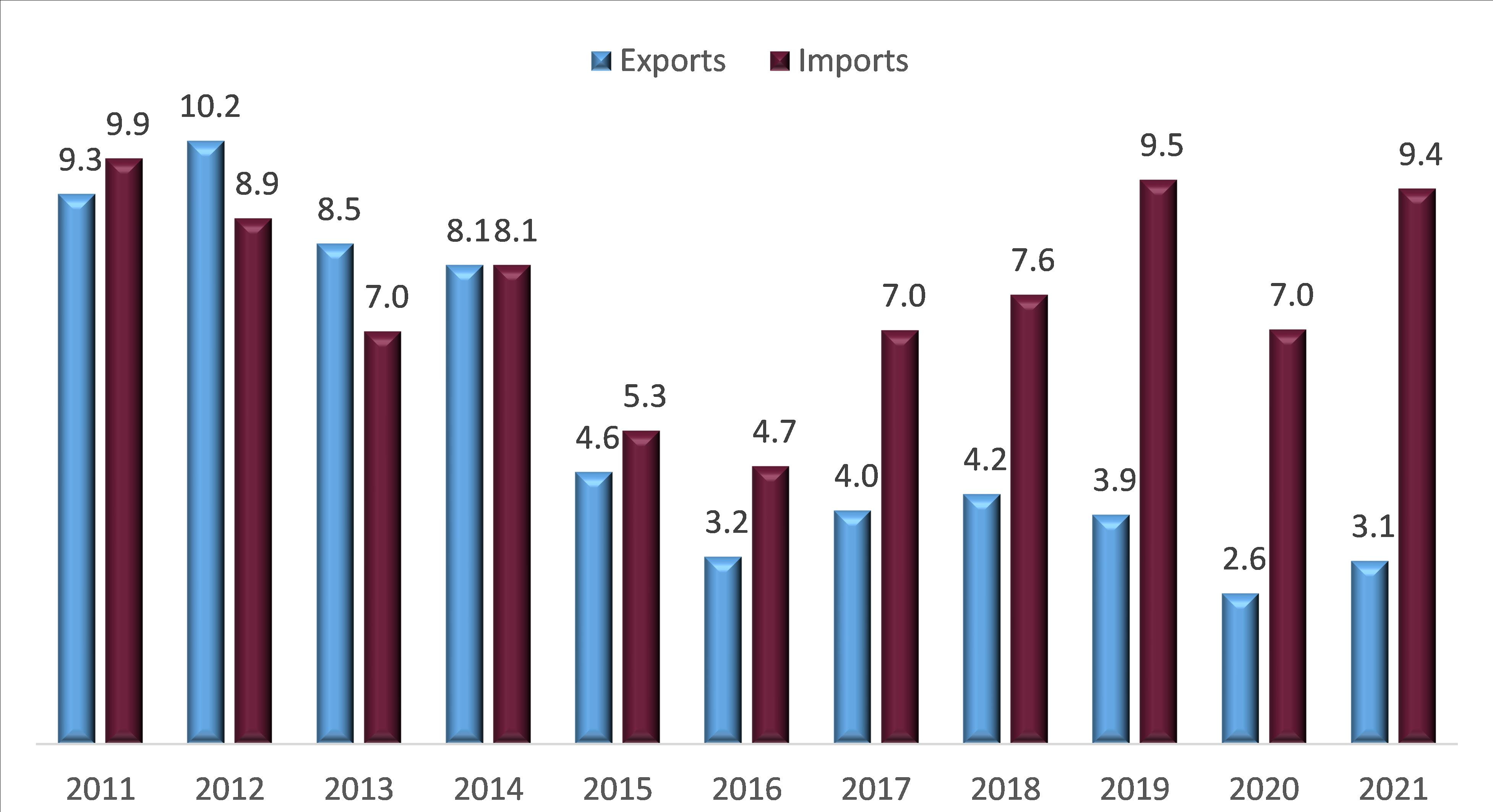
(Source: GSO, AFC Research)
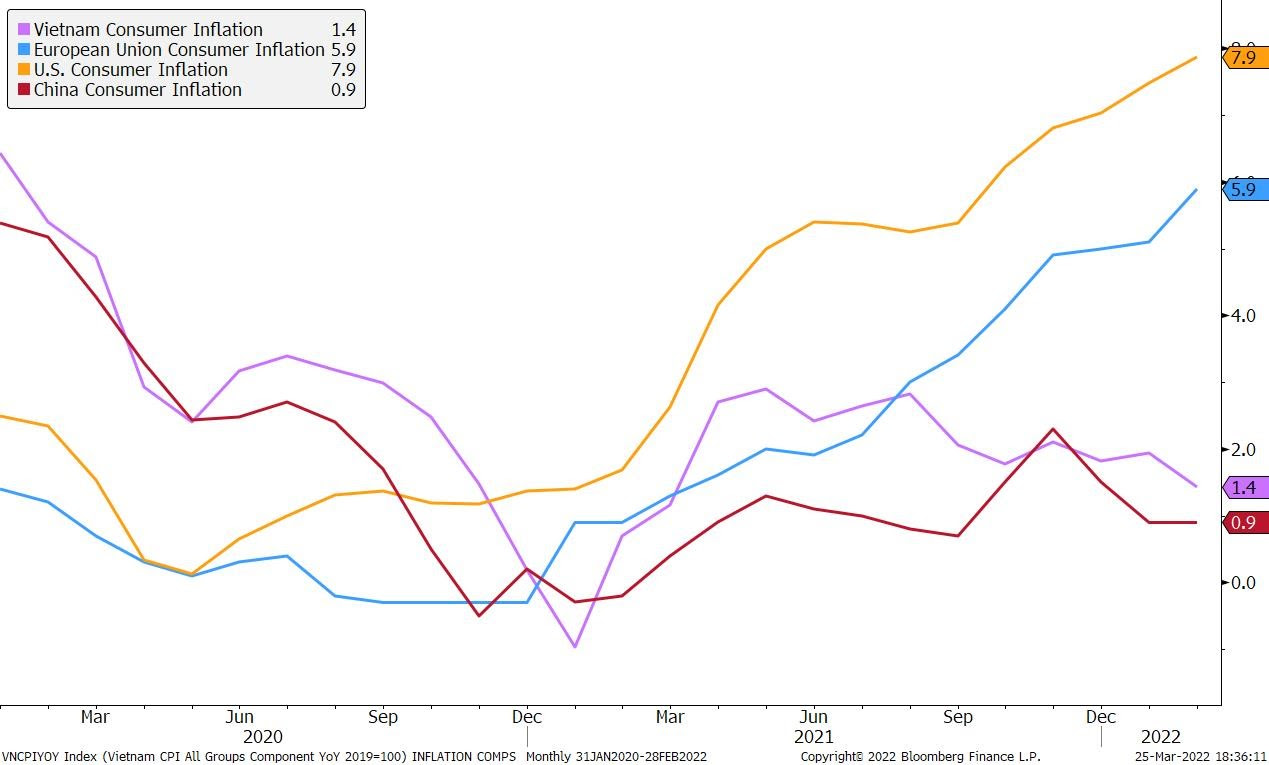
However, fuel and transportation are only 3.6% and 9.7% of the CPI basket respectively, compared to 35% for food and beverages. According to the yearly target of the National Assembly, CPI is expected not to exceed 4% this year from currently around 2%.
Inflation in Asia low compared to the West
(Source: Bloomberg)
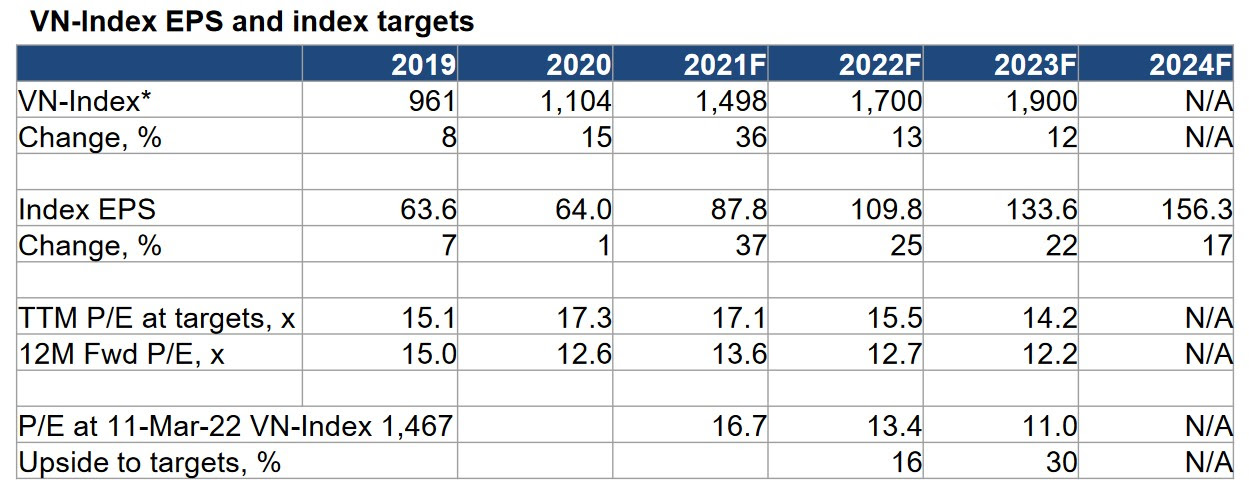
The Vietnamese government agreed to fully reopen its borders to foreign tourists again, which should lead to high economic growth this year of around 7% to 7.5%. The peak of COVID-19 infections was reached in mid-March 2022 and Vietnam now allows all tourists to enter the country with a single test before departure. The massive economic stimulus package should boost this positive sentiment even further and with high expected earnings growth for this and next year, we could see the perfect storm for a continuation of last year’s equity market bull run.
(Source: Viet Capital Securities)
If we apply the same valuation of 17x earnings, like in the past two years, on 2024 expected earnings, we are coming up with an index target of 2,650 for the VN-Index, up 75% from current levels. As a comparison, an equivalent rise of 75% in the Dow Jones Industrial Average would be 60,000, or 6,750 for the Euro Stoxx 50. We certainly feel more comfortable with our call for Vietnam!
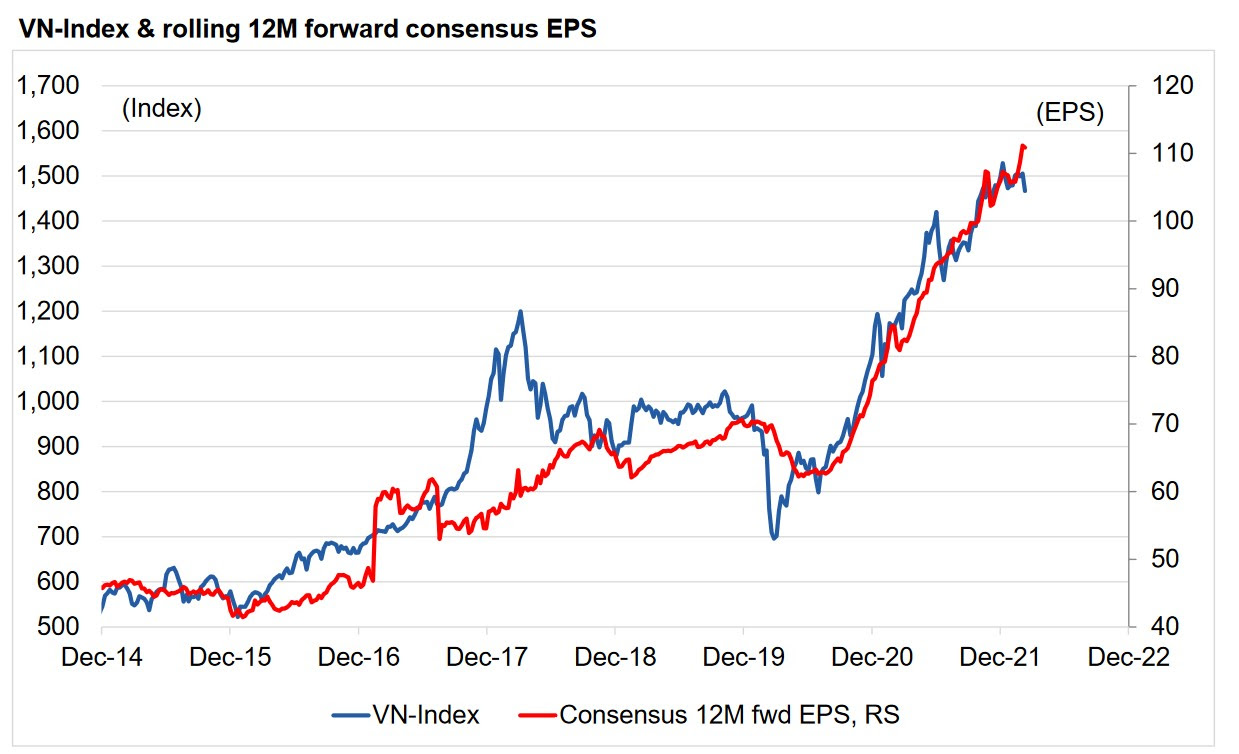
Index is strongly correlated to earnings expectations
(Source: Bloomberg, VCSC)
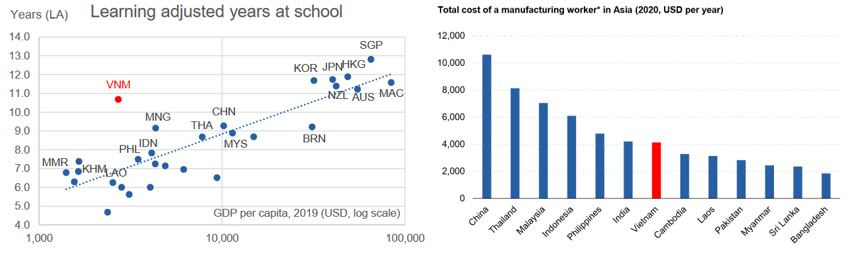
Our optimism is based on manifold reasons, many of which we have repeatedly brought up over the years, and they are intact more than ever. The economy in Vietnam was historically held back for similar reasons China was held back for many years. Despite having a strong economic run in recent years, where workers participated and the middle class grew at a very fast pace, labor costs are still relatively low. Therefore, FDI (foreign direct investments) should continue to see strong inflows as foreign companies see the advantage of the priceless combination of better education and lower labor costs.
(Source: Japan External Trade Organization (JETRO), World Bank, VCSC)
While Vietnam´s export sector can be named as the current most successful in the region, the global share is still low, and therefore we forecast a continuation of the positive trend which is just underlined by recent political events where the West is just learning the hard way how important reliable and politically stable trading partners are.
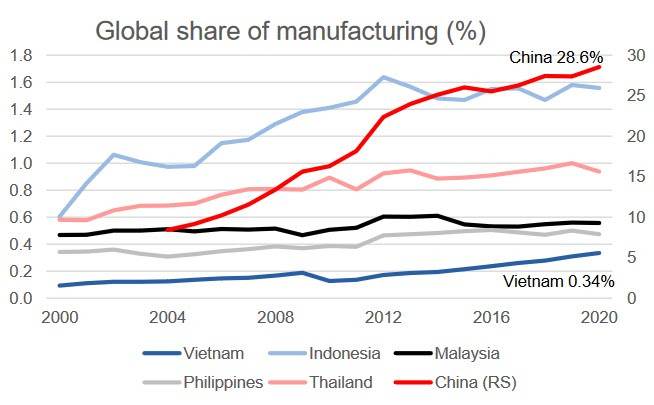
(Source: GSO, FIA, World Bank, VCSC)
Like in many developing countries, financials are heavily weighted in Vietnam’s stock market index. The beginning of the reversal in interest rates will benefit financial companies worldwide as it will do in Vietnam. We expect that the increase in total earnings from listed financial companies in the next 2 years could be around 60% of the total earnings increase, and we therefore monitor this sector closely in order to participate from this trend.
Insurance over banks
We are heavily overweight the insurance sector over banks for several reasons, despite, or maybe even because the market cap in the banking sector is much bigger than the mostly overlooked insurance sector, at least until now. Only just recently, insurance stocks started to outperform and helped our overall fund performance. The impressive performance of bank earnings – and stock prices – last year were partly the result of non-ordinary reasons which will not continue over the next few years.
Net profit of listed banks jumped over 50% yoy in 2021. The reason banks made such huge profits in 2021 was that the Vietnamese state bank allowed commercial banks to rollover all bad debts that were affected by COVID-19. Thanks to this policy, NPL (non-performing loans) provisions in the banking system tumbled and helped banks to substantially increase their profits. Besides that, also the low interest rate environment supported banks to expand their NIM (net interest margin). It is widely expected that the economy will grow strongly in 2022, and therefore banks are expected to benefit alongside. However, the sector also faces some obstacles such as the following:
- Increasing deposit interest rates which may narrow NIM’s of the banking system. Meanwhile the government is urging banks to reduce their lending rates to support economic growth.
- The Vietnamese state bank may stop allowing banks to rollover bad debts which were affected by COVID-19 in 2022. This would mean that banks would have to increase their provision expenses which will have a negative impact on their P/L statements.
In contrast to banks, the insurance sector faced a lot of difficulties in 2020 and 2021 due to the low interest rate environment, which led to lower income from deposits, which are an important income driver in the insurance sector. But in 2022, interest rates started to move up which have already had a positive impact on insurance revenues. Despite relatively low insurance penetration in Vietnam, the sector is growing on average 15-20% per annum, even in 2021, where revenues grew at 15.6% despite the negative COVID-19 impact. Overall, we do think that the insurance sector has ample room to grow and will show stable and attractive revenue growth over the years to come. We are therefore overweight this sector in our portfolio.
Insurance revenue growth (%, yoy)
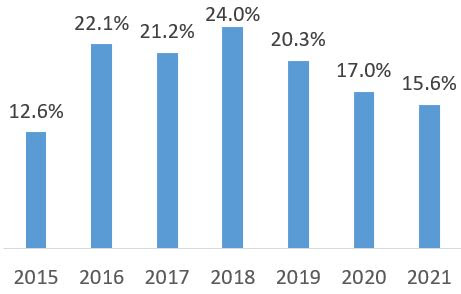
(Source: GSO)
If we look at insurance premium to GDP, the Vietnamese insurance sector seems to be very attractive with only 2% of GDP in 2019 compared to above 5% of other countries in the region, such as China, Thailand, Singapore or Malaysia. The low penetration rate of the Vietnamese insurance sector certainly looks attractive with a high potential for growth in the future.
Premium in % of GDP by country in 2019
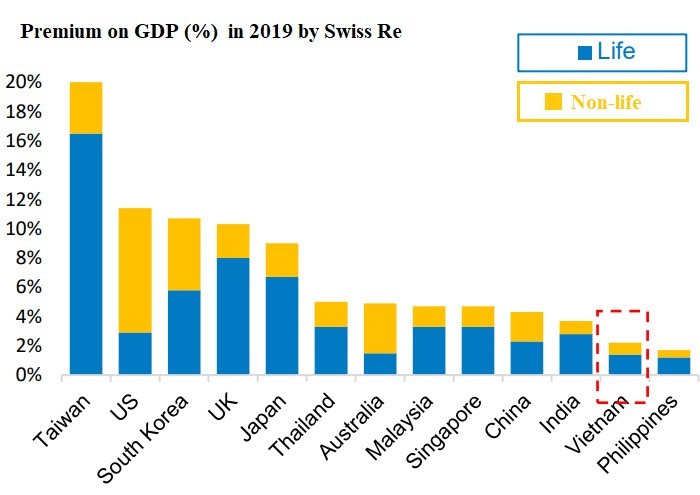
(Source: Swiss Re, BVSC)
Besides the attractive organic earnings growth rate, the insurance sector is categorized as defensive and should have a positive impact and reduce the volatility in our portfolio, which is quite important with the current geopolitical tensions, and especially the war in Ukraine. The exclusion of some Russian banks from SWIFT and the sanctions on Russia created a lot of volatility in the global banking sector and Vietnam is not immune either, even though the effects on the sector are negligible.
The insurance sector in Vietnam vastly underperformed the VN-index and banks over the last 2 years, mainly due the COVID-19 pandemic and the low interest rate environment and hence lower growth. But with rising interest rates on the horizon, we believe the positive momentum in the insurance sector is picking up now.
Insurance Sector versus VN Index and Banking Sector
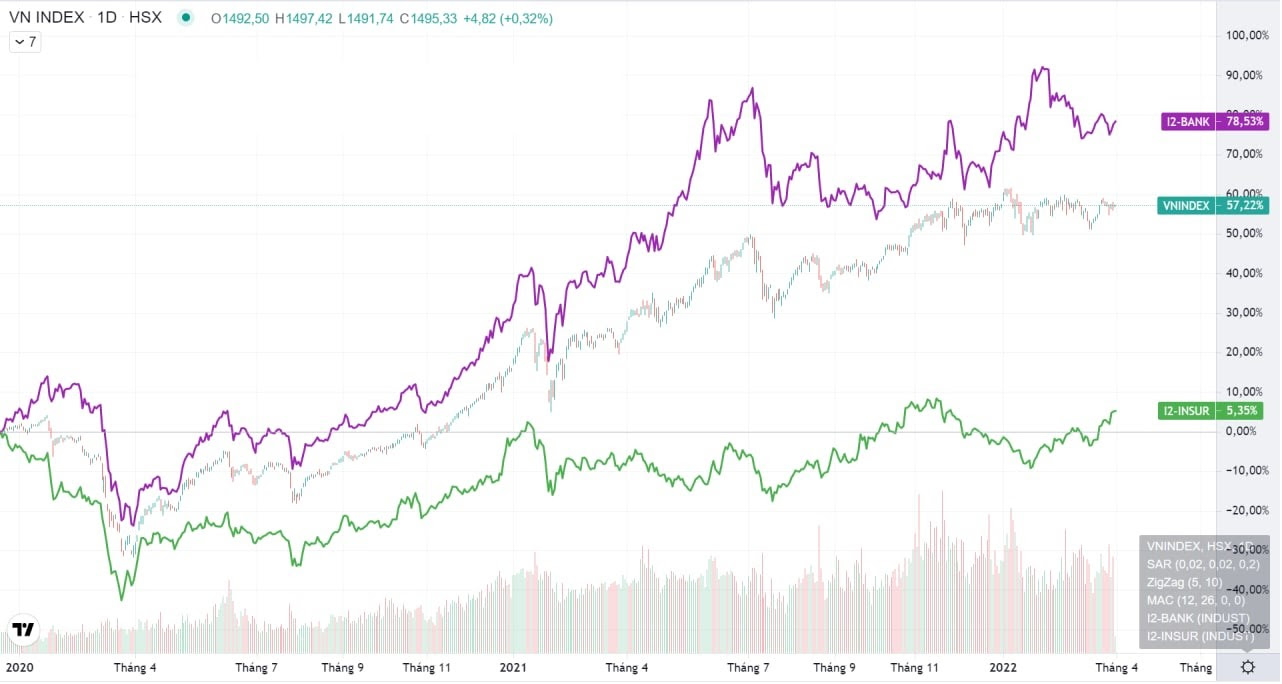
(Source: AFC Research, HSX)
Valuation of some insurance stocks
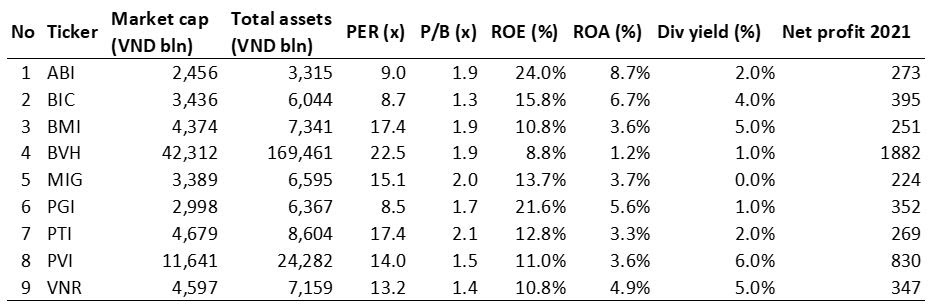
(Source: HSX, HNX, AFC Research, Vietstock)
Economy
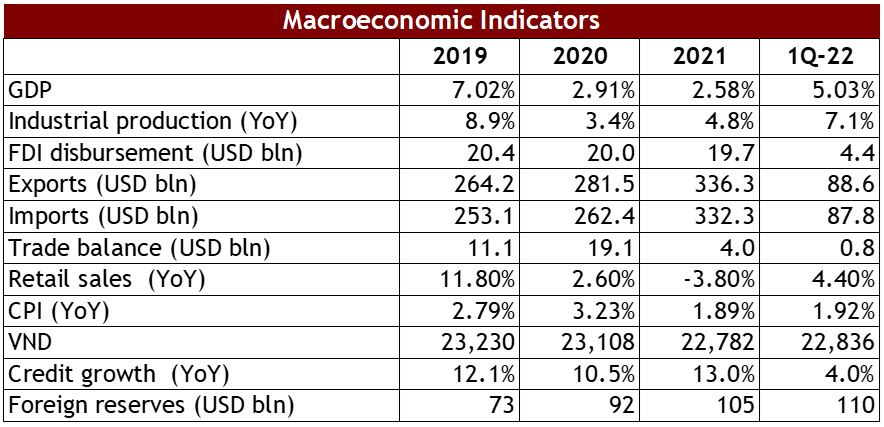
(Source: GSO, VCB, State Bank, AFC Research)
- Unlock research summaries
- Follow top, independent analysts
- Receive personalised alerts
- Access Analytics, Events and more
Join 55,000+ investors, including top global asset managers overseeing $13+ trillion.
Upgrade later to our paid plans for full-access.
- Loading...