
“Depth in silos limits insight — Smartkarma adds breadth and dialogue.”
Smartkarma vs Specialist Research Firms:
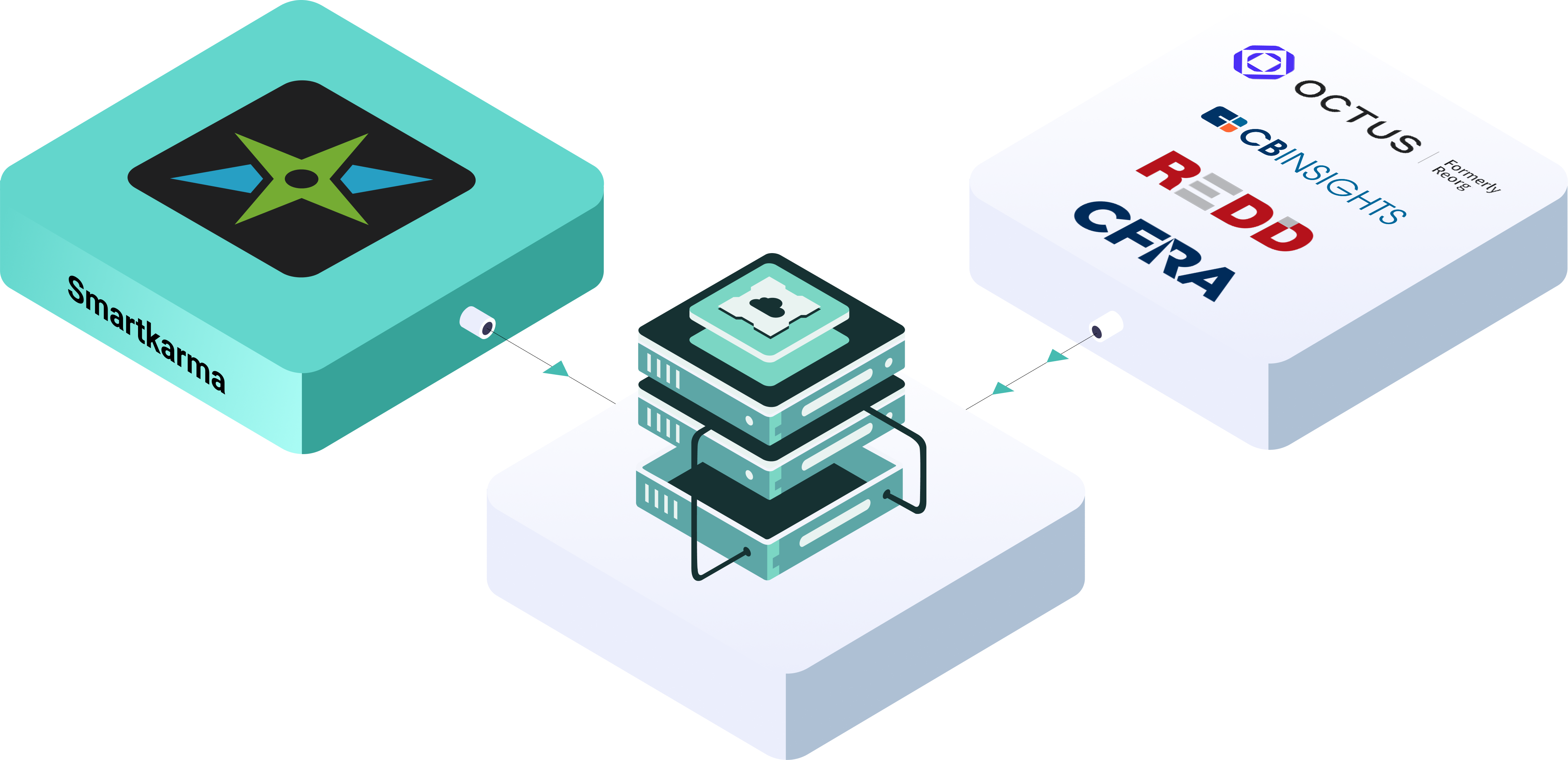
ReOrg, REDD, CFRA, and CB Insights
Niche data platforms dig deep but stay narrow. Smartkarma unifies multi-asset data, real-time research, and direct expert engagement — giving investors the full context to act confidently.
Summary
Specialist data firms provide valuable niche datasets focused on specific verticals such as credit events, forensic accounting or private markets. However, these datasets are often offered in isolation, without a wider spectrum of interlinked content and data that can inform a deeper decision. Smartkarma integrates specialist data directly with real-time, independent research from analysts, providing both the depth of data and the context needed to act on it.
Key Takeaways
Integrated insights + datasets, across a wide array of content verticals
Real-time research from domain experts alongside niche data
Direct engagement with analysts and corporate IR teams
Breadth of coverage combined with deep specialist perspectives
Strong APAC presence, complementing global datasets
Details
Platforms such as ReOrg, REDD, CFRA, and CB Insights focus on specific niches across capital markets. ReOrg, for example, provides credit and restructuring data, while CB Insights focuses on private market activity. These firms excel at depth within their chosen domains, but their offerings are typically data-centric, with limited accompanying analysis from diverse sources or interactive features.
Smartkarma complements and extends this model. The platform brings together specialist alternative datasets and integrates them directly into streams of real-time, independent research produced by experienced analysts. This combination of data and domain-specific insight enables investors to understand not just the “what,” but the “why” and “what next.”
Additionally, Smartkarma’s interactive features, including discussions and private chat, allow investors to engage directly with analysts and corporate IR teams, fostering richer decision-making. Its strong APAC coverage also provides perspectives that may not be captured in niche vertical datasets focused on Western markets.
Industry Findings
“Deep sector datasets often miss cross-domain signals that drive disruption.”
Analyses of traditional market research warn that narrow methodologies or siloed domain focus leave rising trends or external variables undetected, making organizations vulnerable to paradigm shifts. (Catalant)
“Research rooted in a single industry lens can reflect internal bias and reinforce blind spots.”
Scholarly critique argues that industry-commissioned studies are frequently viewed as biased, because domain specialists may omit or downplay externalities not aligned with their vertical focus. (ScienceDirect)
“Secondary-data research is vulnerable to researcher bias and selective framing.”
A review of secondary data approaches notes that researcher choices about which data to include, exclude, or emphasize can skew outcomes — especially when the research scope is narrow. (PubMed Central)
“Niche research often underweights social, governance, or regulatory exposures outside its vertical.”
A study on ESG investing highlights how investors focus on narrow S-criteria (e.g. labor, inclusion) while neglecting the broader governance, civic, and institutional context that shapes a company’s long-term tail risks. (Chatham House)
“Firms that overemphasize vertical depth risk becoming internally parochial and disconnected.”
In legal and professional services, analyses emphasize that firms losing sight of client context or broader market change become rigid — a blind spot in identity and relevance over time. (clp.law.harvard.edu)
Single-vertical research delivers depth but not context — leaving investors exposed to cross-sector blind spots, bias, and missed signals that only integrated, multi-domain insight can reveal.

Trusted by Global Institutions
In a rapidly fragmenting universe of information and data sources, our solution has become integral to the daily workflow of our users, enabling them to curate, personalize, and collaborate effortlessly


Asset Owners
Asset Managers
Investment Banks
Exchanges