Aequitas Research puts out a weekly update on the deals that have been covered by Smartkarma Insight Providers recently, along with updates for upcoming IPOs.
Starting with placements this week, we had a relatively small Recruit Holdings (6098 JP) block sold by Toppan Printing (7911 JP). The stock traded below its deal price of JPY2,762 for the most part of the first-day post-placement. It bounced back on Friday to close just 0.6% above its deal price. We were bullish about the placement because it was a tiny deal relative to its three-month ADV.
There was also a small Ihh Healthcare (IHH MK) secondary block on Thursday after markets have closed. The deal was about US$80m and got priced at MYR5.56, the bottom-end of the price range.
For deals that have launched, there are Maoyan Entertainment (EPLUS HK) and Chalet Hotels. Maoyan will be pricing on the 28th of January while Chalet Hotels will open its book on the 29th of January and swiftly close on the 31st.
Earlier this week, we also heard that Dexin China, a property developer mostly based on Zhejiang Province, was seeking listing approval to list in Hong Kong whereas Global Switch, a UK-based data center operator, will meet banks next week in London to choose arrangers for a Hong Kong IPO of about US$1bn in 2019.
Other than that, another pharma company, Jubilant Pharma, is looking to list on the US market after getting tepid interests from investors for an SGX listing. It was initially looking to raise about US$500m. Fang Holdings Limited (SFUN US), a Chinese real estate internet portal, has also submitted a confidential filing to the SEC for a proposed spin-off of its research unit, China Index Holdings.
Accuracy Rate:
Our overall accuracy rate is 71.9% for IPOs and 63.8% for Placements
(Performance measurement criteria is explained at the end of the note)
No new IPO filings
Below is a snippet of our IPO tool showing upcoming events for the next week. The IPO tool is designed to provide readers with timely information on all IPO related events (Book open/closing, listing, initiation, lock-up expiry, etc) for all the deals that we have worked on. You can access the tool here or through the tools menu.
We believe that parents of primary school children will bring their children back to tutoring schools when they become aware of the competition in junior high schools.
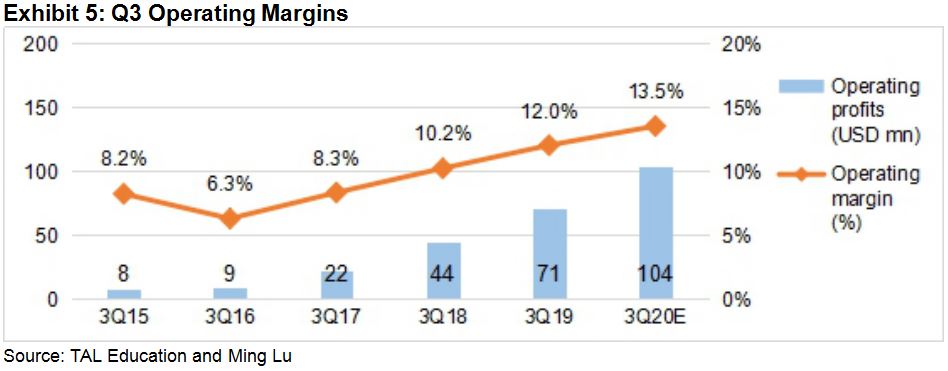
The expansion of online business and the change towards small classes are improving both the revenue growth and the margins.
We believe that the requirement of educator license is not a concern.
The 5-year P/E band suggests an upside of 44% for the share of TAL Education.
In spite of a stellar quarter (Q3 FY19), we remain cautious on Zee Entertainment Enterprises (Z IN) and the prospects of broadcasters in India. Hindi GEC is consolidating, and most of the growth is likely to happen in regional channels which remain competitive. Global data suggests ad spends as a % of revenue for many broadcasters and cable operators has been disrupted and couple of year’s down the line, India should be no exception. Contrary to consensus, driven by millennials and non-affordability of second television, cord cutting in India could accelerate sooner than excepted. With an hyper competitive OTT landscape, uncertainty post TRAI Tariff implementations, in an industry suspect to easy value migration, the long term outlook for Zee Entertainment Enterprises (Z IN) and the broadcast Industry warrants attention. The only near term positive for the stock is the potential stake sale to a strategic partner, which is likely to keep the stock price buoyant but only in the near term.
Kepei Education (1890 HK) has raised US$112m at HK$2.48 per share, just slightly above the mid-end of the IPO price range. We have previously covered the insight in:
Our overall global outlook remains cautious and continued downward pressure on global equities remains our expectation. One bright spot is EM (more on this below), which continues to give us hope that global equities can bottom out. We provide a technical appraisal of major markets and highlight actionable setups within the global Utilities and Staples Sectors.
Get Straight to the Source on Smartkarma
Smartkarma supports the world’s leading investors with high-quality, timely, and actionable Insights. Subscribe now for unlimited access, or request a demo below.
On Friday 25 January 2019, shareholders of Pioneer Corp (6773 JP) voted to implement a self-imposed (self-inflicted?) equity “cramdown” of sorts.
In September, Pioneer and BPAE signed a memorandum of understanding whereby Baring Private Equity Asia would lend money to Pioneer and subsequently inject equity capital and keep the company listed. In December, BPAE and Pioneer management decided that the equity injection would push out then-existing shareholders at a steep discount to the lowest share price the stock had theretofore seen in the company’s 50-year-plus history of being listed.
Now that’s done.
The situation now looks quite a bit like a regular “risk arb” or “wind up” situation, though investors do not have exact understanding of the payment date.
On December 17th 2018, the TSE announced a somewhat strange and unexpected treatment of the TSE-calculated indices for two companies where shares were issued to shareholders of a foreign company where the Japanese company had acquired the foreign company through a Scheme of Arrangement under foreign jurisdiction.
The announcements for TOPIX and JPX Nikkei 400 were made then, and despite the events being entirely similar in construct, but different in month of Scheme Effective Date, they were put in the same month for Mitula and the first tranche of the Takeda inclusion, which was split between two months because of its large impact.
The large IPO last month of Softbank Corp (9434 JP) means there is another large inclusion going effective as of the open of trading on 31 January.
Wednesday is going to be a big day.
If everyone trades their required index amount on the day, it should be a trillion yen plus of flows.
In December 2017, Mitsubishi UFJ Financial (8306 JP) launched a complicated three-step process to acquire up to 40%, then up to 73.8% (or more) in BDMN, five years after DBS’ aborted attempt to obtain a majority in the same bank. Mid-week, local papers announced the planned merger between BDMN and BNP with shareholder vote for both banks 26 March 2019 (record date 1 March) and effective date 1 May 2019.
It looks like this is almost completely bedded down. MUFG has a good relationship with Indonesian regulators and it would not have arrived at this Step 3 without pretty clear pre-approval indicated.
The result is an effective Tender Offer Trade at IDR 9,590/share for the float of BDMN. With shares up 8% the day of the announcement, there was another 6+% left for payment in three months and a week which comes out to 25.4% annualized in IDR terms through the close. Travis thought this is an excellent return for the risk here.
Indonesian takeover procedures generally require a Mandatory Takeover Offer procedure when someone goes over a 50% holding. But banks being bought by foreigners are a different category and bank takeovers are regulated by the OJK. The upshot is that if you tender, you will get the Tender Offer consideration. And if EVERY public shareholder tenders, MUFG will have to conduct a selldown of 7.5% within a very short period, and a selldown of 20% within 2 years or up to 5 years (a virtual IPO when it comes), in order to meet the free float requirements.
ESR has now declared its Offer for Propertylink “to be best and final“, and the Offer has been extended until the 28 February (unless further extended). After adjusting for the interim distribution of A$0.036/share (ex-date 28 December; payment 31 January), the amount payable by ESR under the Offer is A$1.164/share, cash. The Target Statement issued back on the 20 November included a “fair and reasonable” opinion from KPMG, together with unanimous PLG board support.
The next key event is CNI’s shareholder vote on the 31 January. This is not a vote to decide on tendering the shares held by CNI in PLG into ESR’s offer; but to give CNI’s board the authorisation to tender (or not to tender) its 19.5% stake in PLG.
Although no definitive decision has been made public by CNI, calling the EGM to get shareholder approval and attaching a “fair & reasonable” opinion from an independent expert (Deloitte) to CNI’s EGM notice, can be construed as sending a strong signal CNI’s board will ultimately tender in its shares. According to the AFR (paywalled), CNI’s John Mcbain said: “We want to make sure when we do decide to vote, if we get shareholder approval, the timing is with us“.
Assuming the resolution passes, CNI’s board decision on PLG shares will take place shortly afterwards. My bet is this turns unconditional the first week of Feb. The consideration under the Offer would then be paid 20 business days after the Offer becomes unconditional. Currently trading with completion in mind at a gross/annualised spread of 0.8%/6.7%, assuming payment the first week of March.
The company announced a Tender Offer to buy back 26.666mm of its own shares at a roughly 10.5% premium to last trade. That’s a big tender offer. It is ¥40bn and 29.0% of shares outstanding. Shinmaywa prepared this well because they rearranged their holding grouping to be all held under corporate entities (in many situations, they hold under personal names). For some of us, that should have been a clue.
The main purpose of this effort is to get rid of Murakami-san, but Travis’ back of the napkin suggests just a 25% gain for Murakami, which is small beer for an investor bullish on the company’s prospects.
The outright long prospects do not impress. There are a lot of companies in the market with 3+% dividend rates and low PERs which are illiquid. The company will go into a net debt situation. That will likely cap future buybacks to the limit of spending this year’s net income. That would be big, but Travis expects with a high dividend, buybacks will be less likely.
Overall the business is OK, but it is unlikely to grow dramatically enough to warrant an ROE and margins which would make a price of 1.3-1.5x book appropriate in the near-term. Travis expects the tender offer to go through, and expects the price to be a bit “sticky” at this level near-term.
Huarong-CMB network [HCN] play New Sports announced a cash or scrip offer, with the cash alternative of $0.435/share priced at a premium of 3.57% to last close. The Offeror (China Goldjoy (1282 HK) – another HCN play) has entered into an SPA to acquire 37.18% of shares out. Upon successful completion of the SPA, Goldjoy will hold 66.44% and be required to make an unconditional general offer for all remaining shares.
The key condition to the SPA is Goldjoy’s shareholder approval. This should be a simple majority and the major shareholder, Yao Jianhui, has 41.9% in Goldjoy according to HKEx and page 23 of the Offer announcement.
Despite the potential issues faced by New Sports, this is a very real deal, with financing in place for the cash option.
The idea is not a new one. The mobile telecommunications market in Japan is mature, and one of the few ways Type 1 telecom providers can grow is by adding content through the “pipes.” KDDI needs non-telecom revenue channels. KDDI has a bank, and life insurance, and some investment in asset management channels. It needs more, and better. A broker with a bank attached is a pretty good way to get long-term investment and savings products to customers.
Kabu.com is not the best one out there in terms of bang for buck. But KDDI already has a JV with kabu.com majority shareholder MUFG and another with kabu.com. If you could buy an online broker, you might choose to buy Rakuten or SBI, but you can’t. You have to buy the rest of the company with them.
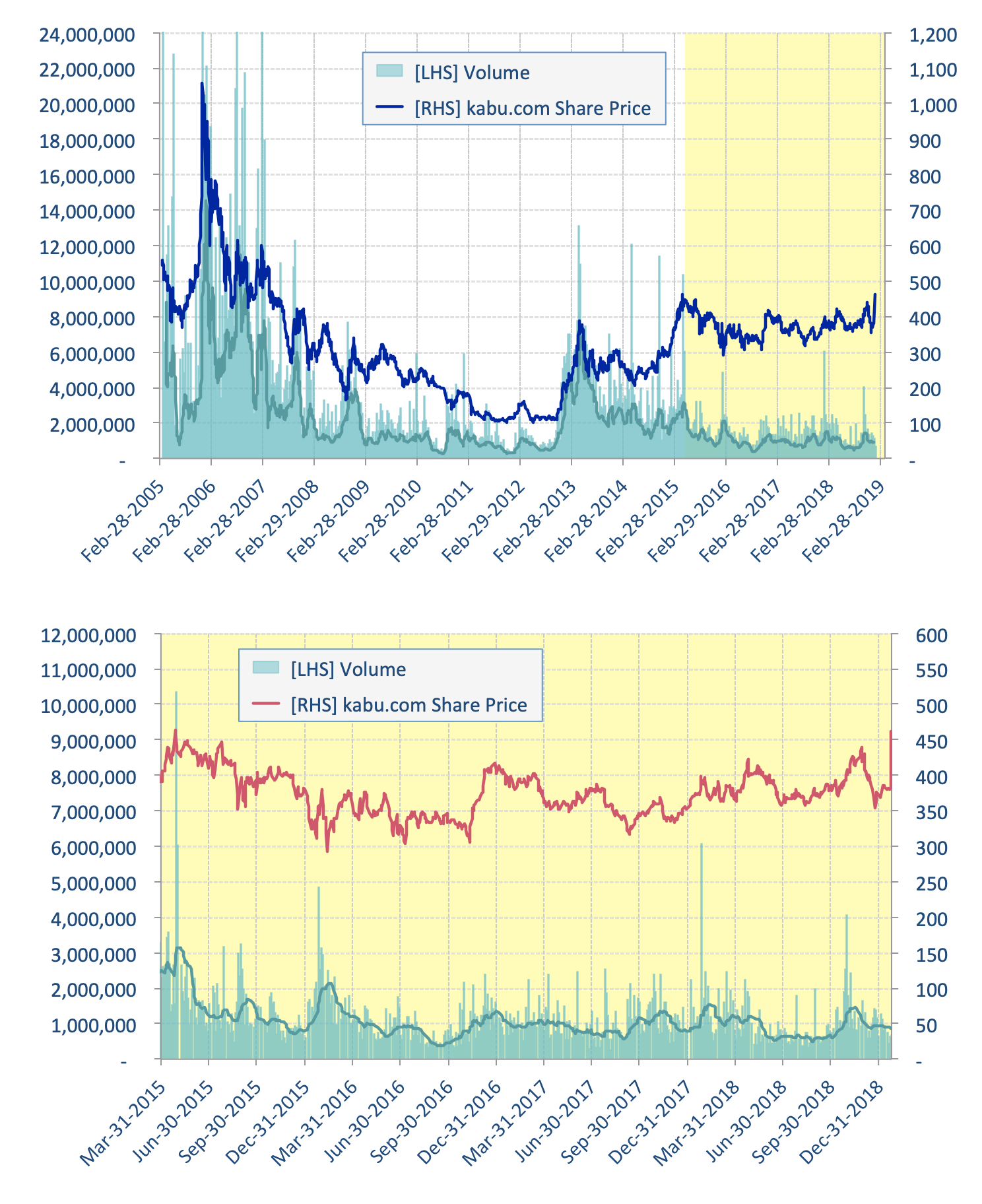
Kabu.com shares were bid limit up all day long after the Nikkei article and closed at ¥462, which is a 10+ year closing high. You have to believe that KDDI is willing to pay a knock-out price to get this trade done. They may, but that is the bet. But Travis sees no impediment to the deal getting done.
Printing and HR services company and funeral parlor operator Kosaido announced that Bain Capital Private Equity would conduct an MBO on its shares via Tender Offer, with a minimum threshold for success of acquiring 66.67% of the shares outstanding. The Tender Offer commenced on 18 January and goes through 1 Mach 2019. The Tender Offer Price is ¥610/share, which is a 43.8% premium to the close of the day before the announcement and a 59.7% premium to the one-month VWAP up through the day before the announcement.
While the pretense will be that the deal is designed to grow the funeral parlor business (which, given the demographics, should be a decent business over time), this is a virtual asset strip in progress. It is the kind of thing which gives activist hedge funds a bad name, but when cloaked in the finery of “Private Equity”, it looks like renewal of a business.
It is a decent premium but an underwhelming valuation. Because of the premium, and its smallcap nature, Travis expect this gets done. If deals like this start to not get done, that would be a bullish sign. Investors will finally be taking the blinders off to unfair M&A practices.
This is a small deal. It is meaningless in the grand scheme of things. But it is a deal which should not have been done at this price because better governance would have meant the stock traded at better than 0.4x book before the announcement.
Bristol Myers Squibb Co (BMY US) announced earnings for 4Q18 this morning followed by a conference call. Most metrics beat street expectations but the withdrawal of its application for Opdivo + low-dose Yervoy for first-line (NSCLC) lung cancer patients with high tumour mutation burdens after discussions with the FDA weighed on shares of BMY today. But for arbs who have the CELG/BMY spread set up, the positive comments on the Celgene acquisition provided further assurance of BMY’s commitment to the deal.
There was, however, no discussion, in the prepared remarks or the Q&A, of the status of antitrust filings (nor was the question asked in the Q&A). The U.S. Hart-Scott-Rodino antitrust filing should have been made with the FTC/DoJ by January 16th, 2019 according to the terms of the merger agreement, although this has not been publicly confirmed. The EU Competition web site does not show a competition filing having been made, and I would not have expected one so soon after the announcement of the deal.
Closing prices equate to annualised rates of return of ~20% / ~26.5%, respectively, by John DeMasi‘s calcs, which is very attractive.
Travis succinctly summarised the ongoing saga of governance and control that is the Renault/Nissan Alliance and speculates on the next chapter.
Carlos Ghosn is likely in more trouble. The release last Friday by Nissan and Mitsubishi makes clear that Ghosn effectively signed contracts to pay himself a very large sum of money from the funds of the Nissan-Mitsubishi Alliance treasury in ways which contravened the rules established for that Joint Venture.
The other news was that French visitors to Tokyo allegedly informed Japanese officials of their intention to have Renault appoint the next chairman of Nissan (as apparently, the Alliance agreement allows) and of the French State’s intention to seek to integrate Nissan and Renault under the umbrella of a single holding company. This is, the French state seeking to intervene in the governance of Nissan. That’s a no-no according to the Alliance Agreement.
Nissan CAN react to any Renault breach of Nissan’s governance by purchasing shares to render Renault’s shares voteless. It can, for example, purchase economic exposure to Renault shares in the form of a cash-settled derivative, where it had neither voting rights nor the access to obtain them.It can do so quickly enough to react to anything that Renault can do by surprise, but it would be a clear breach of the Alliance Agreement to do so quickly.
Travis reckons Renault and Nissan will not deliberately blow up their Alliance – they will work through their issues slowly and painfully. This will cause uncertainty among investors. IF the two companies ever sort out their relationship and decide to merge, the combined entity is cheap. Very cheap. If they blow up their Alliance, they are both going to turn out to be expensive.
Earlier this week, TOC announced a ToSTNeT-3 Buyback, to buy up to 4.6mn shares or 4.49% of shares outstanding at ¥778/share. With this latest buyback, TOC has bought back 30% of shares outstanding in the past 14 months after selling a large asset before that. This has resulted in 49.5% of the votes held by the Ohtani family and their namesake companies, another 30% will be held by cross-holders who are loyal to the family, about 8-9% of the company will be owned by passive investors, and 11-13% of shares will be held by everyone else.
The company’s largest and most famous asset is a near-50-year-old building. There have been suggestions of redevelopment (discussed in more depth here). The two family members controlling almost 50% of the shares (plus the New Otani Company parent) are 72 and 66yrs old respectively. A 10-year redevelopment project might outlast them. The project might be better off in other hands.
The company has very long-held real estate assets – some of which are fully-depreciated and have very low land price book values. The share price is trading below Tangible Book Value. The shares trade at roughly 8x EBIT, which is very inexpensive for deeply undervalued and still earning real estate assets.
The stock is illiquid, trading US$1.25mm/day on a three-month average, and sometimes a lot less, but there is considerable asset backing to these shares. Travis would want to be long here.
Both Intouch Holdings (INTUCH TB) and Thaicom Pcl (THCOM TB) gained ~10% earlier in the week in response to rumours of a government takeout of Thaicom. I estimate the discount to NAV at ~23%, versus an average of 28%, around its narrowest inside a year. The implied stub is at its narrowest inside a year. It was a decent move, translating to a Bt15.2bn lift in Intouch’s market cap, ~4.5x the value of the holding in Thaicom. That alone would suggest Intouch had been overbought.
That the Thai State-run CAT Telecom may take over Thaicom has a ring of truth to it. The military/government uses Thaicom, the only satellite operator in Thailand, and perhaps it is not (finally) comfortable with Singapore’s indirect interest in Thaicom via Singtel (ST SP)‘s stake in Intouch. It is an election year.
The rumoured price tag is Bt8.50/share or ~28% premium to the undisturbed price. Even a takeover premium north of 50% has no material impact on Intouch, as Thaicom accounts for 2% of NAV/GAV. However, selling Thaicom will further clean up what is already a very straightforward single-stock Holdco structure.
Optically Intouch has run its course in response to these Thaicom rumours – Intouch has denied any definitive approach/agreement – however, if a sale unfolds, this may help nudge the discount marginally lower from here.
Should CAT buy out Intouch’s stake, would it be required to make an Offer for all remaining shares? As the stake is above one of the key thresholds, (that is, 25%, 50% or 75% of its the total voting rights) it would be required to conduct a mandatory tender offer. But CAT may be afforded a partial offer, if Thaicom shareholders approve.
With SamE’s1P discount to Common at 16.61%, the lowest since mid-November last year, Sanghyun recommends to go long Common and short 1P with a short term horizon.
LEAP Holdings Group Ltd (1499 HK)announced an MGO at $0.1585/share vs. the last close of $0.39, but above Anthony Wong’s (the seller) in-price of $0.1236/share. Like Wong, this new Offeror has no experience in LEAP’s business. The Offeror is primarily a vehicle owned by Xu Mingxing, who has experience in blockchain technology. However, a more detailed overview of the Offeror can be found on page 14 of the HKEx link, which provides details of no less than 15 individuals with stakes into the Offeror.
My ongoing series flags large moves (~10%) in CCASS holdings over the past week or so, moves which are often outside normal market transactions. These may be indicative of share pledges. Or potential takeovers. Or simply help understand volume swings.
Often these moves can easily be explained – the placement of new shares, rights issue, movements subsequent to a takeover, amongst others. For those mentioned below, I could not find an obvious reason for the CCASS move.
A visit to Ramayana Lestari Sentosa (RALS IJ) in Jakarta confirmed that its positive transformation continues, as it strives to move up the value chain, bringing in more consignment brands and reassigning space to complementary tenants in its stores to draw in the crowds. This is reducing its heavy dependence on Lebaran sales, as it moves up the value chain to attract a slightly more affluent customer.
Ramayana Lestari Sentosa (RALS IJ) continues to upgrade its stores and bring in new tenants, such as cinemas and F&B such as Starbucks, as its closes loss-making supermarkets. A revamped store is expected to see a 20-25% sales enhancement. It will transform a further 30 stores in 2019, including cinemas into the mix.
The company continues to see strong performance from its consignment and fashion sales, with the drop off in supermarket sales lessening and this business no longer losing money.
Ramayana Lestari Sentosa (RALS IJ) strives to be the leader in providing fashion for the masses and continues to use celebrities to endorse its own brands.
It has decentralised sourcing of products and incentivised stores managers at the EBIT level rather than for sales. It has also introduced a strict process for discounting, which is enhancing profitability.
The company will introduce a further 20 new consignment brands in 2019 to help grow this side of the business and move up the value chain. Shoes are one of the most important growth categories.
Ramayana Lestari Sentosa (RALS IJ) is in the midst of a significant metamorphosis, which could see the company truly realise the value of its nationwide franchise, and move up the value to become less reliant on Lebaran sales. It continues to transform its store portfolio, introducing more consignment vendors and complementary tenants into its stores to increase footfall. According to Capital IQ consensus, the stock trades on 18.3x FY19E PER and 17.3x FY20E PER, with estimated EPS growth of +9% and +6% for FY19E and FY20E respectively. These growth expectations look to be conservative given the positive direction that management is taking both on its merchandising, brands, and tenant mix.
Get Straight to the Source on Smartkarma
Smartkarma supports the world’s leading investors with high-quality, timely, and actionable Insights. Subscribe now for unlimited access, or request a demo below.
Profit Warning for Q4 2018 and Q1 2019: Two Fridays ago, Elon Musk warned that Q4 profits came in lower than Q3’s, despite an 8% QoQ rise in vehicle sales during Q4. He also announced a 7% cut in Tesla’s workforce, as Tesla is now facing “a tiny profit” in Q1 that will be achieved with “great difficulty, effort and some luck”. These are extremely bearish comments from a perennial optimist like Musk. If true, however, it kills the growth story at Tesla. And with the average 15% price cut of the Model 3 in the US and 17% in China, it also shows that Tesla may have misread the demand environment for its high-priced electric sedan.
Model 3 Demand in the US has Clearly Been Exhausted: September 2018 saw peak monthly sales of 22,250 units in the US, which fell to an average monthly rate of 18,039 units in Q4. There are no more wait lists for the Model 3 at current prices: Tesla’s website says delivery can be made in under 2 weeks. In the January 18th profit warning, Musk admitted that Tesla must now sell its lowest-end version for $35,000 from May, or see production fall. At this price, Tesla’s Model 3 probably just breaks even, by our estimates.
Weak Model 3 Launch in Europe: It was hoped that the Model 3’s European launch this March would make up for waning demand in the US. But since opening up configurations for reservation holders on December 7th, Tesla only received 13,773 orders, which is a whopping 24% lower than recent monthly sales in the US. Musk was forced to open up configurations to non-reservation holders, but this led to only 2,436 extra orders over the following 2 weeks. In the US, Tesla opened up the Model 3 floodgates to non-reservation holders 12 months after launching the car. In Europe, it took less than 4 weeks.
No Hopes for Tesla in China Either in 2019: Tesla’s registrations in China for October and November 2018, combined, fell by 72% YoY and overall auto demand is weakening there. Musk proclaimed that Tesla would start production of the Model 3 in Shanghai by 2019-end. The factory site is a barren plot of land (see Figure-5). It took VW 23 months to build its latest factory in China and Toyota’s new Alabama plant will require 28 months. Why should we believe that Tesla only needs 11 months?
Watch the Competition for Tesla in 2019: Tesla will face true competition this year for its first time as 4 new European EVs hit the market. During Q4 of 2018, Jaguar’s new I-Pace outsold Tesla’s Models S and X, combined, in the Netherlands–Tesla’s number two market after the US. Audi’s e-Tron SUV–due out next month–had over 20,000 orders as of December 7th last year. Porsche’s new Taycan–a powerful rival for Tesla’s Model S–has sold out its first year of production, with most orders coming from Tesla owners. The Models S/X provided 50% of automotive gross profit in the 2H of 2018, by our estimates. A fall in volume will heavily impact profits.
Spending Will Spike in 2019 and Lead to Negative FCF: Tesla was able to squeeze out a profit during the 2H of 2018 largely because of suppressed spending on R&D and infrastructure. In order to roll out the new Shanghai plant and bring the new Model Y to market, both capex and R&D must rise significantly in 2019. Our list of “spending needs” (see Figure-1) shows that capex should nearly double to $4.5bn in 2019. Including debt obligations and payables, Tesla’s total cash needs in 2019 come to $9.3bn, which is over twice its equity. A highly dilutive public share offering appears inevitable.
Why 2019 Could Be the End of Tesla: Tesla proved in 2018 that, even with higher sales volumes and lofty pricing for the Model 3, it could only attain an estimated 2H operating margin of 1.7%, excluding environmental credits, one-offs, and stock-based compensation. 2019 will be incredibly harder as 1) Tesla faces stiff competition for the first time since its inception; 2) a lower-priced Model 3 will not generate enough profit to cover falling profitability of the Models S/X; and 3) most significantly, a steep rise in capex and R&D will lead to higher losses and negative FCF. Tesla may need a bailout by a deep-pocketed suitor this year. But this could only occur at a much lower share price.
Chalet Hotels (Chalet) is an owner, developer, and asset manager of luxury hotels. The company has grown its revenue and EBITDA at 15.8% and 22.8% CAGR from FY2016 to FY2018. The growth has been driven by the consistent improvement of its average occupancy rate which in turn drove RevPAR higher.
However, the company is embroiled in litigation with Hindustan Aeronautics (HNAL IN) which could result in the company incurring significant costs. Along with the impending renewal of the licensing agreement in 2020 and 2021, there is much to be worried about the company’s near-term outlook and its highly leveraged balance sheet may leave the company backed up into a corner.
In this insight, we will look at the company financial and operating performance, compare hotels’ operating metrics to the industry average, and compare its valuation to other Indian hotel peers. We will also run the deal through our IPO framework.
In this version of the GER weekly events wrap, we assess the recent lock-up expiry for Pinduoduo (PDD US) which may have led to a short squeeze. Secondly, we assess the debt tender for Softbank Group (9984 JP) which may be supporting the equity. Finally, we provide updates on bids for M1 Ltd (M1 SP) and Healthscope Ltd (HSO AU) as well as update a list of upcoming M&A and equity bottom-up catalysts.
The rest of our event-driven research can be found below.
Best of luck for the new week – Rickin, Venkat and Arun
Our thesis on Subaru has maintained for some time that margins were inflated due to under-spending and that these costs would surface in one form or the other over time.
As it turns out, the costs were incurred through recalls as Subaru downgraded its FY OP guidance from ¥300bn to ¥220bn on 5 Nov. What continues to concern us is the constant stream of negative news flow on quality and sustainability-related issues. While the latest announcements do not imply excessive direct costs for the company, they continue to raise the question of whether corners were being cut and thus create doubt about the formerly excellent and still very high OPMs generated by Subaru.
We remain negative on Subaru as we expect margins to remain under pressure and believe top line may stagnate or shrink over the next one to two years.
Osaka official targets Q3 this year for decision on the winning bid, citing a more the merrier attitude on the number of licensee presumptives.
Bidders estimate investment for Osaka at anywhere between US$7bn. TO US$10bn.
Top competitors for Osaka in our view are: MGM Resorts, Galaxy Entertainment Group, Melco Resorts and Entertainment, Las Vegas Sands and Wynn Resorts. Our view: Buy all five at current great entry points.
Get Straight to the Source on Smartkarma
Smartkarma supports the world’s leading investors with high-quality, timely, and actionable Insights. Subscribe now for unlimited access, or request a demo below.
On Friday 25 January 2019, shareholders of Pioneer Corp (6773 JP) voted to implement a self-imposed (self-inflicted?) equity “cramdown” of sorts.
In September, Pioneer and BPAE signed a memorandum of understanding whereby Baring Private Equity Asia would lend money to Pioneer and subsequently inject equity capital and keep the company listed. In December, BPAE and Pioneer management decided that the equity injection would push out then-existing shareholders at a steep discount to the lowest share price the stock had theretofore seen in the company’s 50-year-plus history of being listed.
Now that’s done.
The situation now looks quite a bit like a regular “risk arb” or “wind up” situation, though investors do not have exact understanding of the payment date.
On December 17th 2018, the TSE announced a somewhat strange and unexpected treatment of the TSE-calculated indices for two companies where shares were issued to shareholders of a foreign company where the Japanese company had acquired the foreign company through a Scheme of Arrangement under foreign jurisdiction.
The announcements for TOPIX and JPX Nikkei 400 were made then, and despite the events being entirely similar in construct, but different in month of Scheme Effective Date, they were put in the same month for Mitula and the first tranche of the Takeda inclusion, which was split between two months because of its large impact.
The large IPO last month of Softbank Corp (9434 JP) means there is another large inclusion going effective as of the open of trading on 31 January.
Wednesday is going to be a big day.
If everyone trades their required index amount on the day, it should be a trillion yen plus of flows.
In December 2017, Mitsubishi UFJ Financial (8306 JP) launched a complicated three-step process to acquire up to 40%, then up to 73.8% (or more) in BDMN, five years after DBS’ aborted attempt to obtain a majority in the same bank. Mid-week, local papers announced the planned merger between BDMN and BNP with shareholder vote for both banks 26 March 2019 (record date 1 March) and effective date 1 May 2019.
It looks like this is almost completely bedded down. MUFG has a good relationship with Indonesian regulators and it would not have arrived at this Step 3 without pretty clear pre-approval indicated.
The result is an effective Tender Offer Trade at IDR 9,590/share for the float of BDMN. With shares up 8% the day of the announcement, there was another 6+% left for payment in three months and a week which comes out to 25.4% annualized in IDR terms through the close. Travis thought this is an excellent return for the risk here.
Indonesian takeover procedures generally require a Mandatory Takeover Offer procedure when someone goes over a 50% holding. But banks being bought by foreigners are a different category and bank takeovers are regulated by the OJK. The upshot is that if you tender, you will get the Tender Offer consideration. And if EVERY public shareholder tenders, MUFG will have to conduct a selldown of 7.5% within a very short period, and a selldown of 20% within 2 years or up to 5 years (a virtual IPO when it comes), in order to meet the free float requirements.
ESR has now declared its Offer for Propertylink “to be best and final“, and the Offer has been extended until the 28 February (unless further extended). After adjusting for the interim distribution of A$0.036/share (ex-date 28 December; payment 31 January), the amount payable by ESR under the Offer is A$1.164/share, cash. The Target Statement issued back on the 20 November included a “fair and reasonable” opinion from KPMG, together with unanimous PLG board support.
The next key event is CNI’s shareholder vote on the 31 January. This is not a vote to decide on tendering the shares held by CNI in PLG into ESR’s offer; but to give CNI’s board the authorisation to tender (or not to tender) its 19.5% stake in PLG.
Although no definitive decision has been made public by CNI, calling the EGM to get shareholder approval and attaching a “fair & reasonable” opinion from an independent expert (Deloitte) to CNI’s EGM notice, can be construed as sending a strong signal CNI’s board will ultimately tender in its shares. According to the AFR (paywalled), CNI’s John Mcbain said: “We want to make sure when we do decide to vote, if we get shareholder approval, the timing is with us“.
Assuming the resolution passes, CNI’s board decision on PLG shares will take place shortly afterwards. My bet is this turns unconditional the first week of Feb. The consideration under the Offer would then be paid 20 business days after the Offer becomes unconditional. Currently trading with completion in mind at a gross/annualised spread of 0.8%/6.7%, assuming payment the first week of March.
The company announced a Tender Offer to buy back 26.666mm of its own shares at a roughly 10.5% premium to last trade. That’s a big tender offer. It is ¥40bn and 29.0% of shares outstanding. Shinmaywa prepared this well because they rearranged their holding grouping to be all held under corporate entities (in many situations, they hold under personal names). For some of us, that should have been a clue.
The main purpose of this effort is to get rid of Murakami-san, but Travis’ back of the napkin suggests just a 25% gain for Murakami, which is small beer for an investor bullish on the company’s prospects.
The outright long prospects do not impress. There are a lot of companies in the market with 3+% dividend rates and low PERs which are illiquid. The company will go into a net debt situation. That will likely cap future buybacks to the limit of spending this year’s net income. That would be big, but Travis expects with a high dividend, buybacks will be less likely.
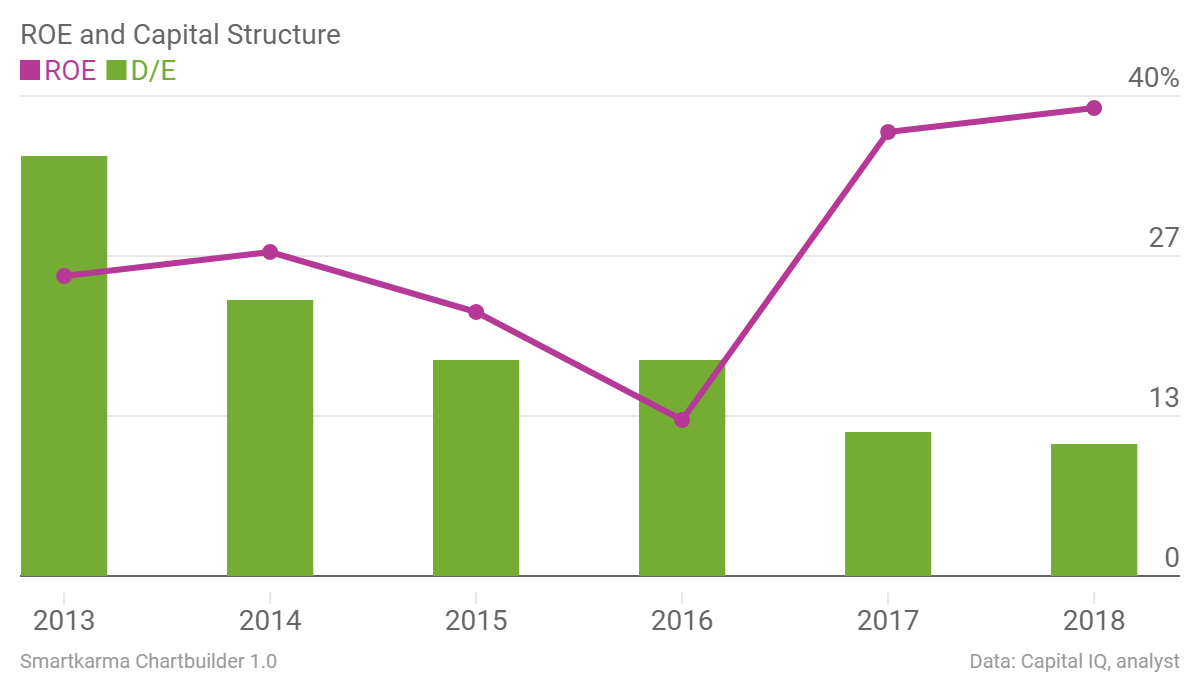
Overall the business is OK, but it is unlikely to grow dramatically enough to warrant an ROE and margins which would make a price of 1.3-1.5x book appropriate in the near-term. Travis expects the tender offer to go through, and expects the price to be a bit “sticky” at this level near-term.
Huarong-CMB network [HCN] play New Sports announced a cash or scrip offer, with the cash alternative of $0.435/share priced at a premium of 3.57% to last close. The Offeror (China Goldjoy (1282 HK) – another HCN play) has entered into an SPA to acquire 37.18% of shares out. Upon successful completion of the SPA, Goldjoy will hold 66.44% and be required to make an unconditional general offer for all remaining shares.
The key condition to the SPA is Goldjoy’s shareholder approval. This should be a simple majority and the major shareholder, Yao Jianhui, has 41.9% in Goldjoy according to HKEx and page 23 of the Offer announcement.
Despite the potential issues faced by New Sports, this is a very real deal, with financing in place for the cash option.
The idea is not a new one. The mobile telecommunications market in Japan is mature, and one of the few ways Type 1 telecom providers can grow is by adding content through the “pipes.” KDDI needs non-telecom revenue channels. KDDI has a bank, and life insurance, and some investment in asset management channels. It needs more, and better. A broker with a bank attached is a pretty good way to get long-term investment and savings products to customers.
Kabu.com is not the best one out there in terms of bang for buck. But KDDI already has a JV with kabu.com majority shareholder MUFG and another with kabu.com. If you could buy an online broker, you might choose to buy Rakuten or SBI, but you can’t. You have to buy the rest of the company with them.
Kabu.com shares were bid limit up all day long after the Nikkei article and closed at ¥462, which is a 10+ year closing high. You have to believe that KDDI is willing to pay a knock-out price to get this trade done. They may, but that is the bet. But Travis sees no impediment to the deal getting done.
Printing and HR services company and funeral parlor operator Kosaido announced that Bain Capital Private Equity would conduct an MBO on its shares via Tender Offer, with a minimum threshold for success of acquiring 66.67% of the shares outstanding. The Tender Offer commenced on 18 January and goes through 1 Mach 2019. The Tender Offer Price is ¥610/share, which is a 43.8% premium to the close of the day before the announcement and a 59.7% premium to the one-month VWAP up through the day before the announcement.
While the pretense will be that the deal is designed to grow the funeral parlor business (which, given the demographics, should be a decent business over time), this is a virtual asset strip in progress. It is the kind of thing which gives activist hedge funds a bad name, but when cloaked in the finery of “Private Equity”, it looks like renewal of a business.
It is a decent premium but an underwhelming valuation. Because of the premium, and its smallcap nature, Travis expect this gets done. If deals like this start to not get done, that would be a bullish sign. Investors will finally be taking the blinders off to unfair M&A practices.
This is a small deal. It is meaningless in the grand scheme of things. But it is a deal which should not have been done at this price because better governance would have meant the stock traded at better than 0.4x book before the announcement.
Bristol Myers Squibb Co (BMY US) announced earnings for 4Q18 this morning followed by a conference call. Most metrics beat street expectations but the withdrawal of its application for Opdivo + low-dose Yervoy for first-line (NSCLC) lung cancer patients with high tumour mutation burdens after discussions with the FDA weighed on shares of BMY today. But for arbs who have the CELG/BMY spread set up, the positive comments on the Celgene acquisition provided further assurance of BMY’s commitment to the deal.
There was, however, no discussion, in the prepared remarks or the Q&A, of the status of antitrust filings (nor was the question asked in the Q&A). The U.S. Hart-Scott-Rodino antitrust filing should have been made with the FTC/DoJ by January 16th, 2019 according to the terms of the merger agreement, although this has not been publicly confirmed. The EU Competition web site does not show a competition filing having been made, and I would not have expected one so soon after the announcement of the deal.
Closing prices equate to annualised rates of return of ~20% / ~26.5%, respectively, by John DeMasi‘s calcs, which is very attractive.
Travis succinctly summarised the ongoing saga of governance and control that is the Renault/Nissan Alliance and speculates on the next chapter.
Carlos Ghosn is likely in more trouble. The release last Friday by Nissan and Mitsubishi makes clear that Ghosn effectively signed contracts to pay himself a very large sum of money from the funds of the Nissan-Mitsubishi Alliance treasury in ways which contravened the rules established for that Joint Venture.
The other news was that French visitors to Tokyo allegedly informed Japanese officials of their intention to have Renault appoint the next chairman of Nissan (as apparently, the Alliance agreement allows) and of the French State’s intention to seek to integrate Nissan and Renault under the umbrella of a single holding company. This is, the French state seeking to intervene in the governance of Nissan. That’s a no-no according to the Alliance Agreement.
Nissan CAN react to any Renault breach of Nissan’s governance by purchasing shares to render Renault’s shares voteless. It can, for example, purchase economic exposure to Renault shares in the form of a cash-settled derivative, where it had neither voting rights nor the access to obtain them.It can do so quickly enough to react to anything that Renault can do by surprise, but it would be a clear breach of the Alliance Agreement to do so quickly.
Travis reckons Renault and Nissan will not deliberately blow up their Alliance – they will work through their issues slowly and painfully. This will cause uncertainty among investors. IF the two companies ever sort out their relationship and decide to merge, the combined entity is cheap. Very cheap. If they blow up their Alliance, they are both going to turn out to be expensive.
Earlier this week, TOC announced a ToSTNeT-3 Buyback, to buy up to 4.6mn shares or 4.49% of shares outstanding at ¥778/share. With this latest buyback, TOC has bought back 30% of shares outstanding in the past 14 months after selling a large asset before that. This has resulted in 49.5% of the votes held by the Ohtani family and their namesake companies, another 30% will be held by cross-holders who are loyal to the family, about 8-9% of the company will be owned by passive investors, and 11-13% of shares will be held by everyone else.
The company’s largest and most famous asset is a near-50-year-old building. There have been suggestions of redevelopment (discussed in more depth here). The two family members controlling almost 50% of the shares (plus the New Otani Company parent) are 72 and 66yrs old respectively. A 10-year redevelopment project might outlast them. The project might be better off in other hands.
The company has very long-held real estate assets – some of which are fully-depreciated and have very low land price book values. The share price is trading below Tangible Book Value. The shares trade at roughly 8x EBIT, which is very inexpensive for deeply undervalued and still earning real estate assets.
The stock is illiquid, trading US$1.25mm/day on a three-month average, and sometimes a lot less, but there is considerable asset backing to these shares. Travis would want to be long here.
Both Intouch Holdings (INTUCH TB) and Thaicom Pcl (THCOM TB) gained ~10% earlier in the week in response to rumours of a government takeout of Thaicom. I estimate the discount to NAV at ~23%, versus an average of 28%, around its narrowest inside a year. The implied stub is at its narrowest inside a year. It was a decent move, translating to a Bt15.2bn lift in Intouch’s market cap, ~4.5x the value of the holding in Thaicom. That alone would suggest Intouch had been overbought.
That the Thai State-run CAT Telecom may take over Thaicom has a ring of truth to it. The military/government uses Thaicom, the only satellite operator in Thailand, and perhaps it is not (finally) comfortable with Singapore’s indirect interest in Thaicom via Singtel (ST SP)‘s stake in Intouch. It is an election year.
The rumoured price tag is Bt8.50/share or ~28% premium to the undisturbed price. Even a takeover premium north of 50% has no material impact on Intouch, as Thaicom accounts for 2% of NAV/GAV. However, selling Thaicom will further clean up what is already a very straightforward single-stock Holdco structure.
Optically Intouch has run its course in response to these Thaicom rumours – Intouch has denied any definitive approach/agreement – however, if a sale unfolds, this may help nudge the discount marginally lower from here.
Should CAT buy out Intouch’s stake, would it be required to make an Offer for all remaining shares? As the stake is above one of the key thresholds, (that is, 25%, 50% or 75% of its the total voting rights) it would be required to conduct a mandatory tender offer. But CAT may be afforded a partial offer, if Thaicom shareholders approve.
With SamE’s1P discount to Common at 16.61%, the lowest since mid-November last year, Sanghyun recommends to go long Common and short 1P with a short term horizon.
LEAP Holdings Group Ltd (1499 HK)announced an MGO at $0.1585/share vs. the last close of $0.39, but above Anthony Wong’s (the seller) in-price of $0.1236/share. Like Wong, this new Offeror has no experience in LEAP’s business. The Offeror is primarily a vehicle owned by Xu Mingxing, who has experience in blockchain technology. However, a more detailed overview of the Offeror can be found on page 14 of the HKEx link, which provides details of no less than 15 individuals with stakes into the Offeror.
My ongoing series flags large moves (~10%) in CCASS holdings over the past week or so, moves which are often outside normal market transactions. These may be indicative of share pledges. Or potential takeovers. Or simply help understand volume swings.
Often these moves can easily be explained – the placement of new shares, rights issue, movements subsequent to a takeover, amongst others. For those mentioned below, I could not find an obvious reason for the CCASS move.
A visit to Ramayana Lestari Sentosa (RALS IJ) in Jakarta confirmed that its positive transformation continues, as it strives to move up the value chain, bringing in more consignment brands and reassigning space to complementary tenants in its stores to draw in the crowds. This is reducing its heavy dependence on Lebaran sales, as it moves up the value chain to attract a slightly more affluent customer.
Ramayana Lestari Sentosa (RALS IJ) continues to upgrade its stores and bring in new tenants, such as cinemas and F&B such as Starbucks, as its closes loss-making supermarkets. A revamped store is expected to see a 20-25% sales enhancement. It will transform a further 30 stores in 2019, including cinemas into the mix.
The company continues to see strong performance from its consignment and fashion sales, with the drop off in supermarket sales lessening and this business no longer losing money.
Ramayana Lestari Sentosa (RALS IJ) strives to be the leader in providing fashion for the masses and continues to use celebrities to endorse its own brands.
It has decentralised sourcing of products and incentivised stores managers at the EBIT level rather than for sales. It has also introduced a strict process for discounting, which is enhancing profitability.
The company will introduce a further 20 new consignment brands in 2019 to help grow this side of the business and move up the value chain. Shoes are one of the most important growth categories.
Ramayana Lestari Sentosa (RALS IJ) is in the midst of a significant metamorphosis, which could see the company truly realise the value of its nationwide franchise, and move up the value to become less reliant on Lebaran sales. It continues to transform its store portfolio, introducing more consignment vendors and complementary tenants into its stores to increase footfall. According to Capital IQ consensus, the stock trades on 18.3x FY19E PER and 17.3x FY20E PER, with estimated EPS growth of +9% and +6% for FY19E and FY20E respectively. These growth expectations look to be conservative given the positive direction that management is taking both on its merchandising, brands, and tenant mix.
Aequitas Research puts out a weekly update on the deals that have been covered by Smartkarma Insight Providers recently, along with updates for upcoming IPOs.
Starting with placements this week, we had a relatively small Recruit Holdings (6098 JP) block sold by Toppan Printing (7911 JP). The stock traded below its deal price of JPY2,762 for the most part of the first-day post-placement. It bounced back on Friday to close just 0.6% above its deal price. We were bullish about the placement because it was a tiny deal relative to its three-month ADV.
There was also a small Ihh Healthcare (IHH MK) secondary block on Thursday after markets have closed. The deal was about US$80m and got priced at MYR5.56, the bottom-end of the price range.
For deals that have launched, there are Maoyan Entertainment (EPLUS HK) and Chalet Hotels. Maoyan will be pricing on the 28th of January while Chalet Hotels will open its book on the 29th of January and swiftly close on the 31st.
Earlier this week, we also heard that Dexin China, a property developer mostly based on Zhejiang Province, was seeking listing approval to list in Hong Kong whereas Global Switch, a UK-based data center operator, will meet banks next week in London to choose arrangers for a Hong Kong IPO of about US$1bn in 2019.
Other than that, another pharma company, Jubilant Pharma, is looking to list on the US market after getting tepid interests from investors for an SGX listing. It was initially looking to raise about US$500m. Fang Holdings Limited (SFUN US), a Chinese real estate internet portal, has also submitted a confidential filing to the SEC for a proposed spin-off of its research unit, China Index Holdings.
Accuracy Rate:
Our overall accuracy rate is 71.9% for IPOs and 63.8% for Placements
(Performance measurement criteria is explained at the end of the note)
No new IPO filings
Below is a snippet of our IPO tool showing upcoming events for the next week. The IPO tool is designed to provide readers with timely information on all IPO related events (Book open/closing, listing, initiation, lock-up expiry, etc) for all the deals that we have worked on. You can access the tool here or through the tools menu.
Smartkarma supports the world’s leading investors with high-quality, timely, and actionable Insights. Subscribe now for unlimited access, or request a demo below.
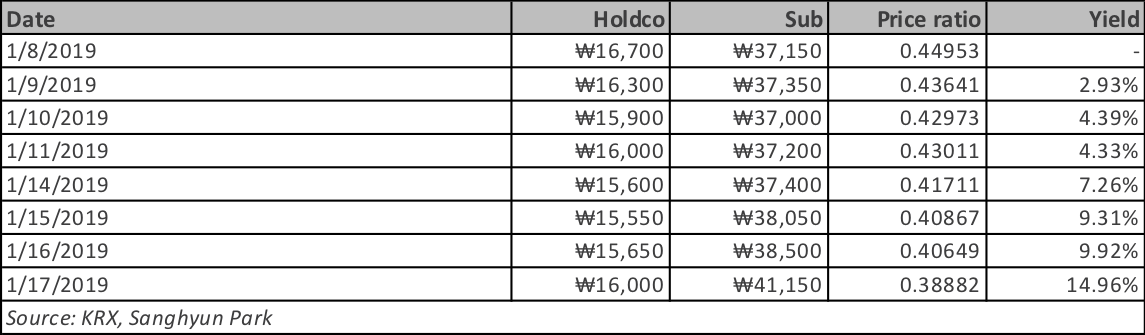
Hankook Tire Worldwide (000240 KS) is again in an interesting position. Its sub, Hankook Tire (161390 KS), is up 2.2% today, putting the duo at -2.2σ. Sub had lost nearly 10% on Jan 2~10 mainly on weakening outlook. Sub has then fully recovered this 10% loss this week. This is putting Holdco at a severely undervalued position on a 20D MA. Holdco discount is now at 41% to NAV.
I initiated a reverse stub trade on this duo on Jan 8. It started at a 0.44953 price ratio. We are now at 0.38882. We would have enjoyed 15% tasteful yield if we had held onto this position up to this day. We have no apparent signal of improving fundamentals on Sub. It appears that Sub’s recent gain should be the work of bargain hunters. Holdco discount is at the local peer average. Price ratio is at yearly mean.
Importantly, this is the first time that price ratio is hitting below -2σ since late September last year. We should expect another quick mean reversion at this level. Just, this time it will be the other way. I’d go long Holdco and go short Sub now.
The supermarket sector is the most fragmented and uncompetitive of all retail sectors, a situation encouraged by major suppliers and not ideal for consumers.
Despite some effort from the likes of Aeon, consolidation has failed to materialise beyond a few in-group mergers.
Yet pressure on supermarkets to consolidate has been building due to depopulation in the regions, competitive pressures from other food retailers such as convenience stores and drugstore chains, as well as the emerging online food services.
Change is now coming. The biggest industry consolidation yet was announced last month, a precedent-setting alliance between three major supermarkets, Arcs Co Ltd (9948 JP), Valor Holdings (9956 JP) and Retail Partners (8167 JP), carving up a large chunk of the country into three regional fiefdoms.
We initiate coverage of JKN with a BUY rating, based on a target price of Bt8.80, pegged to the the 14.8xPE’19E mean of the Asia ex-Japan Consumer Discretionary Sector.
The story:
Plenty of opportunities in the ASEAN market
Harvest season is imminent
New contracts with three new channels confirm 2019 domestic growth
Mild recovery for domestic digital TV industry in 2019E
Risks: Heavy reliance on a few major customers, probability it will have to set provisions for doubtful debts and potential inability to renew contracts with customers.
Shares of Korean Air Lines (003490 KS) are down nearly 60% since its highs in 2010 and we believe this decline has been excessive. The stock has started to recover and we expected continued outperformance this year. We like both Korean Air (Common) (003490 KS) and Korean Air (Pref) (003495) at current levels. However, we think Korean Air (Pref) has a higher upside. We are including Korean Air (Pref) (003495) in our model stock portfolio. The following are the major catalysts that could boost Korean Air (Common) and Korean Air (Pref) shares by 20-30%+ in the next 6-12 months.
Increasing possibility of a breakthrough in corporate governance with potential help from KCGI & NPS
Cheap valuation/Increasing interests from both value funds and hedge funds
Reduced political conflict between China & South Korea
Turnaround of the aerospace business unit
Huge investment plan by the Incheon International Airport to expand facilities by 2023
Current ratio of Korean Air Pref/Common is below the 1 sigma level
Get Straight to the Source on Smartkarma
Smartkarma supports the world’s leading investors with high-quality, timely, and actionable Insights. Subscribe now for unlimited access, or request a demo below.
ZOZO (3092 JP) has been hit from all sides recently, with a major sell-off by investors disturbed by Zozo’s execution of its private brand launch and the resulting impact on the company’s reputation among merchants and consumers alike.
Last month it launched a new campaign which, on the surface, was all about helping customers give back to society, but which drew an immediate negative response from some merchants.
One of these, Onward Holdings, withdrew all its brands from sale on Zozo. This is another damaging dent in Zozo’s reputation.
Decathlon is a category killer sans pareil and will finally open its first store in Japan in March. If Decathlon implements its store roll out well, the French sports retailer will cause a major disruption in Japan’s sports market.
Large domestic sports retailers like Xebio Holdings (8281 JP) and Alpen Co Ltd (3028 JP) will be gearing up to compete in some categories but are far behind in private label development and cost performance, and the major sports brands will have to accelerate their plans for retail stores while reviewing pricing (downwards). Sports firms like Mizuno (8022 JP), with relatively low perceived brand value, could face challenges in the newly polarised market that will emerge from Decathlon’s entry.
A major source of competition for Decathlon will come from a more unlikely retailer: the uniforms to outdoor apparel/gear firm, Workman (7564 JP). While still small, Workman is already manoeuvring to hinder Decathlon’s growth in Japan, and looks like having establishment backing to do so – and echoes the growth of Uniqlo after Gap entered the Japanese market in the 1990s and the rise and rise of Nitori (9843 JP) after IKEA’s launch in 2006.
Both Gap and IKEA have relatively small operations in Japan today compared to their early potential. Decathlon will need to expand rapidly if it is to gain sufficient share to stop Workman emerging with a clear lead in its market.
Holding floor support is vital for this trade to work. In absolute terms both APG and APC display similarly weak chart structures with risk of a final bout of weakness. APG displays a more depressed chart reading however.
Get Straight to the Source on Smartkarma
Smartkarma supports the world’s leading investors with high-quality, timely, and actionable Insights. Subscribe now for unlimited access, or request a demo below.
It seems that Panasonic Corp (6752 JP) is planning for long term growth by concentrating on building its relationship with Toyota Motor (7203 JP) while witnessing its key customer, Tesla Motors (TSLA US), drifts away. Toyota and Panasonic are in discussion to form a JV by 2020E with the aim of mass manufacturing EV batteries with possible benefits from cost-cutting efforts. We mentioned in Tesla Drifting Away Could Leave Panasonic Struggling to Gain Traction in China, that Tesla is looking for Chinese local players to source its factory in China upon the refusal from Panasonic to join hands with them in investing in their Chinese factory. Panasonic, which seemed to have felt the pressure mounting from Tesla potentially distancing itself from them, given that the majority of their battery sales are currently dependent on Tesla, is now preparing itself for the future by building long terms plans with its not-so-new customer, Toyota. Panasonic entered a partnership agreement with Toyota back in 2017 to develop EV batteries including their traditional prismatic batteries while also aiming to develop new battery solutions for the growing and evolving EV market. Thus, its plan to form a JV with Toyota by 2020E displays the confidence Panasonic has in Toyota while also indicating that the former is paving a path for some steady growth in its battery business being supported by one of the leading automakers.
China Meidong Auto (1268 HK) has been on a rollercoaster ride in 2018. The stock price of Meidong started 2018 around 2.7 HKD and recently has been trading around 2.9 HKD.
Nice and steady ride? Not exactly, as it has swung from 4.3 HKD in June to 2.6 HKD in August. After analyzing how NPAT estimates evolved over the past year there should be no justifications for these wild swings.
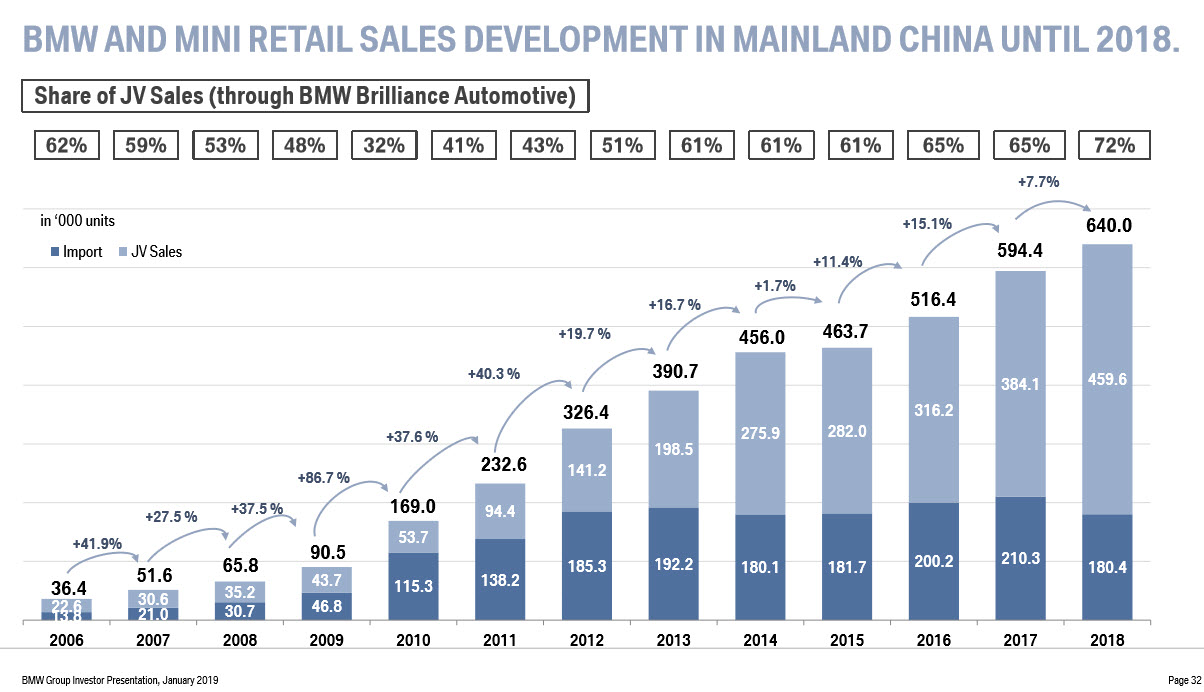
Meidong is likely to report solid FY18 results by late March vs industry peers which are expected to report a weak 2H18. While BMW dealers have been reportedly suffering in China during 2018, Meidong was fortunate to have other luxury brands pick up the slack.
FY19 should be another growth year for Meidong as 1) recently acquired BMW showrooms contribute their maiden results and 2) other luxury brands continue to perform despite overall doom and gloom in the Chinese auto market. Should the Chinese government launch car replacement stimulus measures this would be icing on the cake.
Fair Value lowered slightly from 4.7 HKD to 4.4 HKD (10x 2019E) on lower 2019 profit estimates, which leaves 52% upside excluding dividends.
INVESTMENT VIEW: The Australian Bureau of Meteorology has just downgraded its risk of El Niño from ‘Alert’ to ‘Watch’, and as a result, we temper our optimism for a near-term rally in CPO prices. Longer-term, we remain bullish on Golden Agri Resources (GGR SP), but higher CPO prices remain a key catalyst for our bullish call on the shares.
After adjusting for the interim distribution of A$0.036/share (ex-date 28 December; payment 31 January), the amount payable by ESR under the Offer is A$1.164/share, cash.
The Target Statement issued back on the 20 November included a “fair and reasonable” opinion from KPMG, together with unanimous PLG board support.
To recap: after PLG rebuffed an offer from Centuria Capital (CNI AU) in September, followed by PLG making an offer for Centuria Industrial Reit (CIP AU) – in which both CNI (23.5%) and PLG (17.3%) have sizeable stakes – ESR launched its offer for PLG. Adding to the cross-holdings, ESR also acquired major positions in both PLG (18.06% initially, now up to 19.9%) and CNI (14.9%).
ESR’s Offer is conditional on a minimum acceptance condition of 50.1%. CNI has a 19.5% stake and Vinva Investment Management 5%.
The next key event is CNI’s shareholder vote on the 31 January. This is not a vote to decide on tendering the shares held by CNI in PLG into ESR’s offer; but to give CNI’s board the authorisation to tender (or not to tender) those PLG shares.
Although no definitive decision has been made public by CNI, calling the EGM to get shareholder approval and attaching a “fair & reasonable” opinion from an independent expert (Deloitte) to CNI’s EGM notice, can be construed as sending a strong signal CNI’s board will ultimately tender in its shares. According to the AFR (paywalled), CNI’s John Mcbain said: “We want to make sure when we do decide to vote, if we get shareholder approval, the timing is with us“.
Assuming the resolution passes, CNI’s board decision on PLG shares will take place shortly afterwards. My bet is this turns unconditional the first week of Feb. The consideration under the Offer would then be paid 20 business days after the Offer becomes unconditional. Now trading with completion in mind at a gross/annualised spread of 0.8%/6.7%, assuming payment the first week of March.
M1 Ltd (M1 SP), the third largest telecom operator in Singapore, is subject to a voluntary conditional offer (VGO) at S$2.06 cash per share from Keppel Corp Ltd (KEP SP) and Singapore Press Holdings (SPH SP) (KCL-SPH). KCL-SPH said on Tuesday that they wouldn’t increase their S$2.06 offer price “under any circumstances whatsoever.”
KCL-SPH’s stance not to increase their S$2.06 offer price is a clever ploy to the put the ball in Axiata Group (AXIATA MK)’s court. Axiata has three options, in our view. We believe that the probability of a material bid to KCL-SPH’s offer is low with Axiata most likely to retain its stake as a minority shareholder.
Get Straight to the Source on Smartkarma
Smartkarma supports the world’s leading investors with high-quality, timely, and actionable Insights. Subscribe now for unlimited access, or request a demo below.
Kabu.com shares were bid limit up all day long and closed at ¥462, which is a 10+ year closing high.
The idea is not a new one. The mobile telecommunications market in Japan is mature, and one of the few ways Type 1 telecom providers can grow is by adding content through the “pipes.”
KDDI already has an investment in an online banking 50/50 joint venture with MUFG called Jibun Bank (“My Bank” or “Myself Bank”) which it launched in 2008. KDDI established a smartphone-based asset management service with Daiwa Securities Group (8601 JP) just under a year ago, where KDDI owns 66.6% and Daiwa 33.4%. This was to attract younger customers to savings products accessible through an app in order to make those customers stickier over the long-term. KDDI also bought into Lifenet Insurance Co (7157 JP) in 2015 through a capital raise, and is now its largest shareholder at just over 25% (a decent (and recent) presentation of the company is here). About six months ago, KDDI injected ¥6bn (link is Japanese) into Japanese financial services company Finatext to help spark their new service of a ¥0 commission brokerage. I would note that Finatext and partner (now sub) NOWCAST launched an algorithmic personal asset management advisory service using for kabu.com Securities in 2016.
Owning a stake in a broker would go a long ways towards providing comprehensive financial services access by smartphone under a KDDI-owned profit umbrella.
Is a deal like this feasible? Reasonable? Likely?
The two companies’ first response was pretty standard. This was the version from KDDI:
KDDI is considering various possibilities in financial business with kabu.com Securities, however, there is no determined facts. [a better translation of the Japanese is “however… no decisions have been made”]
This is pretty standard in Japanese corporate “clarifications.” There are, in fact, no ‘decisions’ unless a board meeting has been convened and put their stamp on it.
But the Japanese market will look at a comment like this and figure that where there is smoke there is fire.
In Q2 of FY19, the company has grown at 10.15% with revenue of INR 2.92 bn. EBITDA was INR 0.24 bn and EBITDA margin stood at 8.4% down by 167 bps, Net profit stood at 0.113 bn with margins at 3.87% down by 102 bps. Raw materials cost has increased in the first half of the year leading to lower margins.
The company has acquired 80% in Avadh Snacks, a Gujarat based snacks company for INR1.48 bn, we have discussed the implications in the report.
The stock is currently tradings at its 54x its FY18 EPS (Pre-acquisition) and 42x its FY19 EPS (post-acquisition), we believe the stock is currently overvalued but are positive on the long term prospects of the firm.
Orion sub is now falling 6% this morning. Holdco is currently down only 1.6%. They are currently above +2.2σ on a 20D MA. This is a 120D high. Price ratio wise, they are at 0.16549. This is a little above 120D mean. Holdco discount is now 50% to NAV.
Sub’s 6% fall this morning should be due to the market speculation that 4Q numbers may be worse than expected. But there are still more signals of improving fundamentals going forward. Weaker 4Q numbers do not indicate that Sub is entering a dull cycle business wise.
Current +2.2σ on a 20D MA is something rare to see. It should be rare even if we look much beyond 120 days. Given the market’s favorable sentiments on Sub’s mid-term outlook, current +2.2σ should be held here and reverted pretty soon. I’d go long Sub and short Holdco until +0~0.5σ.
Nexen Sub made a run yesterday. It climbed 6% yesterday. Holdco stayed flat with a 0.34% gain. This created a huge price divergence. The duo made nearly 2σ gap in one single day. They are now slightly below -1σ on a 20D MA. Holdco discount is 46% to NAV.
This much divergence in a single day is very rare for the Nexen duo. Sub’s stronger 4Q numbers should have been already priced in. Yesterday was more of a sentimental boost, thanks to HMG. Short-term wise, further price pushing up on Sub is unlikely.
The duo is well below 120D mean and 2Y mean on a 20D MA price ratio. Price divergence should be held back at the current level. I’d go for a quick reversion in favor of Holdco. Just, Holdco liquidity can be a major issue to many of us here.
The weight of the evidence suggests that the pullback has begun. This belief is supported by overbought conditions combined with the S&P 500, MSCI ACWI, and nearly all Sectors hitting logical resistance. Assuming the pullback continues, the next question is how deep or damaging will it be? In this report we highlight various market/technical indicators we are monitoring, as well as pointing out attractive set ups within Consumer Discretionary and Health Care Sectors.
Get Straight to the Source on Smartkarma
Smartkarma supports the world’s leading investors with high-quality, timely, and actionable Insights. Subscribe now for unlimited access, or request a demo below.
LVS shot at Japan license enhanced by his role in lobbying US Justice Department’s reverse opinion on online gambling published last week. Read why in this insight.
Owning Sands China makes a strong case based on an ROCE analysis vs. the hospitality sector.
Owning both at current trade is one of the screaming bargains in the entire sector
Maoyan Entertainment (EPLUS HK) is the largest online movie ticketing service provider in China. The mid-point of Maoyan’s IPO price range of HK$14.8-20.4 per share implies a market value of $2.5 billion (HK$19.8 billion). Five cornerstone investors have agreed to buy $30 million or 10% of the offering at the IPO mid-point. The cornerstone investors are Imax China Holding (1970 HK), Hylink Digital Solutions, Prestige of The Sun, Welight Capital and Xiaomi Corp (1810 HK).
Our analysis suggests Maoyan is being offered at a material premium to a peer group of major Chinese internet companies. Due to challenging prospects faced by Maoyan as outlined in our previous research, we believe a premium rating is unwarranted. Consequently, we are inclined to sit out this IPO.
In this report, we provide an analysis of our pair trade idea between Amorepacific Group (002790 KS) and Shiseido Co Ltd (4911 JP). Our strategy will be to long Amorepacific Group (APG) and short Shiseido. As mentioned in our report, Korean Stubs Biweekly Sigma σ (#1): The Inaugural Edition, our base case strategy is to achieve gains of 8-10% on this pair trade. Our risk control is to close the trade if it generates 4-5% in combined losses. Cost of commissions are not included in the calculations and closing prices as of January 23rd are used in our pair trade. [Long APG – $0.5 million; Short Shiseido – $0.5 million for total of $1.0 million].
The following are the major catalysts that could boost APG shares higher than Shiseido shares within the next six to twelve months:
Amorepacific Group shares are extremely oversold and forming a base
THAAD is no longer an issue
Amorepacific Group’s NAV discount
Attractive relative valuations
Amorepacific’s new headquarters building distraction out of the way
Chinese tourists are coming back to Korea & slower growth rate of visitors to Japan
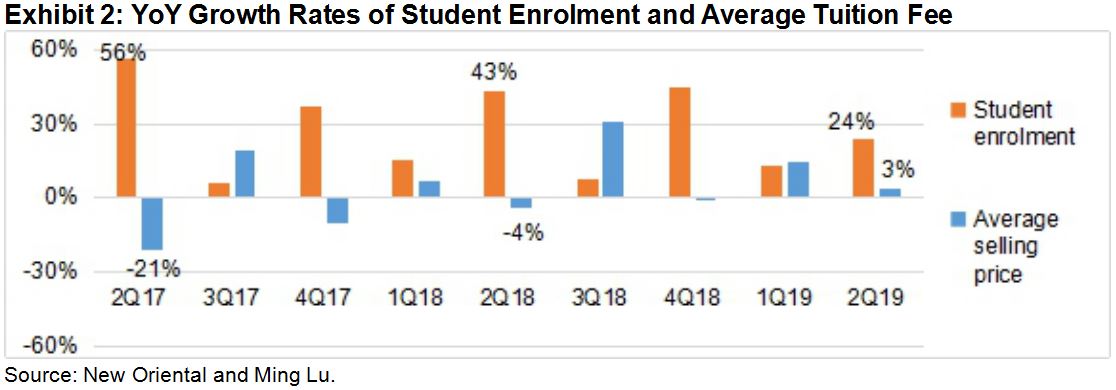
HET has grown its revenue at an impressive 73% CAGR from 2015 to 2017 and has been accompanied by gross margin expansion. The strong growth was supported by improving operating metrics such as an increase in student enrollment and average spending.
However, HET has been making losses and continues to spend more than its net billing. It is unclear whether HET had already achieved break even for its proprietary courses before expanding into its CCtalk platform. But from its high level of expenses, it seems unsustainable for HET to be relying heavily on the sales and marketing spending to get users to purchase online courses.
In this insight, we will look into the company’s financial and operating performance, regulatory risks regarding K12 courses, aggressive spending on sales and marketing, and the performance of other online education companies.
Get Straight to the Source on Smartkarma
Smartkarma supports the world’s leading investors with high-quality, timely, and actionable Insights. Subscribe now for unlimited access, or request a demo below.
We believe that parents of primary school children will bring their children back to tutoring schools when they become aware of the competition in junior high schools.
The expansion of online business and the change towards small classes are improving both the revenue growth and the margins.
We believe that the requirement of educator license is not a concern.
The 5-year P/E band suggests an upside of 44% for the share of TAL Education.
In spite of a stellar quarter (Q3 FY19), we remain cautious on Zee Entertainment Enterprises (Z IN) and the prospects of broadcasters in India. Hindi GEC is consolidating, and most of the growth is likely to happen in regional channels which remain competitive. Global data suggests ad spends as a % of revenue for many broadcasters and cable operators has been disrupted and couple of year’s down the line, India should be no exception. Contrary to consensus, driven by millennials and non-affordability of second television, cord cutting in India could accelerate sooner than excepted. With an hyper competitive OTT landscape, uncertainty post TRAI Tariff implementations, in an industry suspect to easy value migration, the long term outlook for Zee Entertainment Enterprises (Z IN) and the broadcast Industry warrants attention. The only near term positive for the stock is the potential stake sale to a strategic partner, which is likely to keep the stock price buoyant but only in the near term.
Kepei Education (1890 HK) has raised US$112m at HK$2.48 per share, just slightly above the mid-end of the IPO price range. We have previously covered the insight in:
Our overall global outlook remains cautious and continued downward pressure on global equities remains our expectation. One bright spot is EM (more on this below), which continues to give us hope that global equities can bottom out. We provide a technical appraisal of major markets and highlight actionable setups within the global Utilities and Staples Sectors.
Next week promises to be a large catalyst driven week, with Apple Inc (AAPL US), NTT Docomo Inc (9437 JP) and Tesla Motors (TSLA US) expected to report results, among others. We have provided a list below of the key equity catalysts for next week as well as potential drivers for M&A deals and stubs. If you are interested in importing this directly into Outlook or have any further requests, please let us know.
Kind regards, Rickin Arun and Venkat
Get Straight to the Source on Smartkarma
Smartkarma supports the world’s leading investors with high-quality, timely, and actionable Insights. Subscribe now for unlimited access, or request a demo below.