Category

Hong Kong

Brief Hong Kong: Hopewell’s Egregiously Bad Offer, But What Can You Do? and more

By | Hong Kong

In this briefing:

  1. Hopewell’s Egregiously Bad Offer, But What Can You Do?

1. Hopewell’s Egregiously Bad Offer, But What Can You Do?

Price2

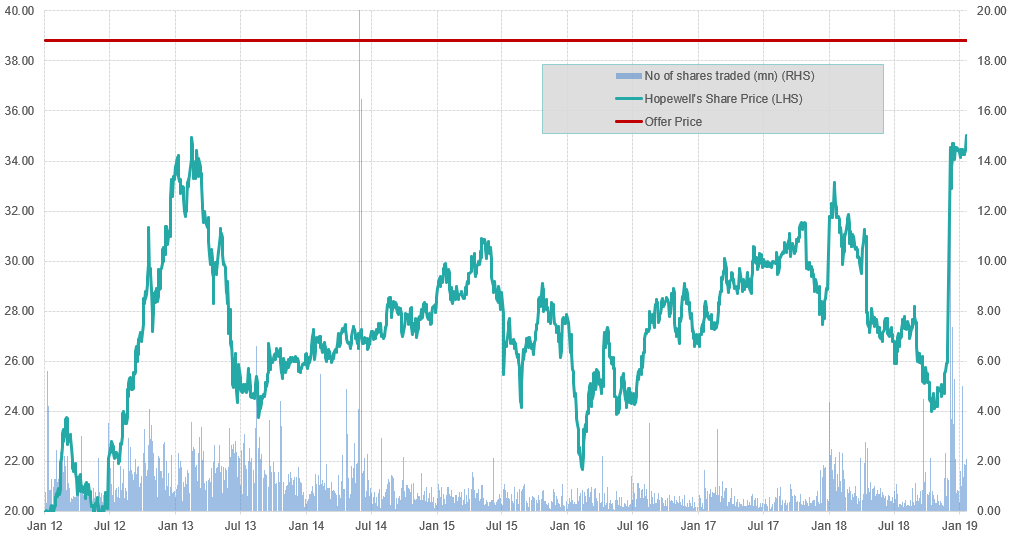
The Scheme Document for the privatisation of Hopewell Holdings (54 HK) has been dispatched. The court meeting will be held on the 21 March. The consideration will be paid (on or before) the 14 May.  The IFA (China Tonghai Capital) considers the $38.80/share Offer to be fair & reasonable. The Scheme is conditional on ≥75% for, ≤10% against from disinterested shareholders. As Hopewell is HK-incorporated, there is no “head count ” test.  The full timetable is as follows:

Date 

Data in the Date

6-Dec-18
Announcement
24-Feb-19
Scheme document
13-Mar-19
Last time for lodging shares to qualify to vote
15-Mar-19
Meeting record date
19-Mar-19
Court/EGM meeting
2-May-19
Effective date
14-May-19
Cheques dispatched
Source: Hopewell

Substantial Shareholders

Mn

%

The Wu family & concert parties
                         320.7
                     36.93
Non-consortium Offeror concert parties
                        31.7
                     3.65
Total
352.5
40.48
Disinterested Shareholders 
516.1
59.42

After hearing conflicting opinions on what constitutes a blocking stake, a chat with the banker confirmed the blocking stake, as per the Companies Ordinance, is tied to 63.07% of shares out (i.e. Scheme shareholders – see page 95); whereas the Takeovers Code is tied to 59.42% of shares out. Effectively there are two assessments on the blocking stake and the more stringent (the 59.42% out in this case) prevails. 

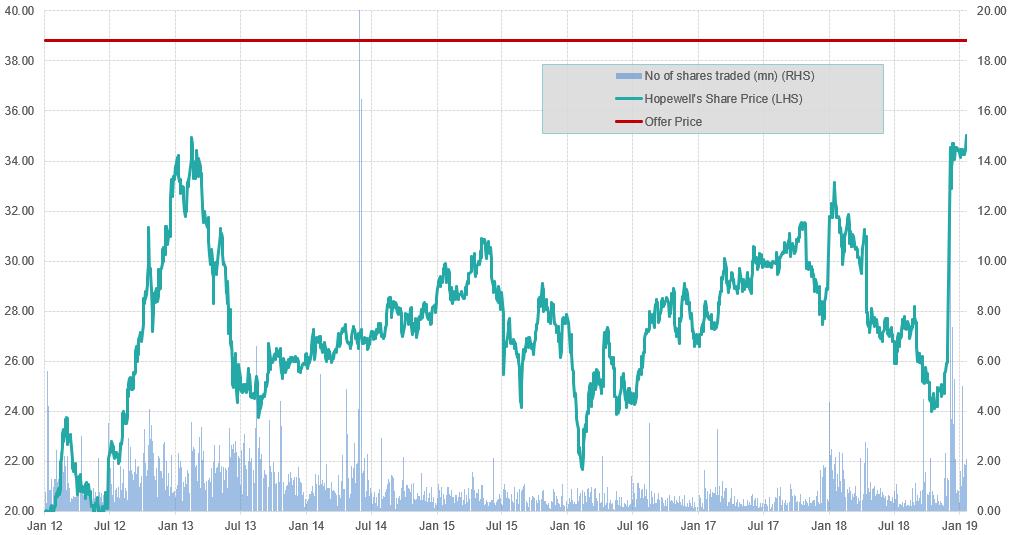
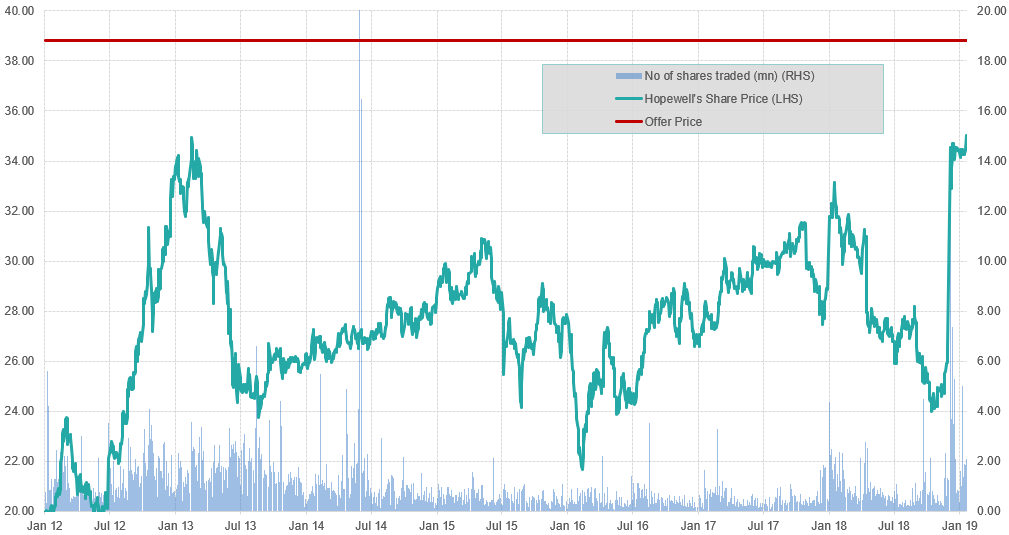
With the Offer Price representing a 43% discount to NAV, wider than the largest discount precedent in past nine years (the Glorious Property (845 HK) offer, which incidentally was voted down), the IFA creatively argues that extenuating factors such as the premium to historical price needs to also be taken into account. Hardly original, but that is where investors must decide whether this is as good as it’s going to get – given the Wu family’s control, there will not be a competing offer – or to hold out for a superior price longer term. This is a final offer and it will not be increased.

What the IFA fails to discuss is that the widest successful discount to NAV privatisation was 29.4% for New World China Land (917 HK) in 2016. And all precedent transactions (successful or otherwise) are PRC (mainly) property development related; except for Wheelock which operated property in Hong Kong (like Hopewell) and in Singapore, which was privatised at a 12.1% discount to NAV.

Therein lies the dilemma – what is a fair and reasonable discount to NAV for a Hong Kong investment property play? With limited precedents, it is challenging to categorically reach an opinion. And that is the disingenuous conclusion from the IFA that the premium to last close and with reference to historical pricing, is in effect the overriding reason to conclude the Offer is reasonable. I would argue the Wu family has made a low-ball offer for what is essentially an investment property play with quantifiable asset value.

A blocking sake is 5.9% or 51.6mn shares. First Eagle, which recently voted down the Guoco Group Ltd (53 HK) privatisation that was pitched at a ~25% discount to NAV, holds 2.7% (according to CapIQ).

Trading at a wide gross/annualised return of 7%/37.5%, reflecting the risk to completion, and the significant downside should the scheme be voted down. Tough one – the premium to last close and with reference to the 10-year price performance, should be sufficient to get it over the line, and the basis for this “bullish” insight. But only for the brave.

Get Straight to the Source on Smartkarma

Smartkarma supports the world’s leading investors with high-quality, timely, and actionable Insights. Subscribe now for unlimited access, or request a demo below.

Brief Hong Kong: Hopewell’s Egregiously Bad Offer, But What Can You Do? and more

By | Hong Kong

In this briefing:

  1. Hopewell’s Egregiously Bad Offer, But What Can You Do?
  2. Yincheng Intl (银城国际) IPO Quick Note: A Highly Levered Nanjing Developer Bet

1. Hopewell’s Egregiously Bad Offer, But What Can You Do?

Price2

The Scheme Document for the privatisation of Hopewell Holdings (54 HK) has been dispatched. The court meeting will be held on the 21 March. The consideration will be paid (on or before) the 14 May.  The IFA (China Tonghai Capital) considers the $38.80/share Offer to be fair & reasonable. The Scheme is conditional on ≥75% for, ≤10% against from disinterested shareholders. As Hopewell is HK-incorporated, there is no “head count ” test.  The full timetable is as follows:

Date 

Data in the Date

6-Dec-18
Announcement
24-Feb-19
Scheme document
13-Mar-19
Last time for lodging shares to qualify to vote
15-Mar-19
Meeting record date
19-Mar-19
Court/EGM meeting
2-May-19
Effective date
14-May-19
Cheques dispatched
Source: Hopewell

Substantial Shareholders

Mn

%

The Wu family & concert parties
                         320.7
                     36.93
Non-consortium Offeror concert parties
                        31.7
                     3.65
Total
352.5
40.48
Disinterested Shareholders 
516.1
59.42

After hearing conflicting opinions on what constitutes a blocking stake, a chat with the banker confirmed the blocking stake, as per the Companies Ordinance, is tied to 63.07% of shares out (i.e. Scheme shareholders – see page 95); whereas the Takeovers Code is tied to 59.42% of shares out. Effectively there are two assessments on the blocking stake and the more stringent (the 59.42% out in this case) prevails. 

With the Offer Price representing a 43% discount to NAV, wider than the largest discount precedent in past nine years (the Glorious Property (845 HK) offer, which incidentally was voted down), the IFA creatively argues that extenuating factors such as the premium to historical price needs to also be taken into account. Hardly original, but that is where investors must decide whether this is as good as it’s going to get – given the Wu family’s control, there will not be a competing offer – or to hold out for a superior price longer term. This is a final offer and it will not be increased.

What the IFA fails to discuss is that the widest successful discount to NAV privatisation was 29.4% for New World China Land (917 HK) in 2016. And all precedent transactions (successful or otherwise) are PRC (mainly) property development related; except for Wheelock which operated property in Hong Kong (like Hopewell) and in Singapore, which was privatised at a 12.1% discount to NAV.

Therein lies the dilemma – what is a fair and reasonable discount to NAV for a Hong Kong investment property play? With limited precedents, it is challenging to categorically reach an opinion. And that is the disingenuous conclusion from the IFA that the premium to last close and with reference to historical pricing, is in effect the overriding reason to conclude the Offer is reasonable. I would argue the Wu family has made a low-ball offer for what is essentially an investment property play with quantifiable asset value.

A blocking sake is 5.9% or 51.6mn shares. First Eagle, which recently voted down the Guoco Group Ltd (53 HK) privatisation that was pitched at a ~25% discount to NAV, holds 2.7% (according to CapIQ).

Trading at a wide gross/annualised return of 7%/37.5%, reflecting the risk to completion, and the significant downside should the scheme be voted down. Tough one – the premium to last close and with reference to the 10-year price performance, should be sufficient to get it over the line, and the basis for this “bullish” insight. But only for the brave.

2. Yincheng Intl (银城国际) IPO Quick Note: A Highly Levered Nanjing Developer Bet

Selected%20cashflow

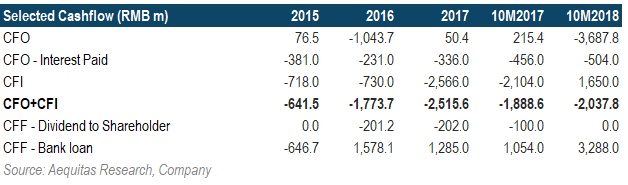
Yincheng International, a China Yangtze delta focused property developer, is raising up to USD 110 million to list on the Hong Kong Stock Exchange. In this note, we will cover the following topics:

  • The company’s property portfolio
  • Financial performance that concerns us
  • Shareholders and use of proceeds
  • Our view on the deal

Get Straight to the Source on Smartkarma

Smartkarma supports the world’s leading investors with high-quality, timely, and actionable Insights. Subscribe now for unlimited access, or request a demo below.


Brief Hong Kong: Hopewell’s Egregiously Bad Offer, But What Can You Do? and more

By | Hong Kong

In this briefing:

  1. Hopewell’s Egregiously Bad Offer, But What Can You Do?
  2. Yincheng Intl (银城国际) IPO Quick Note: A Highly Levered Nanjing Developer Bet
  3. Another US LNG Project Goes Ahead: Positive for the Contractors; Negative for Others Looking to FID

1. Hopewell’s Egregiously Bad Offer, But What Can You Do?

Price2

The Scheme Document for the privatisation of Hopewell Holdings (54 HK) has been dispatched. The court meeting will be held on the 21 March. The consideration will be paid (on or before) the 14 May.  The IFA (China Tonghai Capital) considers the $38.80/share Offer to be fair & reasonable. The Scheme is conditional on ≥75% for, ≤10% against from disinterested shareholders. As Hopewell is HK-incorporated, there is no “head count ” test.  The full timetable is as follows:

Date 

Data in the Date

6-Dec-18
Announcement
24-Feb-19
Scheme document
13-Mar-19
Last time for lodging shares to qualify to vote
15-Mar-19
Meeting record date
19-Mar-19
Court/EGM meeting
2-May-19
Effective date
14-May-19
Cheques dispatched
Source: Hopewell

Substantial Shareholders

Mn

%

The Wu family & concert parties
                         320.7
                     36.93
Non-consortium Offeror concert parties
                        31.7
                     3.65
Total
352.5
40.48
Disinterested Shareholders 
516.1
59.42

After hearing conflicting opinions on what constitutes a blocking stake, a chat with the banker confirmed the blocking stake, as per the Companies Ordinance, is tied to 63.07% of shares out (i.e. Scheme shareholders – see page 95); whereas the Takeovers Code is tied to 59.42% of shares out. Effectively there are two assessments on the blocking stake and the more stringent (the 59.42% out in this case) prevails. 

With the Offer Price representing a 43% discount to NAV, wider than the largest discount precedent in past nine years (the Glorious Property (845 HK) offer, which incidentally was voted down), the IFA creatively argues that extenuating factors such as the premium to historical price needs to also be taken into account. Hardly original, but that is where investors must decide whether this is as good as it’s going to get – given the Wu family’s control, there will not be a competing offer – or to hold out for a superior price longer term. This is a final offer and it will not be increased.

What the IFA fails to discuss is that the widest successful discount to NAV privatisation was 29.4% for New World China Land (917 HK) in 2016. And all precedent transactions (successful or otherwise) are PRC (mainly) property development related; except for Wheelock which operated property in Hong Kong (like Hopewell) and in Singapore, which was privatised at a 12.1% discount to NAV.

Therein lies the dilemma – what is a fair and reasonable discount to NAV for a Hong Kong investment property play? With limited precedents, it is challenging to categorically reach an opinion. And that is the disingenuous conclusion from the IFA that the premium to last close and with reference to historical pricing, is in effect the overriding reason to conclude the Offer is reasonable. I would argue the Wu family has made a low-ball offer for what is essentially an investment property play with quantifiable asset value.

A blocking sake is 5.9% or 51.6mn shares. First Eagle, which recently voted down the Guoco Group Ltd (53 HK) privatisation that was pitched at a ~25% discount to NAV, holds 2.7% (according to CapIQ).

Trading at a wide gross/annualised return of 7%/37.5%, reflecting the risk to completion, and the significant downside should the scheme be voted down. Tough one – the premium to last close and with reference to the 10-year price performance, should be sufficient to get it over the line, and the basis for this “bullish” insight. But only for the brave.

2. Yincheng Intl (银城国际) IPO Quick Note: A Highly Levered Nanjing Developer Bet

Selected%20cashflow

Yincheng International, a China Yangtze delta focused property developer, is raising up to USD 110 million to list on the Hong Kong Stock Exchange. In this note, we will cover the following topics:

  • The company’s property portfolio
  • Financial performance that concerns us
  • Shareholders and use of proceeds
  • Our view on the deal

3. Another US LNG Project Goes Ahead: Positive for the Contractors; Negative for Others Looking to FID

Cp pipeline illustration 1e 1

US private LNG company Venture Global is starting construction on its 10 million ton per annum (mtpa) US LNG export facility in Louisiana after gaining approval from the US Federal Energy Regulatory Commission (FERC). This is positive for the LNG contractor market and we discuss the companies involved in the project. 

This follows final investment decision taken on Golden Pass (Exxon and Qatar Proceed with US$10bn Golden Pass LNG Terminal: Positive for Chiyoda and MDR US) and supports our thesis of a large wave of new projects that will be sanctioned in the coming months (A Huge Wave of New LNG Projects Coming in the Next 18 Months: Positive for The E&C Companies). This was viewed as a relatively speculative project and with aggressively low cost and timing estimates.

Source: Venture Global

Get Straight to the Source on Smartkarma

Smartkarma supports the world’s leading investors with high-quality, timely, and actionable Insights. Subscribe now for unlimited access, or request a demo below.


Brief Hong Kong: China Mobile 4Q18 Trends Improved Slightly. It Remains Most Exposed to 5G Capex Uncertainty. and more

By | Hong Kong

In this briefing:

  1. China Mobile 4Q18 Trends Improved Slightly. It Remains Most Exposed to 5G Capex Uncertainty.
  2. China Unicom Weak 4Q18 Mobile Results Offset by Strength in Fixed Line Business
  3. US Lake Charles LNG Liquefaction Plant Tendering for Contractors: Positive for TechnipFMC
  4. Xinyi Energy IPO Preview: Second Time Lucky?
  5. Bank of Tianjin: 太好了, 不可能是真的

1. China Mobile 4Q18 Trends Improved Slightly. It Remains Most Exposed to 5G Capex Uncertainty.

Cm%20multiples

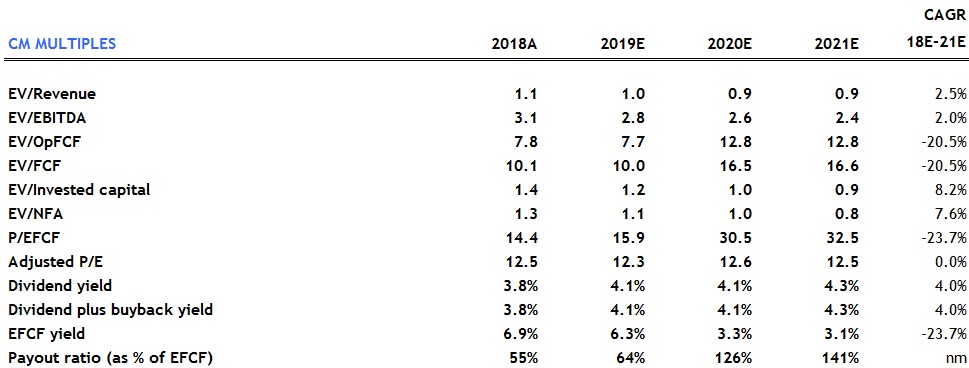
Chris Hoare downgraded China Mobile (941 HK) some time ago on rising concerns that 5G capex would be higher than expected. While China Unicom (762 HK) and China Telecom (728 HK) both laid out very modest 2019 5G capex plans, China Mobile did not.  And despite what we saw as reasonable results, earnings guidance was weak and the lack of a rising dividend payout suggests internal concerns over 5G spending.  We had seen China Mobile as a defensive stock, but recent strong performance and rising 5G worries led us to downgrade our recommendation. It remains at Reduce with a HK$75 target. 

2. China Unicom Weak 4Q18 Mobile Results Offset by Strength in Fixed Line Business

Cu%20arpu

China Unicom’s (762 HK) recent 4Q18 results were not great. The overall figures look ok due to strength in the fixed line business which offset weakness in mobile. However, they were the weakest of the three operators and the stock, which has had a strong run, now looks due for a pause. We have turned more cautious on the Chinese telcos on concerns that 5G spending could be higher than expected. Chris Hoare believes a major reason for the Chinese telcos outperforming in the past year has come from declining capex spending expectations. That trend may now start to reverse. While China Unicom has guided for only modest 5G capex in 2019 the focus will turn to 2020 where it is a much bigger issue and while we expect China Unicom to do a joint roll-out with China Telecom (728 HK) we expect the scale of the spending to be larger than an individual build. 

3. US Lake Charles LNG Liquefaction Plant Tendering for Contractors: Positive for TechnipFMC

Lake%20charles

Energy Transfer LP (ET US) and Royal Dutch Shell (RDSA LN) have signed a Project Framework Agreement to further develop a large-scale LNG export facility in Lake Charles, Louisiana and move toward a potential final investment decision (FID). They have started actively engaging with LNG Engineering, Procurement and Contracting (EPC) companies with a plan to issue an Invitation to Tender (ITT) in the weeks ahead. We look at the potential contract size and winners and also the other US LNG projects that could be negatively impacted. More detail on the LNG project queue for this year in: A Huge Wave of New LNG Projects Coming in the Next 18 Months: Positive for The E&C Companies.

4. Xinyi Energy IPO Preview: Second Time Lucky?

Fig%204

Xinyi Energy Holdings Ltd (1671746D HK) has filed IPO prospectus once again to list its solar generation business that was spun-off from its parent company Xinyi Solar Holding Ltd. Xinyi Energy has 9 operational solar farms with a total capacity of ~950MW.

The company is set to acquire additional solar farms of 540MW capacity from its parent company in a separate transaction post IPO.

Xinyi Energy has not indicated the size and pricing of its offer, however, according to various media reports the company is expected to raise nearly HK$570M (around 12% of the previous offering of HK$4.5B). A significant portion of IPO proceeds is expected to be utilised towards upfront payment of 50% for acquiring solar farms from its parent company and the remainder for working capital and debt repayment. Although we have a positive view of the solar energy sector, the IPO pricing will determine our overall view of the company.

5. Bank of Tianjin: 太好了, 不可能是真的

Bank Of Tianjin (1578 HK) results at first look quite encouraging with firmer profitability, enhanced efficiency, improved capital adequacy, and increased provisioning.

Valuations are optically attractive: p/book of 0.5x, franchise valuation of 7%, earnings yield of 17%, and a total return ratio of 2.5x. These metrics are within the bargain hunter space.

However, optimism fades fast on closer inspection.

“Underlying” Income decreased by 21% YoY as the bank was squeezed by higher funding costs and non-interest expenses. Expenses on wholesale funding increased by 30% YoY. Debt funding now represents 71% of Gross Loans. Debt now stands at 4.3x SH. Funds. This type of funding has exploded by 10x since 2014. At the same time, deposits declined YoY. Deposits have increased by a more sedate 18% since 2014.

PT Profit would have been CNY1.4bn rather than CNY5.2bn but for hefty gains on securities. Loan loss provisions almost tripled YoY.

Regarding the Balance Sheet, Special Mention Loans rose sharply (+25% YoY) and represent 2.8x NPLs. A 127% and 108% YoY increase in “doubtful loans” and “loss loans” puts some perspective on a seemingly respectable NPL ratio of 1.64% and a LLR/NPLs of 250%.

Thus, Bank Of Tianjin (1578 HK) is cheap for a reason. We are reluctant to recommend taking a position at this juncture given the ongoing stresses in source of funding and asset quality.

Get Straight to the Source on Smartkarma

Smartkarma supports the world’s leading investors with high-quality, timely, and actionable Insights. Subscribe now for unlimited access, or request a demo below.


Brief Hong Kong: TRADE IDEA – PCCW (8 HK) Stub: The Li Legacy Lives On and more

By | Hong Kong

In this briefing:

  1. TRADE IDEA – PCCW (8 HK) Stub: The Li Legacy Lives On
  2. Dali Foods (3799:HK) FY18 Results: Revenue Growth Collapses in H2, But Margins Hold Up So Far
  3. StubWorld: Naspers Embeds Another Layer Into Tencent
  4. ESR Cayman Pre-IPO- First Stab at Valuation
  5. China Zheshang Bank – A Look Beyond Doubling Impairment Costs

1. TRADE IDEA – PCCW (8 HK) Stub: The Li Legacy Lives On

Capture2

Have you ever wondered how a company secures the Chinese lucky number “8” as their ticker in Hong Kong? I’ll explain later on, but let’s just say that being the son of Li Ka Shing helps. 

Li Ka Shing is a name that hardly needs introduction in Hong Kong and Richard Li, Li Ka Shing’s youngest son and Chairman of PCCW Ltd (8 HK), follows suit. After being born into Hong Kong’s richest family, Richard Li was educated in the US where he worked various odd jobs at McDonald’s and as a caddy at a local golf course before enrolling at Menlo College and eventually withdrawing without a degree. As fate would have it, Mr. Li went on to set up STAR TV, Asia’s satellite-delivered cable TV service, at the tender age of 24. Three years after starting STAR TV, Richard Li sold the venture, which had amassed a viewer base of 45 million people, to Rupert Murdoch’s News Corp (NWS AU) for USD 1 billion in 1993. During the same year, Mr. Li founded the Pacific Century Group and began a streak of noteworthy acquisitions. 

You may be starting to wonder what all of this has to do with a trade on PCCW Ltd (8 HK) and I don’t blame you. In the rest of this insight I will:

  • finish the historical overview of the Li family and PCCW
  • present my trade idea and rationale
  • give a detailed overview of the business units of PCCW and the associated performance of each
  • recap ALL of my stub trades on Smartkarma and the performance of each  

2. Dali Foods (3799:HK) FY18 Results: Revenue Growth Collapses in H2, But Margins Hold Up So Far

We launched coverage of Dali Foods Group (3799 HK) in February with a Sell rating and a HK$4.18 target price. FY18 financial results, which were released late Tuesday March 26th, appear to confirm at least half of our negative thesis (slowing revenue growth), though the other half (margin compression) has failed to materialize so far.

Dali Foods appears to have met — just — the FY18 consensus EPS target of HK$0.307 per share. The company cut its Final dividend from HK$0.10 to HK$0.075 per share. 

However, the pace of revenue growth plummeted in H218. From solid growth of +11.4% YoY in H118, H218 revenues actually declined by -0.6% YoY in the latter half of the year. This result was beyond even our pessimistic view and we believe bulls on the company will be forced to revisit their overly optimistic assumptions about double-digit revenue growth in 2019e.

Besides assuming slower revenue growth going forward, the other leg of our negative thesis on Dali Foods was the expectation of margin compression due to rising raw materials costs, specifically for paper and key food and beverage ingredients. Although H218 gross margin declined versus H217 (to 37.7% from 37.8%), it did so only marginally, and probably due to a change in product mix (ie, a decline in high-margin beverage sales). 

After reviewing FY and H218 results, we see no reasons to change our negative view of Dali Foods, and our HK$4.18 price target (-26% potential downside) and Sell rating remain unchanged.

3. StubWorld: Naspers Embeds Another Layer Into Tencent

Nav%2026%20mar%20for%20both

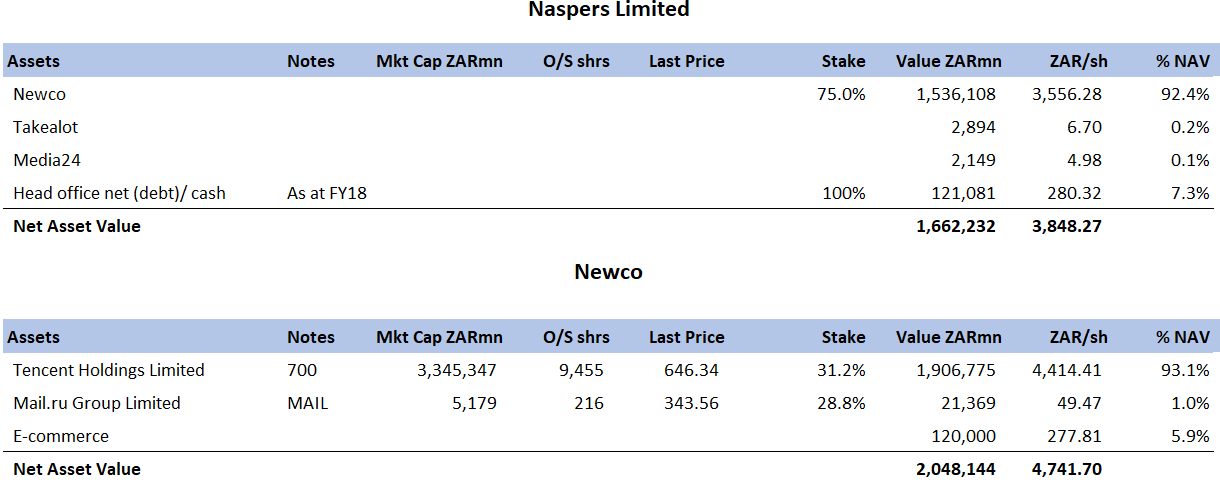
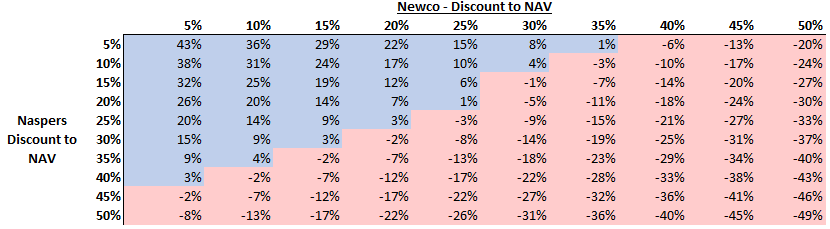
This week in StubWorld …

Preceding my comments on Naspers are the weekly setup/unwind tables for Asia-Pacific Holdcos.

These relationships trade with a minimum liquidity threshold of US$1mn on a 90-day moving average, and a % market capitalisation threshold – the $ value of the holding/opco held, over the parent’s market capitalisation, expressed in percent – of at least 20%.

4. ESR Cayman Pre-IPO- First Stab at Valuation

Planned%20capex

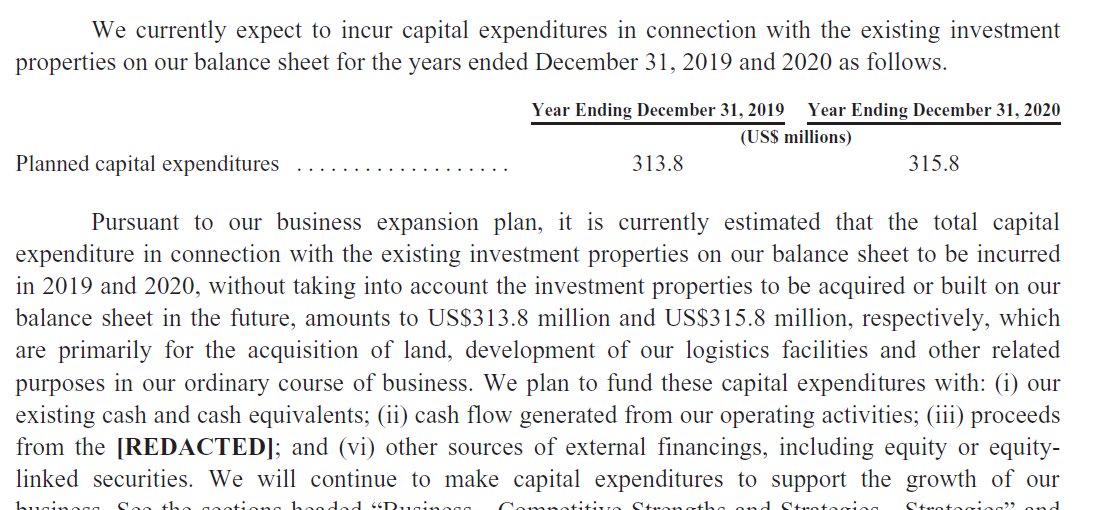
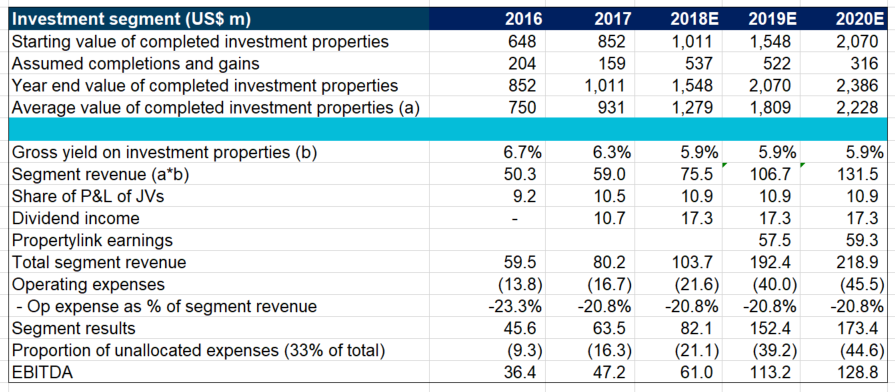
ESR Cayman (ESR HK) aims to raise up to US$1.5bn in its planned Hong Kong listing, as per media reports. The company is backed by Warburg Pincus and counts APG, the Netherlands’ largest pension provider, as one of its main investors.

In my earlier insights: I touched upon the company’s business model and provided an overview of its operations, ESR Cayman Pre-IPO – A Giant in the Making and talk about the financials and the drivers for each of the three segments, ESR Cayman Pre-IPO – Earnings and Segment Analysis.

In this insight, I’ll look at valuing each of the segments.

5. China Zheshang Bank – A Look Beyond Doubling Impairment Costs

1

It should be no surprise to see China Zheshang Bank (2016 HK; “CZB”) reveal a dramatic rise of impairment costs in 4Q18. It is one of only few China banks to yet announced quarterly results, and here it reported profit at -12% YoY in 4Q18.  The doubling of impairment costs in the period goes to our long-standing concerns of continued credit tdeterioration in China and well more than headline figures suggest. This is partly based on our China corporate analysis of interest cover and debt/ebitda, which remain weak. It is also notable that CZB has been one of the faster growing banks in the country, putting its ‘unseasoned’ loans higher than many others; where we believe these banks are more likely to see higher impairment costs. Perhaps that is now coming through? And with RMB250bn of write-offs in December 2018 for China’s bank system, this suggests there will have to sizeable impairment costs to replenish balance sheet provisions.

Get Straight to the Source on Smartkarma

Smartkarma supports the world’s leading investors with high-quality, timely, and actionable Insights. Subscribe now for unlimited access, or request a demo below.


Brief Hong Kong: Yincheng Intl (银城国际) IPO Quick Note: A Highly Levered Nanjing Developer Bet and more

By | Hong Kong

In this briefing:

  1. Yincheng Intl (银城国际) IPO Quick Note: A Highly Levered Nanjing Developer Bet
  2. Another US LNG Project Goes Ahead: Positive for the Contractors; Negative for Others Looking to FID

1. Yincheng Intl (银城国际) IPO Quick Note: A Highly Levered Nanjing Developer Bet

Selected%20cashflow

Yincheng International, a China Yangtze delta focused property developer, is raising up to USD 110 million to list on the Hong Kong Stock Exchange. In this note, we will cover the following topics:

  • The company’s property portfolio
  • Financial performance that concerns us
  • Shareholders and use of proceeds
  • Our view on the deal

2. Another US LNG Project Goes Ahead: Positive for the Contractors; Negative for Others Looking to FID

Cp pipeline illustration 1e 1

US private LNG company Venture Global is starting construction on its 10 million ton per annum (mtpa) US LNG export facility in Louisiana after gaining approval from the US Federal Energy Regulatory Commission (FERC). This is positive for the LNG contractor market and we discuss the companies involved in the project. 

This follows final investment decision taken on Golden Pass (Exxon and Qatar Proceed with US$10bn Golden Pass LNG Terminal: Positive for Chiyoda and MDR US) and supports our thesis of a large wave of new projects that will be sanctioned in the coming months (A Huge Wave of New LNG Projects Coming in the Next 18 Months: Positive for The E&C Companies). This was viewed as a relatively speculative project and with aggressively low cost and timing estimates.

Source: Venture Global

Get Straight to the Source on Smartkarma

Smartkarma supports the world’s leading investors with high-quality, timely, and actionable Insights. Subscribe now for unlimited access, or request a demo below.


Brief Hong Kong: China Unicom Weak 4Q18 Mobile Results Offset by Strength in Fixed Line Business and more

By | Hong Kong

In this briefing:

  1. China Unicom Weak 4Q18 Mobile Results Offset by Strength in Fixed Line Business
  2. US Lake Charles LNG Liquefaction Plant Tendering for Contractors: Positive for TechnipFMC
  3. Xinyi Energy IPO Preview: Second Time Lucky?
  4. Bank of Tianjin: 太好了, 不可能是真的
  5. HK Connect Discovery Weekly: Mainland Investors Buying WH Group (2019-03-22)

1. China Unicom Weak 4Q18 Mobile Results Offset by Strength in Fixed Line Business

Cu%20ebitda

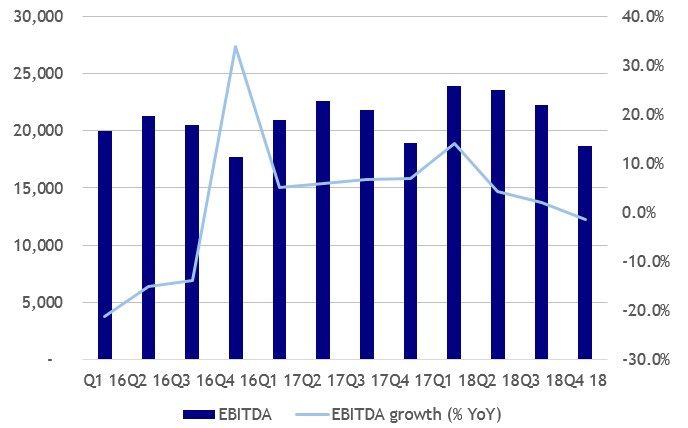
China Unicom’s (762 HK) recent 4Q18 results were not great. The overall figures look ok due to strength in the fixed line business which offset weakness in mobile. However, they were the weakest of the three operators and the stock, which has had a strong run, now looks due for a pause. We have turned more cautious on the Chinese telcos on concerns that 5G spending could be higher than expected. Chris Hoare believes a major reason for the Chinese telcos outperforming in the past year has come from declining capex spending expectations. That trend may now start to reverse. While China Unicom has guided for only modest 5G capex in 2019 the focus will turn to 2020 where it is a much bigger issue and while we expect China Unicom to do a joint roll-out with China Telecom (728 HK) we expect the scale of the spending to be larger than an individual build. 

2. US Lake Charles LNG Liquefaction Plant Tendering for Contractors: Positive for TechnipFMC

Lake%20charles

Energy Transfer LP (ET US) and Royal Dutch Shell (RDSA LN) have signed a Project Framework Agreement to further develop a large-scale LNG export facility in Lake Charles, Louisiana and move toward a potential final investment decision (FID). They have started actively engaging with LNG Engineering, Procurement and Contracting (EPC) companies with a plan to issue an Invitation to Tender (ITT) in the weeks ahead. We look at the potential contract size and winners and also the other US LNG projects that could be negatively impacted. More detail on the LNG project queue for this year in: A Huge Wave of New LNG Projects Coming in the Next 18 Months: Positive for The E&C Companies.

3. Xinyi Energy IPO Preview: Second Time Lucky?

Fig%204

Xinyi Energy Holdings Ltd (1671746D HK) has filed IPO prospectus once again to list its solar generation business that was spun-off from its parent company Xinyi Solar Holding Ltd. Xinyi Energy has 9 operational solar farms with a total capacity of ~950MW.

The company is set to acquire additional solar farms of 540MW capacity from its parent company in a separate transaction post IPO.

Xinyi Energy has not indicated the size and pricing of its offer, however, according to various media reports the company is expected to raise nearly HK$570M (around 12% of the previous offering of HK$4.5B). A significant portion of IPO proceeds is expected to be utilised towards upfront payment of 50% for acquiring solar farms from its parent company and the remainder for working capital and debt repayment. Although we have a positive view of the solar energy sector, the IPO pricing will determine our overall view of the company.

4. Bank of Tianjin: 太好了, 不可能是真的

Bank Of Tianjin (1578 HK) results at first look quite encouraging with firmer profitability, enhanced efficiency, improved capital adequacy, and increased provisioning.

Valuations are optically attractive: p/book of 0.5x, franchise valuation of 7%, earnings yield of 17%, and a total return ratio of 2.5x. These metrics are within the bargain hunter space.

However, optimism fades fast on closer inspection.

“Underlying” Income decreased by 21% YoY as the bank was squeezed by higher funding costs and non-interest expenses. Expenses on wholesale funding increased by 30% YoY. Debt funding now represents 71% of Gross Loans. Debt now stands at 4.3x SH. Funds. This type of funding has exploded by 10x since 2014. At the same time, deposits declined YoY. Deposits have increased by a more sedate 18% since 2014.

PT Profit would have been CNY1.4bn rather than CNY5.2bn but for hefty gains on securities. Loan loss provisions almost tripled YoY.

Regarding the Balance Sheet, Special Mention Loans rose sharply (+25% YoY) and represent 2.8x NPLs. A 127% and 108% YoY increase in “doubtful loans” and “loss loans” puts some perspective on a seemingly respectable NPL ratio of 1.64% and a LLR/NPLs of 250%.

Thus, Bank Of Tianjin (1578 HK) is cheap for a reason. We are reluctant to recommend taking a position at this juncture given the ongoing stresses in source of funding and asset quality.

5. HK Connect Discovery Weekly: Mainland Investors Buying WH Group (2019-03-22)

Hscei%20outflow%2003 22

In our Discover HK Connect series, we aim to help our investors understand the flow of southbound trades via the Hong Kong Connect, as analyzed by our proprietary data engine. We will discuss the stocks that experienced the most inflow and outflow by mainland investors in the past seven days.

We split the stocks eligible for the Hong Kong Connect trade into three groups: component stocks in the HSCEI index, stocks with a market capitalization between USD 1 billion and USD 5 billion, and stocks with a market capitalization between USD 500 million and USD 1 billion.

In this insight, we highlight the WH Group, which led the inflows last week. 

Get Straight to the Source on Smartkarma

Smartkarma supports the world’s leading investors with high-quality, timely, and actionable Insights. Subscribe now for unlimited access, or request a demo below.


Brief Hong Kong: Dali Foods (3799:HK) FY18 Results: Revenue Growth Collapses in H2, But Margins Hold Up So Far and more

By | Hong Kong

In this briefing:

  1. Dali Foods (3799:HK) FY18 Results: Revenue Growth Collapses in H2, But Margins Hold Up So Far
  2. StubWorld: Naspers Embeds Another Layer Into Tencent
  3. ESR Cayman Pre-IPO- First Stab at Valuation
  4. China Zheshang Bank – A Look Beyond Doubling Impairment Costs
  5. China Mobile 4Q18 Trends Improved Slightly. It Remains Most Exposed to 5G Capex Uncertainty.

1. Dali Foods (3799:HK) FY18 Results: Revenue Growth Collapses in H2, But Margins Hold Up So Far

We launched coverage of Dali Foods Group (3799 HK) in February with a Sell rating and a HK$4.18 target price. FY18 financial results, which were released late Tuesday March 26th, appear to confirm at least half of our negative thesis (slowing revenue growth), though the other half (margin compression) has failed to materialize so far.

Dali Foods appears to have met — just — the FY18 consensus EPS target of HK$0.307 per share. The company cut its Final dividend from HK$0.10 to HK$0.075 per share. 

However, the pace of revenue growth plummeted in H218. From solid growth of +11.4% YoY in H118, H218 revenues actually declined by -0.6% YoY in the latter half of the year. This result was beyond even our pessimistic view and we believe bulls on the company will be forced to revisit their overly optimistic assumptions about double-digit revenue growth in 2019e.

Besides assuming slower revenue growth going forward, the other leg of our negative thesis on Dali Foods was the expectation of margin compression due to rising raw materials costs, specifically for paper and key food and beverage ingredients. Although H218 gross margin declined versus H217 (to 37.7% from 37.8%), it did so only marginally, and probably due to a change in product mix (ie, a decline in high-margin beverage sales). 

After reviewing FY and H218 results, we see no reasons to change our negative view of Dali Foods, and our HK$4.18 price target (-26% potential downside) and Sell rating remain unchanged.

2. StubWorld: Naspers Embeds Another Layer Into Tencent

Nav%2026%20mar%20for%20both

This week in StubWorld …

Preceding my comments on Naspers are the weekly setup/unwind tables for Asia-Pacific Holdcos.

These relationships trade with a minimum liquidity threshold of US$1mn on a 90-day moving average, and a % market capitalisation threshold – the $ value of the holding/opco held, over the parent’s market capitalisation, expressed in percent – of at least 20%.

3. ESR Cayman Pre-IPO- First Stab at Valuation

Fund%20management%20segment

ESR Cayman (ESR HK) aims to raise up to US$1.5bn in its planned Hong Kong listing, as per media reports. The company is backed by Warburg Pincus and counts APG, the Netherlands’ largest pension provider, as one of its main investors.

In my earlier insights: I touched upon the company’s business model and provided an overview of its operations, ESR Cayman Pre-IPO – A Giant in the Making and talk about the financials and the drivers for each of the three segments, ESR Cayman Pre-IPO – Earnings and Segment Analysis.

In this insight, I’ll look at valuing each of the segments.

4. China Zheshang Bank – A Look Beyond Doubling Impairment Costs

1

It should be no surprise to see China Zheshang Bank (2016 HK; “CZB”) reveal a dramatic rise of impairment costs in 4Q18. It is one of only few China banks to yet announced quarterly results, and here it reported profit at -12% YoY in 4Q18.  The doubling of impairment costs in the period goes to our long-standing concerns of continued credit tdeterioration in China and well more than headline figures suggest. This is partly based on our China corporate analysis of interest cover and debt/ebitda, which remain weak. It is also notable that CZB has been one of the faster growing banks in the country, putting its ‘unseasoned’ loans higher than many others; where we believe these banks are more likely to see higher impairment costs. Perhaps that is now coming through? And with RMB250bn of write-offs in December 2018 for China’s bank system, this suggests there will have to sizeable impairment costs to replenish balance sheet provisions.

5. China Mobile 4Q18 Trends Improved Slightly. It Remains Most Exposed to 5G Capex Uncertainty.

Cm%20multiples

Chris Hoare downgraded China Mobile (941 HK) some time ago on rising concerns that 5G capex would be higher than expected. While China Unicom (762 HK) and China Telecom (728 HK) both laid out very modest 2019 5G capex plans, China Mobile did not.  And despite what we saw as reasonable results, earnings guidance was weak and the lack of a rising dividend payout suggests internal concerns over 5G spending.  We had seen China Mobile as a defensive stock, but recent strong performance and rising 5G worries led us to downgrade our recommendation. It remains at Reduce with a HK$75 target. 

Get Straight to the Source on Smartkarma

Smartkarma supports the world’s leading investors with high-quality, timely, and actionable Insights. Subscribe now for unlimited access, or request a demo below.


Brief Hong Kong: StubWorld: Naspers Embeds Another Layer Into Tencent and more

By | Hong Kong

In this briefing:

  1. StubWorld: Naspers Embeds Another Layer Into Tencent
  2. ESR Cayman Pre-IPO- First Stab at Valuation
  3. China Zheshang Bank – A Look Beyond Doubling Impairment Costs
  4. China Mobile 4Q18 Trends Improved Slightly. It Remains Most Exposed to 5G Capex Uncertainty.
  5. China Unicom Weak 4Q18 Mobile Results Offset by Strength in Fixed Line Business

1. StubWorld: Naspers Embeds Another Layer Into Tencent

Grid

This week in StubWorld …

Preceding my comments on Naspers are the weekly setup/unwind tables for Asia-Pacific Holdcos.

These relationships trade with a minimum liquidity threshold of US$1mn on a 90-day moving average, and a % market capitalisation threshold – the $ value of the holding/opco held, over the parent’s market capitalisation, expressed in percent – of at least 20%.

2. ESR Cayman Pre-IPO- First Stab at Valuation

Forecast%20 %20investment%20income

ESR Cayman (ESR HK) aims to raise up to US$1.5bn in its planned Hong Kong listing, as per media reports. The company is backed by Warburg Pincus and counts APG, the Netherlands’ largest pension provider, as one of its main investors.

In my earlier insights: I touched upon the company’s business model and provided an overview of its operations, ESR Cayman Pre-IPO – A Giant in the Making and talk about the financials and the drivers for each of the three segments, ESR Cayman Pre-IPO – Earnings and Segment Analysis.

In this insight, I’ll look at valuing each of the segments.

3. China Zheshang Bank – A Look Beyond Doubling Impairment Costs

1

It should be no surprise to see China Zheshang Bank (2016 HK; “CZB”) reveal a dramatic rise of impairment costs in 4Q18. It is one of only few China banks to yet announced quarterly results, and here it reported profit at -12% YoY in 4Q18.  The doubling of impairment costs in the period goes to our long-standing concerns of continued credit tdeterioration in China and well more than headline figures suggest. This is partly based on our China corporate analysis of interest cover and debt/ebitda, which remain weak. It is also notable that CZB has been one of the faster growing banks in the country, putting its ‘unseasoned’ loans higher than many others; where we believe these banks are more likely to see higher impairment costs. Perhaps that is now coming through? And with RMB250bn of write-offs in December 2018 for China’s bank system, this suggests there will have to sizeable impairment costs to replenish balance sheet provisions.

4. China Mobile 4Q18 Trends Improved Slightly. It Remains Most Exposed to 5G Capex Uncertainty.

China mobile 2020 cons capex est share price has risen as capex expectations have fallen y2 2020 capex cons est rmb bn rhs china mobile rmb lhs  chartbuilder

Chris Hoare downgraded China Mobile (941 HK) some time ago on rising concerns that 5G capex would be higher than expected. While China Unicom (762 HK) and China Telecom (728 HK) both laid out very modest 2019 5G capex plans, China Mobile did not.  And despite what we saw as reasonable results, earnings guidance was weak and the lack of a rising dividend payout suggests internal concerns over 5G spending.  We had seen China Mobile as a defensive stock, but recent strong performance and rising 5G worries led us to downgrade our recommendation. It remains at Reduce with a HK$75 target. 

5. China Unicom Weak 4Q18 Mobile Results Offset by Strength in Fixed Line Business

Chinese telcos 12 month relative performance unicom lags but had strong run this year china unicom china mobile china telecom chartbuilder

China Unicom’s (762 HK) recent 4Q18 results were not great. The overall figures look ok due to strength in the fixed line business which offset weakness in mobile. However, they were the weakest of the three operators and the stock, which has had a strong run, now looks due for a pause. We have turned more cautious on the Chinese telcos on concerns that 5G spending could be higher than expected. Chris Hoare believes a major reason for the Chinese telcos outperforming in the past year has come from declining capex spending expectations. That trend may now start to reverse. While China Unicom has guided for only modest 5G capex in 2019 the focus will turn to 2020 where it is a much bigger issue and while we expect China Unicom to do a joint roll-out with China Telecom (728 HK) we expect the scale of the spending to be larger than an individual build. 

Get Straight to the Source on Smartkarma

Smartkarma supports the world’s leading investors with high-quality, timely, and actionable Insights. Subscribe now for unlimited access, or request a demo below.


Brief Hong Kong: ESR Cayman Pre-IPO- First Stab at Valuation and more

By | Hong Kong

In this briefing:

  1. ESR Cayman Pre-IPO- First Stab at Valuation
  2. China Zheshang Bank – A Look Beyond Doubling Impairment Costs
  3. China Mobile 4Q18 Trends Improved Slightly. It Remains Most Exposed to 5G Capex Uncertainty.
  4. China Unicom Weak 4Q18 Mobile Results Offset by Strength in Fixed Line Business
  5. US Lake Charles LNG Liquefaction Plant Tendering for Contractors: Positive for TechnipFMC

1. ESR Cayman Pre-IPO- First Stab at Valuation

Forecast%20 %20investment%20income

ESR Cayman (ESR HK) aims to raise up to US$1.5bn in its planned Hong Kong listing, as per media reports. The company is backed by Warburg Pincus and counts APG, the Netherlands’ largest pension provider, as one of its main investors.

In my earlier insights: I touched upon the company’s business model and provided an overview of its operations, ESR Cayman Pre-IPO – A Giant in the Making and talk about the financials and the drivers for each of the three segments, ESR Cayman Pre-IPO – Earnings and Segment Analysis.

In this insight, I’ll look at valuing each of the segments.

2. China Zheshang Bank – A Look Beyond Doubling Impairment Costs

1

It should be no surprise to see China Zheshang Bank (2016 HK; “CZB”) reveal a dramatic rise of impairment costs in 4Q18. It is one of only few China banks to yet announced quarterly results, and here it reported profit at -12% YoY in 4Q18.  The doubling of impairment costs in the period goes to our long-standing concerns of continued credit tdeterioration in China and well more than headline figures suggest. This is partly based on our China corporate analysis of interest cover and debt/ebitda, which remain weak. It is also notable that CZB has been one of the faster growing banks in the country, putting its ‘unseasoned’ loans higher than many others; where we believe these banks are more likely to see higher impairment costs. Perhaps that is now coming through? And with RMB250bn of write-offs in December 2018 for China’s bank system, this suggests there will have to sizeable impairment costs to replenish balance sheet provisions.

3. China Mobile 4Q18 Trends Improved Slightly. It Remains Most Exposed to 5G Capex Uncertainty.

Cm%20ebitda

Chris Hoare downgraded China Mobile (941 HK) some time ago on rising concerns that 5G capex would be higher than expected. While China Unicom (762 HK) and China Telecom (728 HK) both laid out very modest 2019 5G capex plans, China Mobile did not.  And despite what we saw as reasonable results, earnings guidance was weak and the lack of a rising dividend payout suggests internal concerns over 5G spending.  We had seen China Mobile as a defensive stock, but recent strong performance and rising 5G worries led us to downgrade our recommendation. It remains at Reduce with a HK$75 target. 

4. China Unicom Weak 4Q18 Mobile Results Offset by Strength in Fixed Line Business

Cu%20ebitda

China Unicom’s (762 HK) recent 4Q18 results were not great. The overall figures look ok due to strength in the fixed line business which offset weakness in mobile. However, they were the weakest of the three operators and the stock, which has had a strong run, now looks due for a pause. We have turned more cautious on the Chinese telcos on concerns that 5G spending could be higher than expected. Chris Hoare believes a major reason for the Chinese telcos outperforming in the past year has come from declining capex spending expectations. That trend may now start to reverse. While China Unicom has guided for only modest 5G capex in 2019 the focus will turn to 2020 where it is a much bigger issue and while we expect China Unicom to do a joint roll-out with China Telecom (728 HK) we expect the scale of the spending to be larger than an individual build. 

5. US Lake Charles LNG Liquefaction Plant Tendering for Contractors: Positive for TechnipFMC

Lake%20charles

Energy Transfer LP (ET US) and Royal Dutch Shell (RDSA LN) have signed a Project Framework Agreement to further develop a large-scale LNG export facility in Lake Charles, Louisiana and move toward a potential final investment decision (FID). They have started actively engaging with LNG Engineering, Procurement and Contracting (EPC) companies with a plan to issue an Invitation to Tender (ITT) in the weeks ahead. We look at the potential contract size and winners and also the other US LNG projects that could be negatively impacted. More detail on the LNG project queue for this year in: A Huge Wave of New LNG Projects Coming in the Next 18 Months: Positive for The E&C Companies.

Get Straight to the Source on Smartkarma

Smartkarma supports the world’s leading investors with high-quality, timely, and actionable Insights. Subscribe now for unlimited access, or request a demo below.