Category

Hong Kong

Brief Hong Kong: Oil Exploration: We Expect a Resurgence in 2019 Pointing to Strong Performance for E&Ps and more

By | Hong Kong

In this briefing:

  1. Oil Exploration: We Expect a Resurgence in 2019 Pointing to Strong Performance for E&Ps
  2. Maoyan Entertainment (猫眼娱乐) Post-IPO: The CNY Box Office Catalyst Hasn’t Materialized
  3. Hansoh Pharma IPO Preview: A Decent Story Tarnished by a Huge Pre-IPO Dividend
  4. Baltic Dry – It’s That Time of Year. Again. [2019 Version]

1. Oil Exploration: We Expect a Resurgence in 2019 Pointing to Strong Performance for E&Ps

Wi 11 02 19 world map

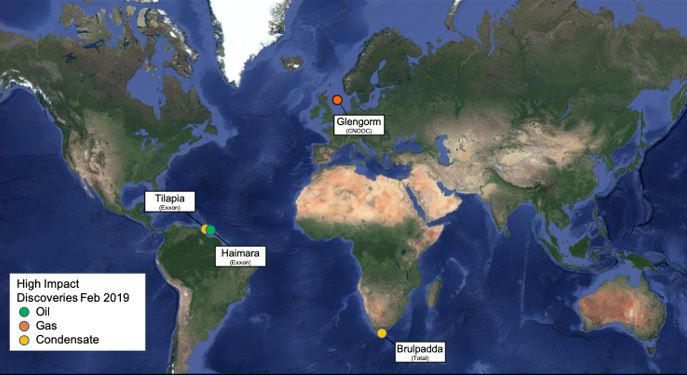
We see oil exploration making a comeback in 2019, as drilling spending sees an increase and on the back of encouraging well results year to date. Already in 2019 there have been 4 high impact discoveries in the UK, South Africa and Guyana. Given the need of companies, especially the majors, to replenish their portfolios, there will still be a number of frontier, high impact wells being drilled. The areas where we see material exploration wells being drilled this year are Guyana, US GoM, Mexico, Brazil the Eastern Mediterranean and West Africa.

If there is some exploration success, the pure-play exploration companies will be good performers, especially those that have exposure to several wells that could be material relative to their size. A pick up in drilling will also be positive for the offshore drilling companies and seismic names. We look at the merits and pitfalls of investing in exploration, performance in 2018, outlook for 2019, the debate over exploring for resource versus buying it, how the economics of exploration have improved and the impact of the time value of money. 

2. Maoyan Entertainment (猫眼娱乐) Post-IPO: The CNY Box Office Catalyst Hasn’t Materialized

Narn hswimzy2530823

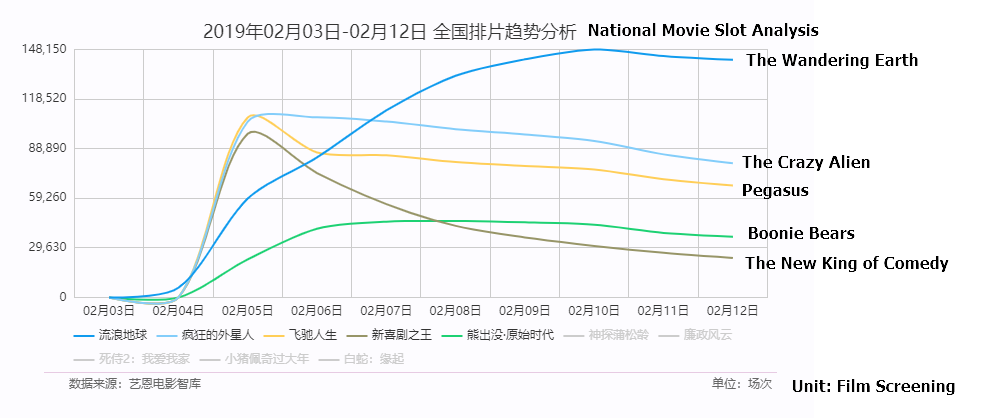
We mentioned in our previous note prior to the listing of Maoyan Entertainment on Feb 4th that Chinese New Year (CNY) Box office from the two movies, namely Pegasus and The New King of Comedy that the company invested could be a catalyst post listing. However, our analysis of CNY box office data suggests although Pegasus reported box office revenues slightly north of RMB 1bn, it is far behind the number one movie, The Wandering Earth’s RMB 2bn box office. In addition to the company-specific movie investment, the overall box office for the CNY holiday has been disappointing, suggesting a challenging year for the movie industry in 2019. 

Our previous coverage on Maoyan Entertainment

3. Hansoh Pharma IPO Preview: A Decent Story Tarnished by a Huge Pre-IPO Dividend

Drug%20by%20revenue

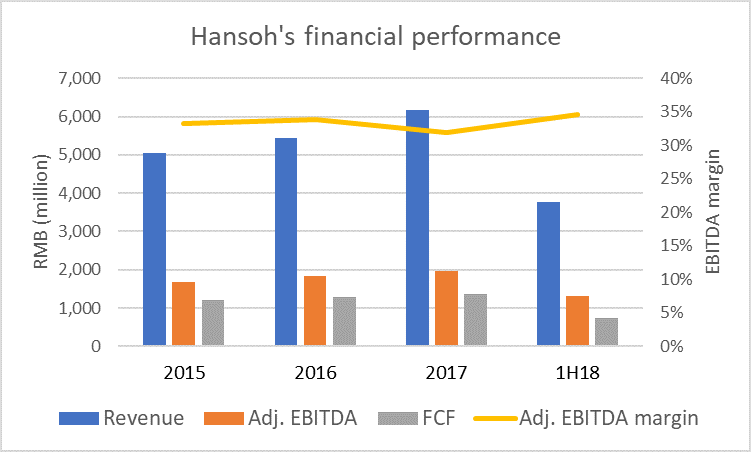
Hansoh Pharmaceutical (HANSOH HK) claims to be one of the few R&D driven Chinese pharmaceutical companies. According to press reports, Hansoh aims to launch its Hong Kong IPO to raise $1 billion this month. Over the track record period, Hansoh’s financial performance shows accelerating revenue growth, relatively stable margins and solid cash generation.

Hansoh has the elements of a decent growth story, but our optimism is tempered due to mixed prospects for its drugs. Also, the huge pre-IPO dividend of RMB4.0 billion ($0.6 billion) will likely raise questions on the timing and size of the IPO.

4. Baltic Dry – It’s That Time of Year. Again. [2019 Version]

Capesize%20calc%20bci%202014

This insight starts with a bit of history. It is entirely extraneous to the data, but I think the history is kind of fun (iron ore, Baltic Dry, and shipping has been a ‘hobby’ of mine for years). If you want to get right to the data, go to the Thin Red Line.


On the 24th of May, 1744, an announcement appeared in The Daily Post (The Daily Poſt) that the Virginia and Maryland coffee house in Threadneedle Street, London (just east of the Bank of England) had changed its name to Virginia and Baltick Coffee House.

This is to give notice that the House, late the Virginia and Maryland Coffee-house in Threadneedle Street, near the Royal Exchange, is now open’d by the Name of the Virginia & Baltick Coffee-house, where all Foreign and Domestick News are taken in ; and all Letters or Parcels, directed to Merchants or Captains in the Virginia or Baltick Trade will be carefully deliver’d according as directed, and the best Attendance given, by Reynallds and Winboult. 

Note, Punch made in any Quantity, in the greatest Perfection, without Adulteration, which is seldom found in any of the most noted Houses ; also Brandy, Rum, and Arrack (neat as imported) are sold in the Vaults under the Coffee-House, at the lowest Prices; where all Customers, we have had the Favour of serving at our late Warehouse in Leadenhall Street, we hope will continue to send their Orders as above.

We have receiv’d Advice, that Several Bags of Letters and Parcels are coming which are directed to be left at the above Coffee-House 

This was perhaps because Virginia and Maryland as a name was slightly redundant. Virginia and Maryland are next to each other (if you dropped cargo in Baltimore, you went past Virginia to get there). It was perhaps because trade with Russia and Baltic countries in tallow (from Russia) used to make candles and soap [more candles than soap as Georgian England was still under the idea bathing might invite the plague to enter the pores], flax, hemp (both from modern-day Estonia and Latvia, and Russia), and other goods was fast climbing after The Muscovy Company (originally founded as The Merchant Adventurers to New Lands in 1551 to look for a northeast passage to China) lost its monopoly (enjoyed since 1555) on English trade with Russia in 1698 (though the company’s activities had been somewhat or at times largely curtailed for 50 years after the execution of Charles I of England in 1648). 

The Baltic routes were effectively the same as created by the Hanseatic League many hundreds of years before when German traders in the Baltic traded wares down to the Netherlands and even London, from Livonia (Riga and northward) or Livländ as the Hansa states would have called it. And the same products were shipped on that route for almost a thousand years.

In Regency/Georgian England, flax, for example, came from Königsburg (54-55º N at 21º E), then Memel (Dermemel on the map) just up the coast, Libnau a bit further north, Riga just off the map at around 56º N, then Pernel (Latvia), Revel (Estonia), and St Petersburg further to the northeast (further off the map unfortunately). Timber imports grew dramatically after the Great Fire of London, and as imports grew and English shipbuilding increased, timber to build ships (including specifically, masts) was sourced from Norway in the late 1600s then increasingly the East Country (north Europe, Livonia (specifically Memel)) and Russia. 

source: Barry Lawrence Ruderman Antique Maps (and the map)

In any case, the new name more accurately represented the business interests of those who congregated there.

The Virginia & Baltick was the place to source North Atlantic and Baltic cargoes, and cargoes rose in volume dramatically from the mid 1700s through the mid 1800s, with a drop only in the early 1810s.

In 1810, the Virginia & Baltick took over the premises of a nearby establishment called the Antwerp Tavern – also on Threadneedle – which was a considerably larger building (in the Hearth Tax (an annual levy of two shillings per annum, to make up the shortfall of ale and beer taxes paid to the sovereign) returns of 1662 it was noted as having 18 hearths). It was renamed the Baltic Coffee House then (it was also periodically the meeting place of the Albion Lodge of Masons). 

Long since replaced, as far as I can tell it was located on the SE corner of Threadneedle and the alley behind the Royal Exchange. By 1823, the wild speculations in commodities and the laxity of theretofore informal arrangements on the Second Floor made it imperative for the senior tallow chandlers, soapmakers, and cargo brokers to form a Member’s Club (limited to 300). Rules were established (they are below in the Appendix).

In 1857, the Virginia & Baltick established a company, The Baltic Company Limited, and arrangements were made to take over the lease of the South Sea House (original home to the South Sea Company) at the end of Threadneedle Street. In 1900, the Baltic Exchange was incorporated as a private limited company – the Baltic Mercantile And Shipping Exchange, Limited. and took over the London Shipping Exchange. In 1903, the company established its own purpose-built premises in St. Mary’s Axe. In 1992, an IRA bomb demolished 30 St. Mary’s Axe and a few years later, permanent premises were found at 38 St. Mary’s Axe. 

Nota Bene:  Before the Great Fire of 1748, the most famous of London’s coffee shops were on the south side of the Royal Exchange – with most in the small area named Exchange Alley and on Birchin, and with Lloyd’s on Lombard Street (corner of Lombard and Abchurch Lane if I remember correctly). The area north and west of the Exchange was oriented towards taverns. The location of the Antwerp Tavern in relation to the map below was roughly where the bolded name of Antwerp Tavern is in the paragraph above.

A map of Coffee Houses Before the Great Fire

In 1985, the Baltic Exchange first calculated its Baltic Freight Index (now the Baltic Dry Index) as an “assessment” of conditions and charter rates amongst a panel of independent ship brokers across nearly two-dozen specific routes (all routes reported have year-round fixtures – not seasonal routes like the Great Lakes) and ship sizes (and since July 1, 2009 is an average of Handysize, Supramax, Panamax, and Capesize Timecharter averages), the data for which is then verified and averaged by the Exchange, and disseminated to members. The route specifics are quite detailed and require “massaging” in order to get normalized data from the specified delivery item (for Capesize Route C2, it is a 180kmt DWT ship on 18.2m SSW draft, max age 10yrs, LOA 290m, beam 45m, TPC 121, 198kcbm grain, 14 knots laden, 15 knots ballast on 62mt fuel oil (380cst) no diesel at sea with the route details as below). 

C2: Tubarao to Rotterdam. 160,000lt iron ore, 10% more or less in owner’s option, free in and out. Laydays/cancelling 20/35 days from index date. 6 days, Sundays + holidays included all purposes. 6 hrs turn time at loading port, 6 hrs turn time at discharge port, 0.5% in lieu of weighing. Freight based on long tons. Age max 18 yrs. 3.75% total commission.

There are audits of the brokers, and no shipbrokers are allowed to have “money in the market.” A full index methodology document is available for those who care for it (message me for the PDF). 

It’s That Time Of Year, Again.

The Baltic Dry Index (BDIY INDEX) is an indicator published by The Baltic Exchange, in London, first distributed in 1985 and something which gained popularity as a tool for equity investors to “see” the bulk market in the early 2000s. 

data: Baltic Exchange, etc

The index has changed somewhat over the years with the current calculation starting in 2009. It is currently calculated as an average of the Capesize, Panamax, Supramax, and Handysize TimeCharter averages, with a slightly complicated weighting system across a variety of routes. An example for Capesize is in the Appendix (below the Rules & Regulations of the Baltic Coffee House of 1823). Most of the routes have a very heavy weighting to Asia. 75% of the weights of Capesize, Panamax, and Supramax have an Asia or Trans-Pacific end of leg to them (Handysize is 50% Asia end, 50% Europe end). 

The increased interest on the part of non-freight customers was because the advent of dramatic increases in raw materials imports to China in the early 2000s meant a significant squeeze on ship time. And because there is seasonality to China and its raw materials imports, more seasonality started showing up in the Baltic Dry Index.

Generically, when raw material pricing goes up because raw material demand goes up, bulker rates go up. When raw material pricing goes up because of natural disaster-induced shortages, the effect can be mixed. For example, if for whatever reason iron ore could not be shipped from Australia to China for a period, shipping costs might rise dramatically (if the materials themselves existed to be exported from elsewhere) simply because of greater ship time to export from say Tubarao to China than from Western Australia to China. Right now, the China-based cost to ship a tonne of iron ore from WA to China is less than US$5 while from Tubarao it is $13. If a serious Brazil export drop were to occur, iron ore would go up in price because of the near-term scarcity, but freight prices might not go up that much because the change in time per tonne required to ship would drop (though they might go up on a scarcity of appropriate ships).

In any case, that China seasonality has another very interesting and over-riding characteristic.

And it has to do with Chinese New Year.

Get Straight to the Source on Smartkarma

Smartkarma supports the world’s leading investors with high-quality, timely, and actionable Insights. Subscribe now for unlimited access, or request a demo below.


Brief Hong Kong: Maoyan Entertainment (猫眼娱乐) Post-IPO: The CNY Box Office Catalyst Hasn’t Materialized and more

By | Hong Kong

In this briefing:

  1. Maoyan Entertainment (猫眼娱乐) Post-IPO: The CNY Box Office Catalyst Hasn’t Materialized
  2. Hansoh Pharma IPO Preview: A Decent Story Tarnished by a Huge Pre-IPO Dividend
  3. Baltic Dry – It’s That Time of Year. Again. [2019 Version]
  4. Indonesia Upstream Gas Asset Sale: Positive Read-Through to Other SE Asia Gas Companies

1. Maoyan Entertainment (猫眼娱乐) Post-IPO: The CNY Box Office Catalyst Hasn’t Materialized

Film%20screening%20analysis%20cny

We mentioned in our previous note prior to the listing of Maoyan Entertainment on Feb 4th that Chinese New Year (CNY) Box office from the two movies, namely Pegasus and The New King of Comedy that the company invested could be a catalyst post listing. However, our analysis of CNY box office data suggests although Pegasus reported box office revenues slightly north of RMB 1bn, it is far behind the number one movie, The Wandering Earth’s RMB 2bn box office. In addition to the company-specific movie investment, the overall box office for the CNY holiday has been disappointing, suggesting a challenging year for the movie industry in 2019. 

Our previous coverage on Maoyan Entertainment

2. Hansoh Pharma IPO Preview: A Decent Story Tarnished by a Huge Pre-IPO Dividend

Oulanning

Hansoh Pharmaceutical (HANSOH HK) claims to be one of the few R&D driven Chinese pharmaceutical companies. According to press reports, Hansoh aims to launch its Hong Kong IPO to raise $1 billion this month. Over the track record period, Hansoh’s financial performance shows accelerating revenue growth, relatively stable margins and solid cash generation.

Hansoh has the elements of a decent growth story, but our optimism is tempered due to mixed prospects for its drugs. Also, the huge pre-IPO dividend of RMB4.0 billion ($0.6 billion) will likely raise questions on the timing and size of the IPO.

3. Baltic Dry – It’s That Time of Year. Again. [2019 Version]

Screenshot%202019 02 11%20at%206.49.48%20pm

This insight starts with a bit of history. It is entirely extraneous to the data, but I think the history is kind of fun (iron ore, Baltic Dry, and shipping has been a ‘hobby’ of mine for years). If you want to get right to the data, go to the Thin Red Line.


On the 24th of May, 1744, an announcement appeared in The Daily Post (The Daily Poſt) that the Virginia and Maryland coffee house in Threadneedle Street, London (just east of the Bank of England) had changed its name to Virginia and Baltick Coffee House.

This is to give notice that the House, late the Virginia and Maryland Coffee-house in Threadneedle Street, near the Royal Exchange, is now open’d by the Name of the Virginia & Baltick Coffee-house, where all Foreign and Domestick News are taken in ; and all Letters or Parcels, directed to Merchants or Captains in the Virginia or Baltick Trade will be carefully deliver’d according as directed, and the best Attendance given, by Reynallds and Winboult. 

Note, Punch made in any Quantity, in the greatest Perfection, without Adulteration, which is seldom found in any of the most noted Houses ; also Brandy, Rum, and Arrack (neat as imported) are sold in the Vaults under the Coffee-House, at the lowest Prices; where all Customers, we have had the Favour of serving at our late Warehouse in Leadenhall Street, we hope will continue to send their Orders as above.

We have receiv’d Advice, that Several Bags of Letters and Parcels are coming which are directed to be left at the above Coffee-House 

This was perhaps because Virginia and Maryland as a name was slightly redundant. Virginia and Maryland are next to each other (if you dropped cargo in Baltimore, you went past Virginia to get there). It was perhaps because trade with Russia and Baltic countries in tallow (from Russia) used to make candles and soap [more candles than soap as Georgian England was still under the idea bathing might invite the plague to enter the pores], flax, hemp (both from modern-day Estonia and Latvia, and Russia), and other goods was fast climbing after The Muscovy Company (originally founded as The Merchant Adventurers to New Lands in 1551 to look for a northeast passage to China) lost its monopoly (enjoyed since 1555) on English trade with Russia in 1698 (though the company’s activities had been somewhat or at times largely curtailed for 50 years after the execution of Charles I of England in 1648). 

The Baltic routes were effectively the same as created by the Hanseatic League many hundreds of years before when German traders in the Baltic traded wares down to the Netherlands and even London, from Livonia (Riga and northward) or Livländ as the Hansa states would have called it. And the same products were shipped on that route for almost a thousand years.

In Regency/Georgian England, flax, for example, came from Königsburg (54-55º N at 21º E), then Memel (Dermemel on the map) just up the coast, Libnau a bit further north, Riga just off the map at around 56º N, then Pernel (Latvia), Revel (Estonia), and St Petersburg further to the northeast (further off the map unfortunately). Timber imports grew dramatically after the Great Fire of London, and as imports grew and English shipbuilding increased, timber to build ships (including specifically, masts) was sourced from Norway in the late 1600s then increasingly the East Country (north Europe, Livonia (specifically Memel)) and Russia. 

source: Barry Lawrence Ruderman Antique Maps (and the map)

In any case, the new name more accurately represented the business interests of those who congregated there.

The Virginia & Baltick was the place to source North Atlantic and Baltic cargoes, and cargoes rose in volume dramatically from the mid 1700s through the mid 1800s, with a drop only in the early 1810s.

In 1810, the Virginia & Baltick took over the premises of a nearby establishment called the Antwerp Tavern – also on Threadneedle – which was a considerably larger building (in the Hearth Tax (an annual levy of two shillings per annum, to make up the shortfall of ale and beer taxes paid to the sovereign) returns of 1662 it was noted as having 18 hearths). It was renamed the Baltic Coffee House then (it was also periodically the meeting place of the Albion Lodge of Masons). 

Long since replaced, as far as I can tell it was located on the SE corner of Threadneedle and the alley behind the Royal Exchange. By 1823, the wild speculations in commodities and the laxity of theretofore informal arrangements on the Second Floor made it imperative for the senior tallow chandlers, soapmakers, and cargo brokers to form a Member’s Club (limited to 300). Rules were established (they are below in the Appendix).

In 1857, the Virginia & Baltick established a company, The Baltic Company Limited, and arrangements were made to take over the lease of the South Sea House (original home to the South Sea Company) at the end of Threadneedle Street. In 1900, the Baltic Exchange was incorporated as a private limited company – the Baltic Mercantile And Shipping Exchange, Limited. and took over the London Shipping Exchange. In 1903, the company established its own purpose-built premises in St. Mary’s Axe. In 1992, an IRA bomb demolished 30 St. Mary’s Axe and a few years later, permanent premises were found at 38 St. Mary’s Axe. 

Nota Bene:  Before the Great Fire of 1748, the most famous of London’s coffee shops were on the south side of the Royal Exchange – with most in the small area named Exchange Alley and on Birchin, and with Lloyd’s on Lombard Street (corner of Lombard and Abchurch Lane if I remember correctly). The area north and west of the Exchange was oriented towards taverns. The location of the Antwerp Tavern in relation to the map below was roughly where the bolded name of Antwerp Tavern is in the paragraph above.

A map of Coffee Houses Before the Great Fire

In 1985, the Baltic Exchange first calculated its Baltic Freight Index (now the Baltic Dry Index) as an “assessment” of conditions and charter rates amongst a panel of independent ship brokers across nearly two-dozen specific routes (all routes reported have year-round fixtures – not seasonal routes like the Great Lakes) and ship sizes (and since July 1, 2009 is an average of Handysize, Supramax, Panamax, and Capesize Timecharter averages), the data for which is then verified and averaged by the Exchange, and disseminated to members. The route specifics are quite detailed and require “massaging” in order to get normalized data from the specified delivery item (for Capesize Route C2, it is a 180kmt DWT ship on 18.2m SSW draft, max age 10yrs, LOA 290m, beam 45m, TPC 121, 198kcbm grain, 14 knots laden, 15 knots ballast on 62mt fuel oil (380cst) no diesel at sea with the route details as below). 

C2: Tubarao to Rotterdam. 160,000lt iron ore, 10% more or less in owner’s option, free in and out. Laydays/cancelling 20/35 days from index date. 6 days, Sundays + holidays included all purposes. 6 hrs turn time at loading port, 6 hrs turn time at discharge port, 0.5% in lieu of weighing. Freight based on long tons. Age max 18 yrs. 3.75% total commission.

There are audits of the brokers, and no shipbrokers are allowed to have “money in the market.” A full index methodology document is available for those who care for it (message me for the PDF). 

It’s That Time Of Year, Again.

The Baltic Dry Index (BDIY INDEX) is an indicator published by The Baltic Exchange, in London, first distributed in 1985 and something which gained popularity as a tool for equity investors to “see” the bulk market in the early 2000s. 

data: Baltic Exchange, etc

The index has changed somewhat over the years with the current calculation starting in 2009. It is currently calculated as an average of the Capesize, Panamax, Supramax, and Handysize TimeCharter averages, with a slightly complicated weighting system across a variety of routes. An example for Capesize is in the Appendix (below the Rules & Regulations of the Baltic Coffee House of 1823). Most of the routes have a very heavy weighting to Asia. 75% of the weights of Capesize, Panamax, and Supramax have an Asia or Trans-Pacific end of leg to them (Handysize is 50% Asia end, 50% Europe end). 

The increased interest on the part of non-freight customers was because the advent of dramatic increases in raw materials imports to China in the early 2000s meant a significant squeeze on ship time. And because there is seasonality to China and its raw materials imports, more seasonality started showing up in the Baltic Dry Index.

Generically, when raw material pricing goes up because raw material demand goes up, bulker rates go up. When raw material pricing goes up because of natural disaster-induced shortages, the effect can be mixed. For example, if for whatever reason iron ore could not be shipped from Australia to China for a period, shipping costs might rise dramatically (if the materials themselves existed to be exported from elsewhere) simply because of greater ship time to export from say Tubarao to China than from Western Australia to China. Right now, the China-based cost to ship a tonne of iron ore from WA to China is less than US$5 while from Tubarao it is $13. If a serious Brazil export drop were to occur, iron ore would go up in price because of the near-term scarcity, but freight prices might not go up that much because the change in time per tonne required to ship would drop (though they might go up on a scarcity of appropriate ships).

In any case, that China seasonality has another very interesting and over-riding characteristic.

And it has to do with Chinese New Year.

4. Indonesia Upstream Gas Asset Sale: Positive Read-Through to Other SE Asia Gas Companies

West%20natuna%20basin

We analyse the sale of a stake in the Mako gas field in Indonesia to Coro Energy PLC (CORO LN) by West Natuna Exploration Limited, majority owned by private Singapore company Conrad Petroleum and UK listed Empyrean Energy PLC (EME LN), which has a 10% stake. It has implications in terms of read-through valuations for other S.E. Asia focused energy companies especially those with Indonesian gas production such as Premier Oil PLC (PMO LN), Ophir Energy (OPHR LN) and Medco Energi Internasional T (MEDC IJ)

Get Straight to the Source on Smartkarma

Smartkarma supports the world’s leading investors with high-quality, timely, and actionable Insights. Subscribe now for unlimited access, or request a demo below.


Brief Hong Kong: Semiconductor Sales Dive A Record 7% MoM In December. 2019 Will Be A Low-To-No Growth Year. and more

By | Hong Kong

In this briefing:

  1. Semiconductor Sales Dive A Record 7% MoM In December. 2019 Will Be A Low-To-No Growth Year.

1. Semiconductor Sales Dive A Record 7% MoM In December. 2019 Will Be A Low-To-No Growth Year.

Screen%20shot%202019 02 11%20at%2010.24.15%20am

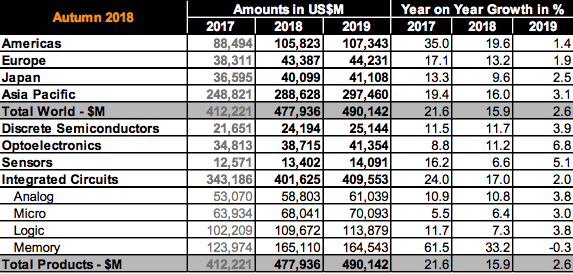
Global Semiconductor Sales for December 2018 amounted to $38.2 billion, down a record 7.0% MoM, according to the latest data published by the Semiconductor Industry Association (SIA). The December data reflects a sharp acceleration of a downward trend which began in November and comes as little surprise following an earnings season characterised by profit warnings led by industry giants such as Apple, Samsung and Nvidia

The December decline amounted to ~$3 billion in absolute terms, far less than the roughly $15 billion that failed to materialise in fourth quarter sector revenues and implying that substantial amounts of inventory still remain to be consumed from within the supply chain. 

As such we anticipate monthly semiconductor sales continuing to decline through April-May timeframe before stabilizing and returning to growth thereafter. We now anticipate growth to moderate significantly from the 13.7% experienced in 2018 to just 1% in 2019. 

Get Straight to the Source on Smartkarma

Smartkarma supports the world’s leading investors with high-quality, timely, and actionable Insights. Subscribe now for unlimited access, or request a demo below.


Brief Hong Kong: Maoyan Entertainment (猫眼娱乐) Post-IPO: The CNY Box Office Catalyst Hasn’t Materialized and more

By | Hong Kong

In this briefing:

  1. Maoyan Entertainment (猫眼娱乐) Post-IPO: The CNY Box Office Catalyst Hasn’t Materialized
  2. Hansoh Pharma IPO Preview: A Decent Story Tarnished by a Huge Pre-IPO Dividend
  3. Baltic Dry – It’s That Time of Year. Again. [2019 Version]
  4. Indonesia Upstream Gas Asset Sale: Positive Read-Through to Other SE Asia Gas Companies
  5. CStone Pharma (基石药业) IPO: Thoughts on Valuation (Part 2)

1. Maoyan Entertainment (猫眼娱乐) Post-IPO: The CNY Box Office Catalyst Hasn’t Materialized

Film%20screening%20analysis%20cny

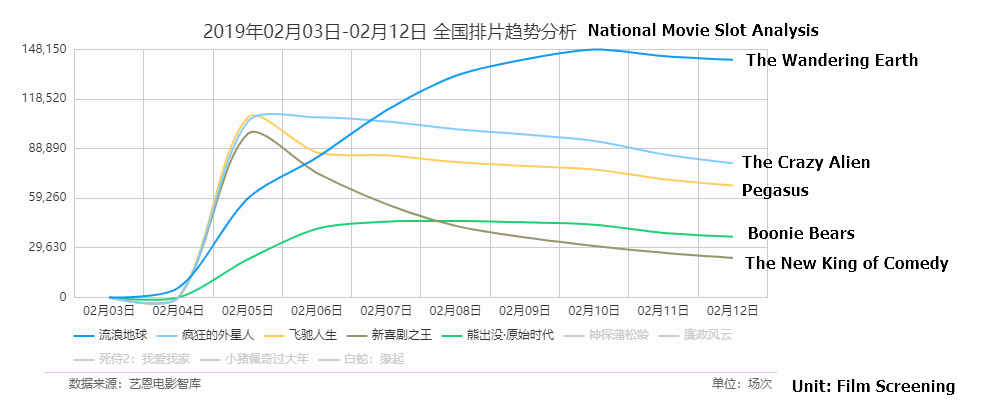
We mentioned in our previous note prior to the listing of Maoyan Entertainment on Feb 4th that Chinese New Year (CNY) Box office from the two movies, namely Pegasus and The New King of Comedy that the company invested could be a catalyst post listing. However, our analysis of CNY box office data suggests although Pegasus reported box office revenues slightly north of RMB 1bn, it is far behind the number one movie, The Wandering Earth’s RMB 2bn box office. In addition to the company-specific movie investment, the overall box office for the CNY holiday has been disappointing, suggesting a challenging year for the movie industry in 2019. 

Our previous coverage on Maoyan Entertainment

2. Hansoh Pharma IPO Preview: A Decent Story Tarnished by a Huge Pre-IPO Dividend

Xinwei

Hansoh Pharmaceutical (HANSOH HK) claims to be one of the few R&D driven Chinese pharmaceutical companies. According to press reports, Hansoh aims to launch its Hong Kong IPO to raise $1 billion this month. Over the track record period, Hansoh’s financial performance shows accelerating revenue growth, relatively stable margins and solid cash generation.

Hansoh has the elements of a decent growth story, but our optimism is tempered due to mixed prospects for its drugs. Also, the huge pre-IPO dividend of RMB4.0 billion ($0.6 billion) will likely raise questions on the timing and size of the IPO.

3. Baltic Dry – It’s That Time of Year. Again. [2019 Version]

Thinredline%20v4 2

This insight starts with a bit of history. It is entirely extraneous to the data, but I think the history is kind of fun (iron ore, Baltic Dry, and shipping has been a ‘hobby’ of mine for years). If you want to get right to the data, go to the Thin Red Line.


On the 24th of May, 1744, an announcement appeared in The Daily Post (The Daily Poſt) that the Virginia and Maryland coffee house in Threadneedle Street, London (just east of the Bank of England) had changed its name to Virginia and Baltick Coffee House.

This is to give notice that the House, late the Virginia and Maryland Coffee-house in Threadneedle Street, near the Royal Exchange, is now open’d by the Name of the Virginia & Baltick Coffee-house, where all Foreign and Domestick News are taken in ; and all Letters or Parcels, directed to Merchants or Captains in the Virginia or Baltick Trade will be carefully deliver’d according as directed, and the best Attendance given, by Reynallds and Winboult. 

Note, Punch made in any Quantity, in the greatest Perfection, without Adulteration, which is seldom found in any of the most noted Houses ; also Brandy, Rum, and Arrack (neat as imported) are sold in the Vaults under the Coffee-House, at the lowest Prices; where all Customers, we have had the Favour of serving at our late Warehouse in Leadenhall Street, we hope will continue to send their Orders as above.

We have receiv’d Advice, that Several Bags of Letters and Parcels are coming which are directed to be left at the above Coffee-House 

This was perhaps because Virginia and Maryland as a name was slightly redundant. Virginia and Maryland are next to each other (if you dropped cargo in Baltimore, you went past Virginia to get there). It was perhaps because trade with Russia and Baltic countries in tallow (from Russia) used to make candles and soap [more candles than soap as Georgian England was still under the idea bathing might invite the plague to enter the pores], flax, hemp (both from modern-day Estonia and Latvia, and Russia), and other goods was fast climbing after The Muscovy Company (originally founded as The Merchant Adventurers to New Lands in 1551 to look for a northeast passage to China) lost its monopoly (enjoyed since 1555) on English trade with Russia in 1698 (though the company’s activities had been somewhat or at times largely curtailed for 50 years after the execution of Charles I of England in 1648). 

The Baltic routes were effectively the same as created by the Hanseatic League many hundreds of years before when German traders in the Baltic traded wares down to the Netherlands and even London, from Livonia (Riga and northward) or Livländ as the Hansa states would have called it. And the same products were shipped on that route for almost a thousand years.

In Regency/Georgian England, flax, for example, came from Königsburg (54-55º N at 21º E), then Memel (Dermemel on the map) just up the coast, Libnau a bit further north, Riga just off the map at around 56º N, then Pernel (Latvia), Revel (Estonia), and St Petersburg further to the northeast (further off the map unfortunately). Timber imports grew dramatically after the Great Fire of London, and as imports grew and English shipbuilding increased, timber to build ships (including specifically, masts) was sourced from Norway in the late 1600s then increasingly the East Country (north Europe, Livonia (specifically Memel)) and Russia. 

source: Barry Lawrence Ruderman Antique Maps (and the map)

In any case, the new name more accurately represented the business interests of those who congregated there.

The Virginia & Baltick was the place to source North Atlantic and Baltic cargoes, and cargoes rose in volume dramatically from the mid 1700s through the mid 1800s, with a drop only in the early 1810s.

In 1810, the Virginia & Baltick took over the premises of a nearby establishment called the Antwerp Tavern – also on Threadneedle – which was a considerably larger building (in the Hearth Tax (an annual levy of two shillings per annum, to make up the shortfall of ale and beer taxes paid to the sovereign) returns of 1662 it was noted as having 18 hearths). It was renamed the Baltic Coffee House then (it was also periodically the meeting place of the Albion Lodge of Masons). 

Long since replaced, as far as I can tell it was located on the SE corner of Threadneedle and the alley behind the Royal Exchange. By 1823, the wild speculations in commodities and the laxity of theretofore informal arrangements on the Second Floor made it imperative for the senior tallow chandlers, soapmakers, and cargo brokers to form a Member’s Club (limited to 300). Rules were established (they are below in the Appendix).

In 1857, the Virginia & Baltick established a company, The Baltic Company Limited, and arrangements were made to take over the lease of the South Sea House (original home to the South Sea Company) at the end of Threadneedle Street. In 1900, the Baltic Exchange was incorporated as a private limited company – the Baltic Mercantile And Shipping Exchange, Limited. and took over the London Shipping Exchange. In 1903, the company established its own purpose-built premises in St. Mary’s Axe. In 1992, an IRA bomb demolished 30 St. Mary’s Axe and a few years later, permanent premises were found at 38 St. Mary’s Axe. 

Nota Bene:  Before the Great Fire of 1748, the most famous of London’s coffee shops were on the south side of the Royal Exchange – with most in the small area named Exchange Alley and on Birchin, and with Lloyd’s on Lombard Street (corner of Lombard and Abchurch Lane if I remember correctly). The area north and west of the Exchange was oriented towards taverns. The location of the Antwerp Tavern in relation to the map below was roughly where the bolded name of Antwerp Tavern is in the paragraph above.

A map of Coffee Houses Before the Great Fire

In 1985, the Baltic Exchange first calculated its Baltic Freight Index (now the Baltic Dry Index) as an “assessment” of conditions and charter rates amongst a panel of independent ship brokers across nearly two-dozen specific routes (all routes reported have year-round fixtures – not seasonal routes like the Great Lakes) and ship sizes (and since July 1, 2009 is an average of Handysize, Supramax, Panamax, and Capesize Timecharter averages), the data for which is then verified and averaged by the Exchange, and disseminated to members. The route specifics are quite detailed and require “massaging” in order to get normalized data from the specified delivery item (for Capesize Route C2, it is a 180kmt DWT ship on 18.2m SSW draft, max age 10yrs, LOA 290m, beam 45m, TPC 121, 198kcbm grain, 14 knots laden, 15 knots ballast on 62mt fuel oil (380cst) no diesel at sea with the route details as below). 

C2: Tubarao to Rotterdam. 160,000lt iron ore, 10% more or less in owner’s option, free in and out. Laydays/cancelling 20/35 days from index date. 6 days, Sundays + holidays included all purposes. 6 hrs turn time at loading port, 6 hrs turn time at discharge port, 0.5% in lieu of weighing. Freight based on long tons. Age max 18 yrs. 3.75% total commission.

There are audits of the brokers, and no shipbrokers are allowed to have “money in the market.” A full index methodology document is available for those who care for it (message me for the PDF). 

It’s That Time Of Year, Again.

The Baltic Dry Index (BDIY INDEX) is an indicator published by The Baltic Exchange, in London, first distributed in 1985 and something which gained popularity as a tool for equity investors to “see” the bulk market in the early 2000s. 

data: Baltic Exchange, etc

The index has changed somewhat over the years with the current calculation starting in 2009. It is currently calculated as an average of the Capesize, Panamax, Supramax, and Handysize TimeCharter averages, with a slightly complicated weighting system across a variety of routes. An example for Capesize is in the Appendix (below the Rules & Regulations of the Baltic Coffee House of 1823). Most of the routes have a very heavy weighting to Asia. 75% of the weights of Capesize, Panamax, and Supramax have an Asia or Trans-Pacific end of leg to them (Handysize is 50% Asia end, 50% Europe end). 

The increased interest on the part of non-freight customers was because the advent of dramatic increases in raw materials imports to China in the early 2000s meant a significant squeeze on ship time. And because there is seasonality to China and its raw materials imports, more seasonality started showing up in the Baltic Dry Index.

Generically, when raw material pricing goes up because raw material demand goes up, bulker rates go up. When raw material pricing goes up because of natural disaster-induced shortages, the effect can be mixed. For example, if for whatever reason iron ore could not be shipped from Australia to China for a period, shipping costs might rise dramatically (if the materials themselves existed to be exported from elsewhere) simply because of greater ship time to export from say Tubarao to China than from Western Australia to China. Right now, the China-based cost to ship a tonne of iron ore from WA to China is less than US$5 while from Tubarao it is $13. If a serious Brazil export drop were to occur, iron ore would go up in price because of the near-term scarcity, but freight prices might not go up that much because the change in time per tonne required to ship would drop (though they might go up on a scarcity of appropriate ships).

In any case, that China seasonality has another very interesting and over-riding characteristic.

And it has to do with Chinese New Year.

4. Indonesia Upstream Gas Asset Sale: Positive Read-Through to Other SE Asia Gas Companies

Duyung%20psc

We analyse the sale of a stake in the Mako gas field in Indonesia to Coro Energy PLC (CORO LN) by West Natuna Exploration Limited, majority owned by private Singapore company Conrad Petroleum and UK listed Empyrean Energy PLC (EME LN), which has a 10% stake. It has implications in terms of read-through valuations for other S.E. Asia focused energy companies especially those with Indonesian gas production such as Premier Oil PLC (PMO LN), Ophir Energy (OPHR LN) and Medco Energi Internasional T (MEDC IJ)

5. CStone Pharma (基石药业) IPO: Thoughts on Valuation (Part 2)

Sotp

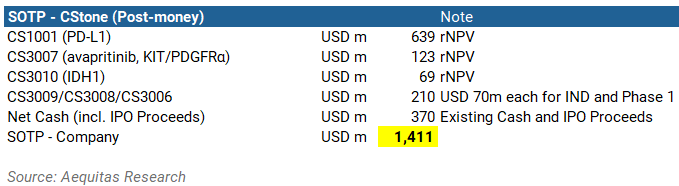
CStone Pharma, a Wuxi Apptec related biotech company, plans to raise USD 300m to list on the Hong Kong Stock Exchange. In our previous insight (link here), we have discussed CStone’s drug candidate pipeline, founders, management team and investors.

In this insight, we will provide a detailed valuation breakdown for its key products. Our base case post-money valuation for CStone is USD 1.4 bn, which is 30% above its pre-IPO valuation of USD 1.05 bn but at the low end of the guided valuation range. 


Our coverage on biotech listing

Get Straight to the Source on Smartkarma

Smartkarma supports the world’s leading investors with high-quality, timely, and actionable Insights. Subscribe now for unlimited access, or request a demo below.


Brief Hong Kong: Hansoh Pharma IPO Preview: A Decent Story Tarnished by a Huge Pre-IPO Dividend and more

By | Hong Kong

In this briefing:

  1. Hansoh Pharma IPO Preview: A Decent Story Tarnished by a Huge Pre-IPO Dividend
  2. Baltic Dry – It’s That Time of Year. Again. [2019 Version]
  3. Indonesia Upstream Gas Asset Sale: Positive Read-Through to Other SE Asia Gas Companies
  4. CStone Pharma (基石药业) IPO: Thoughts on Valuation (Part 2)
  5. Semiconductor Sales Dive A Record 7% MoM In December. 2019 Will Be A Low-To-No Growth Year.

1. Hansoh Pharma IPO Preview: A Decent Story Tarnished by a Huge Pre-IPO Dividend

Financial%20performance

Hansoh Pharmaceutical (HANSOH HK) claims to be one of the few R&D driven Chinese pharmaceutical companies. According to press reports, Hansoh aims to launch its Hong Kong IPO to raise $1 billion this month. Over the track record period, Hansoh’s financial performance shows accelerating revenue growth, relatively stable margins and solid cash generation.

Hansoh has the elements of a decent growth story, but our optimism is tempered due to mixed prospects for its drugs. Also, the huge pre-IPO dividend of RMB4.0 billion ($0.6 billion) will likely raise questions on the timing and size of the IPO.

2. Baltic Dry – It’s That Time of Year. Again. [2019 Version]

Germanocean%20and%20balticksea

This insight starts with a bit of history. It is entirely extraneous to the data, but I think the history is kind of fun (iron ore, Baltic Dry, and shipping has been a ‘hobby’ of mine for years). If you want to get right to the data, go to the Thin Red Line.


On the 24th of May, 1744, an announcement appeared in The Daily Post (The Daily Poſt) that the Virginia and Maryland coffee house in Threadneedle Street, London (just east of the Bank of England) had changed its name to Virginia and Baltick Coffee House.

This is to give notice that the House, late the Virginia and Maryland Coffee-house in Threadneedle Street, near the Royal Exchange, is now open’d by the Name of the Virginia & Baltick Coffee-house, where all Foreign and Domestick News are taken in ; and all Letters or Parcels, directed to Merchants or Captains in the Virginia or Baltick Trade will be carefully deliver’d according as directed, and the best Attendance given, by Reynallds and Winboult. 

Note, Punch made in any Quantity, in the greatest Perfection, without Adulteration, which is seldom found in any of the most noted Houses ; also Brandy, Rum, and Arrack (neat as imported) are sold in the Vaults under the Coffee-House, at the lowest Prices; where all Customers, we have had the Favour of serving at our late Warehouse in Leadenhall Street, we hope will continue to send their Orders as above.

We have receiv’d Advice, that Several Bags of Letters and Parcels are coming which are directed to be left at the above Coffee-House 

This was perhaps because Virginia and Maryland as a name was slightly redundant. Virginia and Maryland are next to each other (if you dropped cargo in Baltimore, you went past Virginia to get there). It was perhaps because trade with Russia and Baltic countries in tallow (from Russia) used to make candles and soap [more candles than soap as Georgian England was still under the idea bathing might invite the plague to enter the pores], flax, hemp (both from modern-day Estonia and Latvia, and Russia), and other goods was fast climbing after The Muscovy Company (originally founded as The Merchant Adventurers to New Lands in 1551 to look for a northeast passage to China) lost its monopoly (enjoyed since 1555) on English trade with Russia in 1698 (though the company’s activities had been somewhat or at times largely curtailed for 50 years after the execution of Charles I of England in 1648). 

The Baltic routes were effectively the same as created by the Hanseatic League many hundreds of years before when German traders in the Baltic traded wares down to the Netherlands and even London, from Livonia (Riga and northward) or Livländ as the Hansa states would have called it. And the same products were shipped on that route for almost a thousand years.

In Regency/Georgian England, flax, for example, came from Königsburg (54-55º N at 21º E), then Memel (Dermemel on the map) just up the coast, Libnau a bit further north, Riga just off the map at around 56º N, then Pernel (Latvia), Revel (Estonia), and St Petersburg further to the northeast (further off the map unfortunately). Timber imports grew dramatically after the Great Fire of London, and as imports grew and English shipbuilding increased, timber to build ships (including specifically, masts) was sourced from Norway in the late 1600s then increasingly the East Country (north Europe, Livonia (specifically Memel)) and Russia. 

source: Barry Lawrence Ruderman Antique Maps (and the map)

In any case, the new name more accurately represented the business interests of those who congregated there.

The Virginia & Baltick was the place to source North Atlantic and Baltic cargoes, and cargoes rose in volume dramatically from the mid 1700s through the mid 1800s, with a drop only in the early 1810s.

In 1810, the Virginia & Baltick took over the premises of a nearby establishment called the Antwerp Tavern – also on Threadneedle – which was a considerably larger building (in the Hearth Tax (an annual levy of two shillings per annum, to make up the shortfall of ale and beer taxes paid to the sovereign) returns of 1662 it was noted as having 18 hearths). It was renamed the Baltic Coffee House then (it was also periodically the meeting place of the Albion Lodge of Masons). 

Long since replaced, as far as I can tell it was located on the SE corner of Threadneedle and the alley behind the Royal Exchange. By 1823, the wild speculations in commodities and the laxity of theretofore informal arrangements on the Second Floor made it imperative for the senior tallow chandlers, soapmakers, and cargo brokers to form a Member’s Club (limited to 300). Rules were established (they are below in the Appendix).

In 1857, the Virginia & Baltick established a company, The Baltic Company Limited, and arrangements were made to take over the lease of the South Sea House (original home to the South Sea Company) at the end of Threadneedle Street. In 1900, the Baltic Exchange was incorporated as a private limited company – the Baltic Mercantile And Shipping Exchange, Limited. and took over the London Shipping Exchange. In 1903, the company established its own purpose-built premises in St. Mary’s Axe. In 1992, an IRA bomb demolished 30 St. Mary’s Axe and a few years later, permanent premises were found at 38 St. Mary’s Axe. 

Nota Bene:  Before the Great Fire of 1748, the most famous of London’s coffee shops were on the south side of the Royal Exchange – with most in the small area named Exchange Alley and on Birchin, and with Lloyd’s on Lombard Street (corner of Lombard and Abchurch Lane if I remember correctly). The area north and west of the Exchange was oriented towards taverns. The location of the Antwerp Tavern in relation to the map below was roughly where the bolded name of Antwerp Tavern is in the paragraph above.

A map of Coffee Houses Before the Great Fire

In 1985, the Baltic Exchange first calculated its Baltic Freight Index (now the Baltic Dry Index) as an “assessment” of conditions and charter rates amongst a panel of independent ship brokers across nearly two-dozen specific routes (all routes reported have year-round fixtures – not seasonal routes like the Great Lakes) and ship sizes (and since July 1, 2009 is an average of Handysize, Supramax, Panamax, and Capesize Timecharter averages), the data for which is then verified and averaged by the Exchange, and disseminated to members. The route specifics are quite detailed and require “massaging” in order to get normalized data from the specified delivery item (for Capesize Route C2, it is a 180kmt DWT ship on 18.2m SSW draft, max age 10yrs, LOA 290m, beam 45m, TPC 121, 198kcbm grain, 14 knots laden, 15 knots ballast on 62mt fuel oil (380cst) no diesel at sea with the route details as below). 

C2: Tubarao to Rotterdam. 160,000lt iron ore, 10% more or less in owner’s option, free in and out. Laydays/cancelling 20/35 days from index date. 6 days, Sundays + holidays included all purposes. 6 hrs turn time at loading port, 6 hrs turn time at discharge port, 0.5% in lieu of weighing. Freight based on long tons. Age max 18 yrs. 3.75% total commission.

There are audits of the brokers, and no shipbrokers are allowed to have “money in the market.” A full index methodology document is available for those who care for it (message me for the PDF). 

It’s That Time Of Year, Again.

The Baltic Dry Index (BDIY INDEX) is an indicator published by The Baltic Exchange, in London, first distributed in 1985 and something which gained popularity as a tool for equity investors to “see” the bulk market in the early 2000s. 

data: Baltic Exchange, etc

The index has changed somewhat over the years with the current calculation starting in 2009. It is currently calculated as an average of the Capesize, Panamax, Supramax, and Handysize TimeCharter averages, with a slightly complicated weighting system across a variety of routes. An example for Capesize is in the Appendix (below the Rules & Regulations of the Baltic Coffee House of 1823). Most of the routes have a very heavy weighting to Asia. 75% of the weights of Capesize, Panamax, and Supramax have an Asia or Trans-Pacific end of leg to them (Handysize is 50% Asia end, 50% Europe end). 

The increased interest on the part of non-freight customers was because the advent of dramatic increases in raw materials imports to China in the early 2000s meant a significant squeeze on ship time. And because there is seasonality to China and its raw materials imports, more seasonality started showing up in the Baltic Dry Index.

Generically, when raw material pricing goes up because raw material demand goes up, bulker rates go up. When raw material pricing goes up because of natural disaster-induced shortages, the effect can be mixed. For example, if for whatever reason iron ore could not be shipped from Australia to China for a period, shipping costs might rise dramatically (if the materials themselves existed to be exported from elsewhere) simply because of greater ship time to export from say Tubarao to China than from Western Australia to China. Right now, the China-based cost to ship a tonne of iron ore from WA to China is less than US$5 while from Tubarao it is $13. If a serious Brazil export drop were to occur, iron ore would go up in price because of the near-term scarcity, but freight prices might not go up that much because the change in time per tonne required to ship would drop (though they might go up on a scarcity of appropriate ships).

In any case, that China seasonality has another very interesting and over-riding characteristic.

And it has to do with Chinese New Year.

3. Indonesia Upstream Gas Asset Sale: Positive Read-Through to Other SE Asia Gas Companies

Mako%20field

We analyse the sale of a stake in the Mako gas field in Indonesia to Coro Energy PLC (CORO LN) by West Natuna Exploration Limited, majority owned by private Singapore company Conrad Petroleum and UK listed Empyrean Energy PLC (EME LN), which has a 10% stake. It has implications in terms of read-through valuations for other S.E. Asia focused energy companies especially those with Indonesian gas production such as Premier Oil PLC (PMO LN), Ophir Energy (OPHR LN) and Medco Energi Internasional T (MEDC IJ)

4. CStone Pharma (基石药业) IPO: Thoughts on Valuation (Part 2)

Sotp

CStone Pharma, a Wuxi Apptec related biotech company, plans to raise USD 300m to list on the Hong Kong Stock Exchange. In our previous insight (link here), we have discussed CStone’s drug candidate pipeline, founders, management team and investors.

In this insight, we will provide a detailed valuation breakdown for its key products. Our base case post-money valuation for CStone is USD 1.4 bn, which is 30% above its pre-IPO valuation of USD 1.05 bn but at the low end of the guided valuation range. 


Our coverage on biotech listing

5. Semiconductor Sales Dive A Record 7% MoM In December. 2019 Will Be A Low-To-No Growth Year.

Screen%20shot%202019 02 11%20at%2010.24.15%20am

Global Semiconductor Sales for December 2018 amounted to $38.2 billion, down a record 7.0% MoM, according to the latest data published by the Semiconductor Industry Association (SIA). The December data reflects a sharp acceleration of a downward trend which began in November and comes as little surprise following an earnings season characterised by profit warnings led by industry giants such as Apple, Samsung and Nvidia

The December decline amounted to ~$3 billion in absolute terms, far less than the roughly $15 billion that failed to materialise in fourth quarter sector revenues and implying that substantial amounts of inventory still remain to be consumed from within the supply chain. 

As such we anticipate monthly semiconductor sales continuing to decline through April-May timeframe before stabilizing and returning to growth thereafter. We now anticipate growth to moderate significantly from the 13.7% experienced in 2018 to just 1% in 2019. 

Get Straight to the Source on Smartkarma

Smartkarma supports the world’s leading investors with high-quality, timely, and actionable Insights. Subscribe now for unlimited access, or request a demo below.


Brief Hong Kong: CStone Pharma (基石药业) IPO: Thoughts on Valuation (Part 2) and more

By | Hong Kong

In this briefing:

  1. CStone Pharma (基石药业) IPO: Thoughts on Valuation (Part 2)
  2. Semiconductor Sales Dive A Record 7% MoM In December. 2019 Will Be A Low-To-No Growth Year.
  3. Capital Flows Return To Asia and India

1. CStone Pharma (基石药业) IPO: Thoughts on Valuation (Part 2)

Sotp

CStone Pharma, a Wuxi Apptec related biotech company, plans to raise USD 300m to list on the Hong Kong Stock Exchange. In our previous insight (link here), we have discussed CStone’s drug candidate pipeline, founders, management team and investors.

In this insight, we will provide a detailed valuation breakdown for its key products. Our base case post-money valuation for CStone is USD 1.4 bn, which is 30% above its pre-IPO valuation of USD 1.05 bn but at the low end of the guided valuation range. 


Our coverage on biotech listing

2. Semiconductor Sales Dive A Record 7% MoM In December. 2019 Will Be A Low-To-No Growth Year.

Screen%20shot%202019 02 06%20at%202.59.04%20pm

Global Semiconductor Sales for December 2018 amounted to $38.2 billion, down a record 7.0% MoM, according to the latest data published by the Semiconductor Industry Association (SIA). The December data reflects a sharp acceleration of a downward trend which began in November and comes as little surprise following an earnings season characterised by profit warnings led by industry giants such as Apple, Samsung and Nvidia

The December decline amounted to ~$3 billion in absolute terms, far less than the roughly $15 billion that failed to materialise in fourth quarter sector revenues and implying that substantial amounts of inventory still remain to be consumed from within the supply chain. 

As such we anticipate monthly semiconductor sales continuing to decline through April-May timeframe before stabilizing and returning to growth thereafter. We now anticipate growth to moderate significantly from the 13.7% experienced in 2018 to just 1% in 2019. 

3. Capital Flows Return To Asia and India

Kfindia

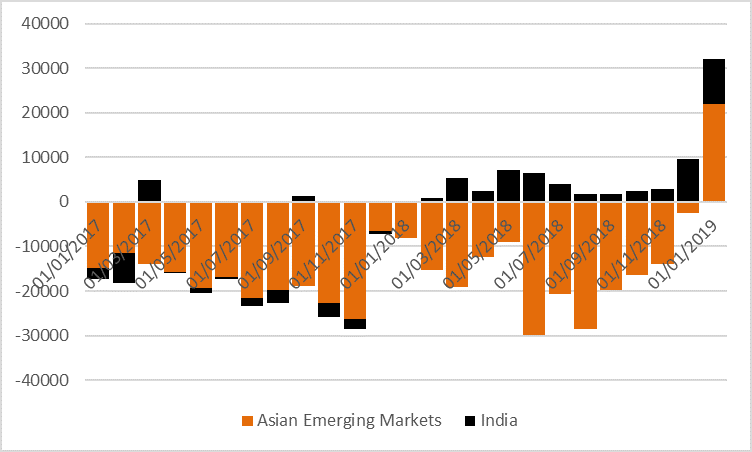
  • Latest January ‘flash’ data show cross-border capital returning to Asia
  • Asian EM and India favoured
  • Reinforces similar evidence in December and helps reverse big outflows a year ago
  • Adds support to our view that Asia is leading the Global cycle higher

Get Straight to the Source on Smartkarma

Smartkarma supports the world’s leading investors with high-quality, timely, and actionable Insights. Subscribe now for unlimited access, or request a demo below.


Brief Hong Kong: Capital Flows Return To Asia and India and more

By | Hong Kong

In this briefing:

  1. Capital Flows Return To Asia and India

1. Capital Flows Return To Asia and India

Kfindia

  • Latest January ‘flash’ data show cross-border capital returning to Asia
  • Asian EM and India favoured
  • Reinforces similar evidence in December and helps reverse big outflows a year ago
  • Adds support to our view that Asia is leading the Global cycle higher

Get Straight to the Source on Smartkarma

Smartkarma supports the world’s leading investors with high-quality, timely, and actionable Insights. Subscribe now for unlimited access, or request a demo below.


Brief Hong Kong: Screening the Silkroad: Small-Mid Cap – Possible High-Risk Names: Q1 2019 and more

By | Hong Kong

In this briefing:

  1. Screening the Silkroad: Small-Mid Cap – Possible High-Risk Names: Q1 2019

1. Screening the Silkroad: Small-Mid Cap – Possible High-Risk Names: Q1 2019

Chart%202%20 %20style

Increasing risk apparent

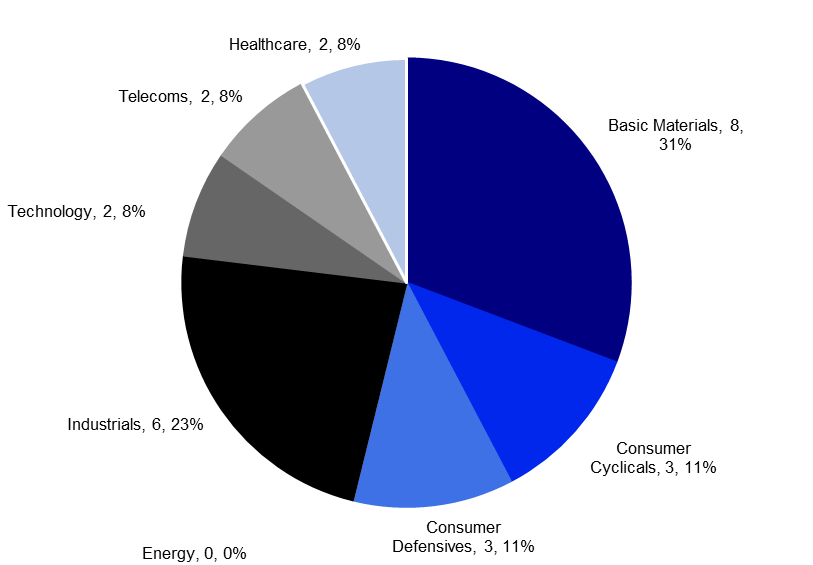
  • Q4-2018 Small-Mid Cap High-Risk screen ( Screening the Silkroad: Small-Mid Cap – High-Risk Names To Avoid Q4 2018 ) delivered a market cap average share price decline of 4.5%. This compares with the MSCI Asia Pacific Index appreciating 4.2% over the same period. 
  • Our screen looks for high valuation multiples presented by candidates, with significant earnings growth forecasts, as well as financial indicators that suggest balance sheet distress. 
  • The Risk to this screen: The Financial and Utility sectors are not covered in this screen. Moreover, “risk is not a number, it is a concept or notion”, as James Mortiner cited during his time at Société Genéralé. Hence, some stocks due to their business model being realigned to a more profitable approach may appear on this screen, whilst also be a member of more positive value or quality screens.
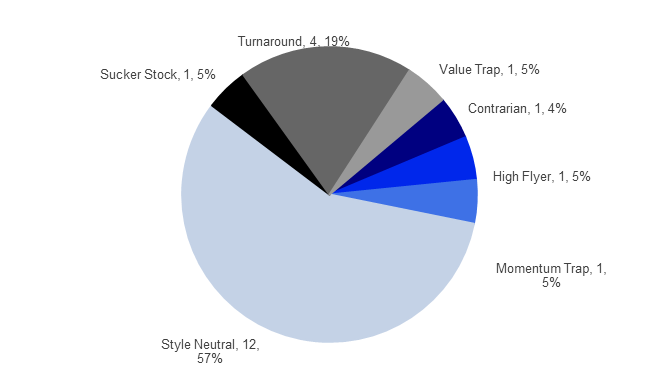
  • 26-stocks appear in our Q1 2019 screen. Eight (8) of which are new, namely from Korea, Japan and Taiwan. Singapore remains absent from the screen for the third quarter running, whilst New Zealand has only presented one candidate in Q4 2018.
  • Our screen suggests that risk is increasing amongst the small-mid cap universe, as the Alman Z average score slips to 1.14 in Q1 2019 from 1.16 in Q4 2018 and 1.38 in Q3 2018. Moreover, our average stock in the list has a ranking of 42.3, compared to 54.9 in Q4 2019. 

Our screening styles

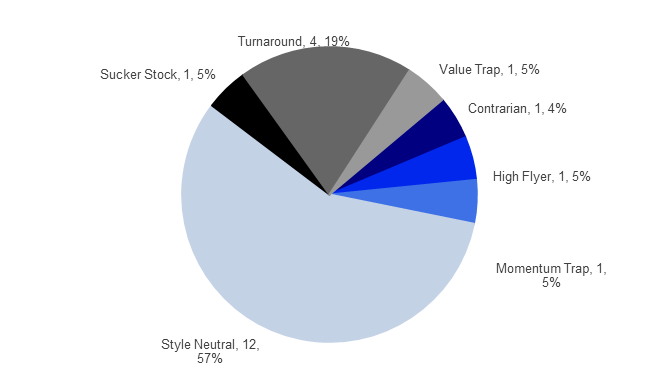
For those that follow us, you will know our Stock Ranking system from our Notes from the Silk Road: Setting Out Our Small-Mid Cap Lemonade Stand  For newcomers to our notes, it is merely a tool for identifying favourable and unfavourable stocks. In addition, to add more depth to our selection process we also monitor a series of “style categories” namely:

■ Growth, 
■ Value, 
■ Quality,
■ Momentum, 
■ Deep Value, 
■ Income,
■ Underperformance.

Within these style categories, we drill down further through a series of alpha momentum screens allowing us to differentiate and identify stock picks. 

Get Straight to the Source on Smartkarma

Smartkarma supports the world’s leading investors with high-quality, timely, and actionable Insights. Subscribe now for unlimited access, or request a demo below.


Brief Hong Kong: Screening the Silkroad: Small-Mid Cap – Possible High-Risk Names: Q1 2019 and more

By | Hong Kong

In this briefing:

  1. Screening the Silkroad: Small-Mid Cap – Possible High-Risk Names: Q1 2019
  2. Dali Foods (3799:HK): Short to HK$4.18 on Expected Cost Increases (Full Note)

1. Screening the Silkroad: Small-Mid Cap – Possible High-Risk Names: Q1 2019

Chart%202%20 %20sector

Increasing risk apparent

  • Q4-2018 Small-Mid Cap High-Risk screen ( Screening the Silkroad: Small-Mid Cap – High-Risk Names To Avoid Q4 2018 ) delivered a market cap average share price decline of 4.5%. This compares with the MSCI Asia Pacific Index appreciating 4.2% over the same period. 
  • Our screen looks for high valuation multiples presented by candidates, with significant earnings growth forecasts, as well as financial indicators that suggest balance sheet distress. 
  • The Risk to this screen: The Financial and Utility sectors are not covered in this screen. Moreover, “risk is not a number, it is a concept or notion”, as James Mortiner cited during his time at Société Genéralé. Hence, some stocks due to their business model being realigned to a more profitable approach may appear on this screen, whilst also be a member of more positive value or quality screens.
  • 26-stocks appear in our Q1 2019 screen. Eight (8) of which are new, namely from Korea, Japan and Taiwan. Singapore remains absent from the screen for the third quarter running, whilst New Zealand has only presented one candidate in Q4 2018.
  • Our screen suggests that risk is increasing amongst the small-mid cap universe, as the Alman Z average score slips to 1.14 in Q1 2019 from 1.16 in Q4 2018 and 1.38 in Q3 2018. Moreover, our average stock in the list has a ranking of 42.3, compared to 54.9 in Q4 2019. 

Our screening styles

For those that follow us, you will know our Stock Ranking system from our Notes from the Silk Road: Setting Out Our Small-Mid Cap Lemonade Stand  For newcomers to our notes, it is merely a tool for identifying favourable and unfavourable stocks. In addition, to add more depth to our selection process we also monitor a series of “style categories” namely:

■ Growth, 
■ Value, 
■ Quality,
■ Momentum, 
■ Deep Value, 
■ Income,
■ Underperformance.

Within these style categories, we drill down further through a series of alpha momentum screens allowing us to differentiate and identify stock picks. 

2. Dali Foods (3799:HK): Short to HK$4.18 on Expected Cost Increases (Full Note)

Dali banner

Chinese snack food and beverage maker Dali Foods Group (3799 HK) is well-loved by sell-side analysts, with 18 of 20 analysts rating the stock ‘Buy’ or ‘Overweight’.

In contrast to the consensus ‘bull’ view of the company, we believe revenue growth is slowing and that core margins will soon come under intense pressure due to rising raw materials costs. As a result, our earnings estimates for Dali Foods are substantially lower than consensus.

Based on 13.5 times our 2019 EPS estimate, our target price for Dali Foods’ shares is HK$4.18, about 23% below the closing price of HK$5.41 on February 1st. 

Get Straight to the Source on Smartkarma

Smartkarma supports the world’s leading investors with high-quality, timely, and actionable Insights. Subscribe now for unlimited access, or request a demo below.


Brief Hong Kong: Screening the Silkroad: Small-Mid Cap – Possible High-Risk Names: Q1 2019 and more

By | Hong Kong

In this briefing:

  1. Screening the Silkroad: Small-Mid Cap – Possible High-Risk Names: Q1 2019
  2. Dali Foods (3799:HK): Short to HK$4.18 on Expected Cost Increases (Full Note)
  3. Aeon Credit Service (Asia) – Giant Yield and ROA, but at Low Price
  4. Dali Foods (3799:HK): Short on Expected Cost Increases (Summary Note)

1. Screening the Silkroad: Small-Mid Cap – Possible High-Risk Names: Q1 2019

Chart%202%20 %20style

Increasing risk apparent

  • Q4-2018 Small-Mid Cap High-Risk screen ( Screening the Silkroad: Small-Mid Cap – High-Risk Names To Avoid Q4 2018 ) delivered a market cap average share price decline of 4.5%. This compares with the MSCI Asia Pacific Index appreciating 4.2% over the same period. 
  • Our screen looks for high valuation multiples presented by candidates, with significant earnings growth forecasts, as well as financial indicators that suggest balance sheet distress. 
  • The Risk to this screen: The Financial and Utility sectors are not covered in this screen. Moreover, “risk is not a number, it is a concept or notion”, as James Mortiner cited during his time at Société Genéralé. Hence, some stocks due to their business model being realigned to a more profitable approach may appear on this screen, whilst also be a member of more positive value or quality screens.
  • 26-stocks appear in our Q1 2019 screen. Eight (8) of which are new, namely from Korea, Japan and Taiwan. Singapore remains absent from the screen for the third quarter running, whilst New Zealand has only presented one candidate in Q4 2018.
  • Our screen suggests that risk is increasing amongst the small-mid cap universe, as the Alman Z average score slips to 1.14 in Q1 2019 from 1.16 in Q4 2018 and 1.38 in Q3 2018. Moreover, our average stock in the list has a ranking of 42.3, compared to 54.9 in Q4 2019. 

Our screening styles

For those that follow us, you will know our Stock Ranking system from our Notes from the Silk Road: Setting Out Our Small-Mid Cap Lemonade Stand  For newcomers to our notes, it is merely a tool for identifying favourable and unfavourable stocks. In addition, to add more depth to our selection process we also monitor a series of “style categories” namely:

■ Growth, 
■ Value, 
■ Quality,
■ Momentum, 
■ Deep Value, 
■ Income,
■ Underperformance.

Within these style categories, we drill down further through a series of alpha momentum screens allowing us to differentiate and identify stock picks. 

2. Dali Foods (3799:HK): Short to HK$4.18 on Expected Cost Increases (Full Note)

Sali price

Chinese snack food and beverage maker Dali Foods Group (3799 HK) is well-loved by sell-side analysts, with 18 of 20 analysts rating the stock ‘Buy’ or ‘Overweight’.

In contrast to the consensus ‘bull’ view of the company, we believe revenue growth is slowing and that core margins will soon come under intense pressure due to rising raw materials costs. As a result, our earnings estimates for Dali Foods are substantially lower than consensus.

Based on 13.5 times our 2019 EPS estimate, our target price for Dali Foods’ shares is HK$4.18, about 23% below the closing price of HK$5.41 on February 1st. 

3. Aeon Credit Service (Asia) – Giant Yield and ROA, but at Low Price

1

As we expand over analysis of exceptionally high yield lenders, we continue to see interesting ideas outside of mainstream commercial banks. Aeon Credit Service Asia Co (900 HK) is another specialty lending that fits well with the several we have highlighted in our past research. There is one glaring difference though: value.

4. Dali Foods (3799:HK): Short on Expected Cost Increases (Summary Note)

Sali price

Chinese snack food and non-alcoholic beverage maker Dali Foods Group (3799 HK) is well-loved by sell-side analysts. Fully 18 of twenty analysts (including all four of the ‘bulge bracket’ investment banks who cover it) rate the stock ‘Buy’ or ‘Overweight’, and only one analyst gives the shares an ‘Underweight’ rating.

The ‘bull’ case for Dali Foods includes continued strong revenue growth and further margin expansion over the next few years. In contrast, we believe revenue growth is already moderating and that core margins will soon come under pressure due to rising raw materials costs. As a result, our forward earnings estimates are substantially below consensus expectations.

Based on 13.5 times our 2019 EPS estimate, our target price for Dali Foods is HK$4.18, about 23% below its HK$5.41 closing price on February 1st. We suggest investors Short Dali Foods; current holders should consider exiting their positions, in our view.

A longer note that includes company and industry background, plus financial statements and forecasts for Dali Foods, can be found elsewhere here on Smartkarma using the company’s ticker.

Get Straight to the Source on Smartkarma

Smartkarma supports the world’s leading investors with high-quality, timely, and actionable Insights. Subscribe now for unlimited access, or request a demo below.