
In this briefing:
- How To Spot The Bear Market Bottom
- Are US Stocks A Buy Yet?
- Uber IPO: Its Sprawling Empire And Battle Lines (Part 3)
- Monthly Geopolitical Comment: Redrafting of Global Map of Political Alliances to Continue in 2019
- Autonomous Driving. Waymo Leading The Charge With Ten Million Miles Driven And Counting
1. How To Spot The Bear Market Bottom
The outsized daily swings in the major U.S. equity averages tell the classic story of a bear market. Normal bull markets simply do not experience consecutive multiple daily moves of 2% or more.
The market’s panicked price action is highly reminiscent of past panics in 1962, 2002 and 2015. In those cases, the market bounced, and made a lower low several months later. In all cases, stock prices were higher a year later. Our base case scenario calls for an initial low, rally, followed by choppy price action, and a final low in 6-8 months.
Our analysis finds that the technical price action of the market is consistent with a bear market. We offered a checklist of events that occur at market bottoms, but we do not know where the market may bottom out. Much depends on the fundamental drivers of the bear market, policy risks from the White House and the Federal Reserve, and how they are ultimately resolved.
2. Are US Stocks A Buy Yet?

- 5%-like rallies on Wall Street are signs of a bear market not a bull market
- Bull markets require strong liquidity and low risk appetite, neither yet apply
- Risk appetite readings at minus 12.6 are still above the minus 40 criterion for an upturn
- Recent large fall in risk appetite consistent with upcoming economic recession
3. Uber IPO: Its Sprawling Empire And Battle Lines (Part 3)
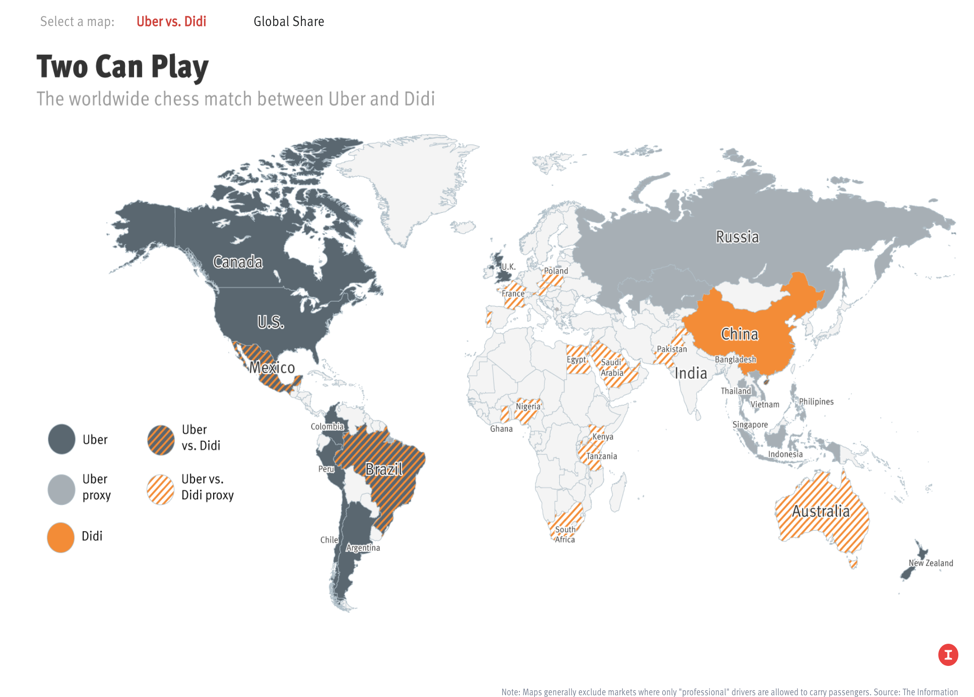
Although Uber aims to be an Amazon for transport, we will focus on the ride-hailing market in part 3 of this series. Here, we try to answer the following questions:
- What are the indicative ride-hailing market shares of Uber vs Lyft in North America?
- What is Uber’s share in other key countries?
- What are the lawsuits investors should watch out for?
- How do Uber’s revenue drivers compare with Lyft’s?
- What are the timelines and key figures for both companies’ IPOs?
This is the third note in a series about the expected 2019 IPO of global ride-hailing giant Uber Technologies (0084207D US) and Lyft. Please read the earlier two pieces in the series for better contexts:
Uber IPO Preview: Its Sprawling Empire and Battle Lines (Part 1) written by me.
Uber IPO Preview: Fast-Growing Uber Eats Has Become a Material Part of Uber (Part 2) written by Daniel Hellberg
4. Monthly Geopolitical Comment: Redrafting of Global Map of Political Alliances to Continue in 2019
The year 2018 has proven tumultuous for global markets. Rapidly changing geopolitical priorities of the US, an erstwhile hegemon, have played a role no less significant than the withdrawal of liquidity by leading central banks or US monetary policy tightening. The US has openly declared that it is in a state of “cold war” with China. Despite the recent truce, signs are abundant that the confrontation between the two global superpowers will continue into 2019 and beyond. In 2019, we expect more countries to find themselves in a position where they must choose who they want to side with, the US or China. There are other tectonic shifts, too, which are causing re-alignment of global geopolitical alliances.
5. Autonomous Driving. Waymo Leading The Charge With Ten Million Miles Driven And Counting

Waymo CEO John Krafcik made some bold decisions after taking the helm at Alphabet‘s self-driving project in September 2015. Chief among them was the fact that the company abandon its plans for Level 3 automated driving and focus exclusively on levels 4 & 5. Furthermore, he decreed that Waymo would no longer manufacture its own vehicles but would instead integrate their technology into those of other automakers. Three years later, those decisions would appear to be finally paying off.
On October 10 2018, Waymo reached a significant milestone having completed 10 million self-driving miles across 25 cities in the US. While their first million self-driving miles took 18 months to complete, Waymo now clocks up over a million self-driving miles per month. The company also recently announced the launch of its robo taxi service in Phoenix, Arizona and looks set to quickly follow suit in California. Plans to extend its self-driving technology beyond robotaxis, most notably for trucks and last-mile transportation solutions are also in the works. Furthermore, the company has begun laying down a framework of innovative B2B revenue models which should help accelerate the speed with which they can eventually monetize their technology.
It hasn’t been smooth sailing all the way for Waymo however. Earlier this year, the company was derided for the driving style of its autonomous vehicles and faced the criticism that its driverless cars continue to have safety drivers. There was also an embarrassing incident where one of those very safety drivers caused the self-driving car he was monitoring to hit a motorcyclist when he attempted to take control of the vehicle. According to Waymo’s own analysis of the vehicle log files, the accident would not have happened had he not intervened.
With ten million self-driving miles under their belt and a thoughtful, strategic approach to monetizing their technology beginning to emerge, Waymo remains firmly ahead of their peers in leading the autonomous driving charge.

