This weekly newsletter pulls together summaries of the top ten most-read Insights across Macro and Cross Asset Strategy on Smartkarma.
Receive this weekly newsletter keeping 45k+ investors in the loop
1. UK: No Need To Cap Energy Yet
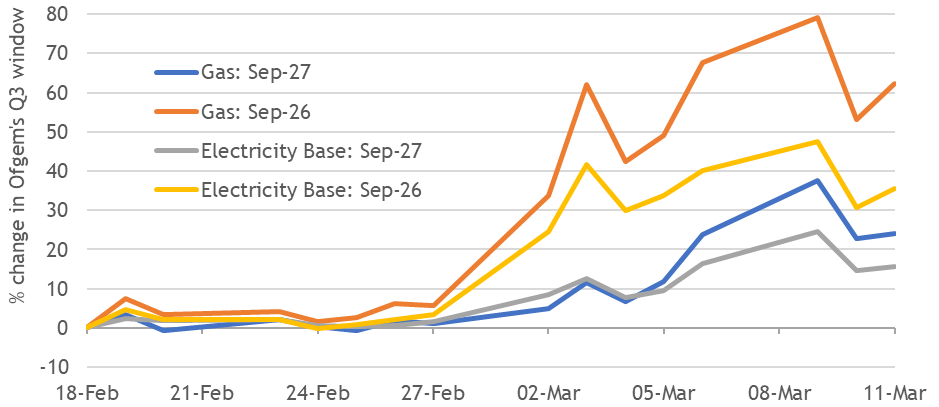
- Energy price volatility is translating into the UK inflation forecast, albeit dampened by direct fuel costs only being 40% of household energy utility costs.
- We are updating our forecasts regularly to accurately capture the impact of higher prices and the rolldown of their priced future unwind into an inflationary hump.
- An average 10% price rise of gas adds 5bps to CPI, and in electricity adds 6bps. These elasticities rise with prices and drive our profile far above the consensus.
2. HEW: Inflation Devours Doves
- Events in Iran and perceptions of military reaction functions drove significant market volatility again. Inflationary pressure has devoured doves, clearing the skies for hawks.
- Macro releases were few and stale. US inflationary pressures remain slightly excessive, but global activity is slower than hoped. Not many doves are left to highlight that now.
- Next week is packed with opportunities to respond at the Fed, ECB, and BoE. Attentive readiness to respond should go with caution amid noisy volatility, which may disappoint.
3. Iran: Gaming Thrones
- Trump’s strategy signals an aim to remove Iran’s antagonistic leadership and its offensive capabilities, without replacing the broader regime, for a quick win.
- Iran escalated with attacks around the region to maximise the pain for the West. Trump could announce a withdrawal even with an unrepentant regime if the costs get too high.
- An open-ended escalation is the least likely scenario, but possible if intensified attacks on energy infrastructure make Trump see red and demand an Iraq-style regime change.
4. US: A Less Good Place For Inflation
- Unsurprising US inflation data for February preserved the annual rates above the target, with the monthly impulse of this and underlying measures also stuck too high.
- The tariff shock was the dog that didn’t bite, but this energy supply shock will do much more than just bark. Firms can’t avoid energy prices like they can tariffs.
- Surging gasoline prices undo the progress that recent months had created for Fed cuts. The shock is less bad than in Europe, but it’s tough to ease into this environment.
5. Asian Equities: What’s Being Discounted Now, After the Carnage?
- Asia’s dependence on Middle Eastern energy and the Strait of Hormuz transit route has driven immense share price volatility – especially in Korea, Japan and pockets of ASEAN.
- The top winners and top losers across market-sectors indicate that the market is most worried about input shortage across industries and potential demand destruction driven by heightened inflation expectation.
- Manufacturing sectors and consumer proxies across Asia could continue to underperform if the conflict lingers. Energy, high dividend yield, precious metals and developed Asia financials could be the safe havens.
6. China: Prepared for a Long War!
- China’s currency, equity, and bond markets have held up better than those of other Asian countries since the beginning of the war in Iran.
- Chinese-Flagged ships have been allowed safe passage through the Strait of Hormuz, which may signal that China will continue to import some crude, LNG, and fuel from the Middle East.
- China increased its strategic oil reserves at a pace of 1mm bbls a day over the past year. Estimated at 1.5 billion bbls, China has ample reserves for a protracted war.
7. War and Peace: History Rhymes, But Which History?
- Investors with the thought that they should conduct their own due diligence about their own possibly overly rosy historical assumptions about long-term risk and return expectations.
- Conventional studies of U.S. asset returns may be creating overly unrealistic expectations of long-term asset returns. The U.S. experience has severe survivorship problems.
- In the words of Ronald Reagan, trust (the markets), but verify (that the regime hasn’t shifted).
8. How Do You Say TACO in Farsi?
- Both the Iranian regime and the Trump Administration face different pressures to bring the war to a conclusion.
- Trump is under political pressure from his support base for his “no wars” pledge. A rising oil price pressures inflation, which threatens the “affordability” promise that he campaigned on.
- We believe these pressures will force him to a TACO (Trump Always Chickens Out) pivot in the near future.
9. BUY/SELL/HOLD: Hong Kong Market Update (March 10)
- Hong Kong market pullbacks with global markets due to war and oil price uncertainty. HSI fell below 200 DMA but holds well above long-term support.
- Value and dividend yield factors are outperforming in 2026. The energy sector has overtaken the materials sector as the top performer year-to-date, with a 24% return.
- Techtronic Industries (669 HK) is rated BUY by UBS and OVERWEIGHT by JP Morgan. It is pursuing Asia and Latin America, aiming to be the dominant brand in these regions.
10. CHARTING COURSE: War Tacos On the Menu – Oil, Weapons and Polls (3/11/26)
- President Trump is preparing for a near-term exit from the Iran conflict. High energy prices, declining popularity in polls, and strains on US weapon inventory forces another TACO decision.
- Surging oil and gas prices are a major problem for Trump before the US midterm elections. Gas prices in the U.S. are higher than they were during his first term.
- President Trump’s approval ratings are at risk of further sharp declines the longer the war continues. The U.S. and its Gulf allies are depleting their weapons rapidly without near-term replacements.