
Receive this weekly newsletter keeping 45k+ investors in the loop
1. Wall Street Vs Silicon Valley: AI Cannot Pay for Itself, so It Will Come for the Businesses that Can
- AI’s Next Battle Is Not Models — It Is the US$4tn+ Fee Pools Around Them, From Financial Services to Advertising and Information
- Silicon Valley Has the Scale and Cost Advantage; Wall Street Has the Licences, Balance Sheets and Relationships to Defend the Fortress
- Our Outcome: A Bifurcated Oligopoly — AI Captures Unlicensed Thinking, While Regulated Incumbents Defend Clients but Surrender Pricing Power
2. India Equities: Stocks to Watch After Deep Underperformance
- India reversed its entire relative gain against EM. The near 50% relative drawdown is the deepest and longest since 2012, so we’re positioning for improvement.
- Bottom-Decile losses in India have historically preceded strong rebounds. Although relative washouts offer no comparable evidence. We can scale up on an absoute basis.
- Opportunity in the middle of the index. We built a tiered watch list from the middle cohort, scaling toward equal weight as confirmation arrives.
3. HEW: Broadening Rate Rises
- Hopeful easing of energy price pressures didn’t disrupt the rising trend in interest rates, aided by PMI data showing sustained resilience and the ongoing fiscal profligacy.
- The Norges Bank delivered a hike, despite dovish hopes to stop it, while the Riksbank signalled it will start hiking before year-end, and even the SNB opened a hawkish door.
- Next week is the RBA’s turn to be hawkish to avoid unwelcome FX pressures. US payrolls and higher EA inflation are the week’s highlights in the macro data.
4. SNB: Franc Shifts the Balance
- The SNB held its policy rate at 0%, as unanimously forecast, judging that higher headline inflation does not yet warrant tightening.
- A weaker franc and elevated energy costs have lifted the inflation path, but forecasts of 0.8% in 2027 and 2028 still support a prolonged hold.
- Rate rises require broader, persistent inflation; renewed franc strength or weaker global demand would instead reinforce the 0% floor.
5. Sentiment Matters: The Biggest Consensus Longs and Shorts
- Where is the market most crowded — and where could the consensus be most vulnerable? This note uses our cross-asset sentiment rankings to find out.
- Technology, Industrial Metals and Energy remain among the strongest consensus longs, with bullish sentiment elevated enough to raise the hurdle for further positive surprises.
- Health Care and High Yield sit near the bearish end of the ranking, but Health Care offers the cleaner contrarian setup given broader and more extreme pessimism.
6. Riksbank Holds Now to Hike Later
- The Riksbank held at 1.75%, as unanimously expected, but its higher rate path confirms a 2026 increase in the base case, with more in 2027.
- Stronger demand, a weaker krona and higher energy costs raise second-round inflation risks, despite underlying inflation remaining near 2%.
- Future hikes hinge on adjusted inflation, demand and labour-market resilience, the krona, energy prices and fiscal policy.
7. Technically Speaking Breakouts & Breakdowns – HONG KONG (September 2026)
- The Hong Kong market continues to drift sideways this month, trading above its long-term support levels but unable to rally past strong resistance at 27100.
- The healthcare and materials sectors have been the only positive performers since August. Large-cap and value factors have consistently outperformed YTD.
- JOINN Laboratories (6127 HK) had an engulfing breakout earlier in the month. The H1 2026 backlog surged 61% to CNY 3.7bn, with newly signed orders nearly doubling.
8. Indonesia: Rupiah Defence Sets the Rate
- Bank Indonesia held its policy rate at 5.75%, as expected, prioritising rupiah stability while macroprudential and fiscal measures support growth.
- Near-Term cuts are unlikely as Fed tightening, a strong dollar, weak portfolio inflows and higher oil prices constrain BI’s policy flexibility.
- A prolonged hold is most likely; renewed rupiah or inflation pressure could trigger a hike, while cuts require sustained external stability.
9. Resilience Survives Renewed Shock
- Flash PMI balances broadly increased in September, despite the intensifying energy supply shock. It has so far been shrugged off, just like the tariffs last year.
- Services balances had fallen in Q1 before the conflict began but have broadly recovered all the lost ground even without the conflict ending.
- National services balances are broadly above their medians of the past year and decade, so demand is not depressed and can’t offset excess inflation in policy trade-offs.
10. BUY/SELL/HOLD: Hong Kong Market Update (September 2026)
- The Hong Kong market continues to consolidate, holding above its long-term support levels but without the momentum to break out to new highs.
- Healthcare is the only sector in positive territory in September. The materials sector benefited from gains in the gold sector.
- ZTE (763 HK) is maintained a BUY at CMB International with a +48% 12-month upside target price. The company is transitioning to international and AI sectors for growth.
Receive this weekly newsletter keeping 45k+ investors in the loop
1. UK: Inflation Squeezes BoE Doves
- Inflation’s August rise matched final forecasts but was 0.3pp above the BoE’s view from July, with resilient services driving the upside along with energy prices.
- Airfares were surprisingly soft, perhaps skewed by sampling and imputation. Underlying price pressures more broadly are still annualising to 3% amid excessive expectations.
- Energy price rises have quadrupled since June’s temporary lows in an intensification of the hawkish shock. The dovishly biased MPC members shouldn’t block a November hike.
2. UK: Resilient Return of the LFS
- The ONS remembered to conduct the LFS again in July, and responses were resilient after two months of imputation. Unemployment held at 4.9%, contrary to dovish views.
- June’s high single-month rate reflects a cohort that leaves the survey in September, potentially cutting the UR by 0.1pp then. Fundamental signals remain broadly stable.
- Wage growth measures range from 2.9% to 5.1%, with outliers biased and the truth probably around 4%, which is too high to be consistent with the inflation target.
3. Fed: Higher Neutral, Higher Plateau
- The Fed hiked by 25bp to 3.75–4.00%, with the dots signalling at least one more increase this year and a long plateau for rates at that higher level.
- Its median rate path is now at 4.1% for 2026–27 and 3.9% for 2028, in a hawkish shift relative to June’s dots and the consensus held until recently.
- A rise in the longer‑run rate to around 3.25% implies a structurally higher neutral 𝑟∗ that pressures peers to reciprocate. We believe the truth is likely even higher than this.
4. BoE: Too Little, Too Late
- The BoE’s reiterated 6-3 vote for no change was an unsurprising ongoing failure to rise to the challenge, unlike its peers. But at least members are on course for November.
- Reliance on a low neutral rate and expectations being anchored at 2%, despite all evidence to the contrary, are critical biases pushing the BoE’s policy failure to persist.
- QT’s expensive mistake is belatedly softened by selling gilts to the DMO, but, like a November hike, this is too little, too late. The fiscal cost could have been avoided.
5. AI THREATENS HUMANITY: World Goes to DEFCON 1 !!
- Leaders of top US AI companies have said human extinction is possible and that AI model development should be slowed.
- With upcoming IPOs and rapid market-share losses to open-source Chinese models, safety risk declarations and calls for government regulation could help these firms cement an oligopoly in the US market.
- China has read this playbook clearly, calling it “malicious competition” and pivoting its strategy: building domestic chip infrastructure, releasing ultra-cheap open-source models, and positioning itself as the open-AI champion.
6. CHINA AI: Are US AI Giants Pushing for a Ban on Chinese Models?
- The US is desperately trying to protect its declining market share in AI. The recent declarations of safety regulations could set the stage for a ban on Chinese AI models.
- Current AI safety discussions follow many measures the US has taken to stifle the rise of Chinese AI models, including export restrictions, accusations of illegal distillation, and global loyalty pledges.
- The US is faced with a dilemma: whether to protect its domestic AI players and risk lowering economic productivity or allow an open market where Chinese AI models may dominate
7. BoJ: Hike Disappoints Markets
- The BoJ’s 25bp hike to 1.25%, in line with consensus, came with an ongoing cautious tightening bias as inflation nears 2% and FX risks stay elevated.
- A 7–2 split vote and below‑target core CPI argue for gradual, data‑dependent hikes rather than a rapid or front‑loaded rate path.
- Yen weakness after the decision shows markets still see BoJ as lagging behind necessary action, leaving pressure for further rate rises if inflation and FX prove problematic.
8. Korea To Introduce 50%+1 Mandatory Tender Offer Rule: Taking 1 Step Back on Reducing Korea Discount
- In the past several days, Korea’s National Assembly passed an amendment to the Capital Markets Act, codifying a bipartisan compromise known as the “50%+1” rule for tender offers.
- I do not like the new 50%+1 tender offer system in Korea, although it is slightly better than the existing tender offer system in Korea.
- What about the remaining 49.99% of the minority shareholders? Clearly, these remaining minority shareholders are not treated fairly.
9. HEW: Hawkish Peer Pressure
- UK inflation and unemployment data confirmed a significant hawkish drift in the BoE’s forecast, but its reluctance to respond disappointed overly hawkish market pricing.
- The Fed and BOJ both hiked like the ECB and are likely to go again, although FX traders also punished the BOJ’s caution. Doves were beaten by peer pressure.
- Next week is the turn of the Norges Bank, SNB and Riksbank to announce their policy decisions, with the latter two being some of the increasingly rare dovish holdouts.
10. Hong Kong’s IPO Boom Is Becoming an Equity Absorption Problem
- Hong Kong’s IPO + placement pipeline has created an estimated HK$1.2trn of net absorbable supply, equivalent to ~5% of free float.
- Thin floats, six-month lock-ups and rising rates are weakening IPO absorption, while A/H discounts point to venue-specific liquidity stress.
- Positioning: favour A-shares, HK cash-returners and HKD cash; underweight the 2026 IPO cohort until supply exhaustion becomes visible.
Receive this weekly newsletter keeping 45k+ investors in the loop
1. Activity Defies Dovish Biases
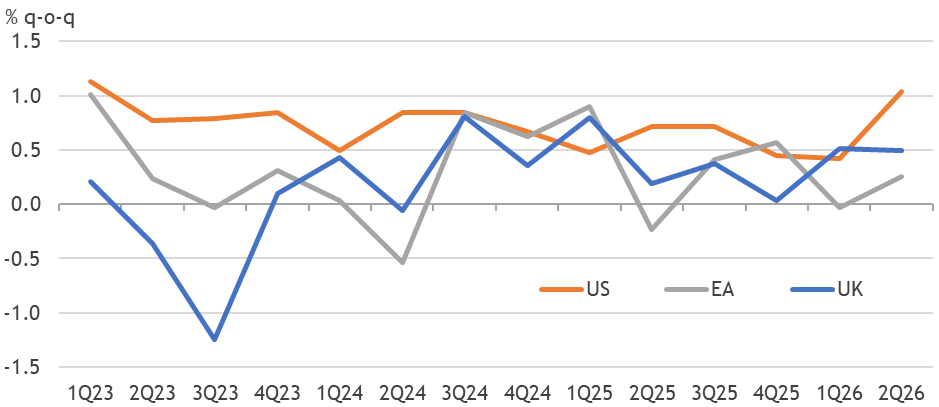
- Upwardly revised headline EA GDP in Q2 didn’t stop it from underperforming peers in H1, including in the labour market, but global activity has been remarkably resilient.
- There is broad balance in countries reporting higher unemployment rates as lower, which suggests slack and monetary conditions are both broadly neutral now.
- Dovish BoE assumptions leave it accommodating high inflation and credit growth, while the decisive ECB stopped the drift. One BoE hike is not enough, but is all that is likely.
2. Reliance On A Warm Winter
- Gas inventories are accumulating too slowly, so storage levels are at their lowest for the time of year and leaving little buffer against historically experienced drawdowns.
- The location of storage matters to energy security, and yet the UK has the lowest level and fullness of storage in Europe, despite its relative vulnerability to being cut off.
- A cold winter would squeeze prices much higher to destroy less sensitive demand, but that would be unusual for an El Niño year, trimming the probability of this painful risk.
3. HEW: Energy Squeezes Tighter
- Sunken Iranian tankers in the Strait of Hormuz and Houthi control of Bab-el-Mandeb are compounding the energy supply shock, squeezing prices to highs as hopes hit lows.
- Activity is still remarkably resilient, so the trade-off screams hawkish, causing the ECB to hike and probably go again in December. The BoE seemingly prays for a warm winter.
- Another 6-3 BoE vote to hold is likely, but with two more members open to a November hike. The BOJ is set to hike, and the Fed likely will too.
4. US Treasuries: The Battle for Price Discovery Versus Financial Repression
- The premium that bond investors are willing to pay for US Treasury securities has fallen since the end of the COVID-19 pandemic due to concerns about monetary and fiscal policy.
- Quantitative easing (QE) by the Fed and below-target inflation persuaded US politicians not to end profligate fiscal policy conduct. QE has sobering legacy issues involving rising inflation and government debt.
- Bond investors and US policymakers disagree about the pricing of Treasury securities as bad fiscal policy conduct is being increasingly factored into valuations as investors seek appropriate price discovery.
5. Sentiment Matters: Buy Side Sentiment Tracker
- We aggregate the published asset-allocation views of more than 50 asset managers across 70+ assets, highlighting where buy-side consensus is building or breaking down.
- Risk appetite: Four of five RoRo indicators rose, taking the aggregate to the third-highest level in Tracker history, while equity sentiment hit a record +81% net bullish.
- Still not all-in: EM equities, Tech and EM FX are very popular, but safe-haven positioning is less extreme; the Swiss franc is the least popular asset at -46% net bearish.
6. Portfolio Update: Selective in Global Stocks, Commodities, Underweight Bonds
- Global equities and commodities contributed to gains throughout our portfolio suite, driven by positive selection effects.
- Aggressive strategies continue to outperform their respective benchmarks YTD, especially as tech and crypto stabilize.
- Positioning carries over into September, maintaining an underweight to bonds and overweights to global stocks and commodities.
7. Asian Equities: Foreigners Are Buying Korea and Taiwan Again; India and Thailand Being Sold
- Recent spike in oil prices and US yields is not deterring foreigners from buying Asian equities. After buying US$4.8bn of Asian Equities in August, FIIs have bought US$1.8bn in September.
- In August FIIs bought Taiwan (US$11bn) and India (US$3.1bn) and sold Korea (-US$8.5bn). In September they have bought Taiwan (US$2bn) and Korea (US$1bn) and have sold India (-US$1.25bn).
- We believe foreign buying shall bounce back in tech-heavy Korea and Taiwan. FIIs would likely buy India too, but in smaller measure than North Asia. We are cautious about ASEAN.
8. ECB: No-Brainer Hike Is Not The Last
- The ECB’s unsurprising unanimous 25bp rate hike was dubbed a no-brainer by President Lagarde amid upside news on both activity and pipeline inflation pressures.
- Staff forecasts settle above target through the medium term, with upside risks and news since the forecast’s cut-off, signalling a strong case for another hike in December.
- Stale neutral rate estimates aren’t restraining the ECB like they are at the BoE, so its three hikes can achieve the target while the BoE’s one perpetuates its policy failure.
9. CTA Trend Picks in Taiwan, South Korea, and Japan
- CTAs are positioned in Asia uptrends, but the stocks that support it are losing momentum.
- We uncovered stocks that sit outside the CTA trade that may be less vulnerable to outflows.
- Tech uptrends remain intact, just lower their weight and make room for less volatile trends in financials.
10. Walker’s Weekly: Dr. Jim’s Summary of Key Global Macro Developments – 11 Sep 2026
- It was with a large pang of sadness this week that we saw the news of the passing of Tung Chee-hua, the first chief executive of Hong Kong post 1997. We were sad not because he was a particularly good leader and that everything in Hong Kong was rosy under his administration, but because he was a perfectly good man with the territory’s best interests at heart.
- On the other hand, the current US Treasury Secretary, Scott Bessent simply leaves the impression of being arrogant and egotistical. He challenges the markets to take him on as regards what he’s going to do with the bond market and more so with the yen. He says “Don’t mess with my Yen agenda”, but seems to forget he is US Treasury Secretary, not the Finance Minister of Japan (or a hedge fund manager).
- We published a Peregrinations report earlier this week, called Japan: Through AI Glasses. It forms part of the argument behind our long yen call, which at the moment is working because markets are frightened of Bessent and intervention. But it won’t work long term unless the yield differential closes. In our view, the way that it will close is through an accelerated hiking pace by the BoJ, not the way that most analysts expected.
Receive this weekly newsletter keeping 45k+ investors in the loop
1. HEM: Sep-26 Views & Challenges
- The energy supply shock is squeezing prices and not destroying much demand. UK excesses are backloaded and underappreciated.
- A warm winter could avoid pressures intensifying. Yet monetary conditions and slack look more balanced than dovishly assumed.
- We see hikes from the BoE in Nov-26 and ECB in Sep-26. Market pricing has probably gone too far given dovish policymaker bias.
2. Recent Bloodbath Margin Calls in the Korean Stock Market – 0.36 Million Margin Accounts Liquidated
- In this insight, I provide a detailed analysis of the recent major bloodbath margin calls and liquidations in the Korean stock market, especially in the summer of 2026.
- There are about 1.5 million active margin accounts in Korea, of which more than 1.2 million margin accounts received margin call triggers and 0.36 million have been liquidated this summer.
- It may take more time for retail Korean investors to regain confidence and re-enter the domestic market more actively due to recent trauma from their margin calls and liquidations.
3. China Equities: Relative Upside in Offshore Vs. Onshore Stocks
- Offshore relative value: We tested 12-month relative returns across onshore vs. offshore, and both vs. EM. Offshore China is the oversold leg, driven by its own weakness rather than onshore strength.
- AI rotation: The performance gap reflects capital favoring the onshore industrial upgrades vs. offshore consumption. Re-rating requires offshore earnings pickup regardless of how cheap the multiple looks.
- Stock selection:MSCI China Index (MXCN INDEX) is dominated by Tencent (700 HK) and Alibaba (9988 HK) while dispersion across the index is wide. We built an investable bucket.
4. HONG KONG ALPHA PORTFOLIO: (August 2026)
- HK Alpha portfolio gained 3.45% in August, outperforming its benchmark by 2.67%. Since inception, the portfolio has outperformed HK indexes by 60% to 84%. HK ALPHA is up 14.35% YTD.
- The Sharpe ratio stands at 1.21, compared with a benchmark of 0.68 since inception. This higher Sharpe ratio is driven by excess alpha, which represents more than 50% of returns.
- The portfolio gained in the healthcare, industrial, and technology sectors in August, while utilities and telecom exposure dragged on performance.
5. EA: Rates Rising Into September
- EA inflation’s 31bp rise in August to 3.3% more than completed the reversal of June’s premature optimism. Benign food and goods price rises aren’t seen in services and core.
- Resurgent inflationary pressures reinforce the ECB’s July signal that it would hike again in September. Core inflation is too high, and upside risks remain.
- Demonstrated vigilance should help preserve the anchor of expectations at 2%, avoiding the BoE’s ongoing failure. Two hikes should be sufficient if a winter squeeze is avoided.
6. HEW: September Steps To Hike
- Boisterous US labour market data move the Fed a step closer to a September hike, with next week’s CPI release now pivotal, while rising EA inflation preserves the ECB’s path.
- The RBNZ hiked and signalled further normalising steps, while central banks in Canada and Malaysia held rates, albeit with the odds of tightening rising in the former.
- Beyond next week’s ECB rate hike and Friday’s US inflation highlight, we await GDP data from the UK and the EA, along with the latter’s final Q2 employment data.
7. Canada Holds As Inflation Risks Rise
- The BoC held at 2.25% as expected, but highlighted higher inflation risks from energy and tariffs, raising the odds of future tightening.
- Broadening recovery and excess supply justify a wait‑and‑see stance, while trade uncertainty could cap growth and extend the hold.
- Rate cuts look unlikely while headline CPI stays near 3%; multiple hikes remain possible if price pressures spread beyond energy.
8. Japanese Banks: Rotating Beneath the Surface
- Return dispersion among banks is wide enough to select on. Individual outcomes range from Fukui Bank (8362 JP) at +264% to Rakuten Bank (5838 JP) at -23%.
- Leadership is rotating. Money is moving from small cheap regionals back toward larger names.
- We constructed a barbel portfolio. Leg A holds six trend-confirmed momentum leaders. Leg B holds six accelerating laggards.
9. Korea Small Cap Gem Insights – Relative Outperformance Vs KOSDAQ
- In this insight, I provide the data analysis regarding the relative performance of my Korea Small Cap Gem series insights (for 27 KOSDAQ listed companies) versus KOSDAQ last two years.
- These 27 companies’ share prices are up on average 3.9%, 11.5%, and 13.8% over one week, one month, and three months, respectively from one day prior to their insight publications.
- I compared these performances versus KOSDAQ which was up on average 0.1%, 1.2%, and 3.4%, respectively from one day prior to these insight publications (same time periods).
10. RBNZ Hikes Towards Conditional Endgame
- The RBNZ’s widely expected 25bp OCR hike to 2.75% extends gradual normalisation towards a ~3% neutral rate, with a conditional tightening bias beyond.
- External economists are split on the terminal rate: some see 3–3.25%, others up to 4%, highlighting a genuinely data‑dependent path for future hikes.
- Fragile domestic demand and export‑led resilience mean the RBNZ will weigh inflation persistence against growth risks before moving rates much above neutral.
Receive this weekly newsletter keeping 45k+ investors in the loop
1. UK: De-Energised Ofgem Vol
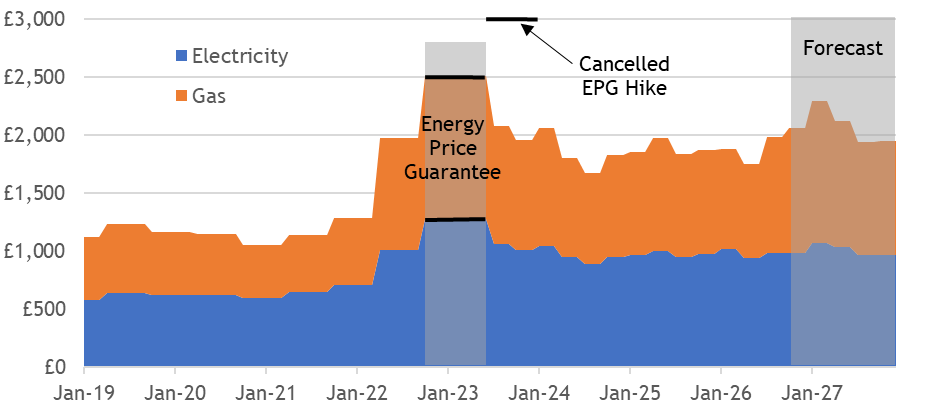
- Household energy utility prices are not much higher than before the energy supply shock began, and are unsurprisingly announced to be rising by only 4% in October.
- The ongoing supply shortage is squeezing prices higher as winter approaches, with inventory levels perilously low in Europe, relying on a warm and wet El Niño season.
- Pass-Through to the CPI/RPI is dampened this time by the blending of fixed tariffs with a high weight. Except that policy and tax changes hit immediately in April and October.
2. Trump’s Iran D-Day: Why “Operation Economic Outcast Is D.O.A.”
- The US unveiled new policies to impose secondary sanctions on countries that have trade or other relationships with Iran. These policies assert US control over any nation’s financial sovereignty.
- Iran’s most consequential trading partner is China, and the US has not sanctioned any major Chinese company or bank because of the risk of “blowing up the global economy.”
- As in the military conflict, the US is overplaying its hand and risks substantial global economic consequences by pursuing short-term, impulsive policies rather than proper negotiations to achieve long-term objectives.
3. Philippines: Third Hike Nears the Peak
- BSP’s third 25bp hike to 5.0% was expected as above‑target inflation to 2027 extends a tightening bias and delays any hopes for rate cuts.
- Upside risks from El Niño, oil and wages mean future moves hinge on core inflation, expectations and evidence of second‑round effects.
- Despite weak growth, BSP’s inflation forecasts imply a prolonged pause at restrictive levels, with cuts only likely once price risks and expectations ease.
4. BoK Doubles Down on Pre‑emption
- The BoK raised its Base Rate by 25bp to 3.00% in a broadly expected back‑to‑back hike, but the hawkish dot plot now points to 3.25–3.50% within six months.
- Stronger growth and sticky core inflation keep inflation above target for “a considerable time”, making further hikes likely unless data undershoot current projections.
- Housing and household‑debt risks now anchor a more pre‑emptive reaction function, limiting scope for early cuts even if headline inflation edges closer to target.
5. ECB Accounts for September Bias
- July’s unanimous hold masked support for a hike. The new meeting Accounts confirm that another rate rise is likely in September unless the inflation outlook improves significantly.
- The Accounts stress persistent upside cost risks from gas, crack spreads and food, with inflation seen above target into 2027 despite softer underlying pressures.
- Some members see rates as not yet mildly restrictive. Robust credit and resilience tilt the bias towards at least one more hike before an extended data‑driven pause.
6. Asian Equities: Watch Interest Rates, Inflation Trajectories and Valuations
- Record high US yields could impact Asia through rising cost of capital dampening growth and valuations. Besides, foreign money could continue to move towards safe haven US treasuries.
- The Asian markets where central banks are forced to hike policy rates, and the markets that are steeply valued relative to earnings growth or ROEs could be particularly vulnerable.
- Korea, Indonesia and Philippines are hiking rates. Judging by inflation trajectories and real rates, India and Thailand could join later this year. India and Taiwan appear overvalued relative to ROEs.
7. Asian Equities: Valuations Look Interesting Again, Forward Earnings Outstripping Several Markets
- In late May we argued that Asia was fully valued and awaited correction. That correction has happened over past two months with Asia’s forward PE declining from 15.1x to 12.7x.
- Some markets have corrected more and have had significant EPS upgrades. These markets should catch up with their earnings trajectory, Korea and Onshore China in particular. HK looks undervalued too.
- Indonesia, though affected by governance-related concerns and fiscal worries, seems cheaper than the headwinds warrant. Other Asian markets are in “no man’s land”: not too expensive, not egregiously cheap either.
8. History of Faces on the South Korean Banknotes and the Surging 30 Year Korean Government Bond Yields
- Why are all four people that are featured in the South Korean banknotes from the 15th/16th centuries? (Why is there no one from the past 300 years)?
- The real reason why no modern person is included in the South Korean banknote is due to concerns about fracturing the political divide of the country even further.
- Lee Jae-Myung administration is expected to pass a huge 800+ trillion won budget next year which is likely to pressure the government bond yields even higher.
9. The Treasury Put, Financial Stability and the Road to Fiscal Dominance
- Three Treasury interventions in three weeks, EUR/JPY sales, FIMA request, doubled buybacks, read as term premium suppression. The Treasury put looks to have a higher strike than the Fed put.
- Rising term premium squeezes the Treasury twice: it inflates the interest bill, and it threatens equities, the one asset class keeping US financial conditions loose. Debt management becomes financial stability.
- Japan’s bill buffer is spent. The next yen defence sells coupons into the long end or borrows through FIMA. By 16 September the cap has moved or it hasn’t.
10. Foreign Exchange Intervention and Buybacks Masks US Treasury’s Concerns About Rising Bond Yields
- Government bond yields in the US, Japan and UK have been rising due to inflation and fiscal policy conduct concerns. Japan’s problems are compounded by slow normalisation of monetary policy.
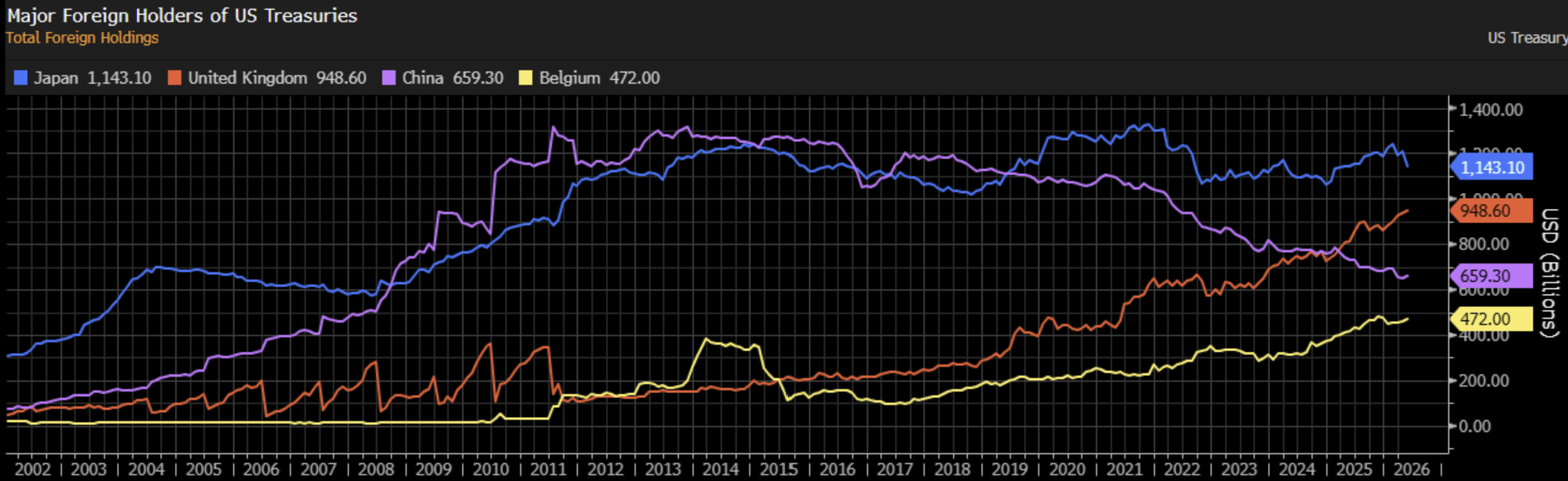
- The US Treasury’s recent foreign exchange intervention masks their concerns about rising long-term government bond yields, fearing Japan will have to liquidate their US bond holdings to support the yen.
- Treasury Secretary Bessent offered Japan access to US dollars via the Fed’s FIMA Repo Facility, a decision that has governance consequences and raised concerns about fiscal encroachment on Fed policy.
Receive this weekly newsletter keeping 45k+ investors in the loop
1. UK: Ascending Inflation’s Twin Peak
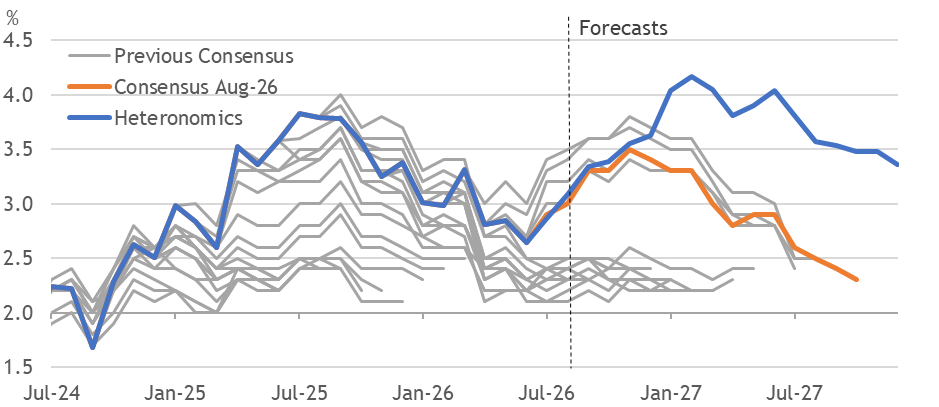
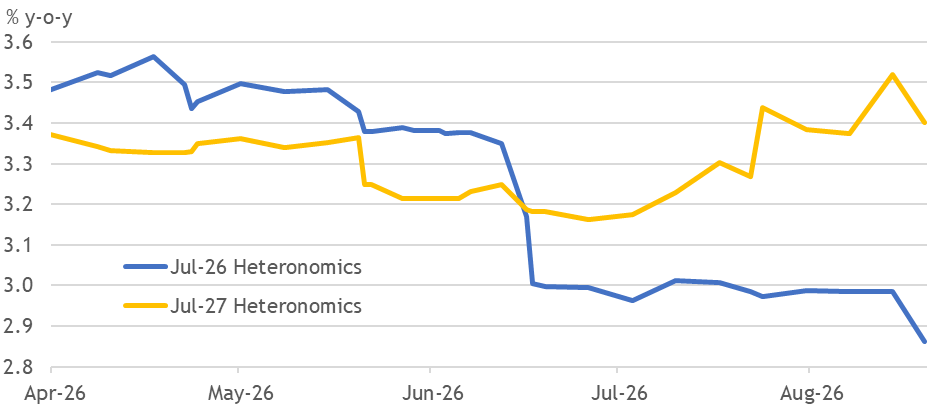
- Inflation began to ascend to its twin peak in July, despite failing to attain the target in between. Energy utility prices belatedly increased, but only add ~8bps to the y-o-y.
- The gas futures curve is back around its peak. Premature hope for the supply shock’s end helps contain October’s rise, postponing the peak pressure to January.
- Delayed pass-through of energy costs, food prices, and airfares should drive this peak much higher than most economists assume, pushing the BoE to hike once begrudgingly.
2. UK: Forgotten Excesses
- Q2’s flat end for the labour market might be exaggerated by imputation after the ONS forgot to appoint anyone to pick up the phone for the labour force survey.
- Underemployment’s decline corroborates the labour market’s trend of tightening so far in 2026, despite low vacancies, as both supply and demand are structurally struggling.
- Divergent pay growth measures have slowed by about 0.5pp on the year but remain excessive, near 4%. We still expect the BoE to hike once, failing to break the problem.
3. EA: Bouncing Back To Hike
- EA inflation bounced back from the brief relief in June as energy price pressures intensified again through July, but it wasn’t quite enough to round up from 2.94%.
- Food prices remain incredibly benign, and underlying inflation measures are contained, despite a bounce back from levels that had been too low in May and June.
- A further rise is likely in August, and the ECB isn’t taking any chances. It seems set to hike again in September, reinforcing the target, unlike its dovish peers.
4. US/CHINA AI WAR: State of Play & AI Sovereignty Decisions
- President Trump is pressuring nations to sign a Loyalty Pledge to the US for their AI future. The pledge aims to counter the rapid growth of open-weight Chinese AI models.
- Nations that agree to the AI Pledge risk compromising their digital sovereignty. This concern was underscored recently when the United States restricted foreign nationals’ access to Anthropic’s latest AI models.
- If the US can convince countries to join its US-controlled AI ecosystem, it would pose a powerful mechanism to co-opt them into future conflicts driven by US geopolitical interests.
5. ID: Rupiah First, Rates on Hold
- Bank Indonesia holds its policy rate at 5.75%, in line with consensus, prioritising Rupiah stability and a high real rate over near-term easing.
- Expanded FX hedging incentives and macroprudential liquidity tools aim to absorb shocks before rate moves, signalling a preference to hold rates at a high level.
- Future rate shifts hinge on Fed tightening, Rupiah resilience and inflation staying near the centre of the target despite global commodity and FX risks.
6. China & HK: The Long Road Back
- China & HK positioning is turning. Relative positioning is strengthening, flows have turned positive and more managers are moving overweight.
- Buying is highly selective. Managers are rotating towards AI infrastructure, semiconductor equipment and advanced technology, while reducing exposure to recent consumer and platform winners.
- The EM Big 4 has been reshaped. China now carries similar weight to Taiwan and South Korea, but offers a far more diversified range of underlying exposures.
7. HEW: Bored Debasement
- With market themes also on holiday recently, the USD debasement trade returned, fed by crumbs of poor policy that we doubt carry enough energy to let the theme run far.
- Flash PMIs were broadly solid, especially in the US. UK unemployment data were imputed flat while inflation’s rise was confirmed, including in the EA’s final print.
- Next week has more energy news in Ofgem’s price cap announcement. EA lending, ECB meeting accounts, and annual benchmark revisions for US payrolls are dull highlights.
8. US Treasuries: Panic Creeps In as Bessent Starts Dancing!!
- On August 19th, Secretary Bessent implemented the most significant intervention in the US long-end bond market in decades by doubling off-schedule buybacks in 10-to-30-year sector to at least $4 billion.
- This approach compresses long-end yields by reducing duration supply rather than relying on outright Federal Reserve purchases. However, as Japan’s experience shows, it also entails significant long-term consequences.
- The United States faces a trilemma: it cannot simultaneously suppress long-end yields, maintain dollar credibility, and control inflation. The current administration is prioritizing yield management over the other objectives.
9. Mergers in Korea to Be Completed Based on Fair Valuation Method Rather Than Average Market Prices
- An amendment to Capital Markets Act (mergers in Korea to be completed on fair valuation basis rather than average market prices) was passed at the National Assembly’s plenary session.
- It is likely that this amendment will be made into law by the end of this year.
- This is clearly a step in the right direction and takes Korea another step closer to reducing corporate governance problems that have persistently impacted lower relative valuations versus global peers.
10. Mandatory Tender Offer for All Remaining Shares in Korea – Lawmakers Trying to Make This Into Law
- I believe the mandatory tender offer for all remaining shares is likely to be passed into law sometime in 2H 2026/1H 2027.
- If this is finally made into law, it will have a positive impact on the entire Korean stock market (reduced corporate governance concerns related to M&A tender offers).
- Democratic Party lawmaker Park Hong-bae has proposed a Capital Markets Act amendment requiring a mandatory tender offer for all remaining shares.
Receive this weekly newsletter keeping 45k+ investors in the loop
1. The US Supports the Yen and Gold Rallies: CONNECTING THE DOTS
- The US Treasury Department has actively intervened in the F/X market to support the JPY for the first time since 2011 amid intensifying fears of weakness in US Treasury bonds.
- Treasury Secretary Bessent has suggested expanding the FIMA facility to allow Japan to borrow against its Treasury holdings rather than outright sales to support the JPY.
- The use of FIMA further expands the global US dollar monetary base, which provides a structural bid for gold as the primary non-sovereign store of value.
2. Sentiment Matters: Buy Side Sentiment Tracker
- The Buy Side Sentiment Tracker aggregates published asset-allocation views from 50+ asset managers across more than 70 assets.
- Grinding more bullish: Risk appetite rose for a third month, but buy-side positioning remains less bullish than before the Iran war and still shows meaningful caution.
- Consensus extremes: Infrastructure, Equities and Tech are most popular; CHF, Cash and Consumer Discretionary least popular. The US-over-Europe preference is unusually broad across asset classes.
3. The Fed Is Buying Treasuries Again—but This Is Not Another Round of Money Printing
- The Fed is buying Treasuries again—but this is not QE: purchases are mainly short-term bills designed to maintain banking-system liquidity, not stimulate the economy
- Rising Fed assets is not always “money printing”: reserves remain near US$3 trillion as the liquidity created has been largely offset by Treasury operations, currency demand and other Fed liabilities
- This helps explain the US dollar’s resilience: bill purchases barely suppress long-term yields, unlike conventional QE, so the direct downward pressure on the dollar is limited
4. UK: H1 Signals Stimulative Setting
- A surprisingly strong end to Q2 for GDP yields 1.1% growth so far in 2026. A 33bp unemployment rate fall and a 6-8% credit growth trend make activity cyclically strong.
- Residual seasonality does not explain all of GDP’s strength, which goes beyond the norm of recent years. The non-seasonally adjusted data also signal unusual strength.
- The signal seen through multiple lenses across H1 is of activity growth beyond potential, implying loose policy. The BoE assumes policy is tight and seems set to repeat mistakes.
5. Asian Equities: A Stupendous Earnings Quarter; Asia Matching US in Upgrades
- As the April-June quarter earnings season winds down, positive surprises outnumber disappointments. Consensus earnings estimates keep getting upgraded in Asia and the US. Asian EPS upgrade has lately outpaced US’s.
- Over the last month, consensus 2026 EPS estimate of Asia-ex-Japan has been upgraded 4.4%, driven by Korea (12.8%), Taiwan (5.8%), Thailand (5.5%). 105 of 162 market-sectors have seen EPS upgrades.
- The encouraging signs are: breadth across a wide range of sectors and not driven by AI capex only. Sectors not directly linked to AI exuberance are among top earnings gainers.
6. JAPAN & US YEN SUPPORT: Speak Loudly and Carry a Small Stick
- The historic Japan/US intervention to support the JPY at the end of July is already being tested as the yen falls back to the 160 level.
- Intervention methods are limited in scope, and jawboning threats carry limited weight. Each successive intervention since the BOJ began to normalize rates has required greater firepower.
- Hedge funds, traders, and even Japanese investors have already begun rebuilding short yen positions, taking advantage of the stronger yen to reposition.
7. Asian Equities: A Close Look at India – Identifying Opportunities in a Well-Diversified Market
- India’s recent outperformance coincided with AI capex anxiety. Simultaneously, macro-economic data points like bank loan growth and GFCF growth are improving. Valuations are higher than averages but not egregiously so.
- On growth-adjusted PE, basic materials, financials, consumer durables, transportation, industrial services, telecommunication stand out as cheaper than the market. Consensus EPS estimates of several sectors are beginning to get upgraded.
- On strong growth forecasts, reasonable valuations, healthy balance sheets and EPS upgrades over last 6 months, we screen 20 stocks – from financials, industrials, basic materials, utilities, healthcare and hardware.
8. The Solidigm Stub: SK Hynix’s US$35bn AI-Storage Asset Priced at Zero
- Korea Economic Daily reports Solidigm — SK Hynix’s AI-storage arm — pursuing a KRW5-10T pre-IPO raise at ~US$35bn; SK Hynix’s Form 6-K denies a decision but commits to 4 Sep.
- SK Hynix’s US$738bn market cap assigns near-zero value to Solidigm — a QLC eSSD franchise tripling revenue QoQ — creating a base-case +3-4% stub re-rating catalyst.
- Reiterate BULLISH; Fair Value KRW3,500,000 (KRX)/US$236 (ADR), based on our DRAM/HBM earnings model; Solidigm pre-IPO crystallisation is additive optionality — 4 Sep the trigger.
9. Korea Sector ETFs Weekly #1 [Week Ending 14 August 2026]
- This is our first inaugural issue of Korea Sector ETFs Weekly. There are two main purposes of this weekly insight.
- This weekly report tracks share price performance for Korea’s 23 major sector ETFs. It helps investors identify market trends by revealing exactly which sectors are outperforming or underperforming.
- Second, tracking sector ETF performance reveals early clues about specific catalysts driving higher stock prices for the companies within those ETFs.
10. US: Data Deferring Action
- US payrolls and CPI should determine whether the Fed hikes in September, but neither release for July signalled an immediate need, so action should be deferred.
- The latest inflation impulse is around a target-consistent level, although the sticky-price rate is 3.5% saar. We doubt the problem is solved, but it seems uncompelling.
- A high evidential hurdle needs clearing to break dovish assumptions. We doubt the Fed will clear it, even as the ECB prepares its second and the BoE belatedly goes once.

Receive this weekly newsletter keeping 45k+ investors in the loop
1. KOPSI’s ROLLERCOASTER: Is Korea Uninvestable?
- The Korean market has become uninvestable for many foreign institutional investors, regardless of its inexpensive valuation metrics. Foreign investors have withdrawn record amounts from the market since early this year.
- The KOSPI has suffered from a convergence of high-concentration risks, extreme leverage through margin lending and leveraged ETFs, and continuous circuit-breaker triggers, resulting in historically high volatility.
- Although the government is instituting regulations to calm market volatility, many retail investors who have lost substantial amounts have vowed not to re-enter the market.
2. HONG KONG ALPHA PORTFOLIO: (July 2026)
- The Hong Kong Alpha portfolio gained 5.79% in July, outperforming its benchmark by 0.30%. The portfolio has outperformed Hong Kong indexes by 52% to 74% since inception.
- The portfolio’s largest exposures are in the industrial, financial, and technology platform sectors. The portfolio has no exposure to the materials or energy sectors.
- The portfolio has generated a Sharpe ratio of 1.20 since inception, compared with 0.69 for the benchmark. The portfolio’s annualized mean excess return is 19.4%.
3. HEM: Aug-26 Views & Challenges
- The energy supply shock has intensified, forcing markets to care, but it is mostly seen in physical prices and low-inventory risks.
- ECB action helps EA inflation back to 2% in 2027, while UK excesses persist and the US outlook sits in between.
- We see hikes from the BoE in Nov-26 and the ECB in Sep-26. The hawkish BoE/Fed spread went far enough given the dovish bias.
4. Iran Gives the US Another Chance at Peace
- Iran and Oman are completing an agreement on how they will administer the Strait of Hormuz. The US negotiating team has not been part of the discussions.
- President Trump is in a weak negotiating position with high inflation and energy prices, declining poll numbers, reduced stockpiles of critical weapons, and elections in 90 days.
- The US will need to accept Iran’s terms for administration of the SOH as the cost of delay now exceeds the cost of compromise.
5. Why Trillions in Yen Intervention Couldn’t Change the Trend
- Japan’s massive currency interventions have only delivered short-lived relief, highlighting that a wide U.S.-Japan yield gap continues to dictate the yen’s direction.
- Despite firmer June inflation, the BoJ sees price pressures easing ahead. Lower inflation forecasts strengthen the case for a gradual and patient policy approach.
- Options market continues to favour a weaker yen, with a 1.19 put-call ratio reinforcing growing bearish conviction ahead of the Fed’s next policy decision.
6. Malaysia Politics: Barisan Bags Second Landslide in Negeri Sembilan
- Barisan Nasional (BN), allied tactically with Perikatan Nasional (PN), won 25 of Negeri Sembilan’s 36 seats, driven by consolidation of the Malay vote and weakening support for Pakatan Harapan (PH).
- Despite successful cooperation in Negeri Sembilan and Johor, a comprehensive nationwide BN–PN pact remains unlikely: competition between UMNO and PAS for Malay-majority constituencies remains fundamentally zero-sum.
- The defeat increases pressure on PH and Prime Minister Anwar Ibrahim to delay the general election, pursue a more electorally generous budget and rebuild party machinery.
7. Chairman Warsh’s Poor Communication Skills Spook Bond Investors as Rate Hike Pressures Rise
- Despite the hawkish pivot in June, the FOMC left its policy rate unchanged after its latest meeting. Chairman Warsh failed to define price stability convincingly, scaring Treasury bond investors.
- Under Chairman Warsh, the Fed’s communication will shift from providing forward guidance and will become less frequent, thereby making it necessary to monitor policy conduct through different mechanisms.
- History suggests that new Fed leaders have often defied expectations after assuming office, but they have always respected the convention of the FOMC determining policy settings.
8. Sentiment Matters: Heatmap Update
- Sentiment: Slightly Bullish. More noise than index-moving action. Rotation has shifted sentiment significantly beneath the surface, but much less at the overall market level.
- Technology Conundrum. Despite weaker performance, Technology sentiment indicators remain close to bullish extremes. There is no sign in our data that bullishness towards the sector has washed out.
- Value Reversal. Our Value SMA has been the biggest riser over the past few weeks. While Technology sentiment still looks remarkably bullish, its opposite has also become more popular.
9. Walker’s Weekly: Dr. Jim’s Summary of Key Global Macro Developments – 31 July 2026
- We produced a Peregrinations report earlier this week on trade and external balances, subtitle: Turbulence. It was a rundown for each country in the region of the import and export growth rates as well as the latest current account position. In short, it’s a very mixed bag across the region and, as we have been arguing for some time, very difficult to interpret given all the price changes that are going on just now.
- In other news, we have been arguing that, given normal profit cycles, Chinese profit data should be turning around this year given the poor run of returns in 2023 (negative) and both 2024 and 2025 (flat). Given the normal shakeout in industries, we should start to see a resurgence in profitability. To be fair, it hasn’t happened yet in ROE numbers but the latest data industrial profits data brought year-to-date profit growth to 18.7% YoY, which appears to be a significant turnaround.
- India’s industrial production for June came in at 7.3%, that was much higher than expectations. India continues to roll along quite nicely. We still believe that increased exposure to the Sensex would be a good equity strategy for international investors at the moment. The country remains the fastest growing economy in Asia at the moment.
10. Overview #72 – The Accelerant
- A review of recent events/data impacting our investment themes and outlook
- The dollar has maintained its breakdown, with positive implications for our themes
- We continue to look for investments not correlated with the AI trade
Receive this weekly newsletter keeping 45k+ investors in the loop
1. Fed Holds as Hike Debate Grows
- The Fed held rates at 3.5–3.75% in a 9-3 vote as hawkish dissents crystallised. Debate centres on whether hikes are needed to restore 2% inflation and credibility.
- Rising real yields and AI capex make financial conditions and productivity payoffs pivotal for any decision to raise rates.
- The five‑year-long inflation overshoot, and counting, keeps hike risk live; cuts are unlikely until disinflation and expectations are firmly anchored.
2. Shaming by Naming Korean Companies with Low PBRs
- On 28 July, the Financial Services Commission and the Korea Exchange announced the detailed criteria for this system of publicly identifying companies with low PBRs.
- This is a “shaming by naming” those companies with low PBRs to address situations where companies with low PBRs neglect efforts to boost shareholder value by publicly identifying them.
- I provide a list of 150 stocks in KOSPI that could be included in this list.
3. Credit Boom Before Burnham’s Burn
- A resurgence in the UK’s monetary data for June built on strength from policy overly accommodating the energy shock. Wage inflation has dominated higher lending rates.
- Recent lending growth is trending up by 6-8% on an annualised basis, devaluing the currency’s purchasing power to a point unlikely to be consistent with the CPI target.
- Fear of higher tax rates should slow loan demand, while the potential abolition of stamp duty should encourage transaction delays. We still see one BoE rate hike in September.
4. The Heat Is On: News Flow and Sentiment in CHINA / HONG KONG (July 2026)
- The Hong Kong market has seen a rebound in July, while North Asian markets declined sharply as the global AI/semiconductor sectors de-rated.
- The financials sector has outperformed over the last 8 weeks, while the tech sector has shown increased strength and momentum.
- MGM China (2282 HK) share price rebounded over the last week before its August Q226 earnings announcement. The company has increased its share of the mass-market gaming in Macau.
5. BoE: Dual Drift As Doves Bed In
- The MPC’s 6-3 vote matched our relatively hawkish view, but the numerical drift toward hiking was more than matched by a dovish drift among the broader committee.
- Most members are patiently awaiting proof of second-round effects before considering a move, making them reactive, not proactive, and compounding inflation risks.
- Our conviction in a persistently excessive UK inflation outlook is increased, but the majority’s reaction function delays a still-likely rate hike to at least November.
6. Technically Speaking Breakouts & Breakdowns – HONG KONG (July 2026)
- The Hong Kong market bounced off its long-term support levels in June and has outperformed the region in July, benefiting from rotational and southbound buying.
- In a positive sign, the financials sector has rallied this month and is the second-best-performing sector YTD at +11%. Value and dividend factors continue to perform well.
- Youran Dairy (9858 HK) had a Descending Trendline Breakout after the company announced that Inner Mongolia Yili Industrial Group (A) (600887 CH) acquired a significant stake in the company.
7. Indonesia Economics: Pressures Are Accumulating After Short-Term Reprieve
- Markets have stabilised since mid-June as Hormuz de-escalation and domestic policy repair buy Indonesia additional time, even as the underlying credibility deficit remains unresolved.
- With external conditions now re-entering a more dangerous phase, pressure is growing both on Indonesia’s trade balance and domestic demand. Policy buffers are also thinner.
- The institutional guardrails against policy mistakes have also been degraded. Intensifying intra-elite infighting also severely compromises the already-febrile business climate.
8. Sentiment Matters: The Biggest Consensus Longs and Shorts
- Technology, US equities and Brazil are now consensus longs—but where has optimism become most vulnerable?
- CAD, sovereign bonds and Consumer Discretionary are deeply unpopular. Which offers the clearest contrarian opportunity?
- Sentiment extremes are not automatic signals. Momentum and narrative vulnerabilities help separate crowded trades from genuine opportunities.
9. Asian Equities: Relentless Foreign Selling in Asia; Most of the Leading Markets Are Now Oversold
- In July foreigners sold US$34.8bn in Asia, the third worst in recent times, after March (US$69.9bn selling) and June (US$55.8bn). Taiwan (US$25.2bn) was the most sold, followed by Korea (US$11.3bn).
- India was bought (US$1.62bn), reversing last four month’s trend. Indonesia and Thailand’s July data is awaited. Till June, Thailand (+889m) is the only market bought this year. Indonesia sold (US$4.27bn).
- Our proprietary indicator of 6-monthly cumulative trade as proportion of market cap indicates Korea, India, Indonesia are oversold. Taiwan nearly there. FIIs beginning to buy India, correcting the oversold stance.
10. CX Daily: Billionaire Founder of Chinese Broker Futu Faces His Toughest Test
- In Profile: Billionaire Founder of Chinese Broker Futu Faces His Toughest Test From an early engineer at Tencent Holdings Ltd. to the billionaire founder of Futu Holdings Ltd., Li Hua built one of China’s most prominent online brokerages.
-
Now, the cross-border business model that powered Futu’s rise has exposed the 49-year-old entrepreneur to the most serious regulatory and legal challenge of his career.
- A third defendant seeking to unfreeze assets in a more than $100 million U.S. insider trading lawsuit shares a name with an investor whose Hong Kong corporate takeover collapsed days after a U.S. court order.
Receive this weekly newsletter keeping 45k+ investors in the loop
1. UK: Frontloaded Disinflation
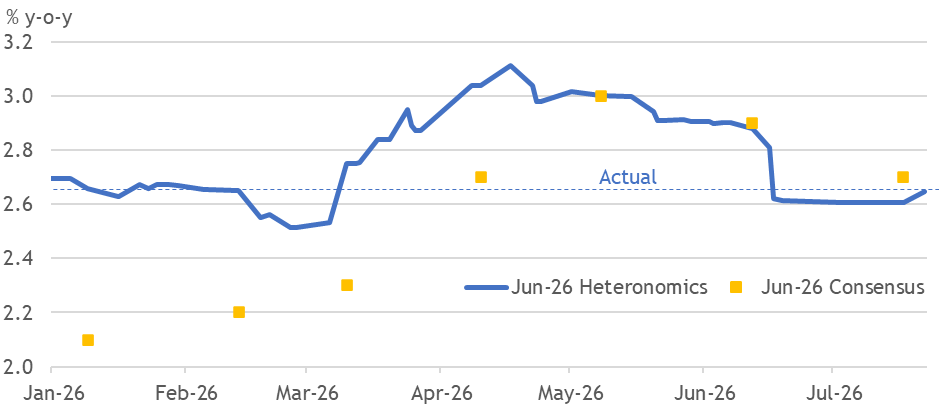
- A third downside inflation surprise to the consensus matched us but split hairs from 2.646%. It will also be a temporary trough as energy optimism was invalidated.
- Netting energy utility price falls, petrol price rises, and food price stability aligns with our pre-war forecast but is ~0.3pp above the consensus amid underlying strength.
- Cost passthrough to food, airfares, etc will occur later, while resurgent energy prices are raising the postponed peak in 2027. We still expect a BoE rate hike in September.
2. CHINA AI: Moonshot’s Kimi K3 Just Spoiled the Semiconductor Party !!
- Moonshot unveiled its Kimi K3 AI model, which rivals the top US frontier models in intelligence at a fraction of the run cost. Kimi K3 ranks third on the AAII.
- The rapid adoption of Chinese AI open-weight models using MoE architecture could bring the semiconductor supply/demand balance forward. Weekly token share of Chinese models by US firms now exceeds 50%.
- The Token Expenditure Index may be an early indicator that the MoE model token efficiency is reducing the growth rate of token demand and affecting the semiconductor ecosystem going forward.
3. UK: Jobs Better Than Distorted Data
- Headline surprises were mixed in the UK’s labour market report. The unemployment rate almost rounded lower, rather than increasing as the consensus expected.
- The ONS imputed responses it forgot to collect in telephone surveys, biasing outcomes to no change, with analysis revealing unemployment would have been lower without it.
- Bonuses disappointed, but total pay growth remains 4%+ with payrolls-based measures 4.5%. Only the ex-bonus ones offer dovish excuses, but they seem spuriously low.
4. HEW: Re-Entering Bad Theatres
- The supply shock intensified this week as the war theatre expanded to affect already impeded traffic through the Red Sea, and as President Trump renewed his trade war.
- Inflationary pressures are rebuilding, making June releases transitory relief, with good news frontloaded. The ECB recognised the change and signalled a September hike.
- Next week’s BoE and Fed decisions are unlikely to offer such a strong presumption, but a 6-3 MPC vote would help build momentum towards a BoE hike in September.
5. Hong Kong Market Catches a Bid: What’s Going On? (July 20)
- The Hong Kong market has advanced this month, while Japan, Korea, and Taiwan have declined in a mean-reversion move sparked by apparent short covering.
- Rising turnover, a supportive tech narrative from Beijing and increased southbound flows indicate that the rally may have legs. Consumer discretionary and energy sectors have been the top sector performers.
- There is evidence that some short covering catalyzed the rally during the normal June/July tight liquidity period, with low volatility and quality factors outperforming in the broader market.
6. The Long Climb in JGB Yields Is Nearly Over
- Most of the historic rise in JGB yields between 2022-26 came from long-run inflation expectation change and a normalization of term premia (TP) as BoJ lifted its unconventional easing.
- TP across the yield curve has largely finished its normalization process, in particular at the longest end. TP at 10-year has a moderate room to expand further.
- We think the hiking cycle in Japan is already in a late phase. Typically, the longer end of the yield curve starts to decline in a late cycle.
7. THE REAL AI BOTTLENECK: Why Data Centers, Not Chips, Limit Rollout
- Given the projected influx of AI chips into the US market, there will be a shortfall of data centers to support them, exceeding current data center capacity.
- Constraints on data center rollout include power infrastructure & grid interconnection, regulatory & permitting friction, supply chain bottlenecks, labor shortages, and growing real estate & local opposition/protests.
- Entities that control power-backed, permitted, and construction-ready data center capacity will hold a durable competitive advantage that capital alone cannot compete against.
8. ECB: Presumptive September Hike
- Surprisingly strong signals beyond the ECB’s hawkish hold now carry a clear presumption of a 25bp September hike, driven by resurgent energy costs and upside inflation risks.
- Press‑conference remarks revealed some Governors are already on the cusp of voting for a hike, with a higher burden of proof to back down after the MOU proved flimsy.
- A second and final hike in September is now our base case. Further hikes would need a more severe energy shock and clearer second‑round effects in prices and wages.
9. BUY/SELL/HOLD: Hong Kong Market Update (7/22/26)
- The Hong Kong market has bounced strongly in July as northern Asian markets decline amid the global AI/semiconductor sell-off.
- The materials, energy, and healthcare sectors are the top performers in July. Value, dividend yield, and large-cap factors have been top investment factors in the HK market this year.
- Precision Tsugami (China) (1651 HK) released its FY26 results, prompting price target and rating upgrades from analysts benefiting from downstream sectors such as NEVs, advanced equipment, and AI.
10. Sentiment Matters: Heatmap Update
- Investor sentiment is clearly in net bullish territory, but remains well below previous peaks and even further below the levels that have historically sent reliable warning signals.
- The Trade Risk Premium remains low…too low? Deep dive into the Trade Policy Uncertainty indicator.
- Heatmaps visualising Investor Sentiment across 600+ indicators and 48 asset classes