This weekly newsletter pulls together summaries of the top ten most-read Insights across Macro and Cross Asset Strategy on Smartkarma.
Receive this weekly newsletter keeping 45k+ investors in the loop
1. UK: De-Energised Ofgem Vol
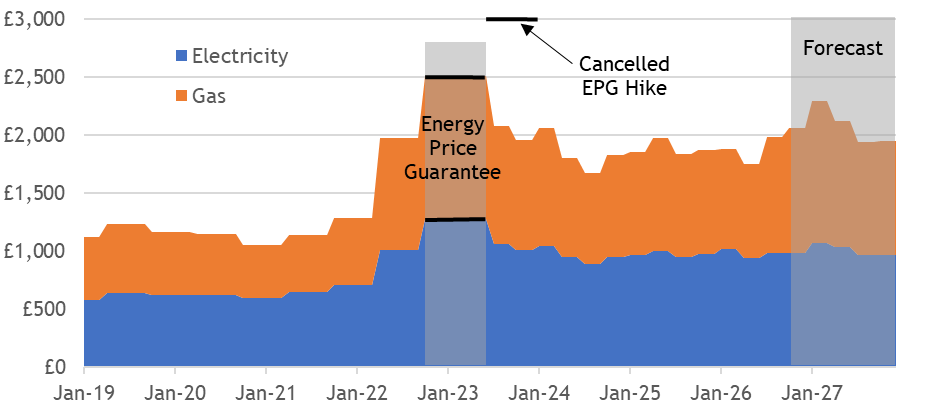
- Household energy utility prices are not much higher than before the energy supply shock began, and are unsurprisingly announced to be rising by only 4% in October.
- The ongoing supply shortage is squeezing prices higher as winter approaches, with inventory levels perilously low in Europe, relying on a warm and wet El Niño season.
- Pass-Through to the CPI/RPI is dampened this time by the blending of fixed tariffs with a high weight. Except that policy and tax changes hit immediately in April and October.
2. Trump’s Iran D-Day: Why “Operation Economic Outcast Is D.O.A.”
- The US unveiled new policies to impose secondary sanctions on countries that have trade or other relationships with Iran. These policies assert US control over any nation’s financial sovereignty.
- Iran’s most consequential trading partner is China, and the US has not sanctioned any major Chinese company or bank because of the risk of “blowing up the global economy.”
- As in the military conflict, the US is overplaying its hand and risks substantial global economic consequences by pursuing short-term, impulsive policies rather than proper negotiations to achieve long-term objectives.
3. Philippines: Third Hike Nears the Peak
- BSP’s third 25bp hike to 5.0% was expected as above‑target inflation to 2027 extends a tightening bias and delays any hopes for rate cuts.
- Upside risks from El Niño, oil and wages mean future moves hinge on core inflation, expectations and evidence of second‑round effects.
- Despite weak growth, BSP’s inflation forecasts imply a prolonged pause at restrictive levels, with cuts only likely once price risks and expectations ease.
4. BoK Doubles Down on Pre‑emption
- The BoK raised its Base Rate by 25bp to 3.00% in a broadly expected back‑to‑back hike, but the hawkish dot plot now points to 3.25–3.50% within six months.
- Stronger growth and sticky core inflation keep inflation above target for “a considerable time”, making further hikes likely unless data undershoot current projections.
- Housing and household‑debt risks now anchor a more pre‑emptive reaction function, limiting scope for early cuts even if headline inflation edges closer to target.
5. ECB Accounts for September Bias
- July’s unanimous hold masked support for a hike. The new meeting Accounts confirm that another rate rise is likely in September unless the inflation outlook improves significantly.
- The Accounts stress persistent upside cost risks from gas, crack spreads and food, with inflation seen above target into 2027 despite softer underlying pressures.
- Some members see rates as not yet mildly restrictive. Robust credit and resilience tilt the bias towards at least one more hike before an extended data‑driven pause.
6. Asian Equities: Watch Interest Rates, Inflation Trajectories and Valuations
- Record high US yields could impact Asia through rising cost of capital dampening growth and valuations. Besides, foreign money could continue to move towards safe haven US treasuries.
- The Asian markets where central banks are forced to hike policy rates, and the markets that are steeply valued relative to earnings growth or ROEs could be particularly vulnerable.
- Korea, Indonesia and Philippines are hiking rates. Judging by inflation trajectories and real rates, India and Thailand could join later this year. India and Taiwan appear overvalued relative to ROEs.
7. Asian Equities: Valuations Look Interesting Again, Forward Earnings Outstripping Several Markets
- In late May we argued that Asia was fully valued and awaited correction. That correction has happened over past two months with Asia’s forward PE declining from 15.1x to 12.7x.
- Some markets have corrected more and have had significant EPS upgrades. These markets should catch up with their earnings trajectory, Korea and Onshore China in particular. HK looks undervalued too.
- Indonesia, though affected by governance-related concerns and fiscal worries, seems cheaper than the headwinds warrant. Other Asian markets are in “no man’s land”: not too expensive, not egregiously cheap either.
8. History of Faces on the South Korean Banknotes and the Surging 30 Year Korean Government Bond Yields
- Why are all four people that are featured in the South Korean banknotes from the 15th/16th centuries? (Why is there no one from the past 300 years)?
- The real reason why no modern person is included in the South Korean banknote is due to concerns about fracturing the political divide of the country even further.
- Lee Jae-Myung administration is expected to pass a huge 800+ trillion won budget next year which is likely to pressure the government bond yields even higher.
9. The Treasury Put, Financial Stability and the Road to Fiscal Dominance
- Three Treasury interventions in three weeks, EUR/JPY sales, FIMA request, doubled buybacks, read as term premium suppression. The Treasury put looks to have a higher strike than the Fed put.
- Rising term premium squeezes the Treasury twice: it inflates the interest bill, and it threatens equities, the one asset class keeping US financial conditions loose. Debt management becomes financial stability.
- Japan’s bill buffer is spent. The next yen defence sells coupons into the long end or borrows through FIMA. By 16 September the cap has moved or it hasn’t.
10. Foreign Exchange Intervention and Buybacks Masks US Treasury’s Concerns About Rising Bond Yields
- Government bond yields in the US, Japan and UK have been rising due to inflation and fiscal policy conduct concerns. Japan’s problems are compounded by slow normalisation of monetary policy.
- The US Treasury’s recent foreign exchange intervention masks their concerns about rising long-term government bond yields, fearing Japan will have to liquidate their US bond holdings to support the yen.
- Treasury Secretary Bessent offered Japan access to US dollars via the Fed’s FIMA Repo Facility, a decision that has governance consequences and raised concerns about fiscal encroachment on Fed policy.