Category

Hong Kong

Daily Hong Kong: Apple (AAPL): Reduces Prices in Mainland China – Right Action, But Not Enough and more

By | Hong Kong

In this briefing:

  1. Apple (AAPL): Reduces Prices in Mainland China – Right Action, But Not Enough
  2. China Kepei Edu (科培教育) IPO – Regulation Poses Significant Near-Term Risks
  3. Ten Years On – Asia’s Time Is Coming, Don’t Miss The Boat
  4. HK Connect Discovery Weekly: China Tower, Tencent, New China Life (2019-01-11)
  5. Screening the Silk Road: Q1-2019 Small-Mid Cap GARP (Zulu Warrior Screening)

1. Apple (AAPL): Reduces Prices in Mainland China – Right Action, But Not Enough

Pic%201 2

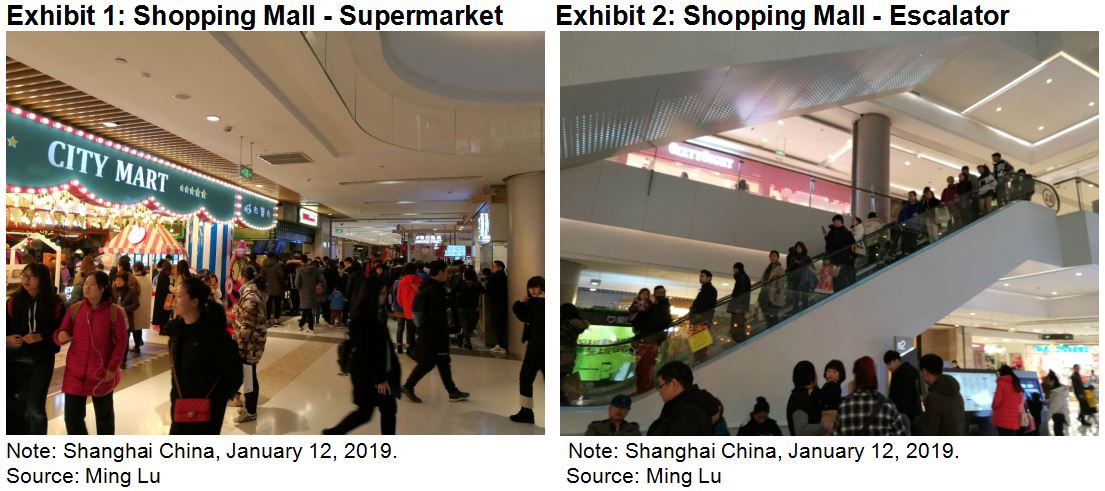
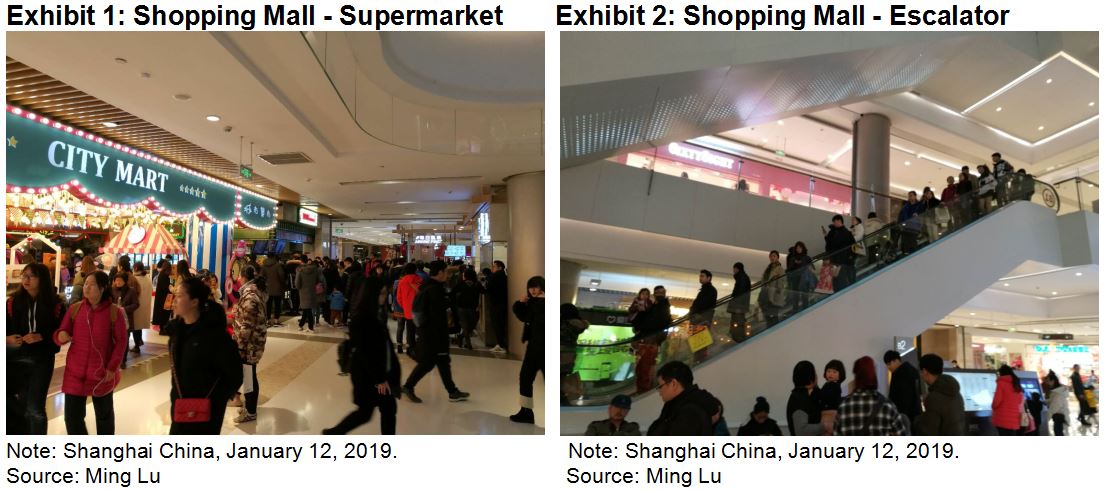
  • Tim Cook passed the buck to the weak sales in China. However, we believe China’s retailing is running well based on our visits to shopping malls with Apple stores.
  • Luxury goods sold better in China than all other major markets in the world in 2018.
  • We believe that the price reduction in Mainland China is just taking market share from Apple Stores in Hong Kong, but not from competitors.
  • We also believe that the app review process is the fatal shortcoming for AAPL.

2. China Kepei Edu (科培教育) IPO – Regulation Poses Significant Near-Term Risks

Increase%20in%20tax%20rate

China Kepei Education (1890 HK) is looking to raise up to US$122m in its upcoming IPO. 

Overall, the company has continued to show that its undergraduate program is the driver behind its growth. It grew its 8M 2018 revenue and gross profit both by about 24% YoY. However, there are significant near-term risks if the MOJ Draft for Comments gets implemented. It may result in Kepei registering its schools as for-profit private schools which would shrink its net profit margin.

In this insight, we will provide updates on the company’s 8M 2018 financials and operating performance, the potential impact of policy change and compare its valuation to other listed education peers. We will also run the deal through our framework.

3. Ten Years On – Asia’s Time Is Coming, Don’t Miss The Boat

Capture%206

We noted in   Ten Years On – Asia Outperforms Advanced Economies Asia’s economies and companies have outperformed advanced country peers in the ten years to 2017.  Growing by 6.8%, real, through the crisis the region is 188% larger in US dollar terms while US dollar per capita incomes 170% higher compared with 2007. In this note we argue even though Asian stock markets have underperformed since 2010 and the bulk of global capital flows have gone to advanced countries, Asia’s time is coming. Valuations are cheap. Growth fundamentals strong. There are few external or internal imbalances. Macroeconomic management has been better than in advanced economies and the scope to ease policy to ward off headwinds in 2019 is greater. China has already started.

4. HK Connect Discovery Weekly: China Tower, Tencent, New China Life (2019-01-11)

Sector%20flow

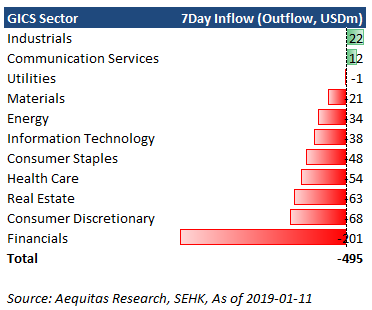
In our Discover HK Connect series, we aim to help our investors understand the flow of southbound trades via the Hong Kong Connect, as analyzed by our proprietary data engine. We will discuss the stocks that experienced the most inflow and outflow by mainland investors in the past seven days.

We split the stocks eligible for the Hong Kong Connect trade into three groups: those with a market capitalization of above USD 5 billion, those with a market capitalization between USD 1 billion and USD 5 billion, and those with a market capitalization between USD 500 million and USD 1 billion.

We see the Financials sector led the outflow by mainland investors last week with 201 million USD of net selling. We also highlight a few companies this week: China Tower (788 HK), Tencent Holdings (700 HK), New China Life Insurance (1336 HK), and Ping An Good Doctor (1833 HK).

5. Screening the Silk Road: Q1-2019 Small-Mid Cap GARP (Zulu Warrior Screening)

Chart%201

  • Value made a comeback, but growth remains core: In May 2018, we examined the divide between value and growth stocks, ( Notes from the Silk Road: Small-Mid Cap Screening for Zulu Warriors). As Q3 unfolded, this eventuated with a +7.5% reversal in favour of value stocks, only to see growth resume dominance in October and November.
  • The optimal value/growth style dynamic: We feel exposure to growth at a reasonable price (GARP) coupled with a healthy FCF yield (via our amended Zulu Screen) should provide some healthy medium to long term returns for investors.
  • The Screen’s Risk: The Zulu Screen relies on analyst estimates. When market sentiment is weak and forecasts are not amended in a timely manner, the screen is susceptible to mis-selection.
  • Q2 2018 screening list succumbed to volatile markets: This was seen in our May screen with our list posting on average a 30% decline in share price, relative to the broader Asia-Pacific Ex-Japan declining 13.6% and the Asia Pacific index by 11.8%.
  • Are there reasons for the underperformance? 10 of the 19 stocks in the May screen were from Hong Kong, which saw the Hang Seng Index (HIS) decline 16% over the same period. The decrease seems due to concern over trade wars and doubts about the China economy. Our key approach to stock selection is to take a medium-to-long-term view as well as focus on quality ranked stocks relative to their peers. This is highlighted via the average stock rank of the group declining only 15.8% from 89.6 to 75.5 points.
  • Our Q1 2019 screen selected only 9 stocks. Of the 9 stocks identified, the average PEG Ratio was 0.4x, the price to FCF yield was 11% and ROCE was 25%. Stocks were selected from Australia, New Zealand, India, Korea, Japan, Hong Kong, Taiwan and Singapore. Cowell Fashion Company from Korea was the only remaining stock from our May screening.

Get Straight to the Source on Smartkarma

Smartkarma supports the world’s leading investors with high-quality, timely, and actionable Insights. Subscribe now for unlimited access, or request a demo below.


Daily Hong Kong: Wanted: A 21st Century Monetary Theory and more

By | Hong Kong

In this briefing:

  1. Wanted: A 21st Century Monetary Theory
  2. HK Connect Discovery Weekly: Tencent, Kingsoft, and Yichang HEC (2019-01-18)
  3. TRACKING TRAFFIC/Chinese Express & Logistics: Inter-City Pricing -9.1%
  4. Galaxy Entertainment Bullish Set up for a Breakout
  5. Hanon Systems (018880): Overvalued Stocks in The Low Margin Sector

1. Wanted: A 21st Century Monetary Theory

The globe is facing more than an ordinary business cycle.

Joseph C. Sternberg, editorial-page editor and European political-economy columnist for the Wall Street Journal’s European edition, recently interviewed Claudio Borio, head of the Monetaryand Economic Department of the BIS. Mr. Borio said that politicians have relied far too much on central banks, which are constrained by economic theories that offer little meaningful guidance on how to sustain growth and financial stability. The only tool they have is an interest rate that can affect output in the short run but ends up affecting only inflation in the end.

2. HK Connect Discovery Weekly: Tencent, Kingsoft, and Yichang HEC (2019-01-18)

Sector%20flow

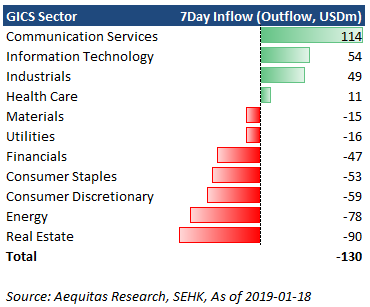
In our Discover HK Connect series, we aim to help our investors understand the flow of southbound trades via the Hong Kong Connect, as analyzed by our proprietary data engine. We will discuss the stocks that experienced the most inflow and outflow by mainland investors in the past seven days.

We split the stocks eligible for the Hong Kong Connect trade into three groups: component stocks in the HSCEI index, stocks with a market capitalization between USD 1 billion and USD 5 billion, and stocks with a market capitalization between USD 500 million and USD 1 billion.

In this week’s HK Connect Discovery, we highlight that Tencent topped the weekly inflow by quantum and its shares held by mainland investors via Stock Connect is at one year low. Stocks exposed to mobile game sector experienced inflow too. In addition, we continue to observe that the mainland investors holding on Yichang HEC continue to rise. 

3. TRACKING TRAFFIC/Chinese Express & Logistics: Inter-City Pricing -9.1%

Dec exp main

Tracking Traffic/Chinese Express & Logistics is the hub for our research on China’s express parcels and logistics sectors. Tracking Traffic/Chinese Express & Logistics features analysis of monthly Chinese express and logistics data, notes from our conversations with industry players, and links to company and thematic notes. 

This month’s issue covers the following topics:

  1. December express parcel pricing fell by over 9% Y/Y. Average pricing per express parcel fell by 9.1% Y/Y, the worst decline since Q216 (excluding January/February figures distorted by the Lunar New Year holiday). 
  2. Express parcel revenue growth remained well below 20% last month. Weak pricing dragged sector revenue growth down to 17% in December, the 4th consecutive month of sub-20% growth. 
  3. Intra-city pricing (ie, local delivery) was strong in 2018. Relative to weak inter-city pricing (down 3.1% Y/Y in 2018), pricing for intra-city express shipments was firm, rising by 0.1% last year. In fact, average pricing for intra-city express shipments has risen in four of the last five years. 
  4. Underlying domestic transport demand remained firm in December. Although demand for inter-city express shipments appears to be moderating (from high levels), underlying transportation activity in December remained firm. The three modes of freight transport we track (rail, highway, air) in aggregate rose 6.6% Y/Y in December, even as the growth of air freight slowed.  

We retain a negative view of China’s express industry’s fundamentals: demand growth is slowing and pricing for inter-city shipments appears to be falling faster than costs can be cut, leading to margin compression. 

4. Galaxy Entertainment Bullish Set up for a Breakout

Galaxy%20for%20sk

Galaxy Entertainment Group (27 HK) exhibits some valid chart support in the form of a key low at 61.8% retracement and physical price support at the 40 level. This low should stay in place for 2019.

Price and RSI wedge formations are building steam for an upside breakout. MACD bull divergence and the triangle breakout back in November will provide forward upside energy. MACD triangles are some of the most powerful chart set ups.

Currently at an attractive risk to reward support zone for an entry with a reasonably tight stop.

5. Hanon Systems (018880): Overvalued Stocks in The Low Margin Sector

Hanon%20sys%20balance%20sheet%20growth

The recent negative sales in the Chinese auto industry and Nissan’s case of Carlos Ghosn removal could put additional pressure on the already thin margin of auto supplier industry. One of the Carlos Ghosn early contribution to Nissan was to cut cost and outsource the auto parts maker to a wide variety of suppliers including to Hanon Systems (018880 KS) . Nissan’s new management may want to undo some of Carlos Ghosn’ legacy including changing the selection criteria of parts supplier.

Hanon’s global peers also experienced a decrease in the inventory turnover and most of them have been priced at PER <10 but Hanon is still trading at 24x PER while its sales growth and profitability is still in low single digit? Facing the onset of the slowdown in the Chinese auto industry, won’t it be another headwind for Hanon Systems?

Get Straight to the Source on Smartkarma

Smartkarma supports the world’s leading investors with high-quality, timely, and actionable Insights. Subscribe now for unlimited access, or request a demo below.


Daily Hong Kong: Global Banks: Why Buy High Into Popular and Fashionable Banks and Markets? Be Contrarian and Buy Low and more

By | Hong Kong

In this briefing:

  1. Global Banks: Why Buy High Into Popular and Fashionable Banks and Markets? Be Contrarian and Buy Low
  2. Uzbekistan Initiation: Value Hidden in Plain Sight
  3. Business Happenings in the Americas that May Be “Below the Radar” – Week Ending January 17, 2019
  4. The Burden of Too Big Government
  5. Debt Ratios Do Matter

1. Global Banks: Why Buy High Into Popular and Fashionable Banks and Markets? Be Contrarian and Buy Low

Trawling through  >1500 global banks, based on the last quarter of reported Balance Sheets, we apply the discipline of the PH Score™ , a value-quality fundamental momentum screen, plus a low RSI screen, and a low Franchise Valuation (FV) screen to deliver our latest rankings for global banks.

While not all of top decile 1 scores are a buy – some are value traps while others maybe somewhat small and obscure and traded sparsely- the bottom decile names should awaken caution. We would be hard pressed to recommend some of the more popular and fashionable names from the bottom decile. Names such as ICICI Bank Ltd (ICICIBC IN) , Credicorp of Peru, Bank Central Asia (BBCA IJ) and Itau Unibanco Holding Sa (ITUB US) are EM favourites. Their share prices have performed well for an extended period and thus carry valuation risk. They represent pricey quality in some cases. They are not priced for disappointment but rather for hope. Are the constituents of the bottom decile not fertile grounds for short sellers?

Why pay top dollar for a bank franchise given risks related to domestic (let alone global) politics and the economy? Some investors and analysts have expressed “inspiration” for developments in Brazil and Argentina. But Brazilian bonds are now trading as if the country is Investment Grade again. (This is relevant for banks especially). Guedes and co. may deliver on pension/social security reform. If so, prices will become even more inflated. But what happens if they don’t deliver on reform? Why pay top dollar for hope given the ramp up in prices already? Argentina is an even more fragile “hope narrative”. More of a “Hope take 2”. Similar to Brazil, bank Franchise Valuations are elevated. While the current account adjustment and easing inflation are to be expected, the political and social scene will be a challenge. LATAM seems to be “hot” again with investment bankers talking of resilience. But resilience is different from valuation. Banks from Chile, Peru, and Colombia feature in the bottom decile too. If an investor wants to be in these markets and desires bank exposure, surely it makes sense to look for the best value on offer. Grupo Aval Acciones y Valores (AVAL CB) may represent one such opportunity.

Our bottom decile rankings feature a great deal of banks from Indonesia. In a promising market such as Indonesia, given bank valuations, one needs to tread extremely carefully to not end up paying over the odds, to not pay for extrapolation. In addition, India is a susceptible jurisdiction for any bank operating there – no bank is “superhuman” and especially not at the prices on offer for the popular private sector “winners”. Saudi Arabia is another market that suddenly became popular last year. We are mindful of valuations and FX.

Does it not make more sense to look at opportunity in the top decile? While some of the names here will be too small or illiquid (mea culpa), there are genuine portfolio candidates. South Korea stands out in the rankings. Woori Bank (WF US) is top of the rankings after a share price plunge related to a stock overhang but this will pass. Hana Financial (086790 KS) , Industrial Bank of Korea (IBK LX) and DGB Financial Group (139130 KS) are portfolio candidates. Elsewhere, Russia and Vietnam rightly feature while Sri Lanka and Pakistan contribute some names despite very real political and macro risks. We would caution on some of the relatively small Chinese names but recommend the big 4 versus EM peers – they are not expensive. In fact some of the big 4 feature in decile 2 of our rankings. There are many Japanese banks here too. And many, like some Chinese lenders, are cheap for a reason. While the technical picture for Japanese banks is bearish, at some stage selective weeding out of opportunity within Japan’s banking sector may be rewarding. The megabanks are certainly not dear. Europe is another matter. Despite valuations, we are cautious on French lenders and on German consolidation narratives – did a merger of 2 weak banks ever deliver shareholder value? The inclusion of two Romanian banks in the top decile is somewhat of a headscratcher. These are perfectly investable opportunities but share prices have been poor of late.

2. Uzbekistan Initiation: Value Hidden in Plain Sight

Som

Uzbekistan’s economy is a frontier market stand out and has a large number of attractive characteristics:

  • Uzbekistan’s stock market trades at a substantial discount to other frontier markets, though the extremely illiquid nature of the market makes it hard to trade.  However, there still is foreign interest in the market.
  • The IMF projects that the economy will grow by 5% during 2018 and 2019, and eventually reach 6% by 2022, though this is still below its historical high. 
  • Market reforms were spearheaded in December 2016 when the newly elected president, Shavkat Mirziyoyev decided to transition towards a market- oriented economy led by private sector growth, as the public sector was unable to create enough jobs.  This represents a significant shift given that Uzbekistan had been a closed, centrally planned economy until 2016.
  • Tourist arrivals grew by 91.6% during H1 2018, and this is poised to improve greater in the future due to the impact of the visa liberalization measures.
  • Twin deficits have remained under control and Uzbekistan is one of few current account surplus frontier markets.
  • Uzbekistan is also very attractive compared to other markets in the frontier space given that its minimum wage is only US$24/month, compared to around $70-75/month in Kyrgyzstan and Kazakhstan.

The market reforms that the country recently implemented will be a major catalyst for future economic growth and makes investment in this market appealing.  Apart from strong growth, the market is also appealing due to its high foreign exchange reserves ( nearly 2 years of import cover), consistent CA surplus, and stable currency.  My latest frontier and emerging market recap highlights the appeals of markets such as Bangladesh, Vietnam, and Egypt, while expressing concerns for markets such as Sri Lanka and Pakistan.  Uzbekistan is a suitable addition given its stable macro/political picture, and the main negative factor of this market is the highly inaccessible nature of the equity market.  The ADTV is less than $100,000, which is a far cry from other frontier markets like Romania, Sri Lanka and Kenya.

3. Business Happenings in the Americas that May Be “Below the Radar” – Week Ending January 17, 2019

Sidewalk%20labs%20toronto

Highlights of significant recent happenings include:

  1. Substantive Deep Dive – Canada’s BlackBerry Ltd (BB CN) seeks to be the go-to provider of web Security: Why we believe investors should look at Blackberry as a way to hedge their exposures to the increasing list of companies who are susceptible to adverse impact from security breaches. 
  2. Feeding the Dragon – Chinese buying of US firms brakes abruptly, obliterating the long-term trend, and now Japan has become the second-largest market for outbound M&A globally. Also, South Korean food giant Cj Cheiljedang (097950 KS)  is continuing its aggressive expansion into the U.S. market
  3.  Local News on Global Companies –  Kroger Co (KR US) and Microsoft Corp (MSFT US) take on Amazon.com Inc (AMZN US) with digital grocery store experiment. “Wal Mart Stores (WMT US) plans to have enough online grocery pickup sites to cover 69% of U.S. households by the end of this month. Alphabet Inc Cl C (GOOG US)‘s proposes a “software-defined network” which is a new method of accessing the internet by removing the need for home routers, for the new Toronto neighbourhood it is planning. Mining companies are cutting back operations in largest coal region in the U.S., and Berkshire Hathaway Inc Cl A (BRK/A US), and Union Pacific (UNP US) will be adversely impacted.

4. The Burden of Too Big Government

From our very own “Austrian” Leigh Skene:

Wars in old times were made to get slaves. The modern implement of imposing slavery is debt. Ezra Pound

Governments used public sector balance sheets to bail out private financial institutions and assist private companies to emerge from bankruptcy in the GFC. These actions transferred credit risk from the private to the public sector, yet falling nominal interest rates minimised, and in some cases froze, the cost of servicing the mounting government debt until late 2016. Since then, many borrowers have paid rising  interest rates on increasing amounts of debt. Debt service charges are rising faster than nominal GDP in a growing number of nations as a result. It is estimated that the US federal funding requirement will rise from minus US$ 700bn to US$ 2tr in 2022.

5. Debt Ratios Do Matter

Monetary diarrhoea has inflated the debt structure.

The death of the Bretton Woods monetary system in 1971 paved the way for unbridled money printing. The resulting Great Inflation inflicted huge negative real returns on bondholders and stockholders until 1982. Thereafter, many countries, especially EMs, linked their exchange rates to the dollar, resulting in the fastest ever-growth in global foreign exchange reserves. In addition, central bank puts and then extraordinary fiscal and monetary policies turned it into the most virulent asset bubble in history, despite monetary mayhem, exemplified by numerous banking crises and three big stock market drawdowns. 

Get Straight to the Source on Smartkarma

Smartkarma supports the world’s leading investors with high-quality, timely, and actionable Insights. Subscribe now for unlimited access, or request a demo below.


Daily Hong Kong: StubWorld: CK Infra/Power Assets, Amorepacific, JCNC and more

By | Hong Kong

In this briefing:

  1. StubWorld: CK Infra/Power Assets, Amorepacific, JCNC
  2. Mapletree Industrial Trust Deal Underscores Data Centres’ Impact on Global Industrial Real Estate
  3. Much Ado About Credit
  4. Weimob IPO Trading Update – Existing Shareholders to the Rescue
  5. 2018 HK-Connect SouthBound In a Nutshell

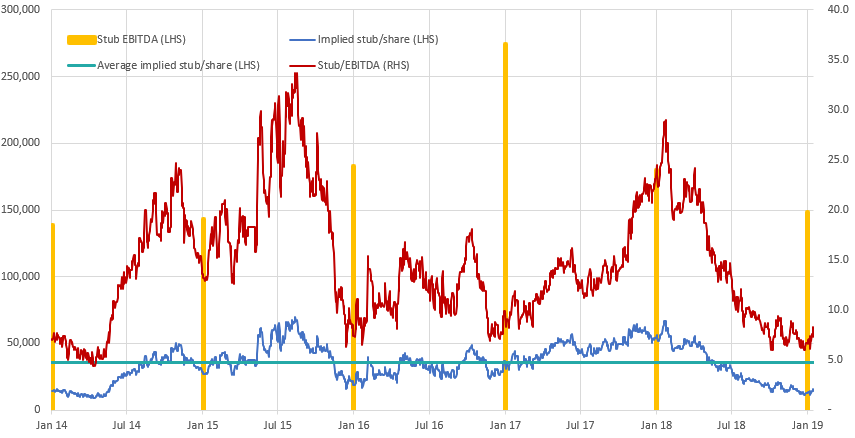
1. StubWorld: CK Infra/Power Assets, Amorepacific, JCNC

Chart%202

This week in StubWorld …

Preceding my comments on CKI/PAH, Amorepacific and JCNC are the weekly setup/unwind tables for Asia-Pacific Holdcos.

These relationships trade with a minimum liquidity threshold of US$1mn on a 90-day moving average, and a % market capitalisation threshold – the $ value of the holding/opco held, over the parent’s market capitalisation, expressed as a % – of at least 20%.

2. Mapletree Industrial Trust Deal Underscores Data Centres’ Impact on Global Industrial Real Estate

Re%2011%20map%20of%20singapore's%2074%20data%20centres

  • While the amount of real estate needed by data centres is small in comparison with the volumes required for e-commerce, we are seeing that data centres are also impacting the market for industrial real estate in locations around the world. 
  • Cloud and mobile computing, plus the Internet of Things are driving demand in the data center industry. According to Cushman & Wakefield, revenue growth at multi-tenant data centres will be 12% to 14% each year for the next two to five years.
  • The data centres industry is having, and is positioned to continue to have, a material positive impact on pricing for industrial real estate in many markets around the world. 
  • Real estate firm Cushman & Wakefield evaluated ten Asia Pacific markets for a range of factors. Singapore emerged as one of the two most attractive Asia Pacific locations for data centres. Over the past five months, Singapore has seen more than its share of significant data centre announcements. Most recently, Mapletree Industrial Trust disclosed that it would lease one of its buildings to global data centre company Equinix for 25 years.

3. Much Ado About Credit

Sk1

  • Global financing conditions could tighten further
  • Credit demand is deteriorating; credit risks are rising; Eurodollar costs are edging higher
  • A de-escalation in trade tensions and a Fed pause could ease the pain
  • Will Fed recently turning more dovish (possible shift to slower QT & Fed rate cut in 2019?) + concomitant USD drift provide sufficient respite to put a floor under risk assets?

4. Weimob IPO Trading Update – Existing Shareholders to the Rescue

Cornerstone

Weimob.com (2013 HK) IPO was priced at the low-end at HKD2.80/share. The retail tranche was 0.79x covered while the institutional tranche was slightly over-subscribed.

I’ve covered most aspects of the deal in my earlier insights: 

In this insight, I’ll provide an update on the deal dynamics, valuations and provide a table with the implied valuations at different share price levels.

5. 2018 HK-Connect SouthBound In a Nutshell

Screenshot%202019 01 14%20at%2010.54.52%20pm

Since autumn of 2014, the HK-Shanghai Connect, and later the HK-Shenzhen Connect mechanisms have provided means for mainland investors to buy Hong Kong-listed stocks. 

We have been tracking the H/A relationships and the Southbound flows per name on a weekly basis and occasionally writing commentary about it since late 2016. 

This report provides a brief synopsis of the SOUTHBOUND flows into Hong Kong-listed stocks over the course of 2018, by sector, by average percentage change in mainland ownership of HK shares outstanding subject to the Connect mechanisms, and the top and bottom five names per sector per quarter.

Get Straight to the Source on Smartkarma

Smartkarma supports the world’s leading investors with high-quality, timely, and actionable Insights. Subscribe now for unlimited access, or request a demo below.


Daily Hong Kong: Apple (AAPL): Reduces Prices in Mainland China – Right Action, But Not Enough and more

By | Hong Kong

In this briefing:

  1. Apple (AAPL): Reduces Prices in Mainland China – Right Action, But Not Enough
  2. China Kepei Edu (科培教育) IPO – Regulation Poses Significant Near-Term Risks
  3. Ten Years On – Asia’s Time Is Coming, Don’t Miss The Boat
  4. HK Connect Discovery Weekly: China Tower, Tencent, New China Life (2019-01-11)
  5. Screening the Silk Road: Q1-2019 Small-Mid Cap GARP (Zulu Warrior Screening)

1. Apple (AAPL): Reduces Prices in Mainland China – Right Action, But Not Enough

Pic%201 2

  • Tim Cook passed the buck to the weak sales in China. However, we believe China’s retailing is running well based on our visits to shopping malls with Apple stores.
  • Luxury goods sold better in China than all other major markets in the world in 2018.
  • We believe that the price reduction in Mainland China is just taking market share from Apple Stores in Hong Kong, but not from competitors.
  • We also believe that the app review process is the fatal shortcoming for AAPL.

2. China Kepei Edu (科培教育) IPO – Regulation Poses Significant Near-Term Risks

Increase%20in%20tax%20rate

China Kepei Education (1890 HK) is looking to raise up to US$122m in its upcoming IPO. 

Overall, the company has continued to show that its undergraduate program is the driver behind its growth. It grew its 8M 2018 revenue and gross profit both by about 24% YoY. However, there are significant near-term risks if the MOJ Draft for Comments gets implemented. It may result in Kepei registering its schools as for-profit private schools which would shrink its net profit margin.

In this insight, we will provide updates on the company’s 8M 2018 financials and operating performance, the potential impact of policy change and compare its valuation to other listed education peers. We will also run the deal through our framework.

3. Ten Years On – Asia’s Time Is Coming, Don’t Miss The Boat

Capture%206

We noted in   Ten Years On – Asia Outperforms Advanced Economies Asia’s economies and companies have outperformed advanced country peers in the ten years to 2017.  Growing by 6.8%, real, through the crisis the region is 188% larger in US dollar terms while US dollar per capita incomes 170% higher compared with 2007. In this note we argue even though Asian stock markets have underperformed since 2010 and the bulk of global capital flows have gone to advanced countries, Asia’s time is coming. Valuations are cheap. Growth fundamentals strong. There are few external or internal imbalances. Macroeconomic management has been better than in advanced economies and the scope to ease policy to ward off headwinds in 2019 is greater. China has already started.

4. HK Connect Discovery Weekly: China Tower, Tencent, New China Life (2019-01-11)

Sector%20flow

In our Discover HK Connect series, we aim to help our investors understand the flow of southbound trades via the Hong Kong Connect, as analyzed by our proprietary data engine. We will discuss the stocks that experienced the most inflow and outflow by mainland investors in the past seven days.

We split the stocks eligible for the Hong Kong Connect trade into three groups: those with a market capitalization of above USD 5 billion, those with a market capitalization between USD 1 billion and USD 5 billion, and those with a market capitalization between USD 500 million and USD 1 billion.

We see the Financials sector led the outflow by mainland investors last week with 201 million USD of net selling. We also highlight a few companies this week: China Tower (788 HK), Tencent Holdings (700 HK), New China Life Insurance (1336 HK), and Ping An Good Doctor (1833 HK).

5. Screening the Silk Road: Q1-2019 Small-Mid Cap GARP (Zulu Warrior Screening)

Chart%201

  • Value made a comeback, but growth remains core: In May 2018, we examined the divide between value and growth stocks, ( Notes from the Silk Road: Small-Mid Cap Screening for Zulu Warriors). As Q3 unfolded, this eventuated with a +7.5% reversal in favour of value stocks, only to see growth resume dominance in October and November.
  • The optimal value/growth style dynamic: We feel exposure to growth at a reasonable price (GARP) coupled with a healthy FCF yield (via our amended Zulu Screen) should provide some healthy medium to long term returns for investors.
  • The Screen’s Risk: The Zulu Screen relies on analyst estimates. When market sentiment is weak and forecasts are not amended in a timely manner, the screen is susceptible to mis-selection.
  • Q2 2018 screening list succumbed to volatile markets: This was seen in our May screen with our list posting on average a 30% decline in share price, relative to the broader Asia-Pacific Ex-Japan declining 13.6% and the Asia Pacific index by 11.8%.
  • Are there reasons for the underperformance? 10 of the 19 stocks in the May screen were from Hong Kong, which saw the Hang Seng Index (HIS) decline 16% over the same period. The decrease seems due to concern over trade wars and doubts about the China economy. Our key approach to stock selection is to take a medium-to-long-term view as well as focus on quality ranked stocks relative to their peers. This is highlighted via the average stock rank of the group declining only 15.8% from 89.6 to 75.5 points.
  • Our Q1 2019 screen selected only 9 stocks. Of the 9 stocks identified, the average PEG Ratio was 0.4x, the price to FCF yield was 11% and ROCE was 25%. Stocks were selected from Australia, New Zealand, India, Korea, Japan, Hong Kong, Taiwan and Singapore. Cowell Fashion Company from Korea was the only remaining stock from our May screening.

Get Straight to the Source on Smartkarma

Smartkarma supports the world’s leading investors with high-quality, timely, and actionable Insights. Subscribe now for unlimited access, or request a demo below.


Daily Hong Kong: TRACKING TRAFFIC/Chinese Tourism: Visits to Macau & HK Surge and more

By | Hong Kong

In this briefing:

  1. TRACKING TRAFFIC/Chinese Tourism: Visits to Macau & HK Surge

1. TRACKING TRAFFIC/Chinese Tourism: Visits to Macau & HK Surge

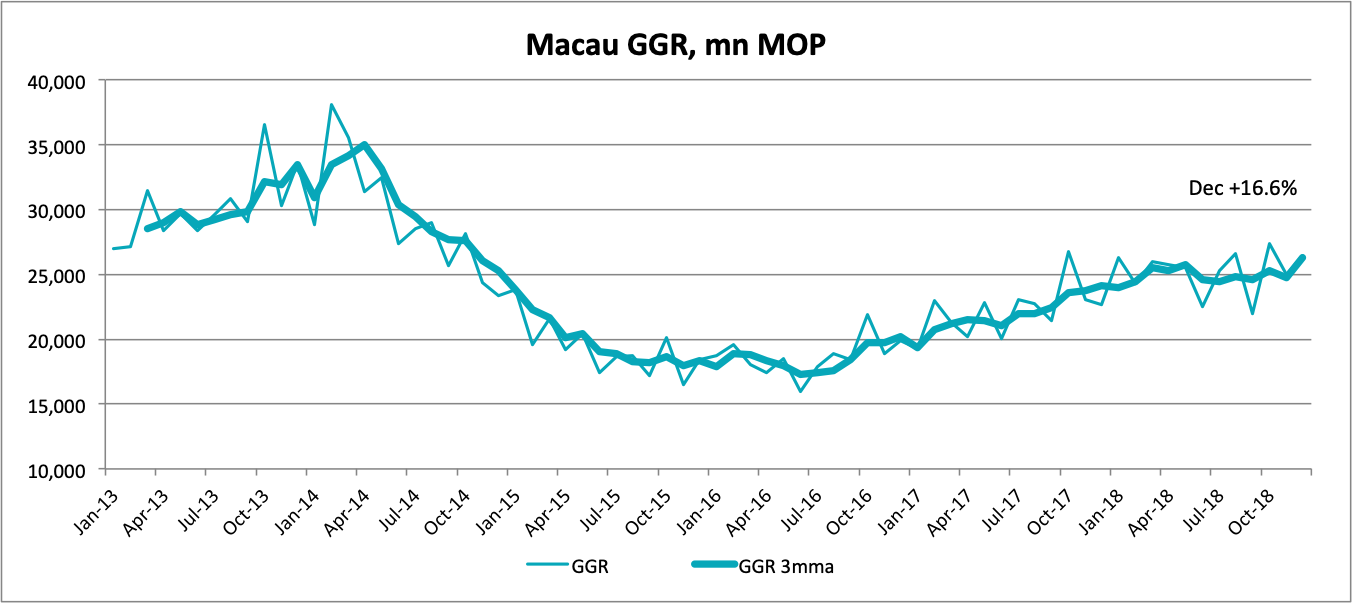
Dec18 ggr

A year ago we began publishing Tracking Traffic/Chinese Tourism as the hub for all of our research on China’s tourism sector. This monthly report features analysis of Chinese tourism data, notes from our conversations with industry participants, and links to recent company news and thematic pieces. Our aim is to highlight important trends in China’s tourism sector (and changes to those trends).

In this issue readers can find:

  1. A review of China’s outbound tourist traffic in November, which strengthened: Lifted by extraordinarily strong growth in visits to Hong Kong and, to a lesser extent, Macau, Chinese outbound travel demand rebounded strongly in the seven regional destinations we track. But the fact that November’s growth was led overwhelmingly by Hong Kong and Macau — destinations close enough for weekend or day trips from population centers in Southern China — suggests Chinese tourists’ purse strings are still tight.
  2. An analysis of November domestic Chinese travel activity, which turned weaker: November data from China’s three leading airlines and the Ministry of Transport show moderating domestic travel demand. For combined rail, highway, and air travel, November demand grew by less than 3% Y/Y. Along with the change in destination mix for outbound travel (that favors ‘nearby’ destinations), it now appears domestic demand has weakened, too. 
  3. Links to other recent news & research on Chinese tourism: Readers can check out our quick takes on Macau’s December GGR figure, preliminary GTV and revenue figures released by Ctrip.Com International (Adr) (CTRP US), declining US visa issuance to Chinese tourists, and Qatar Airways’ new investment in a leading Chinese airline.

Although we remain positive on the long-term growth of Chinese tourism, it’s clear that near-term demand has weakened substantially. We continue to take a negative view of travel intermediaries like Ctrip, which face intensifying competition from many sources. We are more positive on the prospects of actual owners of Chinese travel and tourism assets, like hotel chain Huazhu Group (HTHT US) and Air China Ltd (H) (753 HK)

Get Straight to the Source on Smartkarma

Smartkarma supports the world’s leading investors with high-quality, timely, and actionable Insights. Subscribe now for unlimited access, or request a demo below.


Daily Hong Kong: Weimob IPO Trading Update – Existing Shareholders to the Rescue and more

By | Hong Kong

In this briefing:

  1. Weimob IPO Trading Update – Existing Shareholders to the Rescue
  2. 2018 HK-Connect SouthBound In a Nutshell
  3. Apple (AAPL): Reduces Prices in Mainland China – Right Action, But Not Enough
  4. China Kepei Edu (科培教育) IPO – Regulation Poses Significant Near-Term Risks
  5. Ten Years On – Asia’s Time Is Coming, Don’t Miss The Boat

1. Weimob IPO Trading Update – Existing Shareholders to the Rescue

Cornerstone

Weimob.com (2013 HK) IPO was priced at the low-end at HKD2.80/share. The retail tranche was 0.79x covered while the institutional tranche was slightly over-subscribed.

I’ve covered most aspects of the deal in my earlier insights: 

In this insight, I’ll provide an update on the deal dynamics, valuations and provide a table with the implied valuations at different share price levels.

2. 2018 HK-Connect SouthBound In a Nutshell

Screenshot%202019 01 14%20at%2010.54.52%20pm

Since autumn of 2014, the HK-Shanghai Connect, and later the HK-Shenzhen Connect mechanisms have provided means for mainland investors to buy Hong Kong-listed stocks. 

We have been tracking the H/A relationships and the Southbound flows per name on a weekly basis and occasionally writing commentary about it since late 2016. 

This report provides a brief synopsis of the SOUTHBOUND flows into Hong Kong-listed stocks over the course of 2018, by sector, by average percentage change in mainland ownership of HK shares outstanding subject to the Connect mechanisms, and the top and bottom five names per sector per quarter.

3. Apple (AAPL): Reduces Prices in Mainland China – Right Action, But Not Enough

Pic%201 2

  • Tim Cook passed the buck to the weak sales in China. However, we believe China’s retailing is running well based on our visits to shopping malls with Apple stores.
  • Luxury goods sold better in China than all other major markets in the world in 2018.
  • We believe that the price reduction in Mainland China is just taking market share from Apple Stores in Hong Kong, but not from competitors.
  • We also believe that the app review process is the fatal shortcoming for AAPL.

4. China Kepei Edu (科培教育) IPO – Regulation Poses Significant Near-Term Risks

Increase%20in%20tax%20rate

China Kepei Education (1890 HK) is looking to raise up to US$122m in its upcoming IPO. 

Overall, the company has continued to show that its undergraduate program is the driver behind its growth. It grew its 8M 2018 revenue and gross profit both by about 24% YoY. However, there are significant near-term risks if the MOJ Draft for Comments gets implemented. It may result in Kepei registering its schools as for-profit private schools which would shrink its net profit margin.

In this insight, we will provide updates on the company’s 8M 2018 financials and operating performance, the potential impact of policy change and compare its valuation to other listed education peers. We will also run the deal through our framework.

5. Ten Years On – Asia’s Time Is Coming, Don’t Miss The Boat

Capture%206

We noted in   Ten Years On – Asia Outperforms Advanced Economies Asia’s economies and companies have outperformed advanced country peers in the ten years to 2017.  Growing by 6.8%, real, through the crisis the region is 188% larger in US dollar terms while US dollar per capita incomes 170% higher compared with 2007. In this note we argue even though Asian stock markets have underperformed since 2010 and the bulk of global capital flows have gone to advanced countries, Asia’s time is coming. Valuations are cheap. Growth fundamentals strong. There are few external or internal imbalances. Macroeconomic management has been better than in advanced economies and the scope to ease policy to ward off headwinds in 2019 is greater. China has already started.

Get Straight to the Source on Smartkarma

Smartkarma supports the world’s leading investors with high-quality, timely, and actionable Insights. Subscribe now for unlimited access, or request a demo below.


Daily Hong Kong: Extraordinary Fiscal and Monetary Policies Have Disrupted the Global Economy and more

By | Hong Kong

In this briefing:

  1. Extraordinary Fiscal and Monetary Policies Have Disrupted the Global Economy
  2. China Tower: More Details on Non Telco Growth Suggest Further Upside to Share Price
  3. ASIC Review of Allocation in Equity Raising – Some Truths, Some Half-Truths – No Improvements
  4. StubWorld: Time For A BGF Setup? An Unlikely Boost for Kingboard
  5. A Golden Future?

1. Extraordinary Fiscal and Monetary Policies Have Disrupted the Global Economy

In their public presentations, central banks seem to be contemplating the use of neutral interest rates (r*) in addition to unemployment/inflation theories. R* has the advantage of appearing to be subject to mathematical precision, yet it’s unobservable, and so unfalsifiable. Thus, it permits central banks to present any policy conclusion they want without fear of verifiable contradiction. R* is the policy rate that would equate the future supply of and demand for loans. It rises and falls as an economy strengthens and weakens. Long-term observation during the non-inflationary gold standard, period indicated that r* in an average economy was 2% plus, which would become 4% plus with today’s 2% inflation target. The Fed may soon end this tightening cycle with the fed funds rate at or near 2¾%, which would be r* if the rate of lending and borrowing in America remained stable thereafter. Rising (falling) lending would indicate a higher (lower) r*. 

2. China Tower: More Details on Non Telco Growth Suggest Further Upside to Share Price

Ct%20financials

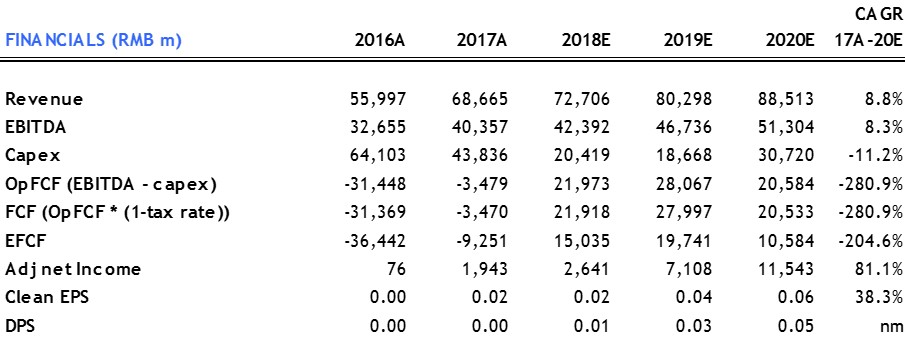
After initially being very skeptical of the China Tower (788 HK) IPO given it is essentially a price take to its three largest shareholders, we changed our view in early December to a more positive outlook. What changed our view has been series of calls and meetings with the company that suggested a more shareholder friendly approach than expected and a real opportunity to reduce capex substantially through the use of “social resources” (e.g. electricity grid, local government sites). These can be used to deliver co-locations without building towers and poles and imply much lower capital intensity at a time when revenue growth will be accelerating as 5G is rolled out.  Management has also given more detail on non-Tower business prospects which can generate higher returns (not under the Master Services Agreement). While small now (2% of revenue) they are growing rapidly. With lower capex than initially guided and a more shareholder friendly management (i.e. higher dividends are possible) we reduce the SOE discount and raise our forecasts (again). We remain at BUY with a new target price of HK$2.20

3. ASIC Review of Allocation in Equity Raising – Some Truths, Some Half-Truths – No Improvements

Size%20of%20the%20bid

Over 2017-18, the Australian Securities & Investments Commission (ASIC) undertook a review of allocation in equity raising transactions. The review involved large and mid-sized licensees (brokers), Issuers, International investors and other international regulators. The results of the review were published by ASIC in Dec 2018. This insight highlights some of the key findings.

It’s good to see that some of the standard practices of banks allocating more to existing clients and participants of earlier deals have at least been acknowledged. Even though some institutional investors have outright labelled the allocation process as a “black box”, ASIC doesn’t seem to want to do much about it.

The area where ASIC is more concerned is the messaging to investors which highlights the different definitions of “well-covered” across banks. Although, the banks seem to have mislead the regulator on interpretation of “real-demand” with ECM bankers saying that all orders are taken at face-value. That raises a whole new level of questions on the messaging around demand for the deal.

4. StubWorld: Time For A BGF Setup? An Unlikely Boost for Kingboard

Nav%20jan%202019

This week in StubWorld …

Preceding my comments on BGF and KBC are the weekly setup/unwind tables for Asia-Pacific Holdcos.

These relationships trade with a minimum liquidity threshold of US$1mn on a 90-day moving average, and a % market capitalisation threshold – the $ value of the holding/opco held, over the parent’s market capitalisation, expressed as a % – of at least 20%.

5. A Golden Future?

The ability to have stable prices has great value.

According to Edward Gibbon, the decaying Roman Empire exhibited five hallmarks: 1) concern with displaying affluence instead of building wealth; 2) obsession with sex; 3) freakish and sensationalistic art; 4) widening disparity between the rich and the poor; and 5) increased demand to live off the state. Most DMs and many EMs display similar symptoms today because fiscal and monetary policies, the foundation of both ancient and modern societies, are identical: increasing welfare outlays by artificially inflating the money supply. The Roman Empire took more than four centuries to destroy what the Republic had built in the previous five centuries because clipping and debasing coins inflated currency supplies slowly. Entering debits and credits in the books of commercial and central banks is much more efficient. 

Get Straight to the Source on Smartkarma

Smartkarma supports the world’s leading investors with high-quality, timely, and actionable Insights. Subscribe now for unlimited access, or request a demo below.


Daily Hong Kong: HK Connect Discovery Weekly: China Tower, Tencent, New China Life (2019-01-11) and more

By | Hong Kong

In this briefing:

  1. HK Connect Discovery Weekly: China Tower, Tencent, New China Life (2019-01-11)
  2. Screening the Silk Road: Q1-2019 Small-Mid Cap GARP (Zulu Warrior Screening)
  3. Chinese Telcos: 5G Launches in 2019. Buy the 5G Beneficiary (China Tower).
  4. Are Chip Oligopolies Real?
  5. Global Banks: Some New Year Pointers

1. HK Connect Discovery Weekly: China Tower, Tencent, New China Life (2019-01-11)

Sector%20flow

In our Discover HK Connect series, we aim to help our investors understand the flow of southbound trades via the Hong Kong Connect, as analyzed by our proprietary data engine. We will discuss the stocks that experienced the most inflow and outflow by mainland investors in the past seven days.

We split the stocks eligible for the Hong Kong Connect trade into three groups: those with a market capitalization of above USD 5 billion, those with a market capitalization between USD 1 billion and USD 5 billion, and those with a market capitalization between USD 500 million and USD 1 billion.

We see the Financials sector led the outflow by mainland investors last week with 201 million USD of net selling. We also highlight a few companies this week: China Tower (788 HK), Tencent Holdings (700 HK), New China Life Insurance (1336 HK), and Ping An Good Doctor (1833 HK).

2. Screening the Silk Road: Q1-2019 Small-Mid Cap GARP (Zulu Warrior Screening)

Chart%201

  • Value made a comeback, but growth remains core: In May 2018, we examined the divide between value and growth stocks, ( Notes from the Silk Road: Small-Mid Cap Screening for Zulu Warriors). As Q3 unfolded, this eventuated with a +7.5% reversal in favour of value stocks, only to see growth resume dominance in October and November.
  • The optimal value/growth style dynamic: We feel exposure to growth at a reasonable price (GARP) coupled with a healthy FCF yield (via our amended Zulu Screen) should provide some healthy medium to long term returns for investors.
  • The Screen’s Risk: The Zulu Screen relies on analyst estimates. When market sentiment is weak and forecasts are not amended in a timely manner, the screen is susceptible to mis-selection.
  • Q2 2018 screening list succumbed to volatile markets: This was seen in our May screen with our list posting on average a 30% decline in share price, relative to the broader Asia-Pacific Ex-Japan declining 13.6% and the Asia Pacific index by 11.8%.
  • Are there reasons for the underperformance? 10 of the 19 stocks in the May screen were from Hong Kong, which saw the Hang Seng Index (HIS) decline 16% over the same period. The decrease seems due to concern over trade wars and doubts about the China economy. Our key approach to stock selection is to take a medium-to-long-term view as well as focus on quality ranked stocks relative to their peers. This is highlighted via the average stock rank of the group declining only 15.8% from 89.6 to 75.5 points.
  • Our Q1 2019 screen selected only 9 stocks. Of the 9 stocks identified, the average PEG Ratio was 0.4x, the price to FCF yield was 11% and ROCE was 25%. Stocks were selected from Australia, New Zealand, India, Korea, Japan, Hong Kong, Taiwan and Singapore. Cowell Fashion Company from Korea was the only remaining stock from our May screening.

3. Chinese Telcos: 5G Launches in 2019. Buy the 5G Beneficiary (China Tower).

China%20target%20prices

We highlighted in a recent note Chris Hoare‘s positive outlook for China Tower (788 HK). Our view takes into account the 5G build-out commencing this year, improved capex efficiency from using “social resources”, the rapid growth in non-tower businesses that lie outside the Master Services Agreement (MSA), and the valuation benefit from what looks like surprisingly investor friendly management. 

This note focuses on four key issues facing the Chinese telcos in 2019:

  • 5G capex (March) (this is by far the most important),
  • Regulatory newsflow (February/ March),
  • Operating trend improvements (August), and
  • Emerging business opportunities driving future growth (August).

We remain positive on the telcos which trade at low multiples. China Unicom (762 HK) continues to trade at a discount, yet is most exposed to the positive story emerging at China Tower. We switch our top pick among the telcos from China Mobile (941 HK) back to China Unicom as a result. Alastair Jones thinks China Telecom’s (728 HK) premium multiple is at risk if management execution on the cost base doesn’t improve. It is our least preferred telco at this stage. Overall, we expect China Tower to outperform all telcos and it is our top pick.  The upgrade to China Tower flows through the telcos (valuation and costs) and our new target prices are as follows: China Unicom to HK$14.4, China Telecom to HK$5.4 and China Mobile to HK$96. 

4. Are Chip Oligopolies Real?

Slide50

In the semiconductor industry, particularly in the DRAM sector, there has been significant consolidation leading some to hypothesize that there’s now an oligopoly that will cause prices to normalize and thus end the business’ notorious revenue cycles.  Here we will take a critical look at this argument to explain its fallacy.

5. Global Banks: Some New Year Pointers

Here is a look at how regions fare regarding key indicators.

  • PH Score = value-quality (10 variables)
  • FV=Franchise Valuation
  • RSI
  • TRR= Dividend-adjusted PEG factor
  • ROE
  • EY=Earnings Yield

We have created a model that incorporates these components into a system that covers>1500 banks.

Get Straight to the Source on Smartkarma

Smartkarma supports the world’s leading investors with high-quality, timely, and actionable Insights. Subscribe now for unlimited access, or request a demo below.


Daily Hong Kong: Uranium – About to Enter Its Own Nuclear Winter and more

By | Hong Kong

In this briefing:

  1. Uranium – About to Enter Its Own Nuclear Winter
  2. Futu Holdings Pre-IPO – Great Metrics but in a Commoditised Industry
  3. This Week in Blockchain & Cryptos: A Bitcoin Reversal; More Red Flags for Bitmain
  4. HK Connect Discovery Weekly: CR Beer, Great Wall Motors, and Kingsoft (2019-01-07)
  5. Asia Gaming Preview 2019: Part Two Picks: Galaxy, MGM China and Nagacorp

1. Uranium – About to Enter Its Own Nuclear Winter

Figure%201

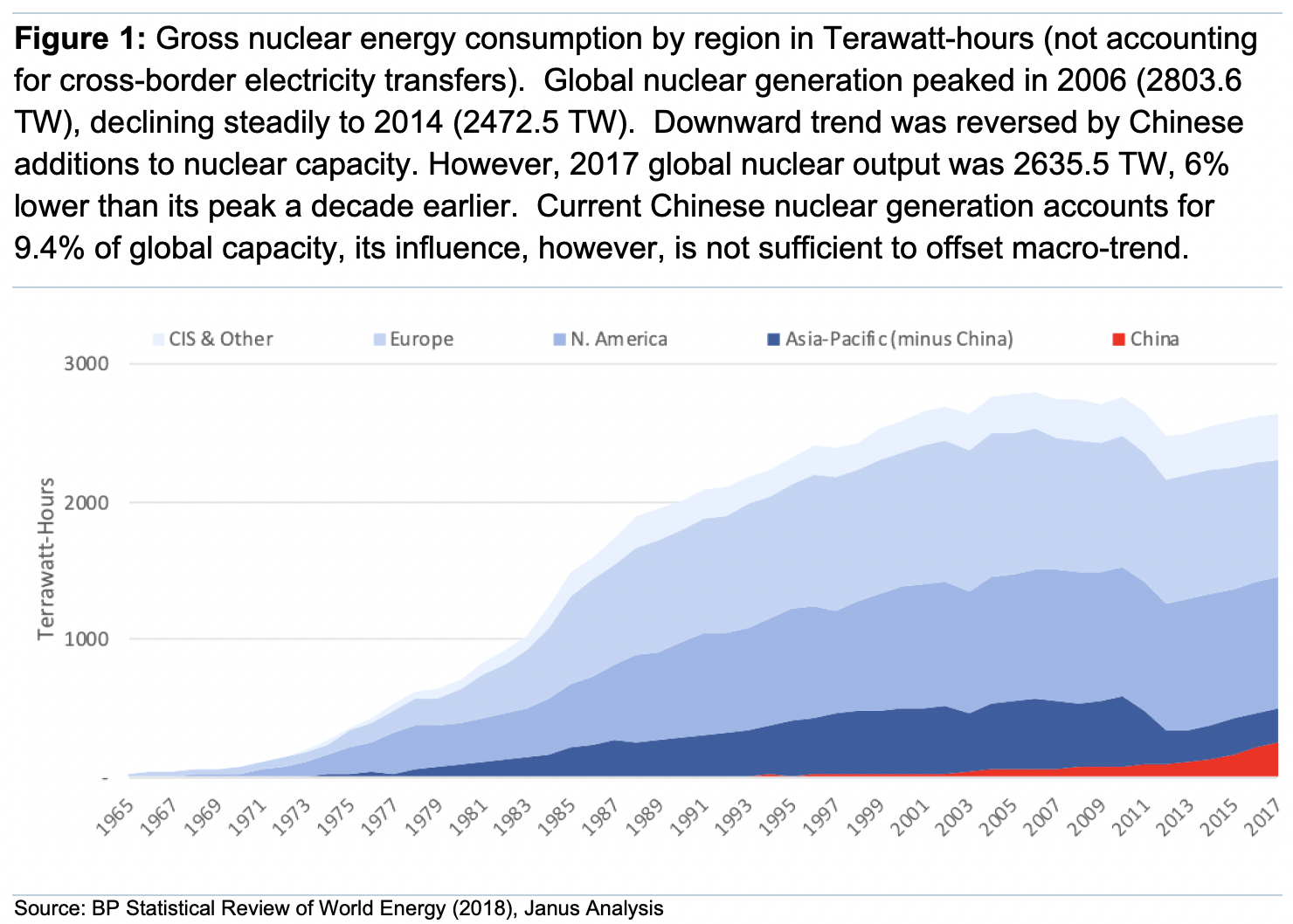
  • Quantifying nuclear statistics with substantial discrepancies
  • LT contracts & speculative hoarding driving recent 40% spot price increase
  • Primary/secondary Uranium supplies currently 112% of 2017 demand
  • Uranium supply deficits extremely unlikely before 2022
  • Global Uranium demand to fall 25-40% by 2050
  •  Primary Uranium sector LT SELL

We have independently audited global nuclear construction statistics in order to determine future Uranium demand.  Although near-term statistics match those in the public domain, long-term demand determined via construction pipeline illustrates substantial discrepancies.  Compiling planned plant construction, operational extensions, nameplate upgrades, versus decommissioning announcements/events, and in many cases, public policy inertia; has led us to believe that despite historical primary supply shortages, global nuclear demand peaked in 2006.

Since plateauing and despite strong Chinese growth, nuclear power generation has fallen <2% over the past two decades, a decline that is predicted to accelerate as a number of developed and developing nations pursue other energy options.

The macro-trend not replacing existing nuclear infrastructure means (dependent on assumptions), according to our calculations, global uranium demand will decrease between 20 to 40% by 2050.

As opposed to signifying a fundamental change in underlying demand, we believe that recent Uranium price increases are the result of producers closing primary operations, and substituting production with purchases on the spot market to meet long-term contract obligations.  In addition, hedge funds are buying physical uranium in order to realise profits on potential future commodity price increases.  Critically, we determine that primary and secondary supplies are more than sufficient to meet forecast demand over the next four to five years; before taking into account substantial existing global uranium stocks, some of which are able to re-enter the spot market at short notice.

2. Futu Holdings Pre-IPO – Great Metrics but in a Commoditised Industry

Interactive%20brokers%20hk%20fees

Futu Holdings Ltd (FHL US) plans to raise around US$300m in its US IPO. The company is backed by Tencent Holdings (700 HK) , Matrix Partners and Sequoia, who together own over 45% of the company.

The founding team comes mostly from Tencent, which might explain Tencent’s large stake in the company. Growth for the company has been stupendous despite the jittery markets, with margin financing adding to the top-line growth. 

While its low costs will help it to steal clients from the more traditional brokers, other new low-cost brokers seem to be offering similar services at comparable rates. In addition, the company is not licensed or regulated by any entities in China, despite the majority of its client base being Chinese nationals. Furthermore, the company plans to expand into newer overseas market where it doesn’t seem to have much of a cost advantage.

3. This Week in Blockchain & Cryptos: A Bitcoin Reversal; More Red Flags for Bitmain

Gmo

The year 2018 was not the brightest for cryptocurrencies; Bitcoin (XBTUSD CURNCY) fell around 70% during 2018 and top altcoins like Ethereum (ETH BGN CURNCY), Ripple and Bitcoin Cash were also down around 80%, 85% and 95% respectively during last year. While it is difficult to pinpoint a single reason for this, a number of factors including, rising security concerns, increased scrutiny, failed institutional support and Bitcoin Cash hash wars have collectively contributed to this bearish sentiment in the cryptocurrency markets last year.

In this note we take a look at several top cryptocurrency and blockchain developments from last year, to see how they would fare going into 2019.

This is a collaborative report between Douglas Kim and myself.

4. HK Connect Discovery Weekly: CR Beer, Great Wall Motors, and Kingsoft (2019-01-07)

Kingsoft

In our Discover HK Connect series, we aim to help our investors understand the flow of southbound trades via the Hong Kong Connect, as analyzed by our proprietary data engine. We will discuss the stocks that experienced the most inflow and outflow by mainlanders in the past seven days.

We split the stocks eligible for the Hong Kong Connect trade into three groups: those with a market capitalization of above USD 5 billion, those with a market capitalization between USD 1 billion and USD 5 billion, and those with a market capitalization between USD 500 million and USD 1 billion.

In the past week, there were only three and a half days trading on the Hong Kong Stock Exchange last week. Hence the flow numbers were not as significant as a typical 5 trading day week. Having said that, we find it interesting that the Chinese were buying China Resources Beer Holdin (291 HK), Great Wall Motor Company (H) (2333 HK). In addition, Yichang Hec Changjiang Pharm (1558 HK) is a rare health care stock that experienced inflow last week despite overall poor sector performance last week. 

5. Asia Gaming Preview 2019: Part Two Picks: Galaxy, MGM China and Nagacorp

11031766 web1 wynn boston sep02 18 082418kc 020

  • Global and Asia headwinds still rattle the gaming sector, but these three companies remain undervalued despite market sentiment.
  • Macau’s solid year end performance continues to defy projections, producing a 14% y/y GGR increase.
  • Galaxy will benefit disproportionately from the HKMB bridge traffic growth, MGM’s single digit market share will ramp up to double digits and Nagacorp may be the single most siloed gaming operator in all of Asia.

Get Straight to the Source on Smartkarma

Smartkarma supports the world’s leading investors with high-quality, timely, and actionable Insights. Subscribe now for unlimited access, or request a demo below.