
In this briefing:
- India: 2018 Is Watershed Year for Renewables with Decline in New Capacity Additions, What Is Next?
- Autonomous Driving. Waymo Leading The Charge With Ten Million Miles Driven And Counting
- The Festive Week the Was in ASEAN@Smartkarma – Thailand Rising, Frail DBS, and Small Cap Picks
- 2019 Asia Selected Gaming Stock Outlook: Headwinds, Tailwinds and Our Top Picks for Entry Levels Now
- Korean Stock Market Sectors 2018 Review & 2019 Outlook
1. India: 2018 Is Watershed Year for Renewables with Decline in New Capacity Additions, What Is Next?

2018 is a watershed year for renewable energy in India, a) the growth has turned negative in capacity additions after several years of huge capacity addition increase in Solar, b) the wind power generation capacity additions is depressed once again after a very poor 2017. The apparent reason is significant delays in commissioning of projects because of execution challenges but there are structural issues as well and this means that there is not much certainty on how things will evolve in future.
The current financial year has seen a big change in general sentiment towards renewables in India and there were instances of cancelled bids and project disputes. More importantly, we think there are important changes we will see in 2019, a) the tariffs may not be increasing in bids but the level on decline we had observed in 2017 is now firmly in the past and this trend will get stronger and tariff bids will be stabilizing, b) Financing will be a major challenge and banks are not interested in power sector with not many alternatives available.
After Indian renewable energy space generated massive interest among power companies as developers and also from investors, we in all likelihood will see a more rational approach in future. It is not certain but hopefully, Govt expectation of continuously declining tariffs will become more reasonable. After a serious decline of more than 80% in solar tariffs over ten years, Govt expectation on per unit prices is continuously getting lower which is an unrealistic assumption because of change in cost dynamics.
2. Autonomous Driving. Waymo Leading The Charge With Ten Million Miles Driven And Counting

Waymo CEO John Krafcik made some bold decisions after taking the helm at Alphabet‘s self-driving project in September 2015. Chief among them was the fact that the company abandon its plans for Level 3 automated driving and focus exclusively on levels 4 & 5. Furthermore, he decreed that Waymo would no longer manufacture its own vehicles but would instead integrate their technology into those of other automakers. Three years later, those decisions would appear to be finally paying off.
On October 10 2018, Waymo reached a significant milestone having completed 10 million self-driving miles across 25 cities in the US. While their first million self-driving miles took 18 months to complete, Waymo now clocks up over a million self-driving miles per month. The company also recently announced the launch of its robo taxi service in Phoenix, Arizona and looks set to quickly follow suit in California. Plans to extend its self-driving technology beyond robotaxis, most notably for trucks and last-mile transportation solutions are also in the works. Furthermore, the company has begun laying down a framework of innovative B2B revenue models which should help accelerate the speed with which they can eventually monetize their technology.
It hasn’t been smooth sailing all the way for Waymo however. Earlier this year, the company was derided for the driving style of its autonomous vehicles and faced the criticism that its driverless cars continue to have safety drivers. There was also an embarrassing incident where one of those very safety drivers caused the self-driving car he was monitoring to hit a motorcyclist when he attempted to take control of the vehicle. According to Waymo’s own analysis of the vehicle log files, the accident would not have happened had he not intervened.
With ten million self-driving miles under their belt and a thoughtful, strategic approach to monetizing their technology beginning to emerge, Waymo remains firmly ahead of their peers in leading the autonomous driving charge.
3. The Festive Week the Was in ASEAN@Smartkarma – Thailand Rising, Frail DBS, and Small Cap Picks
This past Festive week’s offering of Insights across ASEAN@Smartkarma is filled with another eclectic mix of differentiated, substantive and actionable insights from across South East Asia and includes macro, top-down and thematic pieces, as well as actionable equity bottom-up pieces. Please find a brief summary below, with a fuller write up in the detailed section.
The top Macro Insight this week comes from Dr Jim Walker who zeros in on Thailand, where he sees an economy that is about to take off. In the equity bottom-up space, Daniel Tabbush revisits DBS GroupHoldings (DBS SP) in light of falling oil prices, which he sees as potentially leading to higher credit costs. I would also highlight Nicolas Van Broekhoven ‘s overview of his winners and losers over the past year, as well as his top picks for 2019.
Macro Insights
In Thailand: The Sandbox Economic Insight provider Dr Jim Walker circles back to the Thai economy, which he suggests is about to take off.
In The Philippines: Reform Impetus Gives Way to Politicking, Manu Bhaskaran explores the risks ahead for the Philippine Economy.
In IDR, CPI, Oil, Trans-Java & Freeport Strengthen Widodo / Lippo Case Escalates / Efta Cepa / Debates, Kevin O’Rourke provides his value-added comment on economic and political developments in Indonesia over the last week.
In Malaysia: Implosion of Former Ruling Party Could Create Tensions in Ruling Coalition, Manu Bhaskaran zeros in on rising political risks in Malaysia.
Equity Bottom-Up Insights
In Global Banks – DBS Frail Against Global PeersDaniel Tabbush looks at DBS Group Holdings (DBS SP) in light of falling oil prices and assesses the potential impact in credit quality.
In AALI (AALI IJ): Indonesian Biodiesel Mandate to Support CPO PriceDr. Andrew Stotz, CFA works his magic on Astra Agro Lestari (AALI IJ) and comes back with a positive view.
In SPH REIT Nibbles at Blackstone’s PortfolioAnni Kum revisits SPH REIT (SPHREIT SP) in light of its recent acquisition in Australia.
In CKP (CKP TB): Powerful Expansion to Drive Earnings GrowthDr. Andrew Stotz, CFA takes a close look at CK Power Pcl (CKP TB) which offers stronger growth relative to its peers.
In UTP (UTP TB): Continued Gain from Tight Global Paper Supply, Dr. Andrew Stotz, CFA zeros in on paper manufacturer United Paper (UTP TB) and sees an improving picture.
In BAUTO (BAUTO MK): New Models to Keep Strong Sales Momentum, Dr. Andrew Stotz, CFA takes a close look at this Malaysian and Philippines auto player. BAUTO sells Mazda vehicles in Malaysia and via its subsidiary Bermaz Auto Philippines Inc (BAP) in the Philippines.
In COM7 (COM7 TB): Acquisition to Support Aggressive Expansion, Dr. Andrew Stotz, CFA looks at this Thai retailer and finds it an attractive prospect.
Sector and Thematic Insights
In Overview of My Winners and Losers in 2018…and 5 High Conviction Ideas Going into 2019, CrossASEAN Insight Provider Nicolas Van Broekhoven looks back over his stock ideas over the past year and lays out his picks for 2019.
In Small Cap Diary: MEGA, Eastwater, Thai Guru Athaporn Arayasantiparb, CFA looks at a number of interesting better know small caps in Thailand, including Mega Lifesciences (MEGA TB) and Eastern Water Resources Dev (EASTW TB).
In Sathorn Series M: TMB-Thanachart Courtship, Athaporn Arayasantiparb, CFA investigates talks if a merger between Thanachart Capital (TCAP TB), Krung Thai Bank Pub (KTB TB), and TMB Bank PCL (TMB TB) and gives us his views.
In Singapore REIT – Preferred Picks 2019, Anni Kum provides us with her top picks for 2019 in the Singapore REIT space.
4. 2019 Asia Selected Gaming Stock Outlook: Headwinds, Tailwinds and Our Top Picks for Entry Levels Now

Our review of ten Asian gaming companies forward prospects for 2019 yielded our top five picks. Two of those comprise this insight. Three more will follow in Part Two. There is, in our opinion, some disconnect between continuing macro headwinds in both the VIP and mass sectors and a more bullish tone based on a recent upside trend in Macau, strong results in the Philippines and Cambodia. Given the battering of the market in general, the already 8 month old bearish tone to the sector and the current pricing of the two stocks noted here, we see significant upside opportunity as we near the beginning of 2019.
5. Korean Stock Market Sectors 2018 Review & 2019 Outlook
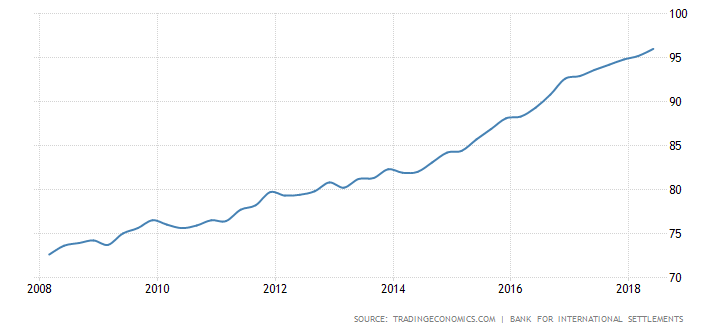
In this report, we review the major sectors’ performance in the Korean stock market in 2018 and also provide our outlook for them in 2019. We divided the Korean stock market into 17 major sectors such as autos, internet, and utilities. Our top sector picks for 2019 include telecom, Internet/games, utilities, and technology (lithium-ion batteries). We also believe there will likely be select IPOs that could do well next year. Overall, we believe it will be prudent to maintain a defensive position in one’s stock portfolio.
One of the positive surprises that could occur in 2019 could be some kind of resolution between the US-China trade war. Both Xi and Trump have significant incentives to make a truce and negotiate for a settlement. However, even if China and the US make a compromise settlement, we believe the overall positive impact could be temporary. The great concern is the fact that the excessive global debt driven economy may be getting closer to the last legs of the business cycle and as more global investors perceive a global recession ahead, they may accelerate the transition to more defensive portfolios.
The top five stocks we like in the Korean stock market in 2019 are SK Telecom (017670 KS), NCsoft Corp (036570 KS), Samsung Sdi (006400 KS), LG Corp (003550 KS), and Ottogi Corporation (007310 KS) .

