Monthly Archives

December 2018

Daily Thematic: 2019 Asia Selected Gaming Stock Outlook: Headwinds, Tailwinds and Our Top Picks for Entry Levels Now and more

By | Thematic (Sector/Industry)

In this briefing:

  1. 2019 Asia Selected Gaming Stock Outlook: Headwinds, Tailwinds and Our Top Picks for Entry Levels Now
  2. Korean Stock Market Sectors 2018 Review & 2019 Outlook
  3. Are US Stocks Still Expensive?
  4. India: Coal Availability Improves at Power Plants, but Utilizations Yet to Pick Up on Lower Demand
  5. Seven Eleven, Familymart and Lawson Find New Growth Strategies in Tighter Market

1. 2019 Asia Selected Gaming Stock Outlook: Headwinds, Tailwinds and Our Top Picks for Entry Levels Now

D76bc97afe36a6d6afbb2d45b25c4d19

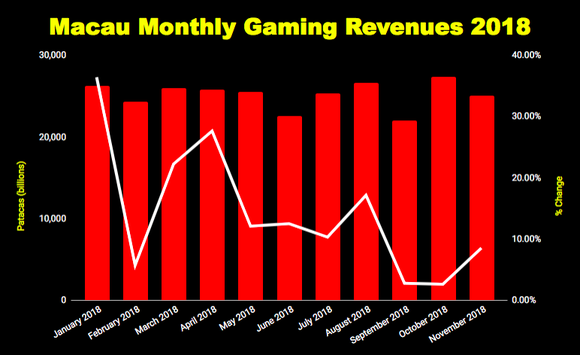
Our review of ten Asian gaming companies forward prospects for 2019 yielded our top five picks. Two of those comprise this insight. Three more will follow in Part Two. There is, in our opinion, some disconnect between continuing macro headwinds in both the VIP and mass sectors and a more bullish tone based on a recent upside trend in Macau, strong results in the Philippines and Cambodia. Given the battering of the market in general, the already 8 month old bearish tone to the sector and the current pricing of the two stocks noted here, we see significant upside opportunity as we near the beginning of 2019.

2. Korean Stock Market Sectors 2018 Review & 2019 Outlook
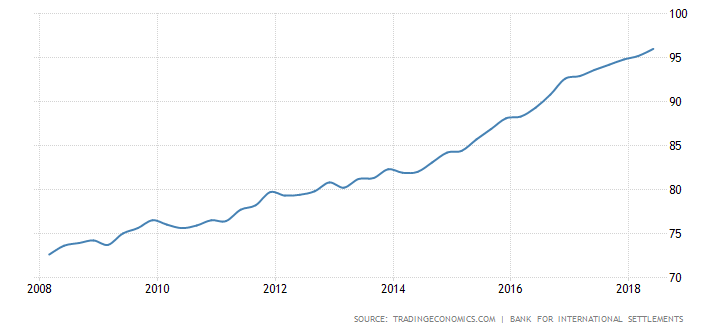
Korea debt

In this report, we review the major sectors’ performance in the Korean stock market in 2018 and also provide our outlook for them in 2019. We divided the Korean stock market into 17 major sectors such as autos, internet, and utilities. Our top sector picks for 2019 include telecom, Internet/games, utilities, and technology (lithium-ion batteries). We also believe there will likely be select IPOs that could do well next year. Overall, we believe it will be prudent to maintain a defensive position in one’s stock portfolio. 

One of the positive surprises that could occur in 2019 could be some kind of resolution between the US-China trade war. Both Xi and Trump have significant incentives to make a truce and negotiate for a settlement. However, even if China and the US make a compromise settlement, we believe the overall positive impact could be temporary. The great concern is the fact that the excessive global debt driven economy may be getting closer to the last legs of the business cycle and as more global investors perceive a global recession ahead, they may accelerate the transition to more defensive portfolios. 

The top five stocks we like in the Korean stock market in 2019 are SK Telecom (017670 KS), NCsoft Corp (036570 KS), Samsung Sdi (006400 KS), LG Corp (003550 KS)and Ottogi Corporation (007310 KS) .

3. Are US Stocks Still Expensive?

Picture1

There are striking parallels between 1929 and 2018.  

The 1929 crash put a halt to a nine-year bull run on the market.

Up until October 1929, same as this year, market consensus was that asset prices could only go up from their current level.

As we mentioned in When the Tide Goes Out, Dominoes Fall, a decade of building up excesses meant a painful burst, back 79 years ago: between October of 1929 and September of 1932, eighty-nine percent of the value of stocks was erased and the market didn’t recover to its former peak until 25 years later.

Are we in a similar situation right now? 

4. India: Coal Availability Improves at Power Plants, but Utilizations Yet to Pick Up on Lower Demand

In the first half of FY19, there has been a serious shortage of coal in several thermal power plants in India which was affecting as much as 25% of total capacity of power plants in India. However, it has improved considerably now. As per latest Ministry of Power data as on 23rd December 2018 for 124 plants, coal shortage has become zero in pit head plants and there are only 12 plants in non pit-head category with coal shortages. This change is a significant improvement in coal availability situation for power generation sector in India.

However, the utilizations have not gone up that much for power plants on a cumulative basis across the country. The average utilizations (Plant Load Factor or PLF) for overall India generation capacity was 62.6% for April to November 2018 period and this was 62.7% in November indicating no significant improvement. This virtually no improvement in power plants’ utilization could be linked to lesser demand for electricity because of change in weather conditions and also indicates that coal supply situation may not have improved that much.

Nevertheless, this will reduce the pressure from Power Plants and the sector on Coal India Ltd (COAL IN) for more supplies. However, we many not see much change in production and volumes for Coal India Ltd (COAL IN) which has seen a significant decline in recent months. Another implication is that when the overall demand for electricity comes down, the demand in spot market will also be lower accordingly. It is directly relevant for the merchant power companies and Indian Energy Exchange (IEX IN).

5. Seven Eleven, Familymart and Lawson Find New Growth Strategies in Tighter Market

Jc1812 focus6

The following is an in-depth review of the big three Japanese convenience store (CVS) players, Seven Eleven (Seven & I Holdings (3382 JP)), Familymart (8028 JP) and Lawson Inc (2651 JP). This follows our review of the Japanese convenience store sector overall, which is best to read first.

The key operational and strategic themes relevant to investors regarding the Big Three in Japan:

  • Saturation has encouraged the top three operators to take over the remaining smaller chains while pushing into regions where they have fewer stores.
  • All are expanding new forms of retail:
    • Seven Eleven and Lawson have launched new e-commerce ventures that make the best use of their existing store networks and could reach national coverage quite soon.
    • Diversification: Familymart, in particular, is tying with all manner of partners to try and come up with a hit hybrid format to find new growth.
  • While competition from drugstores and discount food retailers is a threat, convenience stores will continue to find new growth from e-commerce, hybrid stores and innovative products.
Daily Thematic: Singapore REIT – Preferred Picks 2019 and more

By | Thematic (Sector/Industry)

In this briefing:

  1. Singapore REIT – Preferred Picks 2019
  2. Micron’s Guidance Bombshell Signals Troubled Times Ahead For Beleaguered Semiconductor Segment
  3. China’s Sluggish Inbound Tourism Industry
  4. Japan: Moving Average Outliers – Year-End Blues
  5. What Just Happened In The Stock Market?

1. Singapore REIT – Preferred Picks 2019

With the FTSE ST REIT index’s decline of 9.3% year-to-date, value has emerged for some of the bellwether names in the Singapore REITs sector. The forward yield spread between these REITs and the Singapore government 10-year bond yield (2.13%) currently stand at least 390 basis points. In view of the increasing concerns over global economic growth, rising interest rates and the ongoing trade tension between the US and China, I present three quality REITs with fortified portfolios that are well-positioned to weather the near-term market uncertainties. They possess growth potential from acquisitions, positive rental reversions and deliver resilient forward distribution yield of more than 6%. Some of the bellwether names in the more resilient retail REIT sector, while offering lower yield of around 5.0% – 5.7%, are also in my buy list. 

2. Micron’s Guidance Bombshell Signals Troubled Times Ahead For Beleaguered Semiconductor Segment

Screen%20shot%202018 12 20%20at%2011.20.25%20am

After months of skirting around inventory build-up and a weakening demand outlook, Micron used their latest earnings report to call closing time on a revenue and profitability party that began in Q4 2016 and just got better and better with each passing quarter. 

Micron reported Q1 FY2019 results on December 18’th and while revenues were largely in line with recently lowered guidance from the company, their outlook for both Q2 and 2019 as a whole was worse than even the most bearish of expectations. 

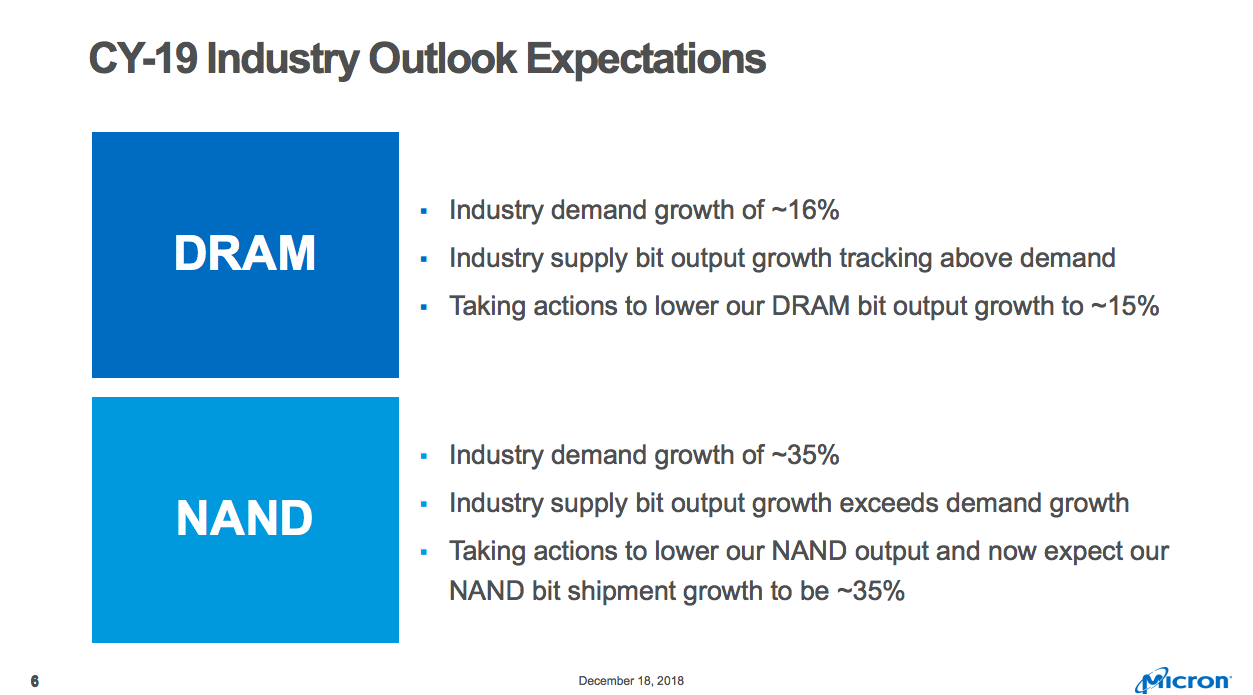
Citing high inventory levels at key customers, Micron guided Q2 FY2019 revenues for $6 billion at the midpoint, down a staggering $1.9 billion, 24% QoQ and 18% YoY. At the same time, Micron revised down their CY2019 bit demand growth forecast for both DRAM (from 20% to 16%) and NAND (35%, the bottom of the previously forecasted range). The company plans to adjust both CapEx and bit supply output downwards to match.

In the wake of their guidance bombshell, Micron’s share price closed down almost 8% the following day to end the session at $31.41, a level last seen in August 2017. Micron is unique in reporting out of sync with its industry peers, making it the proverbial canary in a coal mine. The company’s gloomy outlook and clarion call for further CapEx reductions in a bid to rebalance supply and demand spells troubled times ahead for an already beleaguered semiconductor segment ahead of the upcoming earnings season. 

3. China’s Sluggish Inbound Tourism Industry

How can we explain the fact that in the five years from 2012 the number of tourist visits to China fell from 11.6 to 10.5 million per year? True, business and family reunion visits have risen, but such a culturally rich country should have more tourists.

4. Japan: Moving Average Outliers – Year-End Blues

2018 12 22 16 49 53

MARKET COMPOSITE

Source: Japan Analytics

TRADING ZONE – As of last Friday, the Japan All Market Composite has now entered a bear market, having declined by 20% from the January 23rd high if Y757t. At the close, only 8% by number and 11% by value of Japanese stocks were trading above their weighted composite of 5, 20, 60, 120, and 240-day moving averages. These were the lowest closing values since February 2016 when the All Market Composite reached a low of Y475tand  offer an entry point for a short-term trade for those happy to hold over the extended New Year Holiday period.

Source: Japan Analytics

BREAKOUTS –  The ‘Breaking Bad’ percentage reached 11% on December 4th, the tenth-lowest reading in three years bu thas yet to fall below ‘-15-.  Adding the Breaking Above and Breaking Below percentages together provides a more straightforward view of the 15% threshold that has marked previous short and medium-term turning points, and which again we have yet to reach.


SECTORS

LEGEND: The ‘sparklines’ show the three-year trend in the weighted percentage above moving average relative to the Market Composite and the ‘STDev’ column is a measure of the variability of that relative measure. The table also provides averages for the breaks above and breaks below and the positive and negative ‘crossovers’.

SECTOR BREAKDOWN – The top six sectors measured by the percentage above the weighted average of 5-240 Days are all, predictably, domestic and defensive –  Food, Beverages & Tobacco, REITs, Information Technology, Internet, Media and Utilities. Equally predictable are the bottom half-dozen – Banks, Non-Bank Finance, Autos, Metals, Electrical Equipment and Chemicals


COMPANIES

COMPANY MOVING AVERAGE OUTLIERS – As with the market and sectors, out moving average outlier indicator uses a weighted sum of the share price relative to its 5-day, 20-day, 60-day, 120 day and 240-day moving averages. Extreme values are weighted sums greater than 100% and less than -100%. We would caution that this indicator is best used for timing shorter-term reversals and, in many cases, higher highs and lower lows will be seen. 

Source: Japan Analytics

THE 100% CLUB – As of Friday 21st, there were 16 extreme positive outliers and 622 extreme negative outliers. The number of extreme negative outliers suggests we are a short-term bottom.

In the DETAIL section below, we highlight the current top and bottom twenty-five larger capitalisation outliers as well as those companies that have seen the most significant positive and negative changes in their outlier percentage in the last two weeks and provide short comments on companies of particular note. 

5. What Just Happened In The Stock Market?

The velocity and ferociousness of the recent U.S. equity market weakness caught even cautious investors like us by surprise. Our social media feed has been filled with extreme bearishness. Opinions are now becoming bifurcated. Either the decline is the signal of something big or the fall in stock prices represents a buying opportunity for fundamentally oriented investors.

It is impossible to make a buy, hold or sell decision without some understanding of what the market is discounting. Further analysis reveals that investors are discounting only a mild U.S. slowdown in 1H 2019, but no recession. From a technical perspective, both the U.S. and global markets have violated well-defined uptrend lines, just as they did in 2015 and 2007. It remains an open question as to whether the trend line breakdowns will result in just a mild pullback, or a deeper bear market.

From a technical perspective, we would look for conditions when the market stops responding to bad news. One example can be found during the eurozone and Greek Crisis of 2011. During the summer of 2011, the eurozone was at risk of breaking apart, and European leaders were having almost weekly summits on how to solve the problem. At times, it seemed that Europe was leaderless, and no one was in charge. The crisis lifted after the ECB unveiled its LTRO program to backstop the banking system in order to buy time for member states to engage in structural reform. Sometime during that process, the market stopped falling on bad news. We are not there yet.

Our recommendation is to monitor the evolution of financial risk, as well as the evolution of investor psychology, in order to determine the timing of a market bottom

Daily Thematic: 2018 Was Not the Year for Value or Beta Names in Japan…. and more

By | Thematic (Sector/Industry)

In this briefing:

  1. 2018 Was Not the Year for Value or Beta Names in Japan….
  2. Universal, SegaSammy & Dynam Sit Best Positioned Among Japan Companies in Race for IR Partnerships
  3. Singapore REIT – 4 Investment Themes for the S-REIT Sector in 2019
  4. Is China Losing the Soft Power Battle?

1. 2018 Was Not the Year for Value or Beta Names in Japan….

10

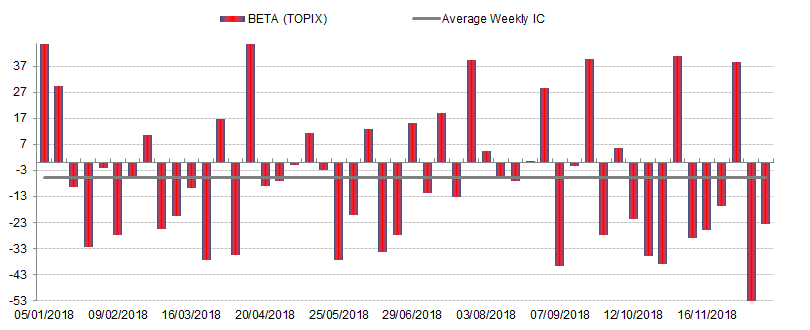
We looked back and identified which factors drove the Japanese market in 2018. We found that Value, which is historically strong in Japan, did poorly and really the only investment styles/factors that did well were large-cap and names with a high percent of retail investors.  

2. Universal, SegaSammy & Dynam Sit Best Positioned Among Japan Companies in Race for IR Partnerships

P.php

  • We’ve reviewed 10 companies in the sector. Of those, three are the consensus favorites of our Tokyo based panel of industry, financial and economics observers of the IR initiative over many years.
  • Based on pachinko alone, the stocks of these companies are fully valued. Based on potential tailwind from a license award within 6 months, they could be vastly undervalued.
  • Each of the three noted here brings strength to a bid less based on financials than corporate focus, outlook and experience in the field.

3. Singapore REIT – 4 Investment Themes for the S-REIT Sector in 2019

Picture4

Singapore real estate investment trusts (“S-REITs”) have been one of the best performing sectors on the Singapore stock market in 2018. In view of the surge in selling activities by institutional investors this year, the resilience of the S-REIT sector came as a pleasant surprise to investors. Fundamentals of the S-REIT sector remain strong. 

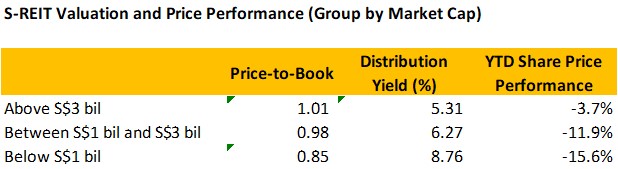
The bigger S-REITs continue to perform well, trading close to their book values and at low yields. The small-cap S-REITs (market capitalization below S$1 bil) tends to be worst performers. Whilst valuation may seem attractive, the low valuations are usually attributable to the additional risk premiums that investors require to compensate for the lack of scale, diversification and growth opportunities as well as the poor track record of some of these S-REITs.

In the coming year 2019, there are 4 investment themes for the S-REIT sector and below are ideas for investors to position their S-REITs portfolio for these themes:

Theme 1: “Safe-haven” asset class for investors

Theme 2: Merger and Acquisition

Theme 3: Growing Overseas Asset Exposure

Theme 4: The Rise of Alternative Property Asset Classes

4. Is China Losing the Soft Power Battle?

Recent figures show China slipping down the Soft Power Index while Chinese language learning in the USA is also in decline. Have tighter controls over education policy and restrictions on academic freedom in China spooked the crowd?

Daily Indonesia;: EM Relative Strength Is Bottoming: Overweight and more

By | Indonesia

In this briefing:

  1. EM Relative Strength Is Bottoming: Overweight
  2. Overview of My Winners and Losers in 2018…and 5 High Conviction Ideas Going into 2019
  3. RRG Global Macro – US Fed Positive Outlook – Stocks Fall.  Politics Take Over from Fundamentals
  4. Universal, SegaSammy & Dynam Sit Best Positioned Among Japan Companies in Race for IR Partnerships

1. EM Relative Strength Is Bottoming: Overweight

Untitled

Relative strength for MSCI EM is bottoming vs. MSCI EAFE despite continued global equity market weakness.  Although the MSCI EM’s price index remains in a downtrend, we are seeing signs of outperformance ona a relative strength basis and would add incremental exposure. In this report we highlight attractive and actionable themes within EM.

2. Overview of My Winners and Losers in 2018…and 5 High Conviction Ideas Going into 2019

In a follow up to my note from last year Overview of My Winners and Losers in 2017…and 5 High Conviction Ideas Going into 2018 I again look at my stock ideas that have worked out in 2018, those that have not and those where the verdict is still pending.

Last year I provided 5 high conviction ideas and here is their performance in a brutal year for Asian Stock Markets:

Company
Share Price 27 Dec 2017
Share Price 20 December 2018
Dividends
% Total Return
0.70 HKD
0.88 HKD
0.01 HKD
+27%
0.20 SGD
0.27 SGD
0.0 SGD
+35%
2.39 HKD
2.82 HKD
0.147 HKD
+24%
0.84 SGD
0.85 SGD
0.02 SGD
+3.5%
1.44 MYR
0.32 MYR
0.0 MYR
-79%
source: Refinitiv

4 out of 5 had a positive performance.

Below I will make a new attempt to provide five high conviction ideas going into 2019.

3. RRG Global Macro – US Fed Positive Outlook – Stocks Fall.  Politics Take Over from Fundamentals

  • US: Stocks fall on political turmoil despite positive noises from the Fed with a dovish rate hike, a reduction in expected 2019 hikes and positive trends on employment and inflation.
  • Russia: Unexpected 25 bps rate hike in the face of higher inflation in Nov. Watch for impact of lower oil prices in coming quarters.
  • Turkey: Economic developments remain negative. The outlook for retail sales is poor as the economy in general is faltering.
  • Indonesia: Trade deficit in November. Exports down 3.3%; imports up 11.68%. This disappointing performance could be the beginning of a trend.

4. Universal, SegaSammy & Dynam Sit Best Positioned Among Japan Companies in Race for IR Partnerships

P.php

  • We’ve reviewed 10 companies in the sector. Of those, three are the consensus favorites of our Tokyo based panel of industry, financial and economics observers of the IR initiative over many years.
  • Based on pachinko alone, the stocks of these companies are fully valued. Based on potential tailwind from a license award within 6 months, they could be vastly undervalued.
  • Each of the three noted here brings strength to a bid less based on financials than corporate focus, outlook and experience in the field.

Daily Thailand: Last Week in Event SPACE: Harbin Electric, MYOB, TMB Bank, Halla Holdings and more

By | Thailand

In this briefing:

  1. Last Week in Event SPACE: Harbin Electric, MYOB, TMB Bank, Halla Holdings
  2. Are US Stocks A Buy Yet?
  3. Monthly Geopolitical Comment: Redrafting of Global Map of Political Alliances to Continue in 2019
  4. The Four Vulnerabilities in Thai Property
  5. Autonomous Driving. Waymo Leading The Charge With Ten Million Miles Driven And Counting

1. Last Week in Event SPACE: Harbin Electric, MYOB, TMB Bank, Halla Holdings

Spins

Last Week in Event SPACE …

(This insight covers specific insights & comments involving Stubs, Pairs, Arbitrage, share Classification and Events – or SPACE – in the past week)

M&A – ASIA-PAC

Harbin Electric Co Ltd H (1133 HK) (Mkt Cap: $546mn; Liquidity: $0.4mn)

As previously discussed in Harbin Electric Expected To Be Privatised, Harbin Electric (HE) has now announced a privatisation Offer from parent and 60.41%-shareholder Harbin Electric Corporation (“HEC”) by way of a merger by absorption. The Offer price of $4.56/share, an 82.4% premium to last close, is bang in line with that paid by HEC in January this year for new domestic shares. The Offer price has been declared final. 

  • Of note, the Offer price is a 37% discount to HE’s net cash of $7.27/share as at 30 June 2018. Should the privatisation be successful, this Offer will cost HEC ~HK$3.08bn, following which it can pocket the remaining net cash of $9.3bn PLUS the power generation equipment manufacturer business thrown in for free.
  • On pricing, “fair” to me would be something like the distribution of net cash to zero then taking over the company on a PER with respect to peers. That is not happening. It will be difficult to see how independent directors (and the IFA) can justify recommending an Offer to shareholders at any price below the net cash/share, especially when the underlying business is profit-generating.
  • Dissension rights are available, however, there is no administrative guidance on the substantive as well as procedural rules as to how the “fair price” will be determined under PRC and HK Law.
  • Trading at a gross/annualised spread of 15%/28% assuming end-July completion, based on the average timeline for merger by absorption precedents. As HEC is only waiting for approval from independent H-shareholders suggests this transaction may complete earlier than precedents. 

(link to my insight: Harbin Electric: The Price Is Not Right)  


MYOB Group Ltd (MYO AU) (Mkt Cap: $1.2bn; Liquidity: $7mn)

KKR and MYOB entered into Scheme Implementation Agreement (SIA) at $3.40/share, valuing MYOB, on a market cap basis, at A$2bn. MYOB’s board unanimously recommends shareholders to vote in favour of the Offer, in the absence of a superior proposal. The Offer price assumes no full-year dividend is paid.

  • On balance, MYOB’s board has made the right decision to accept KKR’s reduced Offer. The argument that MYOB is a “known turnaround story” is challenged as cloud-based accounting software providers Xero Ltd (XRO AU)  and Intuit Inc (INTU US) grab market share. This is also reflected in MYOB’s forecast 7% revenue growth in FY18 and follows a 10% decline in first-half profit, despite a 61% jump in online subscribers.
  • And there is justification for KKR’s lowering the Offer price: the ASX is down 10% since KKR’s initial tilt, the ASX technology index is off by ~14%, a basket of listed Aussie peers are down 17%, while Xero, the most comparable peer, is down ~20%. The Scheme Offer is at a ~27% premium to the estimated adjusted (for the ASX index) downside price of $2.68/share.
  • Bain was okay selling at $3.15/share to KKR and will be fine selling its remaining ~6.5% stake at $3.40. Presumably, MYOB sounded out the other major shareholders such as Fidelity, Yarra Funds Management, Vanguard etc as to their read on the revised $3.40 offer, before agreeing to the SIA with KKR.

  • If the markets avoid further declines, this deal will probably get up. If the markets rebound, the outcome is less assured. This Tuesday marks the beginning of a new year and a renewed mandate for investors to take risk, especially an agreed deal; but the current 5.3% annualised spread is tight.

(link to my insight: MYOB Caves And Agrees To KKR’s Reduced Offer)


TMB Bank PCL (TMB TB) (Mkt Cap: $1.2bn; Liquidity: $7mn)

The Ministry of Finance, the major shareholder of TMB, confirmed that both Krung Thai Bank Pub (KTB TB) and Thanachart Capital (TCAP TB) had engaged in merger talks with TMB. Considering an earlier KTB/TMB courtship failed, it is more likely, but by no means guaranteed, that the deal with Thanachart will happen. Bloomberg is also reporting that Thanachart and TMB want to do a deal before the next elections, which is less than two months away.

  • TMB is much bigger than Thanachart and therefore it may boil down to whether TMB wants to be the target or acquirer. In Athaporn Arayasantiparb, CFA‘s view, a deal with Thanachart would leave TMB as the acquirer rather than the target. But Thanachart’s management has a better track record than TMB.
  • Both banks have undergone extensive deals before this one: 1) TMB acquired DBS Thai Danu and IFCT; and 2) Thanachart engineered an acquisition of the much bigger, but struggling, SCIB.
  • A merger between the two would still leave them smaller than Bank Of Ayudhya (BAY TB) and would not change the bank rankings; but it would give TMB a bigger presence in asset management, hire-purchase finance and a re-entry into the securities business.

(link to Athaporn’s insight: Sathorn Series M: TMB-Thanachart Courtship)  

STUBS/HOLDCOS

Halla Holdings (060980 KS) / Mando Corp (204320 KS)

Mando accounts for 45% of Halla’s NAV, which is currently trading at a 50% discount. Sanghyun Park believes the recent narrowing in the discount may be due to the hype attached to Mando-Hella Elec, which he believes is overdone; and recommends a short Holdco and long Mando. Using Sanghyun’s figures, I see the discount to NAV at 51%, 2STD above the 12-month average of ~47%.

(link to Sanghyun’s insight: Halla Holdings Stub Trade: Downwardly Mean Reversion in Favor of Mando)  

SHARE CLASSIFICATIONS

OTHER M&A UPDATES

CCASS

My ongoing series flags large moves (~10%) in CCASS holdings over the past week or so, moves which are often outside normal market transactions.  These may be indicative of share pledges.  Or potential takeovers. Or simply help understand volume swings. 

Often these moves can easily be explained – the placement of new shares, rights issue, movements subsequent to a takeover, amongst others. For those mentioned below, I could not find an obvious reason for the CCASS move.   

Name

% change

Into

Out of

Comment

Putian Communication (1720 HK)
69.75%
Shanghai Pudong
Outside CCASS
37.68%
China Industrial
Outside CCASS
16.23%
HSBC
Outside CCASS
Source: HKEx

2. Are US Stocks A Buy Yet?

Usra

  • 5%-like rallies on Wall Street are signs of a bear market not a bull market
  • Bull markets require strong liquidity and low risk appetite, neither yet apply
  • Risk appetite readings at minus 12.6 are still above the minus 40 criterion for an upturn
  • Recent large fall in risk appetite consistent with upcoming economic recession

3. Monthly Geopolitical Comment: Redrafting of Global Map of Political Alliances to Continue in 2019

The year 2018 has proven tumultuous for global markets. Rapidly changing geopolitical priorities of the US, an erstwhile hegemon, have played a role no less significant than the withdrawal of liquidity by leading central banks or US monetary policy tightening. The US has openly declared that it is in a state of “cold war” with China. Despite the recent truce, signs are abundant that the confrontation between the two global superpowers will continue into 2019 and beyond. In 2019, we expect more countries to find themselves in a position where they must choose who they want to side with, the US or China. There are other tectonic shifts, too, which are causing re-alignment of global geopolitical alliances.

4. The Four Vulnerabilities in Thai Property

Housing%20supply

As the year closes, developers from giant AP to SC Asset have been warning markets about a downturn in the property market in 2019, and the world is no stranger to the interlinks between economic crisis and property sector. There are four reasons why they might be right to be so bearish:

  • Banks Rejection rates for mortgages have been on the rise. Yet, few credible developers get rejected, because banks have a preference for corporate loans. This means they are effectively supporting the supply side without demand.
  • New financing methods. In recent years, REIT IPOs have become very popular, increasing the amount of financing available to developers. But what of the demand side? Slower wage growth, wealth concentration at the top, rising unemployment.
  • Higher interest rates. While the BOT has resisted rate hikes, they have finally capitulated this month. High rates, lower affordability.
  • Regulations. A cap on loans-to-value ratio at 80% further limits the mortgage availability, but who’s limiting supply?

5. Autonomous Driving. Waymo Leading The Charge With Ten Million Miles Driven And Counting

Screen%20shot%202018 12 27%20at%202.40.18%20pm

Waymo CEO John Krafcik made some bold decisions after taking the helm at Alphabet‘s self-driving project in September 2015. Chief among them was the fact that the company abandon its plans for Level 3 automated driving and focus exclusively on levels 4 & 5. Furthermore, he decreed that Waymo would no longer manufacture its own vehicles but would instead integrate their technology into those of other automakers. Three years later, those decisions would appear to be finally paying off.

On October 10 2018, Waymo reached a significant milestone having completed 10 million self-driving miles across 25 cities in the US. While their first million self-driving miles took 18 months to complete, Waymo now clocks up over a million self-driving miles per month.  The company also recently announced the launch of its robo taxi service in Phoenix, Arizona and looks set to quickly follow suit in California. Plans to extend its self-driving technology beyond robotaxis, most notably for trucks and last-mile transportation solutions are also in the works. Furthermore, the company has begun laying down a framework of innovative B2B revenue models which should help accelerate the speed with which they can eventually monetize their technology.

It hasn’t been smooth sailing all the way for Waymo however. Earlier this year, the company was derided for the driving style of its autonomous vehicles and faced the criticism that its driverless cars continue to have safety drivers. There was also an embarrassing incident where one of those very safety drivers caused the self-driving car he was monitoring to hit a motorcyclist when he attempted to take control of the vehicle. According to Waymo’s own analysis of the vehicle log files, the accident would not have happened had he not intervened. 

With ten million self-driving miles under their belt and a thoughtful, strategic approach to monetizing their technology beginning to emerge, Waymo remains firmly ahead of their peers in leading the autonomous driving charge.  

Daily Thailand: Overview of My Winners and Losers in 2018…and 5 High Conviction Ideas Going into 2019 and more

By | Thailand

In this briefing:

  1. Overview of My Winners and Losers in 2018…and 5 High Conviction Ideas Going into 2019
  2. Company Visits: The Best of November/December 2018
  3. RRG Global Macro – US Fed Positive Outlook – Stocks Fall.  Politics Take Over from Fundamentals
  4. Universal, SegaSammy & Dynam Sit Best Positioned Among Japan Companies in Race for IR Partnerships

1. Overview of My Winners and Losers in 2018…and 5 High Conviction Ideas Going into 2019

In a follow up to my note from last year Overview of My Winners and Losers in 2017…and 5 High Conviction Ideas Going into 2018 I again look at my stock ideas that have worked out in 2018, those that have not and those where the verdict is still pending.

Last year I provided 5 high conviction ideas and here is their performance in a brutal year for Asian Stock Markets:

Company
Share Price 27 Dec 2017
Share Price 20 December 2018
Dividends
% Total Return
0.70 HKD
0.88 HKD
0.01 HKD
+27%
0.20 SGD
0.27 SGD
0.0 SGD
+35%
2.39 HKD
2.82 HKD
0.147 HKD
+24%
0.84 SGD
0.85 SGD
0.02 SGD
+3.5%
1.44 MYR
0.32 MYR
0.0 MYR
-79%
source: Refinitiv

4 out of 5 had a positive performance.

Below I will make a new attempt to provide five high conviction ideas going into 2019.

2. Company Visits: The Best of November/December 2018

During this quarter, we visited 13 companies and have to admit the average quality has improved. Amongst these, there were four stocks that impressed us the most, and the Oscars go to…

  • SSP acheiving profit growth in excess of 20% in the backdrop of Thai economic headwinds and Trumpian trade wars by expanding into countries unaffected by both issues.
  • Amata VN capitalizing on the shift from locations with rising labor costs (eg Thailand, China) to Vietnam, which has more than a few geographic and demographic advantages.
  • Gunkul, arguably Thailand’s hottest renewable play at the moment delivering outsized long-term growth in solar/wind space as well as a promising solar roof game plan.
  • TIGER, an aggressive and small construction company that has only IPO’d for less than a quarter and is already highlighting aggressive growth plans.

3. RRG Global Macro – US Fed Positive Outlook – Stocks Fall.  Politics Take Over from Fundamentals

  • US: Stocks fall on political turmoil despite positive noises from the Fed with a dovish rate hike, a reduction in expected 2019 hikes and positive trends on employment and inflation.
  • Russia: Unexpected 25 bps rate hike in the face of higher inflation in Nov. Watch for impact of lower oil prices in coming quarters.
  • Turkey: Economic developments remain negative. The outlook for retail sales is poor as the economy in general is faltering.
  • Indonesia: Trade deficit in November. Exports down 3.3%; imports up 11.68%. This disappointing performance could be the beginning of a trend.

4. Universal, SegaSammy & Dynam Sit Best Positioned Among Japan Companies in Race for IR Partnerships

P.php

  • We’ve reviewed 10 companies in the sector. Of those, three are the consensus favorites of our Tokyo based panel of industry, financial and economics observers of the IR initiative over many years.
  • Based on pachinko alone, the stocks of these companies are fully valued. Based on potential tailwind from a license award within 6 months, they could be vastly undervalued.
  • Each of the three noted here brings strength to a bid less based on financials than corporate focus, outlook and experience in the field.

Daily Hong Kong: Overview of My Winners and Losers in 2018…and 5 High Conviction Ideas Going into 2019 and more

By | Hong Kong

In this briefing:

  1. Overview of My Winners and Losers in 2018…and 5 High Conviction Ideas Going into 2019
  2. Universal, SegaSammy & Dynam Sit Best Positioned Among Japan Companies in Race for IR Partnerships

1. Overview of My Winners and Losers in 2018…and 5 High Conviction Ideas Going into 2019

In a follow up to my note from last year Overview of My Winners and Losers in 2017…and 5 High Conviction Ideas Going into 2018 I again look at my stock ideas that have worked out in 2018, those that have not and those where the verdict is still pending.

Last year I provided 5 high conviction ideas and here is their performance in a brutal year for Asian Stock Markets:

Company
Share Price 27 Dec 2017
Share Price 20 December 2018
Dividends
% Total Return
0.70 HKD
0.88 HKD
0.01 HKD
+27%
0.20 SGD
0.27 SGD
0.0 SGD
+35%
2.39 HKD
2.82 HKD
0.147 HKD
+24%
0.84 SGD
0.85 SGD
0.02 SGD
+3.5%
1.44 MYR
0.32 MYR
0.0 MYR
-79%
source: Refinitiv

4 out of 5 had a positive performance.

Below I will make a new attempt to provide five high conviction ideas going into 2019.

2. Universal, SegaSammy & Dynam Sit Best Positioned Among Japan Companies in Race for IR Partnerships

P.php

  • We’ve reviewed 10 companies in the sector. Of those, three are the consensus favorites of our Tokyo based panel of industry, financial and economics observers of the IR initiative over many years.
  • Based on pachinko alone, the stocks of these companies are fully valued. Based on potential tailwind from a license award within 6 months, they could be vastly undervalued.
  • Each of the three noted here brings strength to a bid less based on financials than corporate focus, outlook and experience in the field.

Daily India: Farm Loan WaiversTo Dampen Credit Growth Cycle and more

By | India

In this briefing:

  1. Farm Loan WaiversTo Dampen Credit Growth Cycle
  2. Are US Stocks A Buy Yet?
  3. Monthly Geopolitical Comment: Redrafting of Global Map of Political Alliances to Continue in 2019
  4. Direct Income Transfers Likely Soon; Universal Basic Income Possible By 2024 Funded by RBI Reserves
  5. Larsen & Toubro (LT IN): Slowdown in New Orders Is Risk for 3Q, Markets Can’t Ignore It for Long

1. Farm Loan WaiversTo Dampen Credit Growth Cycle

Capture1

The NPA growth cycle affects credit growth cycle negatively. The recent farm waivers announced by many state governments and the speculations of a nationwide farm loan waiver by the Central government do not augur well for the banks’ credit space in India.

2. Are US Stocks A Buy Yet?

Usra

  • 5%-like rallies on Wall Street are signs of a bear market not a bull market
  • Bull markets require strong liquidity and low risk appetite, neither yet apply
  • Risk appetite readings at minus 12.6 are still above the minus 40 criterion for an upturn
  • Recent large fall in risk appetite consistent with upcoming economic recession

3. Monthly Geopolitical Comment: Redrafting of Global Map of Political Alliances to Continue in 2019

The year 2018 has proven tumultuous for global markets. Rapidly changing geopolitical priorities of the US, an erstwhile hegemon, have played a role no less significant than the withdrawal of liquidity by leading central banks or US monetary policy tightening. The US has openly declared that it is in a state of “cold war” with China. Despite the recent truce, signs are abundant that the confrontation between the two global superpowers will continue into 2019 and beyond. In 2019, we expect more countries to find themselves in a position where they must choose who they want to side with, the US or China. There are other tectonic shifts, too, which are causing re-alignment of global geopolitical alliances.

4. Direct Income Transfers Likely Soon; Universal Basic Income Possible By 2024 Funded by RBI Reserves

Direct income transfers to farmers are likely to become reality as competitive loan waivers are fast becoming a norm than an exception and every party is offering a larger waiver. 

Direct income transfers have been quite successful in the South Indian state of Telangana with KCR promising one at the national level if the Federal front (that he is proposing) is voted to power in the general elections. 

Cost of each of the measures (from loan waivers to universal basic income for all Indians) is between 0.7% to 2.7% of GDP with Universal Basic Income  (Rs 7620/individual for 75% of Indians) costing the highest. 

Even as initial fiscal costs are alarming, a gradual scale up (like in the Rural Employment Guarantee Scheme) and transfer of reserves from RBI in tranches could mitigate some fiscal impact. We expect the expert committee of the govt and the RBI to identify transferable reserves between Rs 1.0trn – 3.0trn. 

Overall, the freebies to Rural India will certainly power the consumption story strongly in 2019 with products sold in rural areas like FMCG, tractors and motorcycles expected to gain.

5. Larsen & Toubro (LT IN): Slowdown in New Orders Is Risk for 3Q, Markets Can’t Ignore It for Long

Larsen & Toubro (LT IN) has reported the new orders worth only Rs95 bn after 2Q FY19 results (reported on 31st October 2018). This is much lower run rate as compared to 2Q FY19 (Rs419 bn) or 1H FY19 (Rs781 bn). All these orders by Larsen & Toubro (LT IN) have been received from construction segment where margins are relatively poor e.g. the construction and infrastructure segment of Larsen & Toubro (LT IN) in 2H FY19 has reported 6.8% EBITDA margin, much lower than 11.8% for the company on an overall basis.

Unless new orders pick up in next few weeks, there is a strong likelihood that there could be a negative surprise in 3Q results on order inflow for Larsen & Toubro (LT IN) . This is despite the fact that overall number reported for a quarter for order inflow is a bit higher than the sum of individual orders announced and reported by the company. While the market has not noticed decline in new orders so far and may have been still hopeful about a recovery in order wins, it is highly unlikely that this will continue to get ignored by investors if the trend doesn’t change and get better in next couple of weeks.

Daily India: Prabhat Dairy Ltd – Update: Revenues and Margins Continues to Increase in Line with Our Expectations and more

By | India

In this briefing:

  1. Prabhat Dairy Ltd – Update: Revenues and Margins Continues to Increase in Line with Our Expectations
  2. Alkem Laboratories – En Route to Recovery, Valuations Attractive
  3. Swaraj Engines: Positive Outlook But Growth Is Slowing and Valuation Is Rich
  4. Changing Lanes
  5. India: 2018 Is Watershed Year for Renewables with Decline in New Capacity Additions, What Is Next?

1. Prabhat Dairy Ltd – Update: Revenues and Margins Continues to Increase in Line with Our Expectations

Pledged%20shares%20prabhat%20dairy%20q2fy19

Prabhat Dairy Ltd’s quarterly result is in line with our expectation. In Q2 FY19, the company registered a growth of 8.53% YoY, EBITDA margin was 9.4% improving by 119 bps since the same period last year, EBITDA grew by 24.2% YOY; the profit margin was at 2.95%  improving by 60 bps YoY, Net Income grew by 35.86% YOY.  For more details about the company, please refer to our initiation report  Prabhat Dairy Ltd – An Emerging Star in the Indian Milky Way. B2B business contributed to 70% of revenue and the remaining 30% was driven by B2C business. Value Added Products contributed to 25% of revenue in Q2FY19.

The stock is trading at 16.3x its TTM EPS, 13.8x its FY19F EPS. Margins have improved over the past quarters due to lower cost of raw materials, we expect raw materials to continue to be lower than their historic average in short term. Lower cost of raw material along with the improving contribution from B2C will lead to higher margins in medium to long term. The company also wants to increase its B2C contribution aggressively from the current 30% to 50% by 2020.

We will monitor the stock closely to firm up our views further, albeit we remain positive on the long-term prospects of the company.

2. Alkem Laboratories – En Route to Recovery, Valuations Attractive

Global%20spending

Alkem Laboratories (ALKEM IN) produces branded generics, generic drugs, active pharmaceutical ingredients and neutraceuticals, which it markets in India and over 50 countries internationally. With a portfolio of over 700 brands covering all the major therapeutic segments and a pan-India sales and distribution network, Alkem has been ranked amongst the top ten pharmaceutical companies in India by sales for the past 13 years.

We are optimistic about Alkem because-

  • Alkem continues to grow significantly ahead of the segment growth rate of ~16% in the chronic therapy areas of Cardiac, Antidiabetic, Neuro / Central nervous system (CNS) and Derma. Alkem continues grow in the acute therapy areas of Anti-infective, Gastro-intestinal, Pain/ Analgesic and Vitamins / Minerals /Nutrients.
  • We expect India revenues to grow at CAGR 13% (FY18-21E) to Rs 64,687 mn in FY21E from Rs 44,900 mn in FY18. We expect US revenues to grow at CAGR 31% (FY18-21E) to Rs 30,438 mn from Rs 13,667 mn in FY18 and other international business revenues to grow at CAGR 11% (FY18-21E) to Rs 6,443 mn in FY21E from Rs 4,670 mn in FY18.
  • We expect EBITDA to grow at CAGR 21% (FY18-21E) to Rs 18,638 mn in FY21E from Rs 10,566 mn in FY18 and EBITDA margins to expand by ~ 190 bps to 18.4% in FY21E from 16.5% in FY18. We expect PAT to grow at CAGR 27% (FY18-21E) to Rs. 12,979 mn in FY21E from Rs 6,289 mn in FY18 and we expect PAT margins to expand by ~ 300 bps to 12.8% in FY21E from 9.8% in FY18.
  • We expect RoE to expand by ~530 bps to 19.0% in FY21E from 13.7% in FY18 and RoCE to expand by ~390 bps to 21.1% in FY21E from 17.2% in FY18

We initiate coverage on Alkem with fair value of Rs. 2,260/- representing a potential upside of 21% in the next 12 months. We arrived at the fair value by applying 22x multiple to September 20E EPS of Rs 102. Currently, the stock trades at 21x and 17x its earnings estimates for FY20E and FY21E respectively. After a very volatile 2018, we believe Alkem share price may have smooth upwards move in 2019 driven by strong PAT growth in the next 3 quarters.  

Particulars (Rs mn, Y/E March)

Net sales

EBITDA

PAT

EPS

ROE

ROCE

PE(x)

FY18

64,137

10,566

6,289

52.6

13.7%

17.2%

35

FY19E

74,075

12,406

8,130

68.0

16.0%

16.8%

27

FY20E

87,716

15,659

10,772

90.1

18.4%

20.4%

21

FY21E

1,01,568

18,638

12,979

108.6

19.0%

21.1%

17

 Source- Alkem Annual Report FY18, Trivikram Consultants Research as on 27/12/2018

3. Swaraj Engines: Positive Outlook But Growth Is Slowing and Valuation Is Rich

Profitability%20chart

Swaraj Engines (SWE IN) (SEL)is primarily manufacturing diesel engines for fitment into Swaraj tractors manufactured by Mahindra & Mahindra Ltd. (M&M). The Company is also supplying engine components to SML Isuzu Ltd used in the assembly of commercial vehicle engines. SEL was started as a joint venture between Punjab Tractor Ltd (now acquired by M&M Ltd) and Kirloskar Oil Engines Ltd. M&M holds 33.3% stake in SEL and is its key client.  

We are positive about the business because:

  • SEL’s growth is correlated with M&M’s tractor business growth. SEL supplies engines to the Swaraj division of M&M. M&M expects tractor growth to be around 12% YoY in FY19E. We forecast SEL’s tractor engine volumes will grow at a CAGR of 12% for FY18-21E.
  • The growth of the company is dependent on the monsoon and rural sentiments. We expect the profitability to improve with normal rainfall and government initiatives towards the rural sector. We expect the revenue/ EBITDA/ PAT CAGR for FY18-21E to be 14%/ 15%/ 14% respectively.
  • SEL is debt free and a cash generating company. It has a healthy and stable ROCE and ROE. SEL has increased its capacity from 75,000 engines in FY16 to 120,000 engines in FY18. We expect the capacity utilisation to reach 97% by FY20E from 90% in 1HFY19. SEL funds its capex through internal accruals. We forecast a capex of Rs 600 mn for FY19E to FY21E considering the requirement of the additional capacity, R&D and testing costs for new and higher HP engines & for upgradation of engines according to the TREM IV emission norms for >50 HP engines.

We initiate coverage on SEL with a fair value objective of Rs 1,655/- over the next 12 months. This represents a potential upside of 15% from the closing price of Rs 1,435/- (as on 26-12-2018). We arrive at the fair value by applying PE multiple of 18x to EPS of Rs 87/- to the year ending December-20E and add cash of Rs 82/- per share. While the business outlook is good, we think the upside in the share price is limited due to rich valuation.

Particulars (Rs mn) (Y/E March)

FY18

FY19E

FY20E

FY21E

Revenue

 7,712

 9,210

 10,478

 11,525

PAT

 801

 906

 1,063

 1,190

EPS (Rs)

 64.5

 74.8

 87.6

 98.1

PE (x)

 22.3

 19.2

 16.4

 14.6

Source: SEL Annual Report FY18, Trivikram Consultants Research as on 26-12-2018

Note: E= Estimates

4. Changing Lanes

The hyper-competitive Indian payments industry is changing. New regulations are increasing the cost operations, NPCI (National Payments Corporation of India) & Reserve Bank of India (RBI) are breaking all barriers to entry enabling a level playing field that ensures no competitive moats exist. Although there are volumes, profitability remains a distant dream and likely to remain so making Indian payments a bad business to be invested in.

5. India: 2018 Is Watershed Year for Renewables with Decline in New Capacity Additions, What Is Next?

Renewables

2018 is a watershed year for renewable energy in India, a) the growth has turned negative in capacity additions after several years of huge capacity addition increase in Solar, b) the wind power generation capacity additions is depressed once again after a very poor 2017. The apparent reason is significant delays in commissioning of projects because of execution challenges but there are structural issues as well and this means that there is not much certainty on how things will evolve in future.

The current financial year has seen a big change in general sentiment towards renewables in India and there were instances of cancelled bids and project disputes. More importantly, we think there are important changes we will see in 2019, a) the tariffs may not be increasing in bids but the level on decline we had observed in 2017 is now firmly in the past and this trend will get stronger and tariff bids will be stabilizing, b) Financing will be a major challenge and banks are not interested in power sector with not many alternatives available.

After Indian renewable energy space generated massive interest among power companies as developers and also from investors, we in all likelihood will see a more rational approach in future. It is not certain but hopefully, Govt expectation of continuously declining tariffs will become more reasonable. After a serious decline of more than 80% in solar tariffs over ten years, Govt expectation on per unit prices is continuously getting lower which  is an unrealistic assumption because of change in cost dynamics.

Daily India: Autonomous Driving. Waymo Leading The Charge With Ten Million Miles Driven And Counting and more

By | India

In this briefing:

  1. Autonomous Driving. Waymo Leading The Charge With Ten Million Miles Driven And Counting
  2. 2019 Asia Selected Gaming Stock Outlook: Headwinds, Tailwinds and Our Top Picks for Entry Levels Now
  3. Infosys Ltd (INFO IN): Another Buyback Coming? Not a Bad Idea, but How Much It Can Really Help?
  4. Are US Stocks Still Expensive?
  5. India: Coal Availability Improves at Power Plants, but Utilizations Yet to Pick Up on Lower Demand

1. Autonomous Driving. Waymo Leading The Charge With Ten Million Miles Driven And Counting

Screen%20shot%202018 12 27%20at%202.40.18%20pm

Waymo CEO John Krafcik made some bold decisions after taking the helm at Alphabet‘s self-driving project in September 2015. Chief among them was the fact that the company abandon its plans for Level 3 automated driving and focus exclusively on levels 4 & 5. Furthermore, he decreed that Waymo would no longer manufacture its own vehicles but would instead integrate their technology into those of other automakers. Three years later, those decisions would appear to be finally paying off.

On October 10 2018, Waymo reached a significant milestone having completed 10 million self-driving miles across 25 cities in the US. While their first million self-driving miles took 18 months to complete, Waymo now clocks up over a million self-driving miles per month.  The company also recently announced the launch of its robo taxi service in Phoenix, Arizona and looks set to quickly follow suit in California. Plans to extend its self-driving technology beyond robotaxis, most notably for trucks and last-mile transportation solutions are also in the works. Furthermore, the company has begun laying down a framework of innovative B2B revenue models which should help accelerate the speed with which they can eventually monetize their technology.

It hasn’t been smooth sailing all the way for Waymo however. Earlier this year, the company was derided for the driving style of its autonomous vehicles and faced the criticism that its driverless cars continue to have safety drivers. There was also an embarrassing incident where one of those very safety drivers caused the self-driving car he was monitoring to hit a motorcyclist when he attempted to take control of the vehicle. According to Waymo’s own analysis of the vehicle log files, the accident would not have happened had he not intervened. 

With ten million self-driving miles under their belt and a thoughtful, strategic approach to monetizing their technology beginning to emerge, Waymo remains firmly ahead of their peers in leading the autonomous driving charge.  

2. 2019 Asia Selected Gaming Stock Outlook: Headwinds, Tailwinds and Our Top Picks for Entry Levels Now

D76bc97afe36a6d6afbb2d45b25c4d19

Our review of ten Asian gaming companies forward prospects for 2019 yielded our top five picks. Two of those comprise this insight. Three more will follow in Part Two. There is, in our opinion, some disconnect between continuing macro headwinds in both the VIP and mass sectors and a more bullish tone based on a recent upside trend in Macau, strong results in the Philippines and Cambodia. Given the battering of the market in general, the already 8 month old bearish tone to the sector and the current pricing of the two stocks noted here, we see significant upside opportunity as we near the beginning of 2019.

3. Infosys Ltd (INFO IN): Another Buyback Coming? Not a Bad Idea, but How Much It Can Really Help?

As per reports, Infosys Ltd (INFO IN) may consider a proposal for a share buyback of $1.60 billion very soon. The buyback announcement is likely to be made on January 11 when the company board meets to consider the 3Q FY19 results. Before this, in November 2017, Infosys Ltd (INFO IN) had announced a buyback and spent Rs130 bn to buy a total of 113mn equity shares. This fresh buyback could be an important development and could be an important support for the stock, it is also sensible for other reasons. 

There are no major acquisitions in recent times by Infosys Ltd (INFO IN) and if this is likely to be the trend for near future, share buyback is not a bad idea. The company is still struggling with some of the legacy issues and the priority as of now is to streamline the organic growth. We think Infosys Ltd (INFO IN) is also cautious with inorganic growth opportunities as the company had serious issues with acquisitions in the past. What could be another key driver behind this is that in valuation terms, Infosys Ltd (INFO IN) is not very expensive.

4. Are US Stocks Still Expensive?

Picture1

There are striking parallels between 1929 and 2018.  

The 1929 crash put a halt to a nine-year bull run on the market.

Up until October 1929, same as this year, market consensus was that asset prices could only go up from their current level.

As we mentioned in When the Tide Goes Out, Dominoes Fall, a decade of building up excesses meant a painful burst, back 79 years ago: between October of 1929 and September of 1932, eighty-nine percent of the value of stocks was erased and the market didn’t recover to its former peak until 25 years later.

Are we in a similar situation right now? 

5. India: Coal Availability Improves at Power Plants, but Utilizations Yet to Pick Up on Lower Demand

In the first half of FY19, there has been a serious shortage of coal in several thermal power plants in India which was affecting as much as 25% of total capacity of power plants in India. However, it has improved considerably now. As per latest Ministry of Power data as on 23rd December 2018 for 124 plants, coal shortage has become zero in pit head plants and there are only 12 plants in non pit-head category with coal shortages. This change is a significant improvement in coal availability situation for power generation sector in India.

However, the utilizations have not gone up that much for power plants on a cumulative basis across the country. The average utilizations (Plant Load Factor or PLF) for overall India generation capacity was 62.6% for April to November 2018 period and this was 62.7% in November indicating no significant improvement. This virtually no improvement in power plants’ utilization could be linked to lesser demand for electricity because of change in weather conditions and also indicates that coal supply situation may not have improved that much.

Nevertheless, this will reduce the pressure from Power Plants and the sector on Coal India Ltd (COAL IN) for more supplies. However, we many not see much change in production and volumes for Coal India Ltd (COAL IN) which has seen a significant decline in recent months. Another implication is that when the overall demand for electricity comes down, the demand in spot market will also be lower accordingly. It is directly relevant for the merchant power companies and Indian Energy Exchange (IEX IN).