This weekly newsletter pulls together summaries of the top ten most-read Insights across Macro and Cross Asset Strategy on Smartkarma.
Receive this weekly newsletter keeping 45k+ investors in the loop
1. UK: Utilities Crowd Out Investment
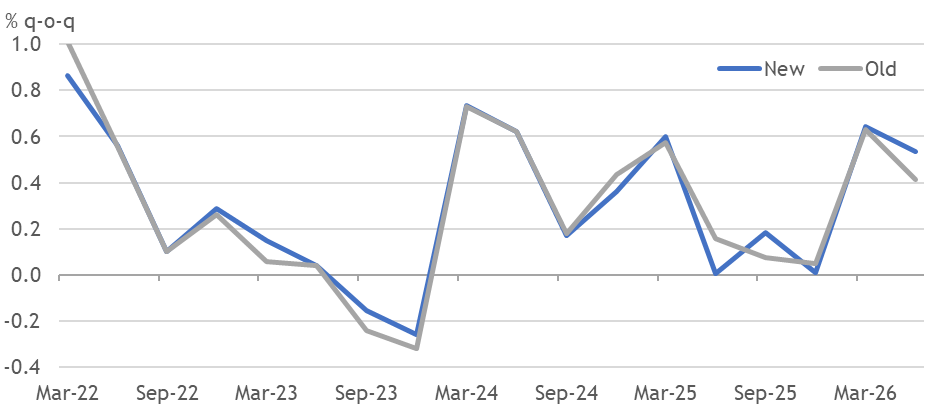
- UK GDP growth was raised to 0.5% q-o-q in Q2, and we track Q3 at 0.4%, despite the energy supply shock and residual seasonality. Business investment boomed 5.2% y-o-y.
- Utilities have driven all real investment in recent years, supported by outsized returns that are politically favoured while other businesses invest in more dynamic countries.
- High energy utility returns over the long term crowd out riskier short-term investments and, as rates are fixed, push more duration than hyperscalers in the UK, squeezing gilts.
2. DATA CENTER SECTOR: From the Tip of the Spear to Canary in the Coal Mine
- DC company share prices are rolling over, foreshadowing increasing pressure on their hyperscaler customers. Since the July swoon in semiconductor stocks, the DC sector has underperformed both hyperscalers and semiconductors.
- DC players face strong headwinds on multiple fronts, including high leverage/circular financing, supply chain delays, public opposition, and questions about aggressive forecasts of future compute demand.
- Leverage is the most prominent risk in the DC sector, with questions looming about completion dates and customers’ ability to meet their contracted offtake agreements.
3. UK Loans Are Not Expensive
- Higher policy rate expectations have encouraged dovish alarm at the shift in mortgage rates, yet resilience in credit and activity growth suggests conditions aren’t tight.
- The average new loan is only 50bps higher since the US-Iran conflict began, with the stock merely moving 5bps. Borrowers refinancing from 2yrs ago face cheaper rates now.
- Costs are much higher than 5yrs ago, but incomes have risen almost as much. Loans aren’t expensive, yet the BoE’s belief that they are helps limit its likely hiking cycle.
4. RBA Tightens Into Supply Shock
- The RBA raised the cash rate by 25bp to 4.60%, as widely expected; the unanimous vote and hawkish guidance leave another increase firmly in play.
- Underlying inflation, expectations and fuel-cost pass-through will determine whether the cash rate rises again to 4.85%.
- Weaker housing supports a pause, but resilient demand, strong investment and poor productivity keep inflation risks skewed upwards.
5. HONG KONG ALPHA PORTFOLIO: (September 2026)
- HK Alpha portfolio gained 2.22% in September, outperforming its benchmark by 5.36%. Since inception, the portfolio has outperformed HK indexes by 66% to 93%. HK ALPHA is up 14.35% YTD.
- The Sharpe ratio stands at 1.22, compared with a benchmark of 0.56 since inception. This higher Sharpe ratio is driven by excess alpha, which represents more than 50% of returns.
- The portfolio gained in the healthcare and energy sectors in August, while exposure to materials and communication services dragged on performance.
6. Asian Equities: Till Debt Do Us Part
- In a world of surging interest rates, highly leveraged markets, sectors and stocks are more vulnerable than unleveraged ones. The former set will have skyrocketing capital costs dampening their profitability.
- China (86% net debt-equity in 2025), Thailand (105%) and Philippines (118%) are the most leveraged Asian markets. The least leveraged are Taiwan (54%), India (65%), Indonesia (66%) and Korea (68%).
- Thai telecom, Philippines transportation, Philippines energy, Korean distribution services, Philippines telecom, Indonesian transportation are the most-leveraged market-sectors. Singapore health technology, Indonesian commercial services, Taiwan energy, Indonesian industrials are the least-leveraged.
7. HEW: Patient Policy
- Higher EA inflation keeps the ECB on course for December, while disappointing US labour market data reduce the pressure to respond again more urgently than that.
- Stronger UK GDP and faster credit growth stretch their inconsistency with the BoE’s dovish belief that policy is tight. It should begrudgingly make a first hike in November.
- Next week is quiet for economic events. We’ll be watching for the Fed and ECB minutes, the Indian rate decision, and publishing our monthly from the road to Pakistan.
8. STRAIT OF HORMUZ IS BACK TO NORMAL….REALLY???: Wall Street’s Slippery Narrative
- Analysts at JP Morgan and Goldman Sachs say oil flows from the Middle East are nearly back to normal, with JPM putting it at 98%.
- Shipping data, tanker rates, and oil prices directly contradict the Wall Street narrative.
- Unlike during the brief truce in June, none of the indicators show that oil flow is increasing.
9. Colombia Resumes Tightening
- BanRep unexpectedly raised its policy rate by 25bp to 12.25%. A three-way split signals an active debate over the need and forcefulness of further tightening.
- Broadening inflation and elevated expectations keep the bias hawkish, with El Niño, fiscal policy and external rates posing additional upside risks.
- A dovish pivot to rate cuts would require clear disinflation towards 3%. Softer demand, credible fiscal restraint and delayed peso pass-through could yet create room in 2027.
10. EA: Inflation Biting Until Spring
- EA inflation jumped by 51bp to 3.76%, exceeding our relatively high forecast as the trend rise in pressures extended even further as the energy shock intensified.
- Italy was the source of most upside news in an otherwise balanced set of national surprises. Higher services inflation at 3.22% drove the core rate up to 2.5%.
- A 4% year-end peak has an upside-risk skew amid low gas inventories, encouraging the ECB to hike again in December. Its activism should ease a return to target in 2027.