This weekly newsletter pulls together summaries of the top ten most-read Insights across Macro and Cross Asset Strategy on Smartkarma.
Receive this weekly newsletter keeping 45k+ investors in the loop
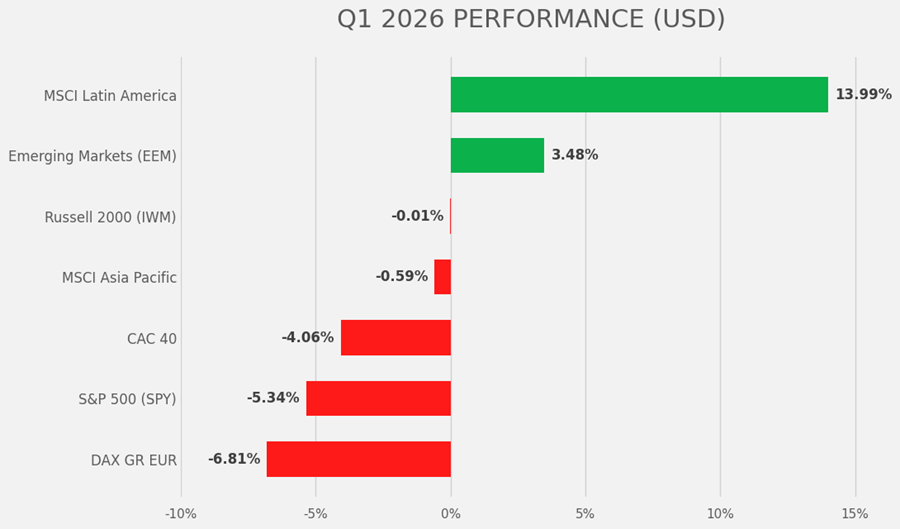
1. Q2 Outlook – Asian Equity Markets
- We first review at Q1 performance in the major markets we follow
- The worst may be over in but news flow will drive markets in the short-term
- We look at foreign positioning and fund flow data to assess risks
2. HEW: Ceasefire Relief Reversal
- Ceasefire has trimmed the dark tails and risk premia, partially reversing recent gloomy market moves, but the relief affects the mean more than our modal economic outlook.
- Next week’s calendar is only slightly less bare of releases, with UK GDP and final EA inflation data our highlights. There are plenty of policymaker speeches, though.
- As our flow of research resumes after the Easter lull, I’m honoured to accept the Consensus Economics award for most accurate forecaster of the UK economy in 2025.
3. PRIVATE CREDIT FUNDS: “Where Are the Customer’s Yachts?”
- The private credit market is under renewed pressure with redemption requests surging in 1Q2026. BDC stock prices are declining as risks mount in the industry.
- Managers are using Payment-In-Kind and Amend-and-Extend methods to restructure loans and delay delinquencies and defaults. Price-to-NAV ratios are declining to historical lows as managers are gating redemption requests beyond 5%.
- The private credit market has grown 60% over the last three years, now totals $1.8 trillion, and could pose a risk of financial contagion if underlying asset values deteriorate quickly.
4. APOCALYPSE POSTPONED: Can Trump Save Himself From Himself?
- President Trump proposed a “Double-Sided Ceasefire”, even though Israel will also need to sign off. The ceasefire, which was not agreed to, has already been broken by Israel and Iran.
- President Trump has introduced a failed tariff policy into the peace plan, proposing 50% tariffs on any country supplying weapons to Iran. The Supreme Court declared these tariffs illegal.
- Another mounting pressure to quickly end the war is the rapid depletion of U.S. weapons stockpiles. Are there enough weapons to “blast Iran back to the Stone Age?”
5. Charting Course: TACO TUESDAY, INVESTORS SEEKING “BOMB SHELTERS” – (April 8th)
- President Trump announced a 2-week ceasefire after Pakistan’s Prime Minister presented a 10-point proposal for negotiation with Iran. There are significant differences between parties as to what was agreed.
- Brent and WTI quickly fell below $100 BBL again after Iran stated it would allow ships to navigate the Strait of Hormuz following military processing.
- There were few places to find shelter other than the energy sector since the war began. Dividend yield and low-volatility factors have performed best in the US market.
6. RBNZ Holds Fire Amid Oil Shock
- The RBNZ held its official cash rate at 2.25%, broadly in line with expectations, but framed as a conditional pause amid an oil‑driven inflation shock.
- Future hikes hinge on second‑round effects, core inflation and inflation expectations; persistent oil or wage gains would trigger decisive tightening.
- Weak demand, tighter markets and spare capacity argue for patience; a sharper growth slowdown could delay or temper any normalisation path.
7. Thinking about Stagflation (again)
-
The Oil markets have been in record backwardation – which basically means that Oil traders are pricing oil in 12 months time over $30 below prices one month ahead.
-
Bond markets however are already pricing a Ukraine style inflation impulse – even if things were resolved tomorrow.
-
Equities were less aggressively positioned than last April before the tariff sell-down and have steadily sagged rather than crashed, with a little end month/quarter bounce to add further uncertainty as only short term traders are engaged right now.
8. BOK Holds: Oil Shock and Rates
- The BOK held the base rate at 2.50% as unanimously expected, signalling a prolonged, data‑dependent pause in the face of war‑related uncertainty.
- Inflation is now projected to exceed the February 2.2% forecast, keeping rate‑cut odds low unless oil and FX pressures ease decisively.
- Growth is set to undershoot earlier forecasts, but FX and inflation risks mean the policy bias remains towards extended holding.
9. US Corporate Profit Expectations Remain Resilient, as Global Credit Conditions Become Less Benign
- Despite geopolitical upheavals in the Middle East, US corporate profit expectations for 2026 have remained resilient. The correction in US equity prices in 2026 has been attributable to P/E compression.
- Higher energy prices will increase the demand for liquidity in the real economy, thereby exerting pressure on financial markets. Credit markets are currently more concerned about inflation risks than recession.
- Rising sovereign bond yields reflect hawkish short-term interest rate expectations. High reliance on Middle East oil supplies in the Asia-Pacific region raise stagflation risks in the event of protracted hostilities.
10. US-Iran: Scenarios for Escalation Remain Dominant, with Deal Prospects Obscure
- While Trump has promised Iran’s ‘civilisation will end tonight’ in the absence of Iran agreeing to a peace deal on US terms, the likelier US focus will be opening Hormuz.
- Kharg island is Iran’s economic lifeline, Qeshm the strategic key to holding Hormuz Straits. US likely to focus on these (plus Tunb and Abu Musa for UAE), not bombing infrastructure.
- Both will prolong market pain. TACO (Trump Always Chickens Out) remains a low probability outcome, despite last-minute pleas from Pakistan. Stay cautious, focused on commodities, metals and high-yield stocks.