This weekly newsletter pulls together summaries of the top ten most-read Insights across Macro and Cross Asset Strategy on Smartkarma.
Receive this weekly newsletter keeping 45k+ investors in the loop
1. UK: Frontloaded Disinflation
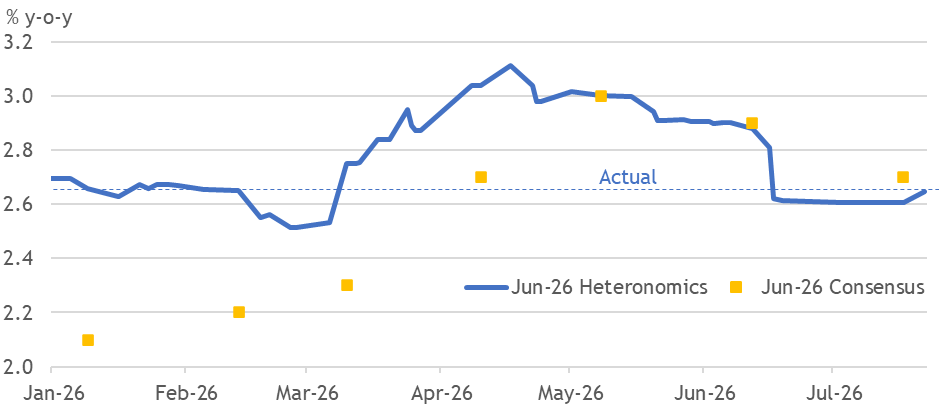
- A third downside inflation surprise to the consensus matched us but split hairs from 2.646%. It will also be a temporary trough as energy optimism was invalidated.
- Netting energy utility price falls, petrol price rises, and food price stability aligns with our pre-war forecast but is ~0.3pp above the consensus amid underlying strength.
- Cost passthrough to food, airfares, etc will occur later, while resurgent energy prices are raising the postponed peak in 2027. We still expect a BoE rate hike in September.
2. CHINA AI: Moonshot’s Kimi K3 Just Spoiled the Semiconductor Party !!
- Moonshot unveiled its Kimi K3 AI model, which rivals the top US frontier models in intelligence at a fraction of the run cost. Kimi K3 ranks third on the AAII.
- The rapid adoption of Chinese AI open-weight models using MoE architecture could bring the semiconductor supply/demand balance forward. Weekly token share of Chinese models by US firms now exceeds 50%.
- The Token Expenditure Index may be an early indicator that the MoE model token efficiency is reducing the growth rate of token demand and affecting the semiconductor ecosystem going forward.
3. UK: Jobs Better Than Distorted Data
- Headline surprises were mixed in the UK’s labour market report. The unemployment rate almost rounded lower, rather than increasing as the consensus expected.
- The ONS imputed responses it forgot to collect in telephone surveys, biasing outcomes to no change, with analysis revealing unemployment would have been lower without it.
- Bonuses disappointed, but total pay growth remains 4%+ with payrolls-based measures 4.5%. Only the ex-bonus ones offer dovish excuses, but they seem spuriously low.
4. HEW: Re-Entering Bad Theatres
- The supply shock intensified this week as the war theatre expanded to affect already impeded traffic through the Red Sea, and as President Trump renewed his trade war.
- Inflationary pressures are rebuilding, making June releases transitory relief, with good news frontloaded. The ECB recognised the change and signalled a September hike.
- Next week’s BoE and Fed decisions are unlikely to offer such a strong presumption, but a 6-3 MPC vote would help build momentum towards a BoE hike in September.
5. Hong Kong Market Catches a Bid: What’s Going On? (July 20)
- The Hong Kong market has advanced this month, while Japan, Korea, and Taiwan have declined in a mean-reversion move sparked by apparent short covering.
- Rising turnover, a supportive tech narrative from Beijing and increased southbound flows indicate that the rally may have legs. Consumer discretionary and energy sectors have been the top sector performers.
- There is evidence that some short covering catalyzed the rally during the normal June/July tight liquidity period, with low volatility and quality factors outperforming in the broader market.
6. The Long Climb in JGB Yields Is Nearly Over
- Most of the historic rise in JGB yields between 2022-26 came from long-run inflation expectation change and a normalization of term premia (TP) as BoJ lifted its unconventional easing.
- TP across the yield curve has largely finished its normalization process, in particular at the longest end. TP at 10-year has a moderate room to expand further.
- We think the hiking cycle in Japan is already in a late phase. Typically, the longer end of the yield curve starts to decline in a late cycle.
7. THE REAL AI BOTTLENECK: Why Data Centers, Not Chips, Limit Rollout
- Given the projected influx of AI chips into the US market, there will be a shortfall of data centers to support them, exceeding current data center capacity.
- Constraints on data center rollout include power infrastructure & grid interconnection, regulatory & permitting friction, supply chain bottlenecks, labor shortages, and growing real estate & local opposition/protests.
- Entities that control power-backed, permitted, and construction-ready data center capacity will hold a durable competitive advantage that capital alone cannot compete against.
8. ECB: Presumptive September Hike
- Surprisingly strong signals beyond the ECB’s hawkish hold now carry a clear presumption of a 25bp September hike, driven by resurgent energy costs and upside inflation risks.
- Press‑conference remarks revealed some Governors are already on the cusp of voting for a hike, with a higher burden of proof to back down after the MOU proved flimsy.
- A second and final hike in September is now our base case. Further hikes would need a more severe energy shock and clearer second‑round effects in prices and wages.
9. BUY/SELL/HOLD: Hong Kong Market Update (7/22/26)
- The Hong Kong market has bounced strongly in July as northern Asian markets decline amid the global AI/semiconductor sell-off.
- The materials, energy, and healthcare sectors are the top performers in July. Value, dividend yield, and large-cap factors have been top investment factors in the HK market this year.
- Precision Tsugami (China) (1651 HK) released its FY26 results, prompting price target and rating upgrades from analysts benefiting from downstream sectors such as NEVs, advanced equipment, and AI.
10. Sentiment Matters: Heatmap Update
- Investor sentiment is clearly in net bullish territory, but remains well below previous peaks and even further below the levels that have historically sent reliable warning signals.
- The Trade Risk Premium remains low…too low? Deep dive into the Trade Policy Uncertainty indicator.
- Heatmaps visualising Investor Sentiment across 600+ indicators and 48 asset classes