Monthly Archives

December 2018

Daily Consumer: Hyosung Holdings: 10%p Drop in Discount to NAV Should Be Reverted Soon and more

By | Consumer

In this briefing:

  1. Hyosung Holdings: 10%p Drop in Discount to NAV Should Be Reverted Soon
  2. Last Week in Event SPACE: Harbin Electric, MYOB, TMB Bank, Halla Holdings
  3. Hotel Properties Ltd– Dissolution of Wheelock-OBS Partnership Could Pave Way for Privatization Offer
  4. Prabhat Dairy Ltd – Update: Revenues and Margins Continues to Increase in Line with Our Expectations
  5. Swaraj Engines: Positive Outlook But Growth Is Slowing and Valuation Is Rich

1. Hyosung Holdings: 10%p Drop in Discount to NAV Should Be Reverted Soon

1

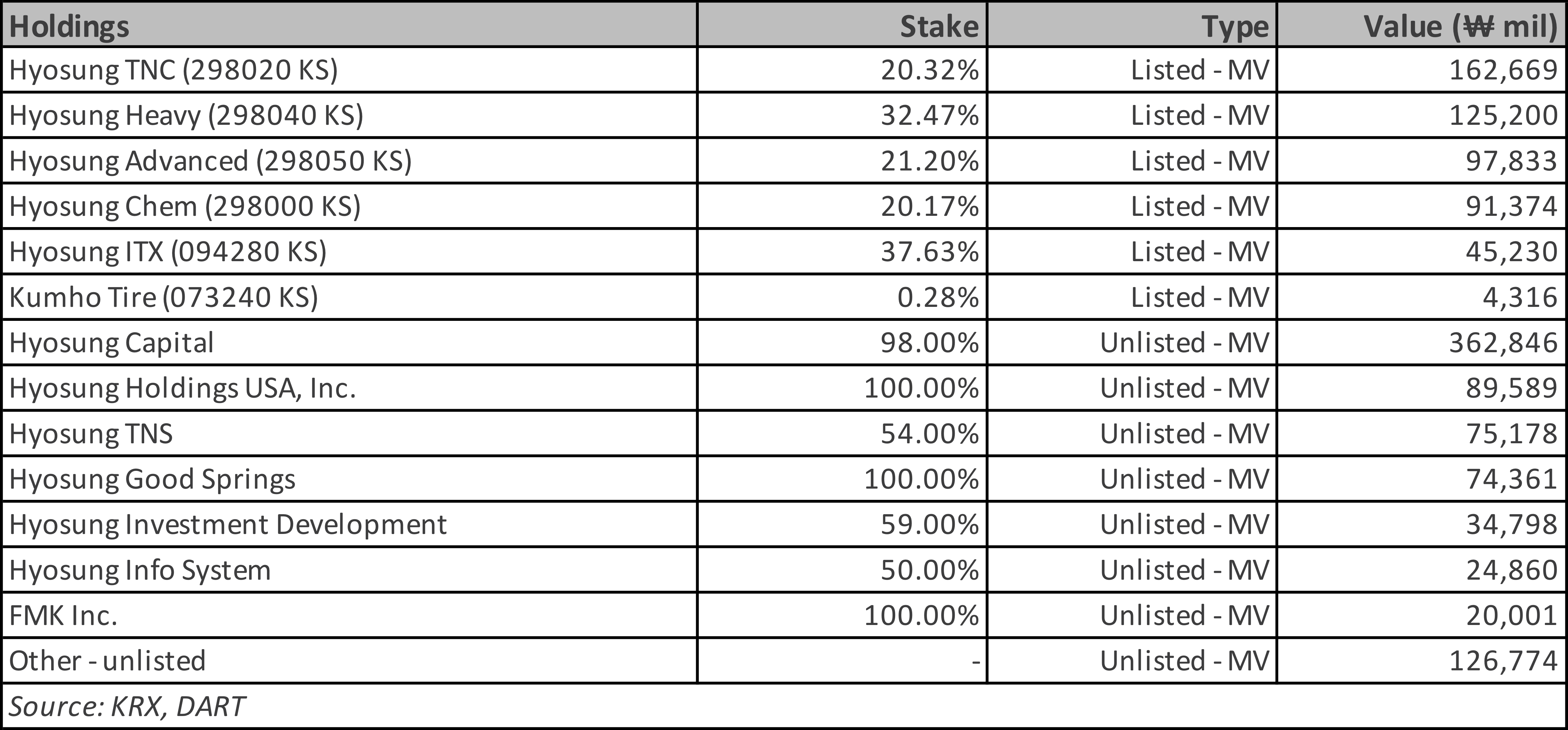
  • Hyosung Corporation (004800 KS) had fallen 16% just in two days. Holdco is now at a 50% discount to NAV. This is a 10%p drop from 10 days ago (Dec 19). Holdco price must have been overly corrected. The ongoing police investigation on Cho Hyun-joon’s alleged crime won’t lead to a delisting. 10%p drop in discount to NAV must be a price divergence, not a sensible price correction.
  • Trade volume remained steady. Local hedge funds led the selling on Dec 27. Even they changed their position the following day. No short selling spike has been seen either. Hyosung is one of the highest yielding div holdco stocks. Hyosung Capital liquidation and Anyang Plant revaluation would be another short-term plus.
  • I’d exploit this price divergence. It would soon revert to the Dec 19 discount level. It should at least stay at the peer average.

2. Last Week in Event SPACE: Harbin Electric, MYOB, TMB Bank, Halla Holdings

Spins

Last Week in Event SPACE …

(This insight covers specific insights & comments involving Stubs, Pairs, Arbitrage, share Classification and Events – or SPACE – in the past week)

M&A – ASIA-PAC

Harbin Electric Co Ltd H (1133 HK) (Mkt Cap: $546mn; Liquidity: $0.4mn)

As previously discussed in Harbin Electric Expected To Be Privatised, Harbin Electric (HE) has now announced a privatisation Offer from parent and 60.41%-shareholder Harbin Electric Corporation (“HEC”) by way of a merger by absorption. The Offer price of $4.56/share, an 82.4% premium to last close, is bang in line with that paid by HEC in January this year for new domestic shares. The Offer price has been declared final. 

  • Of note, the Offer price is a 37% discount to HE’s net cash of $7.27/share as at 30 June 2018. Should the privatisation be successful, this Offer will cost HEC ~HK$3.08bn, following which it can pocket the remaining net cash of $9.3bn PLUS the power generation equipment manufacturer business thrown in for free.
  • On pricing, “fair” to me would be something like the distribution of net cash to zero then taking over the company on a PER with respect to peers. That is not happening. It will be difficult to see how independent directors (and the IFA) can justify recommending an Offer to shareholders at any price below the net cash/share, especially when the underlying business is profit-generating.
  • Dissension rights are available, however, there is no administrative guidance on the substantive as well as procedural rules as to how the “fair price” will be determined under PRC and HK Law.
  • Trading at a gross/annualised spread of 15%/28% assuming end-July completion, based on the average timeline for merger by absorption precedents. As HEC is only waiting for approval from independent H-shareholders suggests this transaction may complete earlier than precedents. 

(link to my insight: Harbin Electric: The Price Is Not Right)  


MYOB Group Ltd (MYO AU) (Mkt Cap: $1.2bn; Liquidity: $7mn)

KKR and MYOB entered into Scheme Implementation Agreement (SIA) at $3.40/share, valuing MYOB, on a market cap basis, at A$2bn. MYOB’s board unanimously recommends shareholders to vote in favour of the Offer, in the absence of a superior proposal. The Offer price assumes no full-year dividend is paid.

  • On balance, MYOB’s board has made the right decision to accept KKR’s reduced Offer. The argument that MYOB is a “known turnaround story” is challenged as cloud-based accounting software providers Xero Ltd (XRO AU)  and Intuit Inc (INTU US) grab market share. This is also reflected in MYOB’s forecast 7% revenue growth in FY18 and follows a 10% decline in first-half profit, despite a 61% jump in online subscribers.
  • And there is justification for KKR’s lowering the Offer price: the ASX is down 10% since KKR’s initial tilt, the ASX technology index is off by ~14%, a basket of listed Aussie peers are down 17%, while Xero, the most comparable peer, is down ~20%. The Scheme Offer is at a ~27% premium to the estimated adjusted (for the ASX index) downside price of $2.68/share.
  • Bain was okay selling at $3.15/share to KKR and will be fine selling its remaining ~6.5% stake at $3.40. Presumably, MYOB sounded out the other major shareholders such as Fidelity, Yarra Funds Management, Vanguard etc as to their read on the revised $3.40 offer, before agreeing to the SIA with KKR.

  • If the markets avoid further declines, this deal will probably get up. If the markets rebound, the outcome is less assured. This Tuesday marks the beginning of a new year and a renewed mandate for investors to take risk, especially an agreed deal; but the current 5.3% annualised spread is tight.

(link to my insight: MYOB Caves And Agrees To KKR’s Reduced Offer)


TMB Bank PCL (TMB TB) (Mkt Cap: $1.2bn; Liquidity: $7mn)

The Ministry of Finance, the major shareholder of TMB, confirmed that both Krung Thai Bank Pub (KTB TB) and Thanachart Capital (TCAP TB) had engaged in merger talks with TMB. Considering an earlier KTB/TMB courtship failed, it is more likely, but by no means guaranteed, that the deal with Thanachart will happen. Bloomberg is also reporting that Thanachart and TMB want to do a deal before the next elections, which is less than two months away.

  • TMB is much bigger than Thanachart and therefore it may boil down to whether TMB wants to be the target or acquirer. In Athaporn Arayasantiparb, CFA‘s view, a deal with Thanachart would leave TMB as the acquirer rather than the target. But Thanachart’s management has a better track record than TMB.
  • Both banks have undergone extensive deals before this one: 1) TMB acquired DBS Thai Danu and IFCT; and 2) Thanachart engineered an acquisition of the much bigger, but struggling, SCIB.
  • A merger between the two would still leave them smaller than Bank Of Ayudhya (BAY TB) and would not change the bank rankings; but it would give TMB a bigger presence in asset management, hire-purchase finance and a re-entry into the securities business.

(link to Athaporn’s insight: Sathorn Series M: TMB-Thanachart Courtship)  

STUBS/HOLDCOS

Halla Holdings (060980 KS) / Mando Corp (204320 KS)

Mando accounts for 45% of Halla’s NAV, which is currently trading at a 50% discount. Sanghyun Park believes the recent narrowing in the discount may be due to the hype attached to Mando-Hella Elec, which he believes is overdone; and recommends a short Holdco and long Mando. Using Sanghyun’s figures, I see the discount to NAV at 51%, 2STD above the 12-month average of ~47%.

(link to Sanghyun’s insight: Halla Holdings Stub Trade: Downwardly Mean Reversion in Favor of Mando)  

SHARE CLASSIFICATIONS

OTHER M&A UPDATES

CCASS

My ongoing series flags large moves (~10%) in CCASS holdings over the past week or so, moves which are often outside normal market transactions.  These may be indicative of share pledges.  Or potential takeovers. Or simply help understand volume swings. 

Often these moves can easily be explained – the placement of new shares, rights issue, movements subsequent to a takeover, amongst others. For those mentioned below, I could not find an obvious reason for the CCASS move.   

Name

% change

Into

Out of

Comment

Putian Communication (1720 HK)
69.75%
Shanghai Pudong
Outside CCASS
37.68%
China Industrial
Outside CCASS
16.23%
HSBC
Outside CCASS
Source: HKEx

3. Hotel Properties Ltd– Dissolution of Wheelock-OBS Partnership Could Pave Way for Privatization Offer

Picture1

Hotel Properties (HPL SP)  (“HPL”) announced on Friday evening a significant change in its shareholdings relating to the HPL shares owned by 68 Holdings Pte Ltd. 

The restructuring of shareholding did not come as a surprise and was within expectations. 

Now, Wheelock holds only a significant minority interest of 22.53% and without a board seat in HPL. Wheelock’s influence in HPL has been reduced significantly. Without control, Wheelock’s investment in HPL is as good as any other non-strategic investment in quoted securities.

In the event that Wheelock Properties decides to sell its HPL shares, Mr Ong will be a likely buyer of the HPL shares. This will present a very good opportunity for Mr Ong to successfully privatise and delist HPL.

4. Prabhat Dairy Ltd – Update: Revenues and Margins Continues to Increase in Line with Our Expectations

Prabhat%20share%20holding%20pattern%20q2fy19

Prabhat Dairy Ltd’s quarterly result is in line with our expectation. In Q2 FY19, the company registered a growth of 8.53% YoY, EBITDA margin was 9.4% improving by 119 bps since the same period last year, EBITDA grew by 24.2% YOY; the profit margin was at 2.95%  improving by 60 bps YoY, Net Income grew by 35.86% YOY.  For more details about the company, please refer to our initiation report  Prabhat Dairy Ltd – An Emerging Star in the Indian Milky Way. B2B business contributed to 70% of revenue and the remaining 30% was driven by B2C business. Value Added Products contributed to 25% of revenue in Q2FY19.

The stock is trading at 16.3x its TTM EPS, 13.8x its FY19F EPS. Margins have improved over the past quarters due to lower cost of raw materials, we expect raw materials to continue to be lower than their historic average in short term. Lower cost of raw material along with the improving contribution from B2C will lead to higher margins in medium to long term. The company also wants to increase its B2C contribution aggressively from the current 30% to 50% by 2020.

We will monitor the stock closely to firm up our views further, albeit we remain positive on the long-term prospects of the company.

5. Swaraj Engines: Positive Outlook But Growth Is Slowing and Valuation Is Rich

Share%20price%2027 12 2018

Swaraj Engines (SWE IN) (SEL)is primarily manufacturing diesel engines for fitment into Swaraj tractors manufactured by Mahindra & Mahindra Ltd. (M&M). The Company is also supplying engine components to SML Isuzu Ltd used in the assembly of commercial vehicle engines. SEL was started as a joint venture between Punjab Tractor Ltd (now acquired by M&M Ltd) and Kirloskar Oil Engines Ltd. M&M holds 33.3% stake in SEL and is its key client.  

We are positive about the business because:

  • SEL’s growth is correlated with M&M’s tractor business growth. SEL supplies engines to the Swaraj division of M&M. M&M expects tractor growth to be around 12% YoY in FY19E. We forecast SEL’s tractor engine volumes will grow at a CAGR of 12% for FY18-21E.
  • The growth of the company is dependent on the monsoon and rural sentiments. We expect the profitability to improve with normal rainfall and government initiatives towards the rural sector. We expect the revenue/ EBITDA/ PAT CAGR for FY18-21E to be 14%/ 15%/ 14% respectively.
  • SEL is debt free and a cash generating company. It has a healthy and stable ROCE and ROE. SEL has increased its capacity from 75,000 engines in FY16 to 120,000 engines in FY18. We expect the capacity utilisation to reach 97% by FY20E from 90% in 1HFY19. SEL funds its capex through internal accruals. We forecast a capex of Rs 600 mn for FY19E to FY21E considering the requirement of the additional capacity, R&D and testing costs for new and higher HP engines & for upgradation of engines according to the TREM IV emission norms for >50 HP engines.

We initiate coverage on SEL with a fair value objective of Rs 1,655/- over the next 12 months. This represents a potential upside of 15% from the closing price of Rs 1,435/- (as on 26-12-2018). We arrive at the fair value by applying PE multiple of 18x to EPS of Rs 87/- to the year ending December-20E and add cash of Rs 82/- per share. While the business outlook is good, we think the upside in the share price is limited due to rich valuation.

Particulars (Rs mn) (Y/E March)

FY18

FY19E

FY20E

FY21E

Revenue

 7,712

 9,210

 10,478

 11,525

PAT

 801

 906

 1,063

 1,190

EPS (Rs)

 64.5

 74.8

 87.6

 98.1

PE (x)

 22.3

 19.2

 16.4

 14.6

Source: SEL Annual Report FY18, Trivikram Consultants Research as on 26-12-2018

Note: E= Estimates

Daily Industrials: Recruit Holdings Down 30% From October; Still Not Cheap and more

By | Industrials

In this briefing:

  1. Recruit Holdings Down 30% From October; Still Not Cheap
  2. Last Week in Event SPACE: Harbin Electric, MYOB, TMB Bank, Halla Holdings
  3. Uber IPO: Its Sprawling Empire And Battle Lines (Part 3)
  4. Larsen & Toubro (LT IN): Slowdown in New Orders Is Risk for 3Q, Markets Can’t Ignore It for Long
  5. Swaraj Engines: Positive Outlook But Growth Is Slowing and Valuation Is Rich

1. Recruit Holdings Down 30% From October; Still Not Cheap

Capture

The share price of Recruit Holdings (6098 JP) has fallen by around 30% over the past three months from an all-time high of JPY3,826 (on 1st October 2018) to JPY2,705 on 24th December 2018. Prior to this, Recruit’s share price saw a strong upward rally during May-September following the company’s announcement that it would acquire Glassdoor Inc. (the company which operates the employment information website glassdoor.com).

We expect Recruit’s consolidated revenue to grow 7.7% and 6.5% YoY in FY03/19E and FY03/20E respectively, driven by the acquisition of Glassdoor and steady growth in Japanese staffing operations, partially offset by a likely slowdown in global labour market activity. We also expect Recruit’s consolidated EBITDA margin to improve by around 50bps due to higher margin from Glassdoor.

Despite the recent dip in share price and steady topline and bottom line growth over the forecast period, at a FY2 EV/EBITDA multiple of 14.0x, Recruit doesn’t look particularly attractive to us. Recruit’s internet advertising business and employment business peers, Yahoo Japan (4689 JP) and Persol Holdings (2181 JP) are trading at FY2 EV/EBITDAs of 7.7x and 9.6x respectively.

Key Financials FY03/18-20E


FY03/18

FY03/19E

FY03/20E

Consolidated Revenue (JPYbn)

2,171

2,338

2,490

YoY Growth %

11.9%

7.7%

6.5%

Consolidated EBITDA (JPYbn)

258

288

312

EBITDA Margin %

11.9%

12.3%

12.5%

Source: Company Disclosures/LSR Estimates

2. Last Week in Event SPACE: Harbin Electric, MYOB, TMB Bank, Halla Holdings

Spins

Last Week in Event SPACE …

(This insight covers specific insights & comments involving Stubs, Pairs, Arbitrage, share Classification and Events – or SPACE – in the past week)

M&A – ASIA-PAC

Harbin Electric Co Ltd H (1133 HK) (Mkt Cap: $546mn; Liquidity: $0.4mn)

As previously discussed in Harbin Electric Expected To Be Privatised, Harbin Electric (HE) has now announced a privatisation Offer from parent and 60.41%-shareholder Harbin Electric Corporation (“HEC”) by way of a merger by absorption. The Offer price of $4.56/share, an 82.4% premium to last close, is bang in line with that paid by HEC in January this year for new domestic shares. The Offer price has been declared final. 

  • Of note, the Offer price is a 37% discount to HE’s net cash of $7.27/share as at 30 June 2018. Should the privatisation be successful, this Offer will cost HEC ~HK$3.08bn, following which it can pocket the remaining net cash of $9.3bn PLUS the power generation equipment manufacturer business thrown in for free.
  • On pricing, “fair” to me would be something like the distribution of net cash to zero then taking over the company on a PER with respect to peers. That is not happening. It will be difficult to see how independent directors (and the IFA) can justify recommending an Offer to shareholders at any price below the net cash/share, especially when the underlying business is profit-generating.
  • Dissension rights are available, however, there is no administrative guidance on the substantive as well as procedural rules as to how the “fair price” will be determined under PRC and HK Law.
  • Trading at a gross/annualised spread of 15%/28% assuming end-July completion, based on the average timeline for merger by absorption precedents. As HEC is only waiting for approval from independent H-shareholders suggests this transaction may complete earlier than precedents. 

(link to my insight: Harbin Electric: The Price Is Not Right)  


MYOB Group Ltd (MYO AU) (Mkt Cap: $1.2bn; Liquidity: $7mn)

KKR and MYOB entered into Scheme Implementation Agreement (SIA) at $3.40/share, valuing MYOB, on a market cap basis, at A$2bn. MYOB’s board unanimously recommends shareholders to vote in favour of the Offer, in the absence of a superior proposal. The Offer price assumes no full-year dividend is paid.

  • On balance, MYOB’s board has made the right decision to accept KKR’s reduced Offer. The argument that MYOB is a “known turnaround story” is challenged as cloud-based accounting software providers Xero Ltd (XRO AU)  and Intuit Inc (INTU US) grab market share. This is also reflected in MYOB’s forecast 7% revenue growth in FY18 and follows a 10% decline in first-half profit, despite a 61% jump in online subscribers.
  • And there is justification for KKR’s lowering the Offer price: the ASX is down 10% since KKR’s initial tilt, the ASX technology index is off by ~14%, a basket of listed Aussie peers are down 17%, while Xero, the most comparable peer, is down ~20%. The Scheme Offer is at a ~27% premium to the estimated adjusted (for the ASX index) downside price of $2.68/share.
  • Bain was okay selling at $3.15/share to KKR and will be fine selling its remaining ~6.5% stake at $3.40. Presumably, MYOB sounded out the other major shareholders such as Fidelity, Yarra Funds Management, Vanguard etc as to their read on the revised $3.40 offer, before agreeing to the SIA with KKR.

  • If the markets avoid further declines, this deal will probably get up. If the markets rebound, the outcome is less assured. This Tuesday marks the beginning of a new year and a renewed mandate for investors to take risk, especially an agreed deal; but the current 5.3% annualised spread is tight.

(link to my insight: MYOB Caves And Agrees To KKR’s Reduced Offer)


TMB Bank PCL (TMB TB) (Mkt Cap: $1.2bn; Liquidity: $7mn)

The Ministry of Finance, the major shareholder of TMB, confirmed that both Krung Thai Bank Pub (KTB TB) and Thanachart Capital (TCAP TB) had engaged in merger talks with TMB. Considering an earlier KTB/TMB courtship failed, it is more likely, but by no means guaranteed, that the deal with Thanachart will happen. Bloomberg is also reporting that Thanachart and TMB want to do a deal before the next elections, which is less than two months away.

  • TMB is much bigger than Thanachart and therefore it may boil down to whether TMB wants to be the target or acquirer. In Athaporn Arayasantiparb, CFA‘s view, a deal with Thanachart would leave TMB as the acquirer rather than the target. But Thanachart’s management has a better track record than TMB.
  • Both banks have undergone extensive deals before this one: 1) TMB acquired DBS Thai Danu and IFCT; and 2) Thanachart engineered an acquisition of the much bigger, but struggling, SCIB.
  • A merger between the two would still leave them smaller than Bank Of Ayudhya (BAY TB) and would not change the bank rankings; but it would give TMB a bigger presence in asset management, hire-purchase finance and a re-entry into the securities business.

(link to Athaporn’s insight: Sathorn Series M: TMB-Thanachart Courtship)  

STUBS/HOLDCOS

Halla Holdings (060980 KS) / Mando Corp (204320 KS)

Mando accounts for 45% of Halla’s NAV, which is currently trading at a 50% discount. Sanghyun Park believes the recent narrowing in the discount may be due to the hype attached to Mando-Hella Elec, which he believes is overdone; and recommends a short Holdco and long Mando. Using Sanghyun’s figures, I see the discount to NAV at 51%, 2STD above the 12-month average of ~47%.

(link to Sanghyun’s insight: Halla Holdings Stub Trade: Downwardly Mean Reversion in Favor of Mando)  

SHARE CLASSIFICATIONS

OTHER M&A UPDATES

CCASS

My ongoing series flags large moves (~10%) in CCASS holdings over the past week or so, moves which are often outside normal market transactions.  These may be indicative of share pledges.  Or potential takeovers. Or simply help understand volume swings. 

Often these moves can easily be explained – the placement of new shares, rights issue, movements subsequent to a takeover, amongst others. For those mentioned below, I could not find an obvious reason for the CCASS move.   

Name

% change

Into

Out of

Comment

Putian Communication (1720 HK)
69.75%
Shanghai Pudong
Outside CCASS
37.68%
China Industrial
Outside CCASS
16.23%
HSBC
Outside CCASS
Source: HKEx

3. Uber IPO: Its Sprawling Empire And Battle Lines (Part 3)

Mexico%20stronghold

Although Uber aims to be an Amazon for transport, we will focus on the ride-hailing market in part 3 of this series. Here, we try to answer the following questions:

  1. What are the indicative ride-hailing market shares of Uber vs Lyft in North America?
  2. What is Uber’s share in other key countries?
  3. What are the lawsuits investors should watch out for?
  4. How do Uber’s revenue drivers compare with Lyft’s?
  5. What are the timelines and key figures for both companies’ IPOs?

This is the third note in a series about the expected 2019 IPO of global ride-hailing giant Uber Technologies (0084207D US) and Lyft. Please read the earlier two pieces in the series for better contexts:

Uber IPO Preview: Its Sprawling Empire and Battle Lines (Part 1) written by me.

Uber IPO Preview: Fast-Growing Uber Eats Has Become a Material Part of Uber (Part 2) written by Daniel Hellberg

4. Larsen & Toubro (LT IN): Slowdown in New Orders Is Risk for 3Q, Markets Can’t Ignore It for Long

Larsen & Toubro (LT IN) has reported the new orders worth only Rs95 bn after 2Q FY19 results (reported on 31st October 2018). This is much lower run rate as compared to 2Q FY19 (Rs419 bn) or 1H FY19 (Rs781 bn). All these orders by Larsen & Toubro (LT IN) have been received from construction segment where margins are relatively poor e.g. the construction and infrastructure segment of Larsen & Toubro (LT IN) in 2H FY19 has reported 6.8% EBITDA margin, much lower than 11.8% for the company on an overall basis.

Unless new orders pick up in next few weeks, there is a strong likelihood that there could be a negative surprise in 3Q results on order inflow for Larsen & Toubro (LT IN) . This is despite the fact that overall number reported for a quarter for order inflow is a bit higher than the sum of individual orders announced and reported by the company. While the market has not noticed decline in new orders so far and may have been still hopeful about a recovery in order wins, it is highly unlikely that this will continue to get ignored by investors if the trend doesn’t change and get better in next couple of weeks.

5. Swaraj Engines: Positive Outlook But Growth Is Slowing and Valuation Is Rich

Share%20price%2027 12 2018

Swaraj Engines (SWE IN) (SEL)is primarily manufacturing diesel engines for fitment into Swaraj tractors manufactured by Mahindra & Mahindra Ltd. (M&M). The Company is also supplying engine components to SML Isuzu Ltd used in the assembly of commercial vehicle engines. SEL was started as a joint venture between Punjab Tractor Ltd (now acquired by M&M Ltd) and Kirloskar Oil Engines Ltd. M&M holds 33.3% stake in SEL and is its key client.  

We are positive about the business because:

  • SEL’s growth is correlated with M&M’s tractor business growth. SEL supplies engines to the Swaraj division of M&M. M&M expects tractor growth to be around 12% YoY in FY19E. We forecast SEL’s tractor engine volumes will grow at a CAGR of 12% for FY18-21E.
  • The growth of the company is dependent on the monsoon and rural sentiments. We expect the profitability to improve with normal rainfall and government initiatives towards the rural sector. We expect the revenue/ EBITDA/ PAT CAGR for FY18-21E to be 14%/ 15%/ 14% respectively.
  • SEL is debt free and a cash generating company. It has a healthy and stable ROCE and ROE. SEL has increased its capacity from 75,000 engines in FY16 to 120,000 engines in FY18. We expect the capacity utilisation to reach 97% by FY20E from 90% in 1HFY19. SEL funds its capex through internal accruals. We forecast a capex of Rs 600 mn for FY19E to FY21E considering the requirement of the additional capacity, R&D and testing costs for new and higher HP engines & for upgradation of engines according to the TREM IV emission norms for >50 HP engines.

We initiate coverage on SEL with a fair value objective of Rs 1,655/- over the next 12 months. This represents a potential upside of 15% from the closing price of Rs 1,435/- (as on 26-12-2018). We arrive at the fair value by applying PE multiple of 18x to EPS of Rs 87/- to the year ending December-20E and add cash of Rs 82/- per share. While the business outlook is good, we think the upside in the share price is limited due to rich valuation.

Particulars (Rs mn) (Y/E March)

FY18

FY19E

FY20E

FY21E

Revenue

 7,712

 9,210

 10,478

 11,525

PAT

 801

 906

 1,063

 1,190

EPS (Rs)

 64.5

 74.8

 87.6

 98.1

PE (x)

 22.3

 19.2

 16.4

 14.6

Source: SEL Annual Report FY18, Trivikram Consultants Research as on 26-12-2018

Note: E= Estimates

Daily Thematic: How To Spot The Bear Market Bottom and more

By | Thematic (Sector/Industry)

In this briefing:

  1. How To Spot The Bear Market Bottom
  2. India: Notes from Hindi Heartland, There Are Issues but People Don’t See a Better Choice than Modi
  3. Japan: 2018 Market Review – Bear Market Rally Ahead
  4. Farm Loan WaiversTo Dampen Credit Growth Cycle
  5. Korea Stock Market Monthly Recap #31 (December 2018)

1. How To Spot The Bear Market Bottom

The outsized daily swings in the major U.S. equity averages tell the classic story of a bear market. Normal bull markets simply do not experience consecutive multiple daily moves of 2% or more.

The market’s panicked price action is highly reminiscent of past panics in 1962, 2002 and 2015. In those cases, the market bounced, and made a lower low several months later. In all cases, stock prices were higher a year later. Our base case scenario calls for an initial low, rally, followed by choppy price action, and a final low in 6-8 months.

Our analysis finds that the technical price action of the market is consistent with a bear market. We offered a checklist of events that occur at market bottoms, but we do not know where the market may bottom out. Much depends on the fundamental drivers of the bear market, policy risks from the White House and the Federal Reserve, and how they are ultimately resolved.

2. India: Notes from Hindi Heartland, There Are Issues but People Don’t See a Better Choice than Modi

We have spent more than ten days in Uttar Pradesh in the second half of December 2018 and tried to assess the chances for BJP and how it could perform in 2019 Lok Sabha elections. Of course the number of seats which each party could win depends more on coalitions, the vote share will remain important nonetheless. We were trying to understand the voting preference of people and the political choices they will be making next year.

First, the good news for BJP is that Prime Minister continues to enjoy almost similar level of popularity as 2014 (the previous Lok Sabha elections) and 2017 (previous Assembly elections in the state). There is also perception that BJP Governments are in general much less corrupt than administration provided by other political parties including Congress. BJP is by far the No. 1 political entity in the state because of Modi’s leadership.

But there is also important bad news, a) the level of satisfaction with state Govt is much lower, b) issues such as cow protection have become nuisance for many people, farmers for example, c) there is a perception that BJP’s simple majority at the Centre and 3/4th majority in state made accountability more difficult and that was the reason governance also suffered in a big way, and, d) people also think that BJP’s elected representatives are not qualitatively different vs. other parties.

3. Japan: 2018 Market Review – Bear Market Rally Ahead

6

2018 MARKET REVIEW – In this Insight, we shall review the performance of the Japanese stock market, during 2018 and look forward to the coming year. We shall look back at the year from a Sectors, Peer Group and Company perspective in separate Insights to follow next week.

Source: Japan Analytics

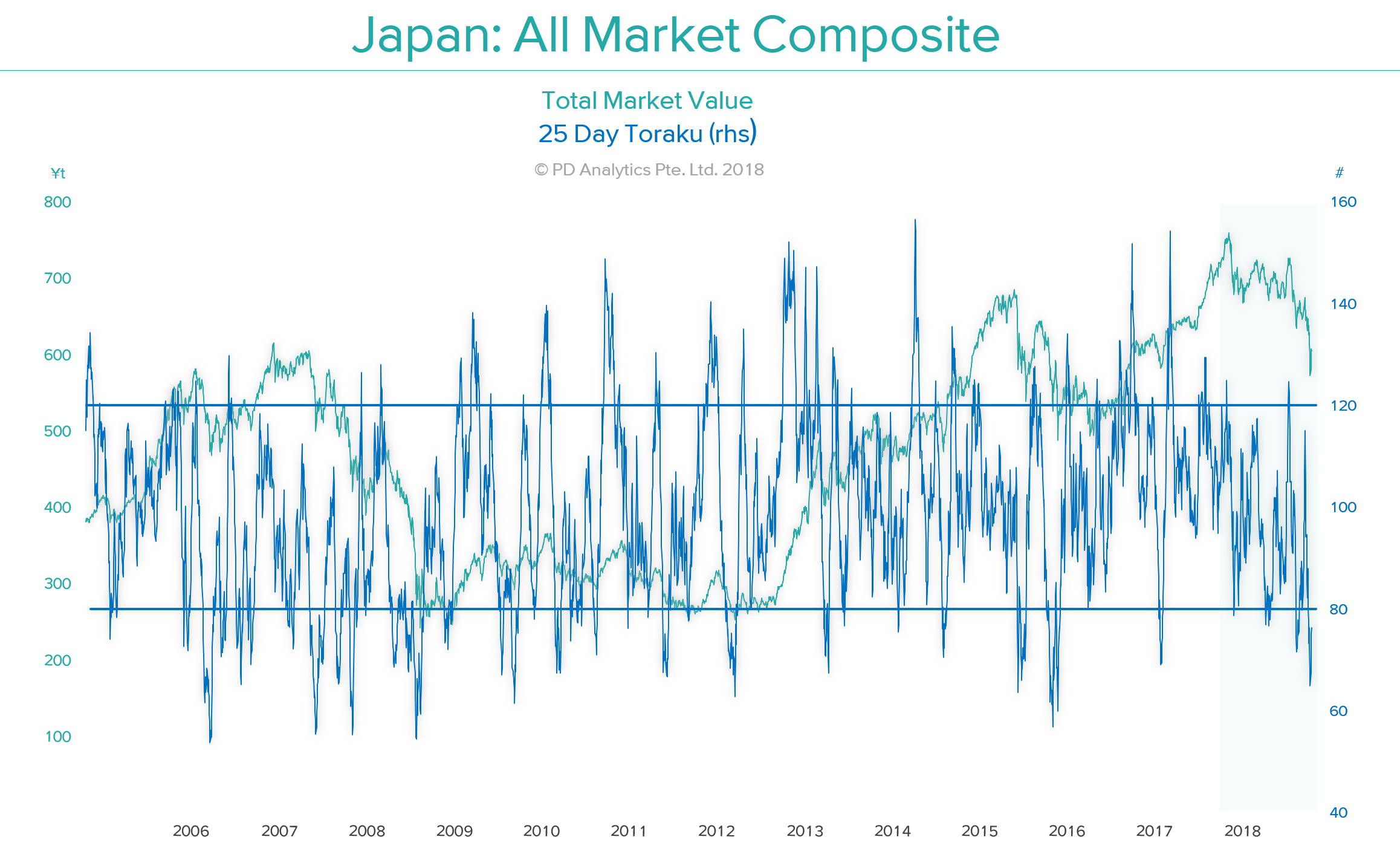
BEAR MARKET RALLY AHEAD – From the January 23rd peak to the December 25th low, the All Market Composite declined 24.5% in Yen terms and 24.9% in US$ terms placing Japan in a bear market for the seventh time since the bursting of the 1989 stock market ‘bubble’. The average stock is now 35% below its one-year high compared with just 10% below at the beginning of the year. Total Market Value is still ¥123t above the low of 12th February 2016, and the question remains – are we replaying March 2008 or February 2016? In both cases, there were bear market rallies (25% and 17%) before the final downward leg – which entailed further declines of 50% and 13%, respectively. In our recent Insight on 21st December – Ticking the Bear Market Boxes – we commented that it was too early for contrarians to start ‘nibbling’. The 1,000 point Nikkei 225 (NKY INDEX) decline the next trading day, and the rebound into the year-end suggests that a case can now be made for, at least, a short-term rally. In the charts in the DETAIL below, we shall explore the case for (✓) and against (✕), and attempt to answer the question of the 2008 or 2016 reprise.

4. Farm Loan WaiversTo Dampen Credit Growth Cycle

Capture1

The NPA growth cycle affects credit growth cycle negatively. The recent farm waivers announced by many state governments and the speculations of a nationwide farm loan waiver by the Central government do not augur well for the banks’ credit space in India.

5. Korea Stock Market Monthly Recap #31 (December 2018)

Kospi

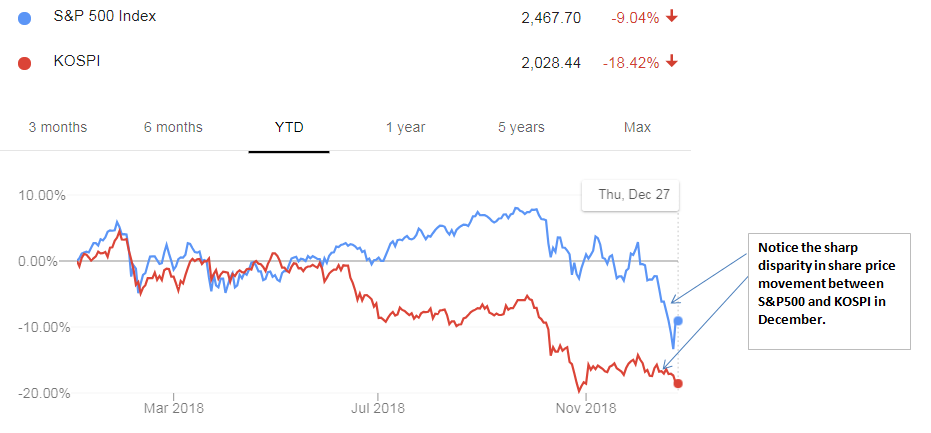
Korean stock market declined again in December. KOSPI was down 2.7% in December and completed 2018 with a decline of 18% this year. Investors remained cautious preferring to increase their capital allocation to defensive sectors such as utilities. However, December was a bit unusual in that KOSPI declined much less than the US market (S&P 500 was down 9% in December). In the past few months, there has been a noticeable outperformance of numerous emerging markets stocks relative to the US stock market.

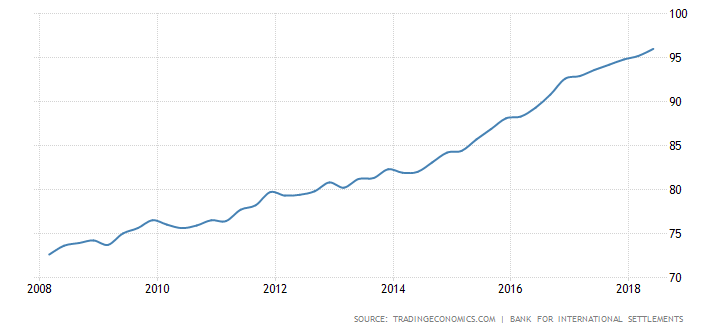
Fool me once, fool me twice, fool me three times? It has been 10 years since the last Great Repression. Unlike in 2008, when the US Fed Fund rate plummeted from 4.1% in the beginning of the year to 0.09% at the end of the year, the US Fed Fund rate kept climbing throughout the year. The share price declines in global equity markets around the world this year are probably reflecting the concerns about a potential recession in the next two years. 

Our model portfolio was down 2.0% in December (cash is 30% of model portfolio), outperforming KOSPI which was down 2.8% in December. Starting January 2019, we are increasing the cash portion to 35% of the model portfolio, to become more defensive in capital allocation. 

The top 10 events impacting the Korean stock market, economy, & politics in December were as follows:

  • Global markets volatility
  • Growing concerns about the declining memory prices on the semiconductor sector
  • Investors trying to find next HanjinKal
  • Hyundai Motor Group and Korean Government’s Big Push into Hydrogen Fuel Cell Vehicles 
  • Jim Rogers & Ananti
  • The EU agrees to cut carbon emissions from cars by 37.5% by 2030
  • Amorepacific’s strong rebound
  • Korean prefs vs. common
  • Samsung Biologics trades again
  • Naver’s surprising stock option plan

The top three reports we wrote in December related to the Korean market were as follows (in terms of views & appreciates): 

Daily Thematic: India: 2018 Is Watershed Year for Renewables with Decline in New Capacity Additions, What Is Next? and more

By | Thematic (Sector/Industry)

In this briefing:

  1. India: 2018 Is Watershed Year for Renewables with Decline in New Capacity Additions, What Is Next?
  2. Autonomous Driving. Waymo Leading The Charge With Ten Million Miles Driven And Counting
  3. The Festive Week the Was in ASEAN@Smartkarma – Thailand Rising, Frail DBS, and Small Cap Picks
  4. 2019 Asia Selected Gaming Stock Outlook: Headwinds, Tailwinds and Our Top Picks for Entry Levels Now
  5. Korean Stock Market Sectors 2018 Review & 2019 Outlook

1. India: 2018 Is Watershed Year for Renewables with Decline in New Capacity Additions, What Is Next?

Renewables

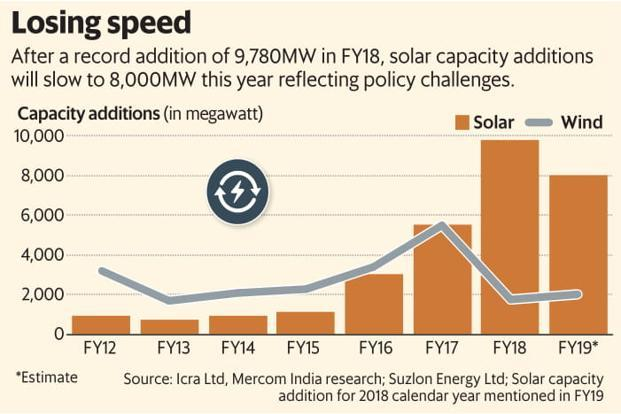
2018 is a watershed year for renewable energy in India, a) the growth has turned negative in capacity additions after several years of huge capacity addition increase in Solar, b) the wind power generation capacity additions is depressed once again after a very poor 2017. The apparent reason is significant delays in commissioning of projects because of execution challenges but there are structural issues as well and this means that there is not much certainty on how things will evolve in future.

The current financial year has seen a big change in general sentiment towards renewables in India and there were instances of cancelled bids and project disputes. More importantly, we think there are important changes we will see in 2019, a) the tariffs may not be increasing in bids but the level on decline we had observed in 2017 is now firmly in the past and this trend will get stronger and tariff bids will be stabilizing, b) Financing will be a major challenge and banks are not interested in power sector with not many alternatives available.

After Indian renewable energy space generated massive interest among power companies as developers and also from investors, we in all likelihood will see a more rational approach in future. It is not certain but hopefully, Govt expectation of continuously declining tariffs will become more reasonable. After a serious decline of more than 80% in solar tariffs over ten years, Govt expectation on per unit prices is continuously getting lower which  is an unrealistic assumption because of change in cost dynamics.

2. Autonomous Driving. Waymo Leading The Charge With Ten Million Miles Driven And Counting

Screen%20shot%202018 12 27%20at%202.40.18%20pm

Waymo CEO John Krafcik made some bold decisions after taking the helm at Alphabet‘s self-driving project in September 2015. Chief among them was the fact that the company abandon its plans for Level 3 automated driving and focus exclusively on levels 4 & 5. Furthermore, he decreed that Waymo would no longer manufacture its own vehicles but would instead integrate their technology into those of other automakers. Three years later, those decisions would appear to be finally paying off.

On October 10 2018, Waymo reached a significant milestone having completed 10 million self-driving miles across 25 cities in the US. While their first million self-driving miles took 18 months to complete, Waymo now clocks up over a million self-driving miles per month.  The company also recently announced the launch of its robo taxi service in Phoenix, Arizona and looks set to quickly follow suit in California. Plans to extend its self-driving technology beyond robotaxis, most notably for trucks and last-mile transportation solutions are also in the works. Furthermore, the company has begun laying down a framework of innovative B2B revenue models which should help accelerate the speed with which they can eventually monetize their technology.

It hasn’t been smooth sailing all the way for Waymo however. Earlier this year, the company was derided for the driving style of its autonomous vehicles and faced the criticism that its driverless cars continue to have safety drivers. There was also an embarrassing incident where one of those very safety drivers caused the self-driving car he was monitoring to hit a motorcyclist when he attempted to take control of the vehicle. According to Waymo’s own analysis of the vehicle log files, the accident would not have happened had he not intervened. 

With ten million self-driving miles under their belt and a thoughtful, strategic approach to monetizing their technology beginning to emerge, Waymo remains firmly ahead of their peers in leading the autonomous driving charge.  

3. The Festive Week the Was in ASEAN@Smartkarma – Thailand Rising, Frail DBS, and Small Cap Picks

This past Festive week’s offering of Insights across ASEAN@Smartkarma is filled with another eclectic mix of differentiated, substantive and actionable insights from across South East Asia and includes macro, top-down and thematic pieces, as well as actionable equity bottom-up pieces. Please find a brief summary below, with a fuller write up in the detailed section.

The top Macro Insight this week comes from Dr Jim Walker who zeros in on Thailand, where he sees an economy that is about to take off. In the equity bottom-up space, Daniel Tabbush revisits DBS GroupHoldings (DBS SP) in light of falling oil prices, which he sees as potentially leading to higher credit costs. I would also highlight Nicolas Van Broekhoven ‘s overview of his winners and losers over the past year, as well as his top picks for 2019. 

Macro Insights

In Thailand: The Sandbox Economic Insight provider Dr Jim Walker circles back to the Thai economy, which he suggests is about to take off.

In The Philippines: Reform Impetus Gives Way to Politicking, Manu Bhaskaran explores the risks ahead for the Philippine Economy. 

In IDR, CPI, Oil, Trans-Java & Freeport Strengthen Widodo / Lippo Case Escalates / Efta Cepa / Debates, Kevin O’Rourke provides his value-added comment on economic and political developments in Indonesia over the last week. 

In Malaysia: Implosion of Former Ruling Party Could Create Tensions in Ruling Coalition, Manu Bhaskaran zeros in on rising political risks in Malaysia.

Equity Bottom-Up Insights

In Global Banks – DBS Frail Against Global PeersDaniel Tabbush looks at DBS Group Holdings (DBS SP) in light of falling oil prices and assesses the potential impact in credit quality. 

In AALI (AALI IJ): Indonesian Biodiesel Mandate to Support CPO PriceDr. Andrew Stotz, CFA works his magic on Astra Agro Lestari (AALI IJ) and comes back with a positive view. 

In SPH REIT Nibbles at Blackstone’s PortfolioAnni Kum revisits SPH REIT (SPHREIT SP) in light of its recent acquisition in Australia. 

In CKP (CKP TB): Powerful Expansion to Drive Earnings GrowthDr. Andrew Stotz, CFA takes a close look at CK Power Pcl (CKP TB) which offers stronger growth relative to its peers. 

In UTP (UTP TB): Continued Gain from Tight Global Paper Supply, Dr. Andrew Stotz, CFA zeros in on paper manufacturer United Paper (UTP TB) and sees an improving picture. 

In BAUTO (BAUTO MK): New Models to Keep Strong Sales Momentum, Dr. Andrew Stotz, CFA takes a close look at this Malaysian and Philippines auto player. BAUTO sells Mazda vehicles in Malaysia and via its subsidiary Bermaz Auto Philippines Inc (BAP) in the Philippines. 

In COM7 (COM7 TB): Acquisition to Support Aggressive Expansion, Dr. Andrew Stotz, CFA looks at this Thai retailer and finds it an attractive prospect.

Sector and Thematic Insights

In Overview of My Winners and Losers in 2018…and 5 High Conviction Ideas Going into 2019, CrossASEAN Insight Provider Nicolas Van Broekhoven looks back over his stock ideas over the past year and lays out his picks for 2019.  

In Small Cap Diary: MEGA, Eastwater, Thai Guru Athaporn Arayasantiparb, CFA looks at a number of interesting better know small caps in Thailand, including Mega Lifesciences (MEGA TB) and Eastern Water Resources Dev (EASTW TB).

In Sathorn Series M: TMB-Thanachart Courtship, Athaporn Arayasantiparb, CFA investigates talks if a merger between Thanachart Capital (TCAP TB), Krung Thai Bank Pub (KTB TB), and TMB Bank PCL (TMB TB) and gives us his views.

In Singapore REIT – Preferred Picks 2019, Anni Kum provides us with her top picks for 2019 in the Singapore REIT space. 

4. 2019 Asia Selected Gaming Stock Outlook: Headwinds, Tailwinds and Our Top Picks for Entry Levels Now

D76bc97afe36a6d6afbb2d45b25c4d19

Our review of ten Asian gaming companies forward prospects for 2019 yielded our top five picks. Two of those comprise this insight. Three more will follow in Part Two. There is, in our opinion, some disconnect between continuing macro headwinds in both the VIP and mass sectors and a more bullish tone based on a recent upside trend in Macau, strong results in the Philippines and Cambodia. Given the battering of the market in general, the already 8 month old bearish tone to the sector and the current pricing of the two stocks noted here, we see significant upside opportunity as we near the beginning of 2019.

5. Korean Stock Market Sectors 2018 Review & 2019 Outlook

Korea debt

In this report, we review the major sectors’ performance in the Korean stock market in 2018 and also provide our outlook for them in 2019. We divided the Korean stock market into 17 major sectors such as autos, internet, and utilities. Our top sector picks for 2019 include telecom, Internet/games, utilities, and technology (lithium-ion batteries). We also believe there will likely be select IPOs that could do well next year. Overall, we believe it will be prudent to maintain a defensive position in one’s stock portfolio. 

One of the positive surprises that could occur in 2019 could be some kind of resolution between the US-China trade war. Both Xi and Trump have significant incentives to make a truce and negotiate for a settlement. However, even if China and the US make a compromise settlement, we believe the overall positive impact could be temporary. The great concern is the fact that the excessive global debt driven economy may be getting closer to the last legs of the business cycle and as more global investors perceive a global recession ahead, they may accelerate the transition to more defensive portfolios. 

The top five stocks we like in the Korean stock market in 2019 are SK Telecom (017670 KS), NCsoft Corp (036570 KS), Samsung Sdi (006400 KS), LG Corp (003550 KS)and Ottogi Corporation (007310 KS) .

Daily Thematic: Monthly Geopolitical Comment: Redrafting of Global Map of Political Alliances to Continue in 2019 and more

By | Thematic (Sector/Industry)

In this briefing:

  1. Monthly Geopolitical Comment: Redrafting of Global Map of Political Alliances to Continue in 2019
  2. Direct Income Transfers Likely Soon; Universal Basic Income Possible By 2024 Funded by RBI Reserves
  3. Changing Lanes
  4. Japan Pharma – Top Picks (28 Dec 2018)
  5. The Four Vulnerabilities in Thai Property

1. Monthly Geopolitical Comment: Redrafting of Global Map of Political Alliances to Continue in 2019

The year 2018 has proven tumultuous for global markets. Rapidly changing geopolitical priorities of the US, an erstwhile hegemon, have played a role no less significant than the withdrawal of liquidity by leading central banks or US monetary policy tightening. The US has openly declared that it is in a state of “cold war” with China. Despite the recent truce, signs are abundant that the confrontation between the two global superpowers will continue into 2019 and beyond. In 2019, we expect more countries to find themselves in a position where they must choose who they want to side with, the US or China. There are other tectonic shifts, too, which are causing re-alignment of global geopolitical alliances.

2. Direct Income Transfers Likely Soon; Universal Basic Income Possible By 2024 Funded by RBI Reserves

Direct income transfers to farmers are likely to become reality as competitive loan waivers are fast becoming a norm than an exception and every party is offering a larger waiver. 

Direct income transfers have been quite successful in the South Indian state of Telangana with KCR promising one at the national level if the Federal front (that he is proposing) is voted to power in the general elections. 

Cost of each of the measures (from loan waivers to universal basic income for all Indians) is between 0.7% to 2.7% of GDP with Universal Basic Income  (Rs 7620/individual for 75% of Indians) costing the highest. 

Even as initial fiscal costs are alarming, a gradual scale up (like in the Rural Employment Guarantee Scheme) and transfer of reserves from RBI in tranches could mitigate some fiscal impact. We expect the expert committee of the govt and the RBI to identify transferable reserves between Rs 1.0trn – 3.0trn. 

Overall, the freebies to Rural India will certainly power the consumption story strongly in 2019 with products sold in rural areas like FMCG, tractors and motorcycles expected to gain.

3. Changing Lanes

The hyper-competitive Indian payments industry is changing. New regulations are increasing the cost operations, NPCI (National Payments Corporation of India) & Reserve Bank of India (RBI) are breaking all barriers to entry enabling a level playing field that ensures no competitive moats exist. Although there are volumes, profitability remains a distant dream and likely to remain so making Indian payments a bad business to be invested in.

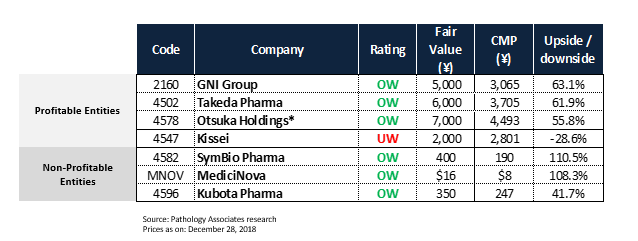
4. Japan Pharma – Top Picks (28 Dec 2018)

Pa%20coverage 20181228

Source: Pathology Associates research

                                                                                                                                                                                                                                                                        `                        

5. The Four Vulnerabilities in Thai Property

Housing%20supply

As the year closes, developers from giant AP to SC Asset have been warning markets about a downturn in the property market in 2019, and the world is no stranger to the interlinks between economic crisis and property sector. There are four reasons why they might be right to be so bearish:

  • Banks Rejection rates for mortgages have been on the rise. Yet, few credible developers get rejected, because banks have a preference for corporate loans. This means they are effectively supporting the supply side without demand.
  • New financing methods. In recent years, REIT IPOs have become very popular, increasing the amount of financing available to developers. But what of the demand side? Slower wage growth, wealth concentration at the top, rising unemployment.
  • Higher interest rates. While the BOT has resisted rate hikes, they have finally capitulated this month. High rates, lower affordability.
  • Regulations. A cap on loans-to-value ratio at 80% further limits the mortgage availability, but who’s limiting supply?

Daily Thematic: Are US Stocks Still Expensive? and more

By | Thematic (Sector/Industry)

In this briefing:

  1. Are US Stocks Still Expensive?
  2. India: Coal Availability Improves at Power Plants, but Utilizations Yet to Pick Up on Lower Demand
  3. Seven Eleven, Familymart and Lawson Find New Growth Strategies in Tighter Market
  4. Business Happenings in the Americas that May Be “Below the Radar” – Week Ending December 22, 2018
  5. Japan Convenience Stores Still Innovating in a Saturated Market

1. Are US Stocks Still Expensive?

Picture1

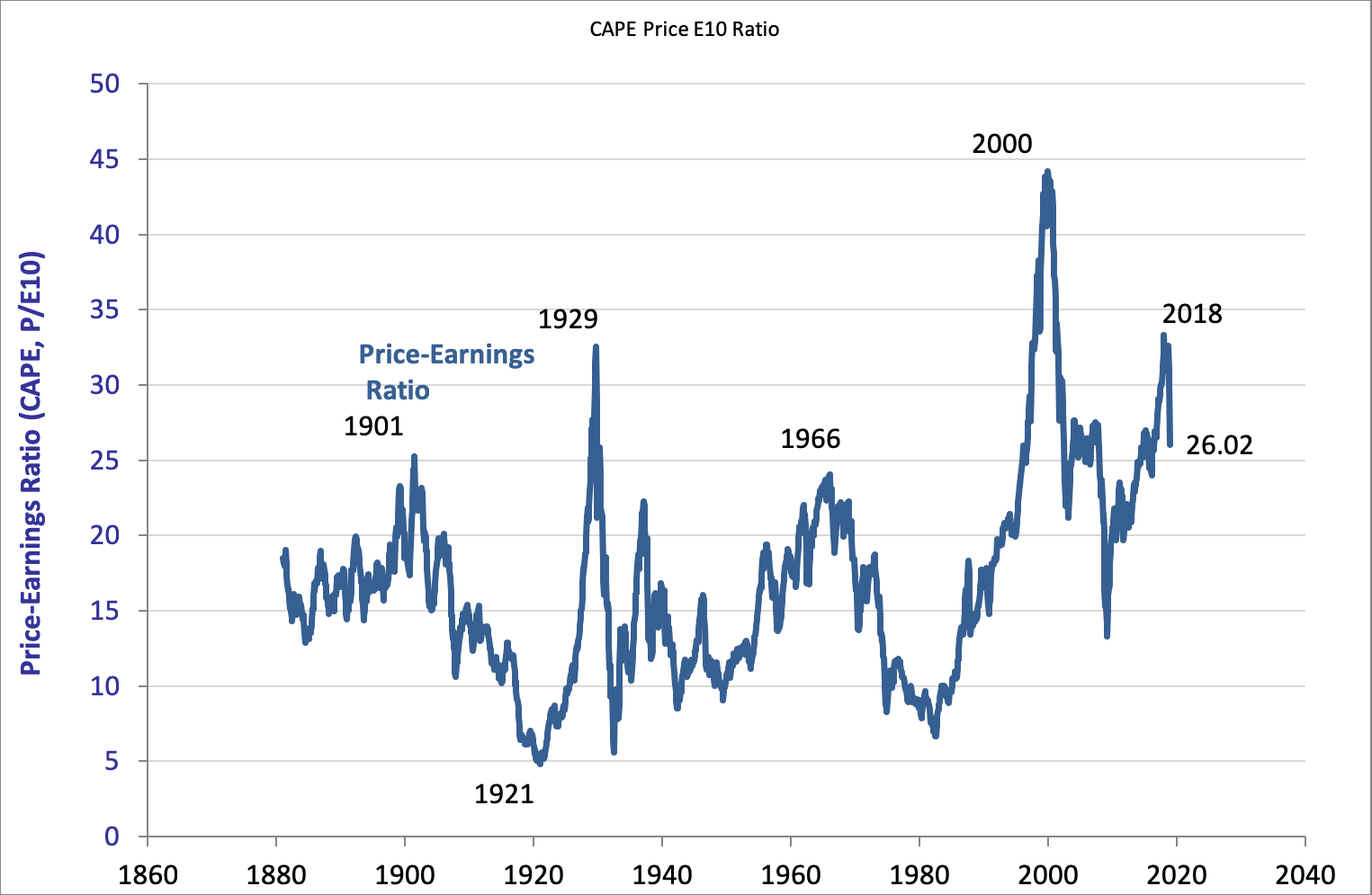
There are striking parallels between 1929 and 2018.  

The 1929 crash put a halt to a nine-year bull run on the market.

Up until October 1929, same as this year, market consensus was that asset prices could only go up from their current level.

As we mentioned in When the Tide Goes Out, Dominoes Fall, a decade of building up excesses meant a painful burst, back 79 years ago: between October of 1929 and September of 1932, eighty-nine percent of the value of stocks was erased and the market didn’t recover to its former peak until 25 years later.

Are we in a similar situation right now? 

2. India: Coal Availability Improves at Power Plants, but Utilizations Yet to Pick Up on Lower Demand

In the first half of FY19, there has been a serious shortage of coal in several thermal power plants in India which was affecting as much as 25% of total capacity of power plants in India. However, it has improved considerably now. As per latest Ministry of Power data as on 23rd December 2018 for 124 plants, coal shortage has become zero in pit head plants and there are only 12 plants in non pit-head category with coal shortages. This change is a significant improvement in coal availability situation for power generation sector in India.

However, the utilizations have not gone up that much for power plants on a cumulative basis across the country. The average utilizations (Plant Load Factor or PLF) for overall India generation capacity was 62.6% for April to November 2018 period and this was 62.7% in November indicating no significant improvement. This virtually no improvement in power plants’ utilization could be linked to lesser demand for electricity because of change in weather conditions and also indicates that coal supply situation may not have improved that much.

Nevertheless, this will reduce the pressure from Power Plants and the sector on Coal India Ltd (COAL IN) for more supplies. However, we many not see much change in production and volumes for Coal India Ltd (COAL IN) which has seen a significant decline in recent months. Another implication is that when the overall demand for electricity comes down, the demand in spot market will also be lower accordingly. It is directly relevant for the merchant power companies and Indian Energy Exchange (IEX IN).

3. Seven Eleven, Familymart and Lawson Find New Growth Strategies in Tighter Market

Jc1812 focus6

The following is an in-depth review of the big three Japanese convenience store (CVS) players, Seven Eleven (Seven & I Holdings (3382 JP)), Familymart (8028 JP) and Lawson Inc (2651 JP). This follows our review of the Japanese convenience store sector overall, which is best to read first.

The key operational and strategic themes relevant to investors regarding the Big Three in Japan:

  • Saturation has encouraged the top three operators to take over the remaining smaller chains while pushing into regions where they have fewer stores.
  • All are expanding new forms of retail:
    • Seven Eleven and Lawson have launched new e-commerce ventures that make the best use of their existing store networks and could reach national coverage quite soon.
    • Diversification: Familymart, in particular, is tying with all manner of partners to try and come up with a hit hybrid format to find new growth.
  • While competition from drugstores and discount food retailers is a threat, convenience stores will continue to find new growth from e-commerce, hybrid stores and innovative products.

4. Business Happenings in the Americas that May Be “Below the Radar” – Week Ending December 22, 2018

Northwest passage%20route

Highlights of significant recent happenings include:

  1. Feeding the Dragon – Sumitomo Corp (8053 JP) buying into massive Chile copper project; Mitsui & Co Ltd (8031 JP) and Tokyo Gas (9531 JP) announced plans to be long-term buyers of Mexican LNG.
  2.  Local News on Global Companies Huawei Technology (40978Z CH)‘s to do “whatever is required” to meet Canada’s 5G security standards; Ant Financial (1051260D CH)’s Sesame Credit be used to apply for Canadian visas;  Facebook Inc A (FB US) offered data to  Netflix Inc (NFLX US) and Royal Bank Of Canada (RY CN)BlackBerry Ltd (BB CN)‘s high-security reputation increasingly valuable; Fedex Corp (FDX US) and  United Parcel Service Cl B (UPS US) deny negative impact from  Amazon.com Inc (AMZN US)‘s Amazon Air operations; and Anheuser Busch Inbev Sa (Adr) (BUD US) and Tilray Inc (TLRY US) are doing “joint” product development.
  3. Trade Deals & No Deals – Bosideng Intl Hldgs (3998 HK) got an unexpected boost, while Canada Goose Holdings (GOOS CN) took an unexpected hit as a consequence of the U.S.A. Government’s problems with Huawei Technology (40978Z CH)
  4. Outliers – Another “silver lining” to global warming?  The Warming Arctic Opens the Northwest Passage as a Potential Maritime Superhighway

5. Japan Convenience Stores Still Innovating in a Saturated Market

Jc1812 focus2

The following is an in-depth review of the Japanese convenience store (CVS) sector and, in particular, the top three players, Seven Eleven (Seven & I Holdings (3382 JP)), Familymart (8028 JP) and Lawson Inc (2651 JP). Also covered are the smaller firms like Ministop Co Ltd (9946 JP), Poplar Co Ltd (7601 JP), Daily Yamazaki, Cvs Bay Area (2687 JP), Three F Co Ltd (7544 JP) and Secoma which are targets for the Big Three.

The key operational and strategic themes relevant to investors in CVS in Japan:

  • The Japanese convenience store sector may have reached saturation but this has just encouraged the top three operators to speed up their quest to take over the remaining smaller chains while pushing into regions where they have fewer stores.
  • At the same time, all are looking at new forms of retailing to expand further:
    • All of the top three had previously failed to come up with coherent e-commerce strategies, but this year Seven Eleven and Lawson have launched new ideas that make better use of their existing store networks and could reach national coverage quite soon.
    • Diversification is another strategy to overcome saturation, and Familymart, in particular, is tying with all manner of partners to try and come up with a hit hybrid format to find new growth.
  • While competition from drugstores and discount food retailers is a threat, convenience stores will continue to find new sources of growth from e-commerce, hybrid stores and innovative products.

This first report reviews the sector overall and the main players, while a second report looks at the big three CVS operators – which have a combined 91% share of the market – in detail.

Daily Thematic: China’s Sluggish Inbound Tourism Industry and more

By | Thematic (Sector/Industry)

In this briefing:

  1. China’s Sluggish Inbound Tourism Industry
  2. Japan: Moving Average Outliers – Year-End Blues
  3. What Just Happened In The Stock Market?
  4. Japan Pharma – Domestic Market and Long Listed Drug Exposure

1. China’s Sluggish Inbound Tourism Industry

How can we explain the fact that in the five years from 2012 the number of tourist visits to China fell from 11.6 to 10.5 million per year? True, business and family reunion visits have risen, but such a culturally rich country should have more tourists.

2. Japan: Moving Average Outliers – Year-End Blues

2018 12 22 16 49 53

MARKET COMPOSITE

Source: Japan Analytics

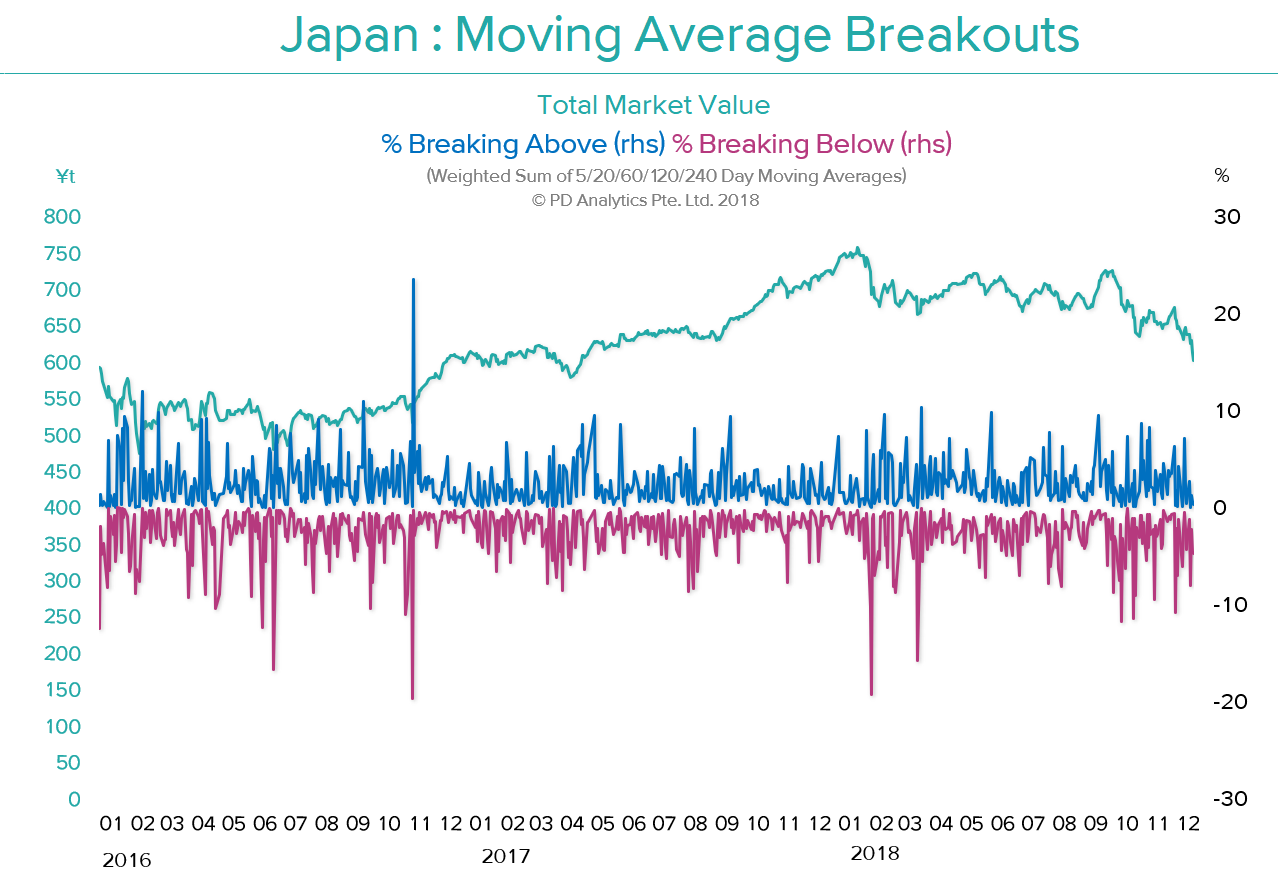
TRADING ZONE – As of last Friday, the Japan All Market Composite has now entered a bear market, having declined by 20% from the January 23rd high if Y757t. At the close, only 8% by number and 11% by value of Japanese stocks were trading above their weighted composite of 5, 20, 60, 120, and 240-day moving averages. These were the lowest closing values since February 2016 when the All Market Composite reached a low of Y475tand  offer an entry point for a short-term trade for those happy to hold over the extended New Year Holiday period.

Source: Japan Analytics

BREAKOUTS –  The ‘Breaking Bad’ percentage reached 11% on December 4th, the tenth-lowest reading in three years bu thas yet to fall below ‘-15-.  Adding the Breaking Above and Breaking Below percentages together provides a more straightforward view of the 15% threshold that has marked previous short and medium-term turning points, and which again we have yet to reach.


SECTORS

LEGEND: The ‘sparklines’ show the three-year trend in the weighted percentage above moving average relative to the Market Composite and the ‘STDev’ column is a measure of the variability of that relative measure. The table also provides averages for the breaks above and breaks below and the positive and negative ‘crossovers’.

SECTOR BREAKDOWN – The top six sectors measured by the percentage above the weighted average of 5-240 Days are all, predictably, domestic and defensive –  Food, Beverages & Tobacco, REITs, Information Technology, Internet, Media and Utilities. Equally predictable are the bottom half-dozen – Banks, Non-Bank Finance, Autos, Metals, Electrical Equipment and Chemicals


COMPANIES

COMPANY MOVING AVERAGE OUTLIERS – As with the market and sectors, out moving average outlier indicator uses a weighted sum of the share price relative to its 5-day, 20-day, 60-day, 120 day and 240-day moving averages. Extreme values are weighted sums greater than 100% and less than -100%. We would caution that this indicator is best used for timing shorter-term reversals and, in many cases, higher highs and lower lows will be seen. 

Source: Japan Analytics

THE 100% CLUB – As of Friday 21st, there were 16 extreme positive outliers and 622 extreme negative outliers. The number of extreme negative outliers suggests we are a short-term bottom.

In the DETAIL section below, we highlight the current top and bottom twenty-five larger capitalisation outliers as well as those companies that have seen the most significant positive and negative changes in their outlier percentage in the last two weeks and provide short comments on companies of particular note. 

3. What Just Happened In The Stock Market?

The velocity and ferociousness of the recent U.S. equity market weakness caught even cautious investors like us by surprise. Our social media feed has been filled with extreme bearishness. Opinions are now becoming bifurcated. Either the decline is the signal of something big or the fall in stock prices represents a buying opportunity for fundamentally oriented investors.

It is impossible to make a buy, hold or sell decision without some understanding of what the market is discounting. Further analysis reveals that investors are discounting only a mild U.S. slowdown in 1H 2019, but no recession. From a technical perspective, both the U.S. and global markets have violated well-defined uptrend lines, just as they did in 2015 and 2007. It remains an open question as to whether the trend line breakdowns will result in just a mild pullback, or a deeper bear market.

From a technical perspective, we would look for conditions when the market stops responding to bad news. One example can be found during the eurozone and Greek Crisis of 2011. During the summer of 2011, the eurozone was at risk of breaking apart, and European leaders were having almost weekly summits on how to solve the problem. At times, it seemed that Europe was leaderless, and no one was in charge. The crisis lifted after the ECB unveiled its LTRO program to backstop the banking system in order to buy time for member states to engage in structural reform. Sometime during that process, the market stopped falling on bad news. We are not there yet.

Our recommendation is to monitor the evolution of financial risk, as well as the evolution of investor psychology, in order to determine the timing of a market bottom

4. Japan Pharma – Domestic Market and Long Listed Drug Exposure

Domestic%20sales%20as%20a%20%25%20of%20total%20sales

  • The Japanese government recently announced its decision to initiate an ad-hoc price reduction of ~4.35%, to be levied in October 2019, this will be in addition to the scheduled biennial price revisions (source).
  • The October 2019 scheduled price cuts will have nominal overall impact; however, we highlight a few companies that are relatively more vulnerable to ongoing price reforms.
  • Mitsubishi Tanabe, Taisho, Santen, Kaken, Kyorin and Kissei generate >50% of revenue from the domestic market and are projected to continue to do so over next 3-5 years.
  • Furthermore, the contribution from long listed (LL) drugs is much higher for the above-mentioned companies, which makes them relatively vulnerable to ongoing price reforms (price cuts for LL drugs are much higher than the average).
  • On the other hand, Ono, KHK and Nippon Shinyaku, despite a high proportion of domestic revenue (as a % of total revenue), have only limited contribution from LL drugs.
  • Ono’s Opdivo, however, will continue to face market expansion led special price cuts going forward.
Source: Company data, Pathology Associates research
* Companies with financial year ending December, Taisho domestic pharma includes OTC sales, N Kayaku domestic pharma sales includes Generics and Biosimilar sales

Daily Thematic: Sri Lanka’s Short Term Outlook Is Hazy: Limited Pockets of Value Present and more

By | Thematic (Sector/Industry)

In this briefing:

  1. Sri Lanka’s Short Term Outlook Is Hazy: Limited Pockets of Value Present
  2. India Politics: Bihar Seat Sharing Sign of Flexible BJP Leadership, Reformed Stance Positive for NDA
  3. India: New Governor, New Hope
  4. Singapore REIT – Preferred Picks 2019
  5. Micron’s Guidance Bombshell Signals Troubled Times Ahead For Beleaguered Semiconductor Segment

1. Sri Lanka’s Short Term Outlook Is Hazy: Limited Pockets of Value Present

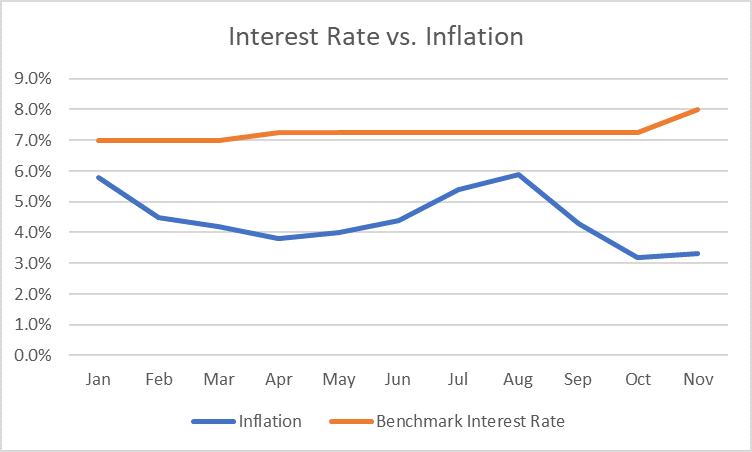
Ir%20inflation

Sri Lanka’s economy/stock market have been plagued by issues associated with politics and its external position this year, which resulted in poor stock market performance relative to its frontier market peers.  Select pockets of value can be found in some areas but there are no major positive catalysts for the stock market in the coming years, even though growth is poised to rebound significantly during 2019-2020.  I retain preference for other markets with stronger economic fundamentals such as Vietnam, Egypt and Uzbekistan (initiation note coming soon).

2. India Politics: Bihar Seat Sharing Sign of Flexible BJP Leadership, Reformed Stance Positive for NDA

The seat sharing formula announced over the weekend by BJP and its partners in Bihar is a clear sign of a more flexible and accommodating BJP leadership (Prime Minister and party president). There are total 40 Lok Sabha seats in Bihar and 17 seats each for two parties (JDU and BJP) which had won 2 (JDU) and 22 (BJP) in the 2014 elections from Bihar is a sign of BJP’s great pragmatism and willingness to concede more space to allies. This is not only required for BJP to deal with a more formidable challenge from Opposition, it is also very important to assuage concerns of allies which are getting more demanding.

This decision of BJP also has larger implications, for pre-elections approach of BJP on contentious issues with its existing and potential allies and also for its ability to attract more parties to NDA post elections. Realizing they are dealing with a more difficult political challenge in 2019, the BJP leadership of Narendra Modi and Amit Shah is now willing to change its previously aggressive operating model. It is both good and bad. Because while this might impact the pace of decision making and make it slower, it will also to a large extent eliminate the risk of policy misadventures such as demonetization.

The silver lining is that previous experience of Atal Bihari Vajpayee era (when in 1998-2004, the BJP was leading the Central Govt with only 182 seats in Lok Sabha) suggests that even coalition Govt can work effectively. The process at the Govt will be more consultation based and robust because BJP will be less combative when weaker, which might help. Some of the recent examples like departure of ex-RBI Governor Urjit Patel have proven that these issues could have disastrous consequences and are extremely damaging for markets and the image of Govt. If that changes and is reformed at the top, it will be positive for building up the right investment climate in the country.

3. India: New Governor, New Hope

1

Shaktikanta Das has been appointed as the new governor of India’s central bank. The new appointment comes as a major boost to the economy and has driven a rebound in the financial markets as well as the Indian rupee. The country’s current account deficit remains a major concern, although these recent developments further affirm India’s attractiveness as an investment destination.

4. Singapore REIT – Preferred Picks 2019

With the FTSE ST REIT index’s decline of 9.3% year-to-date, value has emerged for some of the bellwether names in the Singapore REITs sector. The forward yield spread between these REITs and the Singapore government 10-year bond yield (2.13%) currently stand at least 390 basis points. In view of the increasing concerns over global economic growth, rising interest rates and the ongoing trade tension between the US and China, I present three quality REITs with fortified portfolios that are well-positioned to weather the near-term market uncertainties. They possess growth potential from acquisitions, positive rental reversions and deliver resilient forward distribution yield of more than 6%. Some of the bellwether names in the more resilient retail REIT sector, while offering lower yield of around 5.0% – 5.7%, are also in my buy list. 

5. Micron’s Guidance Bombshell Signals Troubled Times Ahead For Beleaguered Semiconductor Segment

Screen%20shot%202018 12 20%20at%2011.20.25%20am

After months of skirting around inventory build-up and a weakening demand outlook, Micron used their latest earnings report to call closing time on a revenue and profitability party that began in Q4 2016 and just got better and better with each passing quarter. 

Micron reported Q1 FY2019 results on December 18’th and while revenues were largely in line with recently lowered guidance from the company, their outlook for both Q2 and 2019 as a whole was worse than even the most bearish of expectations. 

Citing high inventory levels at key customers, Micron guided Q2 FY2019 revenues for $6 billion at the midpoint, down a staggering $1.9 billion, 24% QoQ and 18% YoY. At the same time, Micron revised down their CY2019 bit demand growth forecast for both DRAM (from 20% to 16%) and NAND (35%, the bottom of the previously forecasted range). The company plans to adjust both CapEx and bit supply output downwards to match.

In the wake of their guidance bombshell, Micron’s share price closed down almost 8% the following day to end the session at $31.41, a level last seen in August 2017. Micron is unique in reporting out of sync with its industry peers, making it the proverbial canary in a coal mine. The company’s gloomy outlook and clarion call for further CapEx reductions in a bid to rebalance supply and demand spells troubled times ahead for an already beleaguered semiconductor segment ahead of the upcoming earnings season. 

Daily Indonesia: EM Relative Strength Is Bottoming: Overweight and more

By | Indonesia

In this briefing:

  1. EM Relative Strength Is Bottoming: Overweight

1. EM Relative Strength Is Bottoming: Overweight

Untitled

Relative strength for MSCI EM is bottoming vs. MSCI EAFE despite continued global equity market weakness.  Although the MSCI EM’s price index remains in a downtrend, we are seeing signs of outperformance ona a relative strength basis and would add incremental exposure. In this report we highlight attractive and actionable themes within EM.

Daily Thailand: Business Happenings in the Americas that May Be “Below the Radar” – Week Ending December 22, 2018 and more

By | Thailand

In this briefing:

  1. Business Happenings in the Americas that May Be “Below the Radar” – Week Ending December 22, 2018
  2. COM7 (COM7 TB): Acquisition to Support Aggressive Expansion
  3. Micron’s Guidance Bombshell Signals Troubled Times Ahead For Beleaguered Semiconductor Segment
  4. Sathorn Series M: TMB-Thanachart Courtship

1. Business Happenings in the Americas that May Be “Below the Radar” – Week Ending December 22, 2018

Northwest passage%20route

Highlights of significant recent happenings include:

  1. Feeding the Dragon – Sumitomo Corp (8053 JP) buying into massive Chile copper project; Mitsui & Co Ltd (8031 JP) and Tokyo Gas (9531 JP) announced plans to be long-term buyers of Mexican LNG.
  2.  Local News on Global Companies Huawei Technology (40978Z CH)‘s to do “whatever is required” to meet Canada’s 5G security standards; Ant Financial (1051260D CH)’s Sesame Credit be used to apply for Canadian visas;  Facebook Inc A (FB US) offered data to  Netflix Inc (NFLX US) and Royal Bank Of Canada (RY CN)BlackBerry Ltd (BB CN)‘s high-security reputation increasingly valuable; Fedex Corp (FDX US) and  United Parcel Service Cl B (UPS US) deny negative impact from  Amazon.com Inc (AMZN US)‘s Amazon Air operations; and Anheuser Busch Inbev Sa (Adr) (BUD US) and Tilray Inc (TLRY US) are doing “joint” product development.
  3. Trade Deals & No Deals – Bosideng Intl Hldgs (3998 HK) got an unexpected boost, while Canada Goose Holdings (GOOS CN) took an unexpected hit as a consequence of the U.S.A. Government’s problems with Huawei Technology (40978Z CH)
  4. Outliers – Another “silver lining” to global warming?  The Warming Arctic Opens the Northwest Passage as a Potential Maritime Superhighway

2. COM7 (COM7 TB): Acquisition to Support Aggressive Expansion

  • Improving asset turnover, good risk adjusted price momentum, and relatively strong analyst recommendations relative to its sector
  • Larger distribution channel through acquisition of DNA Retail Link to add 95 more stores to current 518 stores
  • New mobile product launches in 4Q18 and COM7’s focus on high margin products, such as Android smartphones, should support high earnings growth which was up 56% YoY in 3Q18
  • Attractive at a 19CE* PEG of 0.9 versus ASEAN sector at a PEG of 2.7
  • Risks: Lower-than-expected demand for new IT products, slower-than-expected store expansions

* Consensus Estimates

3. Micron’s Guidance Bombshell Signals Troubled Times Ahead For Beleaguered Semiconductor Segment

Screen%20shot%202018 12 20%20at%2011.20.25%20am

After months of skirting around inventory build-up and a weakening demand outlook, Micron used their latest earnings report to call closing time on a revenue and profitability party that began in Q4 2016 and just got better and better with each passing quarter. 

Micron reported Q1 FY2019 results on December 18’th and while revenues were largely in line with recently lowered guidance from the company, their outlook for both Q2 and 2019 as a whole was worse than even the most bearish of expectations. 

Citing high inventory levels at key customers, Micron guided Q2 FY2019 revenues for $6 billion at the midpoint, down a staggering $1.9 billion, 24% QoQ and 18% YoY. At the same time, Micron revised down their CY2019 bit demand growth forecast for both DRAM (from 20% to 16%) and NAND (35%, the bottom of the previously forecasted range). The company plans to adjust both CapEx and bit supply output downwards to match.

In the wake of their guidance bombshell, Micron’s share price closed down almost 8% the following day to end the session at $31.41, a level last seen in August 2017. Micron is unique in reporting out of sync with its industry peers, making it the proverbial canary in a coal mine. The company’s gloomy outlook and clarion call for further CapEx reductions in a bid to rebalance supply and demand spells troubled times ahead for an already beleaguered semiconductor segment ahead of the upcoming earnings season. 

4. Sathorn Series M: TMB-Thanachart Courtship

Right before Christmas, the Ministry of Finance confirms that both Thanachart and KTB were in talks to merge with TMB. We note that:

  • Considering that KTB’s earlier courtship failed once, it is more likely, but by no means guaranteed, for the deal with Thanachart to happen.
  • A deal with Thanachart would leave TMB as the acquirer rather than the target. Thanachart’s management has better track record than TMB.
  • Both banks have undergone extensive deals before this one: 1) TMB acquired DBS Thai Danu and IFCT; and 2) Thanachart engineered an acquisition of the much bigger, but struggling, SCIB.
  • A merger between the two would still leave them smaller than BAY and not really change the bank rankings, but it would give TMB a bigger presence in asset management and hire-purchase finance and an re-entry into the securities business.