
Receive this weekly newsletter keeping 45k+ investors in the loop
1. UK: No Need To Cap Energy Yet
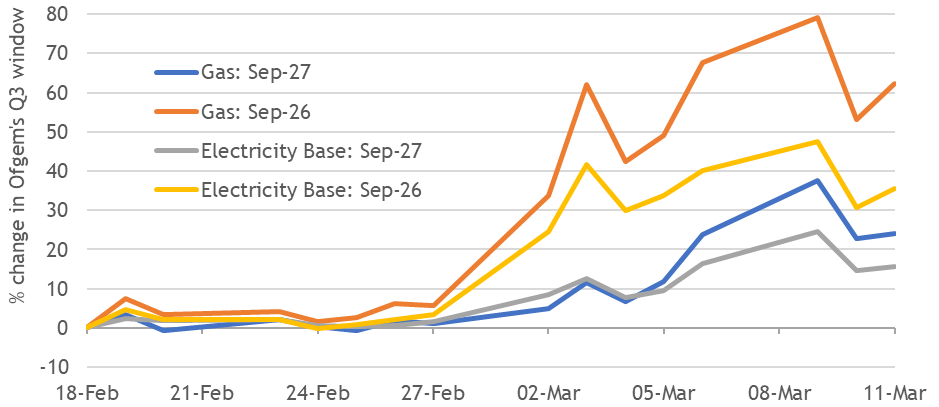
- Energy price volatility is translating into the UK inflation forecast, albeit dampened by direct fuel costs only being 40% of household energy utility costs.
- We are updating our forecasts regularly to accurately capture the impact of higher prices and the rolldown of their priced future unwind into an inflationary hump.
- An average 10% price rise of gas adds 5bps to CPI, and in electricity adds 6bps. These elasticities rise with prices and drive our profile far above the consensus.
2. HEW: Inflation Devours Doves
- Events in Iran and perceptions of military reaction functions drove significant market volatility again. Inflationary pressure has devoured doves, clearing the skies for hawks.
- Macro releases were few and stale. US inflationary pressures remain slightly excessive, but global activity is slower than hoped. Not many doves are left to highlight that now.
- Next week is packed with opportunities to respond at the Fed, ECB, and BoE. Attentive readiness to respond should go with caution amid noisy volatility, which may disappoint.
3. Iran: Gaming Thrones
- Trump’s strategy signals an aim to remove Iran’s antagonistic leadership and its offensive capabilities, without replacing the broader regime, for a quick win.
- Iran escalated with attacks around the region to maximise the pain for the West. Trump could announce a withdrawal even with an unrepentant regime if the costs get too high.
- An open-ended escalation is the least likely scenario, but possible if intensified attacks on energy infrastructure make Trump see red and demand an Iraq-style regime change.
4. US: A Less Good Place For Inflation
- Unsurprising US inflation data for February preserved the annual rates above the target, with the monthly impulse of this and underlying measures also stuck too high.
- The tariff shock was the dog that didn’t bite, but this energy supply shock will do much more than just bark. Firms can’t avoid energy prices like they can tariffs.
- Surging gasoline prices undo the progress that recent months had created for Fed cuts. The shock is less bad than in Europe, but it’s tough to ease into this environment.
5. Asian Equities: What’s Being Discounted Now, After the Carnage?
- Asia’s dependence on Middle Eastern energy and the Strait of Hormuz transit route has driven immense share price volatility – especially in Korea, Japan and pockets of ASEAN.
- The top winners and top losers across market-sectors indicate that the market is most worried about input shortage across industries and potential demand destruction driven by heightened inflation expectation.
- Manufacturing sectors and consumer proxies across Asia could continue to underperform if the conflict lingers. Energy, high dividend yield, precious metals and developed Asia financials could be the safe havens.
6. China: Prepared for a Long War!
- China’s currency, equity, and bond markets have held up better than those of other Asian countries since the beginning of the war in Iran.
- Chinese-Flagged ships have been allowed safe passage through the Strait of Hormuz, which may signal that China will continue to import some crude, LNG, and fuel from the Middle East.
- China increased its strategic oil reserves at a pace of 1mm bbls a day over the past year. Estimated at 1.5 billion bbls, China has ample reserves for a protracted war.
7. War and Peace: History Rhymes, But Which History?
- Investors with the thought that they should conduct their own due diligence about their own possibly overly rosy historical assumptions about long-term risk and return expectations.
- Conventional studies of U.S. asset returns may be creating overly unrealistic expectations of long-term asset returns. The U.S. experience has severe survivorship problems.
- In the words of Ronald Reagan, trust (the markets), but verify (that the regime hasn’t shifted).
8. How Do You Say TACO in Farsi?
- Both the Iranian regime and the Trump Administration face different pressures to bring the war to a conclusion.
- Trump is under political pressure from his support base for his “no wars” pledge. A rising oil price pressures inflation, which threatens the “affordability” promise that he campaigned on.
- We believe these pressures will force him to a TACO (Trump Always Chickens Out) pivot in the near future.
9. BUY/SELL/HOLD: Hong Kong Market Update (March 10)
- Hong Kong market pullbacks with global markets due to war and oil price uncertainty. HSI fell below 200 DMA but holds well above long-term support.
- Value and dividend yield factors are outperforming in 2026. The energy sector has overtaken the materials sector as the top performer year-to-date, with a 24% return.
- Techtronic Industries (669 HK) is rated BUY by UBS and OVERWEIGHT by JP Morgan. It is pursuing Asia and Latin America, aiming to be the dominant brand in these regions.
10. CHARTING COURSE: War Tacos On the Menu – Oil, Weapons and Polls (3/11/26)
- President Trump is preparing for a near-term exit from the Iran conflict. High energy prices, declining popularity in polls, and strains on US weapon inventory forces another TACO decision.
- Surging oil and gas prices are a major problem for Trump before the US midterm elections. Gas prices in the U.S. are higher than they were during his first term.
- President Trump’s approval ratings are at risk of further sharp declines the longer the war continues. The U.S. and its Gulf allies are depleting their weapons rapidly without near-term replacements.
Receive this weekly newsletter keeping 45k+ investors in the loop
1. UK: The Chancellor’s Empty Hat
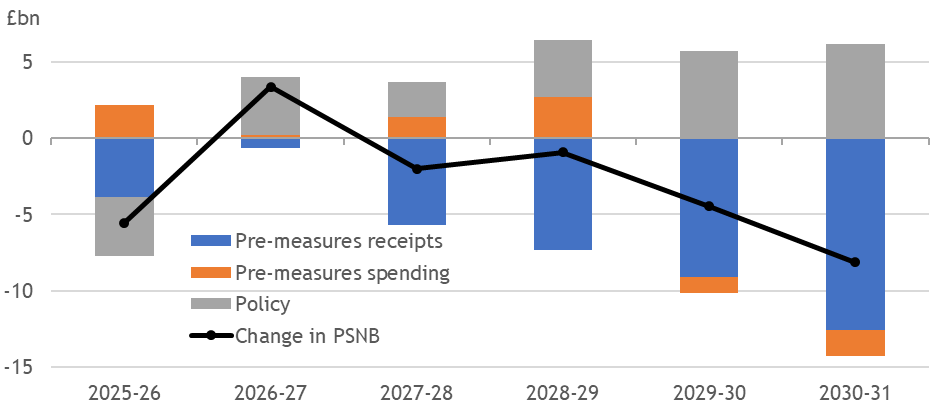
- The UK Chancellor resisted pulling any rabbits out of her hat, which offers welcome economic stability, but leaves her looking like she’s got no ideas left to change things.
- Fiscal projections improved slightly, and earlier announcements only partly spent them, but the Iran war could easily blow up that space, especially if the conflict is sustained.
- Forecasts and Keir Starmer’s position are like Wile E. Coyote floating over the abyss. A more left-wing PM and Chancellor are likely after the local election losses in May.
2. HEM: Mar-26 Views & Challenges
- A dovish repricing during February followed surprisingly broad BoE dissents, even as the Fed signalled stability.
- The BoE’s dovish bias renews the accommodation of excess inflation. Output and credit remain resilient.
- Unemployment’s global stability suggests monetary conditions might be broadly neutral. Cuts could take them loose.
3. HEW: Rates Fly On Magic Carpet
- The explosives flying out of Iran at critical energy infrastructure are causing inflation pressures to soar on a Persian magic carpet, taking the policy rate outlook with it.
- EA inflation was surprisingly strong before this shock hit, and UK CFOs told the BoE that they don’t see slack. Chillingly bad US payrolls don’t break the case for caution.
- Next week’s thin release calendar features UK GDP and US inflation, but their relevance is overtaken by developments in the Middle East and the spillovers from that.
4. EA: Inflation Explodes Before The War
- EA inflation exploded out of its January trough to hit 1.9% in February. The upside news was broad across special aggregates and countries, compounding the hawkish signal.
- Services strengthen the underlying story, with past energy price falls responsible for the ongoing slight target undershoot. War with Iran is flipping that energy price story.
- The ECB can remain in its good place for now. The broad underlying strength renews the likelihood that it heads in a hawkish direction when it leaves the good place.
5. UK: Firms Still Don’t Find Slack
- CFOs are telling the BoE that there has been no change in recruitment difficulties over the past year, staying marginally tight on balance, despite unemployment jumping.
- The divergence is consistent with unemployment’s rise being structural. Adding the NICs threshold change to the basic rate increase raises our NAWRU estimate to 5.3%.
- Dovish MPC hopes that slack will drive headline pay to sustainable levels are likely to be disappointed, with no significant slack and expectations stuck above the target.
6. War, Oil and Asia
- Asia has enough stockpiles to weather at least a month of crude import disruptions.
- It’ll still likely feel the impact of higher oil prices through rising import bills, deteriorating current account balances and weaker currencies.
- Monetary policy will likely prioritise inflation over growth, pushing the bar for rate cuts higher.
7. HONG KONG ALPHA PORTFOLIO: (February 2026)
- Hong Kong Alpha portfolio gained 0.46 % in February resulting in a 2.99% underperformance to its benchmark. The portfolio has outperformed HK indexes by 53% to 75% since inception 10/1/24.
- Hong Kong Alpha has generated 63% of its return from alpha and has a Sharpe ratio of 1.71 since inception. The portfolio’s annualized mean excess return is 24%.
- At the end of February, we reduced positions in the technology sector and added positions in the energy and building materials sectors.
8. Dual Track Anti-Stock Price Suppression Laws in Korea
- In this insight, we discuss the new, dual track anti-stock price suppression laws that the Korean government is trying to pass.
- Two anti-stock price suppression laws include requiring companies with PBR of less than 1x to submit corporate value enhancement plan and amendment to the Inheritance and Gift Tax Act.
- According to KRX, 549 of the 919 KOSPI-listed companies had a PBR of less than 1x (about 60% of total), which is significantly higher than Japan (33%) and US (2%).
9. Activity Robust Before Energy Shock
- The global economic impact of the Iranian conflict is sensitive to initial conditions, where a robust starting point keeps the shock relatively small and linear.
- Slowing in the US services PMI is balanced by a booming ISM and strength elsewhere, including in the manufacturing sector. Employment is also improving outside the UK.
- Resilience to the demand-side of the shock encourages policymakers to lean against the inflation risk, with the possibility of BoE and Fed cuts shrinking in response.
10. Making Sense of the Citrini AI Debate
- Citrini Research recently published a controversial report postulating a scenario where AI wipes out millions of jobs. By contrast, AI boosters assume widespread productivity gains without disruption.
- The history of the adoption of disruptive technology indicates that outcomes are never utopian nor Apocalyptic.
- We prefer to adopt a middle ground. AI is a very real and its adoption will dramatically change society. Expect some degree of disruption in capital markets and return expectations.
Receive this weekly newsletter keeping 45k+ investors in the loop
1. UK: Stickier CPI Than BoE Assumes
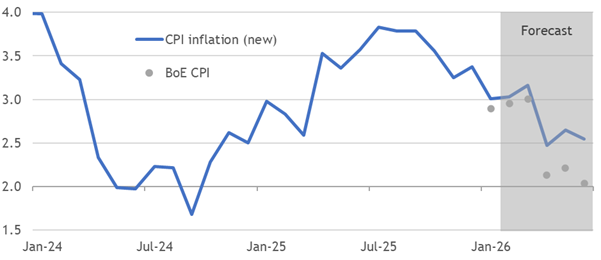
- UK inflation’s base effect-driven slide was stickier than the BoE expected in January, only reaching 3%. Core and services inflation hawkishly drove the resilience.
- Underlying inflation measures broadly remain stuck above levels consistent with the BoE’s 2% target, although it assumes the problem away with a dovish bias.
- We still expect the BoE to wait until 30 April before cutting again. It won’t see another inflation print until after the 19 March meeting, and there is good reason for caution.
2. BoE Failure is Institutionally Ignored
- Bank staff ignored the possibility of excess inflation expectations when finding no structural change in an irrelevant construct that persuaded dovish dissents in February.
- Staff can’t be expected to tell their leaders of their policy failure. Firms and households expect further excesses in price and wage inflation, but the MPC is not listening.
- The 2% target has become a floor only broken by substantial temporary shocks. Loose fiscal policy enjoys this excessive accommodation, and both biases will likely persist.
3. UK: A Lame Horse Year?
- The UK labour market ended 2025 on a disappointingly feeble note, with unemployment rising to 5.2%. Methodology and tax contributed, so the cyclical change isn’t so bad.
- Wage growth also slowed in 2025, with disagreement about the extent. Most measures remain above 4%, although the distorted public vs private split depressed the latter.
- Dovish BoE assumptions can lean on labour market weakness to cut again soon. We still lean towards the 30 April MPR, but soft CPI inflation could push Bailey to 19 March.
4. HEW: Case For Cuts Narrows
- A UK retail sales boom, robust PMI surveys, and persistent price and wage inflation offer plenty of reasons not to cut. But unemployment rose further, offering dovish cover.
- Biased assumptions make further BoE policy mistakes likely, as 2% is treated more like a floor than a target. FOMC members are more cautious, and even Miran’s view is moving.
- Next week’s EA HICP print carries extra significance for us after Eurostat deprecated its old data. Our replacement component models for all member states will roll out then.
5. Asian Equities: The Earnings Boom – Korea Taiwan, Malaysia, Tech and Basic Materials Rule the Roost
- Asia-Ex-Japan equities have moved from a valuation rerating driven rally to an earnings driven rally. Since late October, Asia-ex-Japan equities have appreciated 8% but its forward PE has declined 6%.
- Korea’s 2026 EPS estimate up 67.8% in last 6 months, followed by Taiwan (17.5%) and Malaysia (7.5%). Philippines (-4.4%), India (-3.9%) and Indonesia (-1.3%) constitute the bottom of the pile.
- Technology and basic materials are driving the earnings upgrades while consumer-oriented sectors are dragging them down. We think consumption sentiment recovery shall be essential for earnings upgrades to sustain.
6. Mandatory Cancellation of Treasury Shares: Final Approval by the Korean National Assembly on 24 Feb?
- According to Money Today, the Democratic Party of Korea will hold a plenary session of the National Assembly on 24 February to mandate the mandatory cancellation of treasury shares.
- The Commercial Act’s third amendment requires companies to cancel newly acquired treasury stock within one year. For existing treasury shares, a grace period of 18 months is granted for disposal.
- Numerous other local media have also mentioned that the Democratic Party of Korea plans to finally pass this amendment in late February/early March to mandate the cancellation of treasury shares.
7. IEEPA Ruling Is a Silver Lining
- The court ruling reduces the risk of excessively high, permanent tariffs for Asian economies going forward.
- Focus will now shift to sectoral tariffs from across-the-board country tariffs.
- Signed trade deals with Malaysia, Cambodia and Indonesia are likely to be re-negotiated to take into account Section 232v and tariffs under other potential avenues.
8. What Comes After the Software Apocalypse?
- A market leadership analysis of asset classes and the U.S. equity market shows that we are in an equity bull with minimal risk of a major bear market.
- Cyclical stocks are leading the way, but their advance is highly extended.
- Market internals shows U.S. equities are vulnerable to a significant correction in the context of a bull trend in the coming weeks and months.
9. Technically Speaking Breakouts & Breakdowns – HONG KONG (February 13)
- After breaking resistance in January, the Hong Kong market is rangebound as sector rotation into energy, industrials and financials occurs before the next leg up in its Secular Bull Market.
- As the tech and healthcare sectors lose momentum, the value factor has emerged as an outperformer so far in 2026.
- Kingboard Holdings (148 HK) broke out to new highs with technical momentum and strength indicators support the move.
10. Currency Resilience in ASEAN: Moving Towards an Independent Financial System
- ASEAN currencies have remained comparatively stable despite global shocks, supported by strong domestic fundamentals, prudent monetary policy, sustained FDI inflows, and diversified economic bases. While geopolitical tensions, sanctions, and trade fragmentation have tested emerging markets, ASEAN economies have leveraged policy buffers and regional growth dynamics to mitigate volatility.
- Rising geopolitical uncertainty and pressure on the US dollar’s dominance have accelerated ASEAN’s push toward deeper regional integration. Initiatives such as Regional Payment Connectivity, integrated QR systems, financial safety nets, Digital Economy Framework agreements, and exploration of Central Bank Digital Currencies (CBDCs) are strengthening intra-regional trade, reserve diversification, and financial sovereignty — reducing reliance on external currencies.
- The rapid expansion of fintech and digital banking across ASEAN is reinforcing financial system resilience while unlocking scalable investment themes. Growth across digital payments, lending, neobanking, embedded finance, investment technology, and supporting infrastructure is positioning the region as a structurally attractive long-term play within emerging market financial services.
Receive this weekly newsletter keeping 45k+ investors in the loop
1. UK: Unsustainable Wage Growth
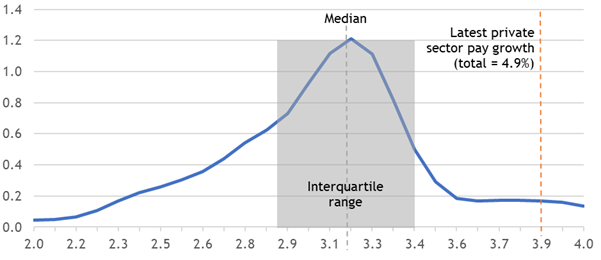
- Wage growth of 3.25% is unlikely to be consistent with achieving the 2% inflation target, contrary to the BoE’s assessment that relied on consistently dovish-biased assumptions.
- Stagnant productivity and a recovery in profit margins are problems that should inform any coincident assessment. But the Bank is relying on the world to bail out UK excesses.
- The Euro area and China are not structurally exporting disinflation anymore, and the latter is not politically tolerable. The biased BoE seems set to keep missing its target.
2. UK Electoral Hopes Rise In Asian Victories
- Landslide victories for recently appointed Prime Ministers calling snap elections in Japan and Thailand offer hope to Labour MPs hoping Keir Starmer stands aside soon.
- Peter Mandelson’s conduct is damned in the Court of Public Opinion, including evidence that he was unfaithful to his political colleagues and husband. Starmer can’t escape it.
- Leadership challengers aren’t ready yet, so Starmer remains likely to limp on longer. But change will bring fiscal easing that the dovish BoE fails to anticipate adequately.
3. UK GDP Softly Turns In Q4
- Half of last month’s upside GDP growth surprise was revised away with the December data, tempering Q4 growth back to our 0.1% q-o-q forecast while disappointing others.
- An encouraging mix skewed to services output meant the underlying performance still trended up during Q4. We now track 0.4% for Q1, aided by residual seasonality.
- Revisions to December, or a belated catch-up to trend, could make this even stronger. It is the flip side of soft H2 performances, and the dovish BoE is focused on other things.
4. CHARTING COURSE: HK Dollar & Bitcoin…. Again(February 2026)
- The HKD is moving to the weak end of its trading band. In order to maintain the current level of the Aggregate Balance, the HKMA will allow HIBOR to rise.
- A stronger CNY/HKD exchange rate will draw more HKD investments to the mainland as stock market valuations converge. There is a strong demand for Chinese bonds in Hong Kong.
- Bitcoin is taking a breather after its rapid decline this year, and before it begins its next leg down. Our long gold / short bitcoin strategy has gained 55% YTD.
5. About 10% of Listed Stocks in KOSDAQ Could Be Delisted by the End of 2026
- There are too many listed stocks in the KOSDAQ exchange. The Korean financial regulators have finally realized this problem and the FSC announced several measures to fix this problem.
- About 10% of the stocks listed on the KOSDAQ exchange could be no mas by the end of 2026.
- The overall impact should be positive on the KOSDAQ index since it helps the investors to focus on the higher quality companies and the zombie companies to be delisted.
6. BUY/SELL/HOLD: Hong Kong Market Update (February 10)
- Hong Kong market continues in an upward trend after breaking resistance at 27100 last month. The next resistance level is 28000. Southbound flows have accelerated over the last week.
- The energy, conglomerates, and property sectors outperformed the materials sector in 2026. Momentum and value have been the top factors for performance YTD.
- Zhejiang Sanhua Intelligent Controls (2050 HK) was initiated with OUTPERFORM at Shenwan Hongyuan Research. The manufacturer of air-conditioning and refrigeration components has expanded into energy storage, automotive thermal management, and robotics.
7. Asian Equities: Foreigners Continue to Sell Asia but Market Rotation Setting In
- In January FIIs sold US$3.5 bn Asia-6 equities and till 10th February they have sold US$5.7bn. February marks the fourth month in succession that the FIIs are selling Asia.
- In February MTD, FIIs have sold US$6.5bn Korean equities and US$888m Taiwanese. They bought US$1.7bn India and US$23m Philippines. Thailand was also bought (US$139m in January), Indonesia sold heavily (US$588m).
- FII buying should restart in Korea, Taiwan soon. Flows into India have bounced back but it’s too early to predict a sustainable reversal. Philippines, Thailand should continue to see inflows.
8. Asian Equities: India – Light at the End of the Tunnel
- After long-drawn-out underperformance, Indian equities are looking interesting again. Cyclically improving growth, stabilizing currency on the back of several trade deals, policy focus on infrastructure and advanced manufacturing are converging.
- High frequency data reveals growth acceleration in consumer discretionary, construction goods, automobiles, electrical goods, base metals. Some of these sectors are reasonably valued in relation to forecast growth and ROE.
- We highlight 17 stocks across a range of sectors that have robustly improving earnings estimates, strong growth forecasts, healthy balance sheets, reasonable growth-adjusted valuations. 8 of them are large caps.
9. Understanding US Debt Dynamics – Dissecting the $38t Debt
- Investors should not focus solely on the $38t in US public debt as it a headline figure over-reported and under- analysed
- Fears of using short-term debt as the main source of financing debt is misplaced. They are rolled over and do not ‘add’ to new debt unless deficits expand
- Teasury auction data does not show any signs of funding stress to date despite the widespread fears fanned by comments on Trump’s fiscal policies
10. HEW: Assuming Success
- Assumptions consistent with our hopes are alluring, but not always realistic. They can lead policymakers to learn the wrong lessons for politics and monetary conditions.
- Recent election victories don’t mean a new soft-left UK leader will achieve the same. Current resilience need not break to target-consistent levels, nor create room for cuts.
- Next week is packed with some of the most important UK releases coming before the BoE’s March decision, including unemployment and inflation’s likely January drop to 3%.
Receive this weekly newsletter keeping 45k+ investors in the loop
1. HEW: BoE Goes Its Own Way
- The BoE refused to behave like its peers this week, with a significant dovish shift in the vote despite a lack of news, even as others settle on holding steady or even hiking.
- Those doves overshadowed the ECB’s calm stability after inflation matched forecasts by dipping to 1.7% in January. Disappointing US labour market news drove rates down.
- Next week’s slightly delayed payrolls (and CPI) releases will help reveal the relevance of this week’s noisy signals. We also await UK GDP data turning in residual seasonality.
2. BoE: Presumptive Doves Fly
- The MPC held rates in a shockingly finely balanced 5:4 vote again. Assumptions in the analytical boxes were uniformly dovish and widely cited as driving the dovish flight.
- We see target-consistent wage growth lower, only partly because of productivity. Fiscal policy will not match tight plans, and elevated expectations can’t be assumed away.
- Only one of the two members open to cutting soon is needed to deliver it. We no longer see enough time for dovish assumptions to be disproved, making a late April cut likely.
3. Fed: Rate Cuts Rolling Away
- Pricing for Fed rate cuts in 2026 has been trimmed by ongoing economic resilience and a fairly uncontroversial appointment of Kevin Warsh as the Fed’s next Chair.
- Mean pricing still covers two cuts, close to the BoE, despite both being on hold and some other central banks turning hawkish. Delaying cuts until mid-year isn’t enough.
- We see excess demand and inflation surviving, preventing policy easing. Trump’s Chair can sell this stability. Temporal decay of the dovish skew would also roll rate cuts away.
4. HONG KONG ALPHA PORTFOLIO: (January 2026)
- Hong Kong Alpha portfolio gained 16.26% in January resulting in a 6.2% outperformance to its benchmark. The portfolio has outperformed HK indexes by 48% to 63% since inception on 10/1/24.
- Hong Kong Alpha has generated 50% of its return from alpha and has a Sharpe ratio of 1.79 since inception. The portfolio’s annualized mean excess return is 28%.
- At the end of January, we reduced positions in the materials, communications, and conglomerate sectors and added positions in the food, energy, and manufacturing sectors.
5. HEM: Feb-26 Views & Challenges
- Policymakers have broadly signalled caution against cutting too far, feeding pricing for prolonged pauses.
- Resilient output, expanding credit, and the UK’s unbroken excess inflation problem should prevent further cuts.
- Risks from rising unemployment eased with stabilisation after a bad round of releases during December.
6. Korea ETF Market Monthly: #1 (January 2026)
- We introduce a new monthly publication called Korea ETF Market Monthly.There are 1,068 different ETFs to choose from in Korea.
- The top 100 ETFs in Korea totaled 69% of the total ETF market size amount as of 30 January 2026.
- Korean ETF market surged in the past two years. ETFs in Korea had total market cap of 346.5 trillion won (end of January 2026), up 179% in two years.
7. What Does Silver’s Volatility Mean for Markets?
- Silver has gone parabolic, and even the silver/gold ratio has surged. We can find no satisfactory fundamental reasons beyond rising excessive bullish precious sentiment.
- It’s impossible to try to time the blow-off top in precious metals but a reversal may have begun last Friday.
- Even though gold and silver prices are highly extended, the secular trend of a hard asset leadership cycle is intact, and any weakness is a pullback in an uptrend.
8. CHARTING COURSE: Gold, BITCOIN, and the Dollar (January 2026)
- Gold’s long-term upward price trend is still intact. The underlying fundamentals have not changed as the metal’s price corrects and consolidates in its secular bull market.
- Bitcoin is breaking down and investors seem to be losing interest as the cryptocurrency has not acted as a hedge to dollar weakness nor as a safe-haven.
- The U.S. wants a weaker dollar, but not too fast! The dollar’s long-term trend indicates further weakness in 2026 with a DXY target at 5% below its current level.
9. Hanwha Asset Mgmt Launching the PLUS Korea Manufacturing Core Alliance Index ETF (KMCA) On NYSE
- Hanwha Asset Management has launched the process of listing the PLUS Korea Manufacturing Core Alliance (KMCA) Index ETF on the NYSE in 1H 2026.
- KMCA ETF will includes companies in six core sectors: 1) AI semiconductors, 2) batteries, 3) shipbuilding, 4), defense, 5) power grids and nuclear energy, and 6) robots and humanoids.
- This is likely to attract additional foreign capital into Korean stocks in the coming months.
10. Union Budget 2026- What We like and What We Don’t
- The Union Budget 2026-27 is a steady budget with silent fireworks. In our view, the Budget lays a good foundation for growth, while keeping the fiscal consolidation in check.
- Key positives are change in reforms to attract foreign capital in the country, especially given the recent outflows. Tax reforms on IT/Services and emphasis on manufacturing is also a positive.
- What we do not like is increase in transaction costs for HFTs and Arbitrageurs, thereby reducing market efficiency. Limits in MAT set off is another disadvantage to the corporates.
Receive this weekly newsletter keeping 45k+ investors in the loop
1. How to Position for Greenland and Other 2026 TACOs
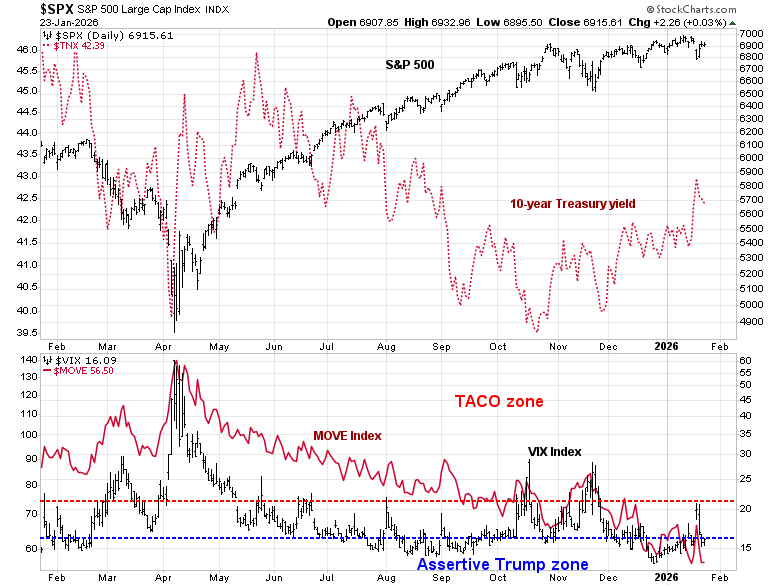
- Regardless of the apparent chaos and volatility of Trump’s initiatives, his actions are constrained by market spikes in volatility, which can crater stock prices and spike Treasury yields.
- The Trump Administration and Republicans are highly sensitive to the electoral popularity of specific issues. Recently, the extreme unpopularity of a Greenland purchase and military intervention forced a face-saving retreat.
- Investors are advised to buy sudden risk-off downdrafts between now and the November election as ways to position to potentially profit from a probable TACO response.
2. UK Politics: The Beginning of the End?
- A post-local election Labour Party leadership challenge remains high, despite Andy Burnham being blocked from standing for parliament in a forthcoming by-election.
- In this event, whoever prevailed would likely still be beholden to the left within the Parliamentary Labour Party, which markets would not welcome.
- However, investors might find some solace in a new leader’s likely willingness to move more quickly on closer economic and defence ties with Europe.
3. UK Shelter Costs Coasting
- The unusual stability of UK house prices is unlikely to last, while rent inflation is set to slow further. We expect the price-to-rent ratio to stabilise here at pre-pandemic levels.
- Rapid wage increases in the UK’s unbroken regime of excess inflation have eroded the price-to-earnings ratio to its lowest in over a decade, and will probably extend further.
- Banks have more regulatory space to lend while lower rates feed the affordability of leveraging up, so there are upside inflationary risks to this benign coasting narrative.
4. HEW: Markets Making Opinions
- The falling USD and surging precious metals prices don’t fit the fundamental narratives of lazy strategists seeking to extrapolate moves into spurious trends.
- Macro developments have been relatively benign, with resilient real activity shown in euro area GDP and surveys. Looser conditions pose upside risks to UK shelter prices.
- Next week’s ECB and BoE decisions are set for no change rate outcomes, and we expect that will also broadly apply to guidance. We still expect no more cuts from either bank.
5. KOSDAQ’s 7% Rise Today – A Fake Reversal or Sustainable by a Potential 17 Trillion Won Inflow?
- The KOSDAQ index rose by 7.1% today to 1,064.4 today which was one of the largest single day returns for KOSDAQ in the past three decades.
- Will this 7% upside move be a fake reversal or the start of a strong, sustainable momentum trade driven by a potential 17 trillion won inflow into the KOSDAQ companies?
- The Korean government is trying to encourage the injection of nearly 17 trillion won into KOSDAQ listed companies through venture capital (raised through integrated market assets (IMAs) and commercial papers).
6. JAPAN: Plaza Accord II Is a Pipe Dream!
- The JPY has gained since rumors of a coordinated effort between the U.S. and Japan to intervene in the currency market.
- Talk of a new Plaza Accord is motivating an unwind of JPY shorts, however, a sustained intervention to strengthen the JPY versus the USD is unrealistic.
- The risk to U.S. inflation, treasury yields, and the equity market will provide guardrails against any meaningful currency intervention by the U.S. Treasury Department.
7. CHARTING COURSE: Yuan’s Internationalization, Japan’s Bond & Currency Woes
- China continues to attract foreign capital through its yuan internationalization efforts as de-dollarization accelerates.
- Foreign Exchange repatriation in China hit a record in December as exporters and investors continue to favor a strengthening yuan.
- Japan may not get the help it needs to support the JPY as the dollar takes a leg down and breaks support.
8. KOSDAQ in on Fire! Korean Government Encourages Investment in KOSDAQ Companies by Pension Funds
- KOSDAQ has been on fire in the past week. KOSDAQ is up 20% in the past one week, outperforming KOSPI which is up 5.4% in the same period.
- One of the key reasons why KOSDAQ has been on fire is mainly due to expectation of the Korean government encouraging capital inflow into the KOSDAQ listed companies.
- Korean government will encourage investment in the KOSDAQ by incorporating the KOSDAQ index into the evaluation criteria for the management of pension funds’ assets, which amount to 1,400 trillion won.
9. US Policy: SACRIFICING THE DOLLAR ON THE ALTAR OF TREASURIES
- The U.S. dollar will face further pressure as the Administration tries to support the Treasury market and keep interest rates in check at the expense of a weaker dollar.
- Continued dollar debasement will fuel higher inflation expectations. The weaker dollar policy underpins the rally in precious metals, other commodities, and emerging-market currencies.
- The dollar has broken technical support, with the next target level for the DXY index at 90 (-6.25%). A coordinated effort to support the yen vs. the dollar is unlikely.
10. EM Active Investors’ Stock Positioning Guide
- TSMC, Tencent and Samsung remain dominant holdings, but are increasingly held as structural underweights as managers sell into strength to manage benchmark risk.
- 2025 saw sharp ownership increases in emerging leaders such as Xiaomi, CATL and Accton, while former consensus names like Meituan and Indonesian banks were heavily exited.
- Across regions, new stock leadership is forming in MENA, LATAM and ASEAN as capital rotates away from long-standing EM favourites into a broader set of positions.
Receive this weekly newsletter keeping 45k+ investors in the loop
1. UK: LFS Fades Extremes
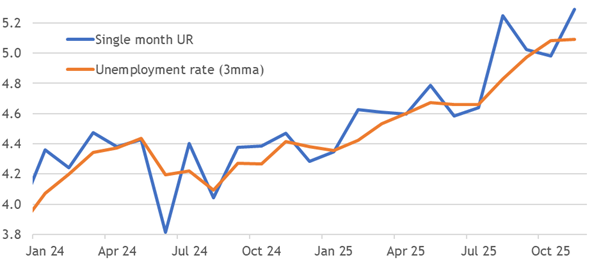
- Some of the support offered to both hawkish and dovish narratives faded in the latest labour market data, but this won’t break the case for any camp on the MPC.
- The unemployment rate held steady for the first time since July. Employment isn’t keeping up with the surging labour force, including students not finding flexible work.
- Redundancies retraced lower, and wage growth has slowed, but the fall in private pay is probably exaggerated by reclassification to the public sector. We still see no more cuts.
2. UK: Inflationary Bump On Slow Descent
- UK inflation’s rebound reversed much of the recent undershoot, partly because of airfares, and despite the early index date. Seasonal payback will weigh in January.
- There is little headline news for the BoE since November, while underlying inflation is too strong, supported by the fundamental pressure from excessive wage growth.
- Our forecast continues to trend above the consensus through the year, which could encourage the MPC to keep rolling back its assumed rate cut, then never deliver it.
3. Japan: PARTY LIKE IT’S 1999, HANGOVER LIKE IT’S 2000!
- Japan’s declining debt and currency markets belie the surging equity market. The fiscal expansion pushed by the Takaichi government exacerbates the risks to the economy.
- JGB yields are at 20-year highs, and inflation has been above the BOJ 2% target for more than 3 years. The JPY is testing long-term support at 160.
- The BOJ faces an impossible task of containing the yen, JGB yields, and inflation, while the Takaichi government increases spending and budget deficits. Inevitably, the stock market will react.
4. China: “UNINVESTABLE TO UNAVOIDABLE”
- China reported solid economic numbers in 2025 with GDP growth at 5%; however, the media coverage is almost uniformly negative. China continues to outperform the U.S. on most economic measures.
- Although China Derangement Syndrome drove foreign investors out of China’s stock markets after COVID, the country’s solid economic performance supports the substantial reallocation of funds back to China’s equity markets.
- China’s stock markets trade at a 50% valuation discount to the U.S. market, a gap we believe will narrow in 2026.
5. EA: Food Prices Take Another Bite
- EA inflation printed lower than the flash again at 1.94%, also because of food prices, but the 1.6bp nibble out of the headline rate still isn’t fundamentally significant.
- Median inflation remains stuck below the target, offsetting the hawkish signal from other underlying statistical measures that better reflect the resilience of wage growth.
- The ECB can remain comfortable with its “good place” assessment until it sees more evidence of inflation persistence stoking the headline. We still see no more ECB cuts.
6. HEW: Recovering UK Data
- UK macro data filled a release calendar with positive news on activity from retail sales, the PMIs, public finances, and even unemployment through its first stability since July.
- Inflation data didn’t offset this hawkish pressure. It increased despite the early sample and the EA rate getting revised even softer. Greenland’s travails distracted markets.
- Next week’s calendar is dominated by the Fed’s guidance around its likely unchanged policy decision. We don’t see the Fed in any rush to cut again, nor the BoE or ECB.
7. EM Fixed Income: Sticking to the knitting
- Focus on key global economic drivers in EM markets
- Headlines such as political flashpoints and Fed independence may not have significant impact on global economic outlook
- Favorable macroeconomic environment supporting EM currencies, high yield local bonds, and growth forecasts
This content is sourced through publicly available sources and has been machine generated. Information displayed is for general informational purposes only.
8. US Market: OVERWEIGHT FOR UNDERPERFORMANCE
- The US debt, equity, and currency markets will continue to underperform in 2026 regardless of whether global markets rise or fall. Foreign investors began aggressively hedging dollar exposure in 2025.
- De-Dollarization may pick up as President Trump’s aggressive trade and geopolitical policies isolate traditional allies. A decline in the US market may result in TACO Trade II.
- Having a net debtor position of -$27 trillion, the US remains dependent on foreign investors to support its debt and equity markets.
9. Lower US-China Stress in 2026, but Currency Tensions Could Easily Return
- Face-To-Face meetings between President Trump and Xi in 2026 will result in less elevated bilateral tensions in 2026, but China has doubled down on its reliance on export-led economic growth.
- China enjoys significant cost advantages over the US in the battle to achieve AI dominance due to lower electric utility prices, courtesy of years of large expansion in power capacity.
- China’s growth was assisted by currency undervaluation. President Trump’s desire to reindustrialise the US economy requires dollar weakness, thereby raising the prospect of currency tensions between the US and China.
10. Global Rates: 2026 Global government issuance outlook
- Forecasting a decline of approximately 13% in net issuance of conventional government bonds in 2026, driven mostly by the US Treasury.
- DMOs in the euro area, Japan, and the UK are reducing reliance on long-end issuance, with the US expected to follow suit.
- US fiscal deficit forecasted to widen to 1.96 trillion in fiscal year 2026, leading to potential increases in treasury coupon auction sizes concentrated in the front end through intermediate sectors of the curve.
This content is sourced through publicly available sources and has been machine generated. Information displayed is for general informational purposes only.
Receive this weekly newsletter keeping 45k+ investors in the loop
1. UK: Turning the Statistical Corner
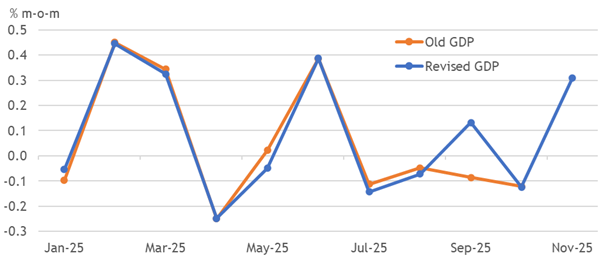
- The UK GDP surprise flipped to exceed expectations with 0.3% m-o-m growth in Nov-25 as residual seasonality turned past its trough. We now track 0.14% q-o-q for Q4.
- Further upside news is likely over the next few months as output surges again in Q1, pushing back dovish hopes for another rate cut. We still see the cutting cycle as over.
- Economists prefer to tell fundamental stories, ignoring statistical ones, but we should not be shocked by the impact of the predictable surprises created by this shortcoming.
2. US Inflation Resumes Without Payback
- US inflation resumed its monthly trend in headline, core, and underlying services after nonsensical methodological noise around the shutdown, including non-collection itself.
- Payback from late sampling in November didn’t have an apparent inflationary effect, perhaps because the gap between collections didn’t leave long for other prices to rise.
- Surprises are skewing lower, but inflation is stuck above the target, so there isn’t a compelling case to cut again. We still expect the Fed to hold rates in January.
3. “DON’T FIGHT THE FED” : It Might Fight Back!
- Federal Reserve Chair Jerome Powell has said the Department of Justice has served the central bank with subpoenas and threatened it with a criminal indictment over his previous testimony.
- Powell said that the DOJ actions were part of a concerted effort by the Administration to undermine and threaten its ability to set interest rates according to its mandate.
- Precious metals moved higher on the news, while the dollar and S&P futures declined. We expect growing anxiety about the Fed’s independence to weigh on U.S. markets this year.
4. The Heat Is On: News Flow and Sentiment in CHINA / HONG KONG (January 14)
- The materials, healthcare, and tech sectors are leading the Hong Kong market out of its consolidation pattern, with January shaping up to be one of the best in years.
- China and Hong Kong ETF flows were the strongest in Asia during 2025 posting significant inflows throughout the year although Korea had the most significant increase at 600%.
- Trip.com Group (9961 HK) share price plunged after it announced an investigation into its monopolistic business practices. Haidilao International Holding (6862 HK) shares jumped after the founder returned as CEO.
5. Tactical Trading – Increasing Hong Kong Exposure
- The time is right to increase exposure to the Hong Kong market
- A confluence of factors and catalysts will drive the index higher
- We suggest a few names that we believe will benefit.
6. Technically Speaking Breakouts & Breakdowns – HONG KONG (January 13)
- Hong Kong market is poised to break out from its consolidation, which began in October of last year. The next resistance level for Hong Kong’s Secular Bull Market is 30,000.
- Increased strength and momentum in the high beta tech and healthcare sector, along with increased mainland buying, confirm the probability of a breakout in the near term.
- Hua Hong Semiconductor (1347 HK) has had a breakout from its continuation wedge formation pattern. As the second largest mature node specialty foundry, the company is benefiting from on-shoring policies.
7. Overview #46 – From GPUs to Geopolitics: Is China Winning the AI Race?
- A review of recent events and data impacting our investment themes and outlook
- China has another breakthrough moment with DeepSeek changing standard AI architecture
- The case for precious metals and commodities continues to build, but short-term caution is warranted.
8. BUY/SELL/HOLD: Hong Kong Market Update (January 10)
- The Hong Kong market has shown increased momentum so far in 2026, testing the top of its trading range at 27000. The materials sector continues to outperform.
- Mainland buying has increased during the first week of 2026, with Momentum, Growth and Liquidity leading factors in stock outperformance.
- Baidu (9888 HK) announced that it will spinning off its AI chip business in a separate Hong Kong listing. The shares have outperformed on the news.
9. CHINA REFLATION: China Gets Invited to the Global Inflation Party!
- After three years of disinflation and continuous price pressures, reflation is reappearing in China. CNY appreciation pressure and rising government bond yields reflect underlying inflation building in the economy.
- Exporters are showing increased preference to repatriate FX earnings as China’s trade surplus reaches record highs in 2025. Foreign investors began to reallocate investments toward the mainland in 2025.
- China’s monetary policy will include “reasonable” price increases as one of its major policy benchmarks. This policy will work in coordination with fiscal policies like “anti-involution” to support prices.
10. A Momentum-Driven Start to 2026
- Evidence of strong price momentum is intermediate-term bullish for equities.
- Our technical outlook is further supported by twin macro tailwinds of easy monetary and fiscal policy.
- However, growth expectations are high and the market is vulnerable to disappointment and the propensity for large drawdowns during mid-term election years.
Receive this weekly newsletter keeping 45k+ investors in the loop
1. BoE Faces Renewed Margin Pressure
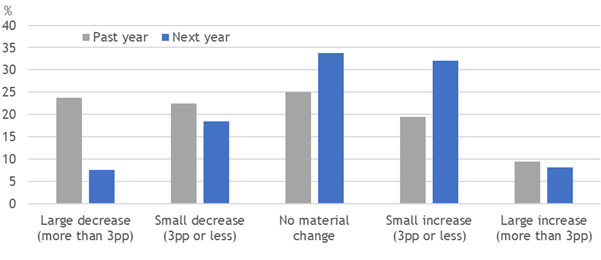
- CFOs suffered squeezed margins in 2025 that they intend to partly recover in 2026, reversing a source of disinflation into another reason for hawkish concern.
- Price and wage inflation expectations remain excessive while the November crash in employment sentiment reversed, dampening the dovish ammunition.
- The MPC’s three pivotal members need dovish news to bring forward another cut not implied until at least April. This outcome merely encourages the inactive course.
2. HEM: Jan-26 Views & Challenges
- Hawkish cuts led markets to price less easing, or even hikes, but there was little change in BoE views.
- The MPC is split in the face of wage growth persistently above target-consistent levels but is bias to ease in May.
- Rising unemployment rates may aid the appropriateness of previous cuts if the neutral rate is less elevated.
3. Outlook 2026: THE BIG IDEAS TO NAVIGATE MARKETS
- Macroeconomic trends affecting global markets will be driven by an increasing schism between US published inflation numbers and actual underlying inflation in its economy driving real rates lower.
- The Fed will justify interest rate decisions based on understated inflation estimates expanding bubbles in financial markets, weakening the dollar and pressuring long-term Treasuries.
- In 2026, the US stock market will underperform its global peers, gold and other precious metals will continue to shine and Hong Kong will attract more mainland buying.
4. HEW: Turning 2026 Resiliently
- A festive feast in resilient GDP data has extended into tracking estimates for Q4 in the US and UK, while the US unemployment rate has fallen from revision-tempered highs.
- Falling PMIs were less encouraging, but don’t break resilient signals nor persistently excessive inflation signals. Plans to recover profit margins add to the BoE’s challenge.
- Next week’s US inflation data provides the first clean monthly rate after November’s nonsensical gap-filling. UK GDP data for November is the other highlight for us.
5. HONG KONG ALPHA PORTFOLIO: (December 2025)
- The Hong Kong Alpha portfolio outperformed its benchmark and all Hong Kong indexes in 2025 with an overall gain of 48.41%. The portfolio achieved a Sharpe ratio of 1.86.
- Alpha generation represented 59% of the portfolio’s gains in 2025. Most of this came from the materials, healthcare, and energy sectors. HKALPHA had low exposure to the real estate sector.
- As the Hong Kong market ends its consolidation, we added tech exposure at the end of the year and reduced underperforming positions in mostly in the utility sector.
6. Oil in 2026
- Last year’s downward trend in the price of oil is set to continue into 2026, with most analysts expecting Brent crude to test USD55pb in the first half of the year.
- There is undue concern about geopolitical supply disruption buoying prices, whereas we believe the real focus should be on what Opec+ decides to do at the end of the quarter.
- My forecast for Brent crude on 31 December is therefore USD55pb, but with the risk to this price skewed to the downside.
7. Overview #45 – Sanctions, Metals, and Mergers
- A review of recent events and data impacting our investment themes and outlook
- Tensions ratchet up between China and Japan over Taiwan comments
- Signs of a turning point in the Chinese macro environment?
8. Major 2026 Investment Themes
- A review of 2025 performance for the major asset classes and sectors we follow
- An outline summary of our current 2026 investment ideas and themes
- We make some changes in the allocations between commodity sectors
9. EA: De-energised Back To Target
- EA inflation slowed back to target at the end of 2025, reversing November’s upside news to strengthen the ECB’s “good place” caricature.
- Falling energy prices are driving an unsustainable disinflation, while service price inflation is stuck above 3%. Small and balanced EA surprises skew lower in big states.
- Base effects remain set to drive a drop below the target and reversal by May. A slightly below target 2026 is not dovish when underlying pressures are stronger.
10. FSC Allows Korean Securities Trading Account Opening For IBKR and 3 Other Foreign Firms
- On 9 January, FSC announced that it will allow Korean securities account opening for IBKR and three other foreign firms including Emperor Securities, TFI, and BancTrust.
- FSC announced that overseas traders will be able to access the Korean won on a 24 hours real-time exchange rates basis from July 2026.
- KOSPI is up 82% in the past one year and the likelihood of Korea becoming Developed Market status is a key factor driving higher share prices of Korean stocks.

Receive this weekly newsletter keeping 45k+ investors in the loop
1. 2025: Thematic Review
- Most of our major themes during 2025 proved correct and made investors money. These themes included the Hong Kong market, gold, and the dollar.
- The US dollar weakened rapidly after “Liberation Day,” absorbing the selling pressure from the bear market in March/April. The US substantially underperformed its global peers during the year.
- Underlying actual inflation is high and increasingly disconnected from published BLS inflation rates. This has contributed to the surge in precious metals, as real interest rates have declined rapidly.
2. Chartbook : 2025 in Review
- Asia defied US tariffs to grow at a faster pace in 2025 than 2024.
- But the tech-led growth spurt masks internal fault lines of sluggish domestic demand and a weakening manufacturing sector.
- The growing divergence between tech‑dependent sectors and the rest of the economy will require careful policy calibration going forward, even as Chinese competition, US protectionism and geopolitical challenges persist.
3. Korean Stock Market – The Best Performing Among Major Countries Indices in 2025
- We discuss the five most important factors driving the Korean stock market this year which was the best performing among all major country equity markets in the world in 2025.
- These five factors included the global AI boom, wars and rumors of wars, beneficiaries of MASGA, Korea Value-Up initiatives, and reduced political uncertainties with new President elected in June 2025.
- Our best bet to diversify one’s portfolio and be more cautious because staying alive will be a key in 2026 rather than FOMO, especially in 2H 2026.
4. Indonesia: Asia Ex-Japan Investors Lose Confidence
- Indonesia fund positioning has collapsed, with average weights and participation falling to 15-year lows; 7.2% of funds exited entirely in the past six months.
- Exposure remains highly concentrated, with five stocks making up 75% of allocations—yet even these names have seen sharp declines in ownership.
- The median weight sits well below the average, reflecting how a narrow group of high-conviction funds is skewing overall exposure amid a broad-based retreat.
5. US Reflation in 2026 Will Support Economy and Risky Assets
- The performance of the US economy and equities exceeded the predictions of many who feared fallout from tariffs. Highly respectable economic momentum during 2025 H2 will spill over into 2026.
- US fiscal policy will be reflationary during 2026 H1, due to political considerations, courtesy of large tax refunds as well as potential tariff-related dividends being paid to households.
- Fed policy will be eased during 2026 by a magnitude that may exceed current market expectations. US equities will enjoy broad-based support from reflationary policies, producing less narrow market leadership.
6. CX Daily: China’s AI Titans Escalate Battle for Control of Digital Gateways
- Cover Story: China’s AI Titans Escalate Battle for Control of Digital Gateways
- China to Allow Interest on Digital Yuan in Major Overhaul
- China Rolls Out Nationwide Cross-Border Cash-Pooling Program
- Hong Kong Fully Allocates $14 Billion Under Offshore Yuan Funding Facility
7. CX Daily: Chinese Contractors Undergird Middle East Building Boom
- In Depth: Chinese Contractors Undergird Middle East Building Boom
- Six IPOs in One Day Cap Hong Kong’s Return to the Top
- Former ICBC Regional Chief Ousted in China’s Graft Probe
- Tianan Life Misses Bond Payment, Testing Implicit Guarantees
8. Egypt (December 30th 2025)
- CBE cut rates by 100 bps to 20 % for the deposit rate.
- The IMF, staff agreement with Egypt on the 5th and 6th reviews of the EFF.
- Offshore investors would hold 30bn $ worth of local treasuries.