Elastic NV (ESTC US) has been one of the best tech IPOs globally in 2018. Its current price is $62.53, up 74% from its IPO price of $36. Elastic’s share price has been holding up very nicely since its IPO on October 5th, 2018. Meanwhile, from October 5th to December 21st 2018, many tech stocks have experienced brutal declines. Elastic’s ability to outperform the top US tech stocks in a very difficult environment for the stock market sets the stage for a continued out-performance once the stock market starts to stabilize.
Since the IPO, the company reported better than expected second quarter results (quarter ending October 31, 2018) on December 4th. The company’s adjusted net loss in FY2Q19 was $0.38 per share, beating analysts’ consensus estimate by 9 cents. It generated revenue of $63.6 million, up 72% YoY. Calculated billings were also strong at $88.5 million, up 73% YoY.
The company’s guidance for FY3Q19 (quarter ending January 31, 2019) is to generate revenue in the range of $64 million to $66 million, representing a 56% YoY growth rate at the midpoint of the guidance. It expects to generate operating margin of negative 28% to negative 30% in FY3Q19.
A combination of major investors shifting their assets away from FAANG and semiconductor stocks has resulted in some improved performance of many software related stocks in recent months relative to other major tech stocks. In general, these stocks face less negative impact from a prolonged trade war between China and the US. Plus, theyare not as exposed to the higher cycle volatility as the semiconductor related stocks. In many respects, Elastic shares many business similarities with these software driven companies, and thus has been more immune from the decline in the stock prices since early October. We remain positive on Elastic NV (ESTC US).
Halla Holdings is falling nearly 5% today. Holdco said it’d give a ₩2,000 div per share. This is about 4.5% div yield at yesterday’s closing price. 5% drop today shouldn’t be much as an ex-dividend date price drop. Mando fell 5%. Mando was oversold relative to the other local auto stocks, particularly to Halla Holdings. They are still close to +1 σ on a 20D MA.
Mando-Hella Elec has been another reason behind Holdco’s valuation divergence against Mando lately. I believe Mando-Hella is being overhyped. Mando-Hella-caused divergence should no longer be effective. I expect ‘downwardly’ mean reversion from now on. I’d go short Holdco and long Mando at this point.
Good payout ratio, good growth in core profit, and strong long-term sales growth relative to its sector
Acquisition of 49% stake in a 30MW solar farm in Malaysia with a commercial operation date (COD) set for 1Q20 to support revenue growth
High volume of solar rooftop installation projects planned for Charoen Pokphand Foods Pub (CPF TB) and other private firms to boost GUNKUL’s construction revenue
Attractive at 19CE* PEG ratio of 0.5 relative to ASEAN Industry at 1.6
Risk: Lower than expected electricity demand, unfavorable weather conditions
We maintain a BUY rating on ASAP with new 2019E target price of Bt3.80 (from Bt6.50), derived from 19.6xPE, which is 1.0x PEG of earnings growth in 2019-20E.
The story:
Trimmed 2018-20F earnings forecast by 35%
Not a falling knife, but fallen angel
Potential disruptor in car rental industry
Expect a 20% CAGR for earnings in 2019-20E
Risks:
Contract termination of airport space leases
Participating in a highly competitive industry
Cash-flow management will be a challenge in a growth phase
New Pride Corp (900100 KS) announced a ₩36.2bil rights offer. This is a public offering, so there won’t be subscription rights to trade. Pricing will be done as 3-day VWAP on Jan 9~11 at a 30% discount.
Supposedly, we can have ample opportunity to arb trade. This may be what the company is hoping. Simply, we wait until Jan 16~17 (subscription period) and see the spread. At this much discount, there must be a huge spread opening.
Proration risk can be much more annoying than a usual stockholder offering. In the previous public offering event by New Pride, subscription rate went as high as 370 to 1. It should be way much lower this time. But still this is risky enough.
Maruti Suzuki’s Q2FY19 results were below our expectations. Sales grew by only 2% YoY in Q2FY19 led by a 3.7% increase in realization per unit. But the volumes declined by 1.5% YoY in the same period. We analyze the results.
The accounting fraud issue had hammered the Celltrion duo nearly equally up until Dec 26. But last two days were different. Healthcare got hurt much more deeply. Celltrion fell only 2.41%, but Healthcare fell 11.52%.
The accounting issue is supposed to be equal to both. KOSPI move and merger are still alive to push up Healthcare. Local institutions and foreigners have bashed both pretty much equally in the last two days. This is another sign that it was more of a price divergence than a mean reversion.
The duo is now at 20D MA and also the yearly mean. I expect it to go substantially below the yearly mean on KOSPI move and merger expectations. A powerful downwardly mean adjusting force still seems to be in action. I’d long Healthcare and short Celltrion to exploit the latest price divergence.
Alkem Laboratories (ALKEM IN) produces branded generics, generic drugs, active pharmaceutical ingredients and neutraceuticals, which it markets in India and over 50 countries internationally. With a portfolio of over 700 brands covering all the major therapeutic segments and a pan-India sales and distribution network, Alkem has been ranked amongst the top ten pharmaceutical companies in India by sales for the past 13 years.
We are optimistic about Alkem because-
Alkem continues to grow significantly ahead of the segment growth rate of ~16% in the chronic therapy areas of Cardiac, Antidiabetic, Neuro / Central nervous system (CNS) and Derma. Alkem continues grow in the acute therapy areas of Anti-infective, Gastro-intestinal, Pain/ Analgesic and Vitamins / Minerals /Nutrients.
We expect India revenues to grow at CAGR 13% (FY18-21E) to Rs 64,687 mn in FY21E from Rs 44,900 mn in FY18. We expect US revenues to grow at CAGR 31% (FY18-21E) to Rs 30,438 mn from Rs 13,667 mn in FY18 and other international business revenues to grow at CAGR 11% (FY18-21E) to Rs 6,443 mn in FY21E from Rs 4,670 mn in FY18.
We expect EBITDA to grow at CAGR 21% (FY18-21E) to Rs 18,638 mn in FY21E from Rs 10,566 mn in FY18 and EBITDA margins to expand by ~ 190 bps to 18.4% in FY21E from 16.5% in FY18. We expect PAT to grow at CAGR 27% (FY18-21E) to Rs. 12,979 mn in FY21E from Rs 6,289 mn in FY18 and we expect PAT margins to expand by ~ 300 bps to 12.8% in FY21E from 9.8% in FY18.
We expect RoE to expand by ~530 bps to 19.0% in FY21E from 13.7% in FY18 and RoCE to expand by ~390 bps to 21.1% in FY21E from 17.2% in FY18
We initiate coverage on Alkem with fair value of Rs. 2,260/- representing a potential upside of 21% in the next 12 months. We arrived at the fair value by applying 22x multiple to September 20E EPS of Rs 102. Currently, the stock trades at 21x and 17x its earnings estimates for FY20E and FY21E respectively. After a very volatile 2018, we believe Alkem share price may have smooth upwards move in 2019 driven by strong PAT growth in the next 3 quarters.
Particulars (Rs mn, Y/E March)
Net sales
EBITDA
PAT
EPS
ROE
ROCE
PE(x)
FY18
64,137
10,566
6,289
52.6
13.7%
17.2%
35
FY19E
74,075
12,406
8,130
68.0
16.0%
16.8%
27
FY20E
87,716
15,659
10,772
90.1
18.4%
20.4%
21
FY21E
1,01,568
18,638
12,979
108.6
19.0%
21.1%
17
Source- Alkem Annual Report FY18, Trivikram Consultants Research as on 27/12/2018
More attractive to analysts, low price-to-sales, and low correlation with Western stock markets relative to its sector
To meet strong demand, KRI recently commissioned Plant 17, which increased capacity by 1.5bn. Upcoming Plants 18 and 19 to commission in 2019 should add another 5.5bn or a 20% capacity increase
High barriers to entry for medical gloves due to stringent compliance to regulatory requirement aids KPI market shares
Trades above ASEAN Health Care at 19CE* 4.1x PB, in line with offering a better ROE
The healthcare industry in Indonesia has undergone a massive change since the introduction of the National Health Insurance (JKN) in 2014. Although the program allows for better healthcare access for over 200mn Indonesians, the industry dynamics have shifted and Kalbe Farma (KLBF IJ) is one of the companies that has been on the losing side during this adjustment period.
With the Health and Social Security (BPJS) deficit forecast to grow to IDR16t by end of 2018, and with a continuing roll out of coverage to 250mn people by end of 2019, all parties in the healthcare industry are expected to continue subsidizing the program. Hospitals and drug manufacturers have had to cope with relatively flat pricing from the INA-CBG (reimbursement) tariff since 2014, despite cost pressures stemming from the currency depreciation and inflation. KLBF has reported declines in its overall pharmaceutical margin, as well as low growth rates for its licensed and OTC (over the counter) drugs over the past five years.
Our recent meeting with the company revealed that to mitigate the JKN impact, KLBF has launched several strategies, including expanding into niche specialty products such as oncology and biosimilar drugs, as well as preventive and herbal supplements. We are also at a tipping point where KLBF’s non-OTC consumer health and nutritionals revenues are finally larger than the pharmaceutical revenues for the first time. In this insight, we will discuss whether the worst is already behind us, and if it is now time to take another look at the stock.
Horiba combines high gearing to semiconductor capital spending with a large and growing automotive test business characterized by upward trending but uneven profitability. At ¥4,545 (Friday, December 21, closing price), its share price has dropped by 53% from an all-time high of ¥9,590 reached last May. Falling demand for semiconductor production equipment and a downward revision to FY Dec-18 sales and profit guidance announced in November appear to be largely in the price.
The downward revision, which cut projected full-year operating profit growth from 15.5% to 2.5%, followed a 22.2% year-on-year decline in operating profit in 3Q and implies a similar rate of decline in 4Q. The weakness is concentrated in Semiconductor Equipment and Automotive Test, the former due to a cyclical downturn in overall demand, the latter due to M&A-related and other one-time expenses. New Automotive Test orders continued to outpace sales, leading to a 9.5% increase in the order backlog during 3Q.
Automotive Test sales and profits should rise next year, while semiconductor equipment sales and profits seem likely to bottom out. In a report issued on December 17, SEMI (the semiconductor equipment and materials industry organization) forecasts a further decline in wafer fab equipment sales in 1H of 2019, followed by recovery in 2H. Other industry sources we talked to before the report was issued had similar views.
This scenario could fall apart due to general economic weakness, American attempts to stifle China’s semiconductor industry, or both. On December 21, Reuters reported that Foxconn “…is in the final stages of talks with the local government of the Chinese city of Zhuhai to build a chip plant there with a total investment of about $9 billion… most of which would be shouldered by the Zhuhai government through subsidies and tax breaks…” This looks like a perfect target for the Americans, but whether or not they will notice or care remains to be seen.
Horiba is now selling at 9.6x our EPS estimate for this fiscal year, 13.4x our estimate for next year and 12.1x our estimate for FY Dec-20. These and other projected valuations are near the bottom of their 5-year historical ranges. If the Semiconductor Equipment division does not recover in 2H of 2019, historical data suggest that its operating profit could drop by 70% rather than the 47% we are now forecasting, resulting in a P/E ratio of 17x. Nevertheless, it is time to start considering when and at what price to buy Horiba.
Horiba is a diversified Japanese maker of precision and analytical devices and systems with a significant presence in the global markets for automotive test, industrial process and environmental analysis, hematology, semiconductor production equipment and scientific instruments. It is by far the world’s leading producer of automotive emission measurement systems (EMS), having supplied about 80% of the installed base worldwide, and also the world’s top manufacturer of mass flow controllers for the semiconductor industry, with an estimated global market share of nearly 60%.
Recapping the original plan: when Familymart Uny Holdings (8028 JP)(“FM”) sold the remaining 60% of UNY to Don Quijote Holdings (7532 JP) (DQ), it entered into an agreement to buy 20+% in DQ, for one of two reasons; 1) a company wants to prove to the employees of a division being sold that they are maintaining a watchful eye over them, or (as is now evident) 2) the buyer wants to gain an equity method affiliate and the income from it (including the placeholder for frontrunner status to future capital events).
FM launched a Partial Tender Offer at a 20% premium to last in order to buy these shares, and in the MOU to launch the tender offer there was a clause which said that if FM did not reach the full 20%, it had made arrangements to borrow shares in order to get to 20% of the voting rights. And if FM did not manage to get to the full 20%, there was an agreement between DQ which allowed FM to buy shares in the market to get to a 20% (but not larger) position.
If FM managed to get the shares, it was going to buy from the weak hands. Growth stock managers don’t like selling growth stocks until the growth stops growing. DQ is still growing, and with UNY, DQ may grow faster than previously expected. The upshot is that everyone decided they’d stand pat – FM got nothing in the tender (0.08% of the total desired).
Shares in DQ could fall because of a lack of hard strategy announced by FM to buy all the shares at a higher price immediately. That shouldn’t be a big worry – it wasn’t going to happen.
Travis Lundy sees DQ having a performance skew which includes a “cushion of sorts” in the ¥5500-6600/share zone where he would expect FM to acquire shares. He does not see a cushion for the shares of FM, and expects them to be volatile.
It is possible this suspension is not in relation to a takeover, but a major sale of assets, for example, from the parent to the sub. This would make sense given the recent share purchase by HEC (completed in January this year), and the fact HE is playing catch-up to Dongfang Electric Corporation (1072 HK)& Shanghai Electric Group Company (2727 HK). Arguably, launching a takeover shortly after subscribing for more shares is unusual. Then again, when the two SOE railway behemoths CNR and CSR merged in 2015, a merger was disputed (at the time) when both were suspended on account of the fact CNR was only listed (on the HK exchange) in 2Q14.
HE has perennially traded at discount to net cash. As at its last traded price, the discount to net cash (using the 2018 interim figure of HK$12.4bn, or HK$7.27/share) was 65%.
“Fair” pricing to me would be something like the distribution of net cash to zero then taking over the company on PER. I simply don’t see this happening. And if it doesn’t, the fiduciary duty of independent directors will be tested/scrutinised if they recommend an offer to shareholders at any price less than the net cash/share of the company.
Reportedly Motherson has entered merger/acquisition talks withLeoni AG (LEO GR), a leading provider of cables and cable systems for the automotive sector and other industries. Motherson has made four acquisitions so far in this business segment with the latest being PKC in 2017.
Motherson has always aimed at strengthening this business area internationally, therefore the news about a merger with Leoni comes as no surprise and was mentioned as a potential acquisition target in LightStream Research‘s earlier insight Two More Acquisitions on the Way for Motherson Sumi.
Motherson has a strong balance sheet that could support this acquisition, although its ability to make further acquisitions in the short-to-medium term may be hampered – Leoni would be at the higher end of the price range for recent acquisitions. Should the acquisition go through, the company will be very well positioned to reach its US$18bn revenue target by 2020E, given that the combined revenue for FY2017 alone is ~US$13bn.
Currently, Motherson is trading at an FY1 EV/EBITDA of 10x, slightly above peers such as Mahindra Cie Automotive (MACA IN)(9x) and below peers such as Bosch Ltd (BOS IN) (25x). If the deal goes through, Motherson’s FY1 EV/EBITDA of ~12x would be at a slight premium to local players, but still reasonable compared to international players.
Kohlberg Kravis Roberts reduced its indicative offer to $3.40 from $3.77 on Thursday after sifting through MYOB’s books, with MYOB announcing:
Following completion of due diligence and finalisation of debt funding commitments, KKR has revised the offer price to $3.40 per share. … The board has informed KKR that it is not in a position to recommend the revised proposal, however it remains in discussions with KKR regarding its proposal. (my emphasis)
KKR’s revised non-binding proposal expired at 5pm on Friday, which came and went without any ASX announcement. Presumably, an announcement will be made before the market opens tomorrow (rendering this commentary redundant) with either MYOB grudgingly accepting the lower offer, or MYOB rejecting and KKR walking away (for now), or going hostile.
The Nikkei carried an article noting that the Japanese government’s FY2019 budget currently being formed proposes a sale of ¥160bn of shares in NTT to help fund any revenue impact from the upcoming consumption tax rate hike from 8% to 10% next October. The article helpfully notes that they plan on selling when NTT is buying back shares. One of the longstanding features of buybacks for NTT is that NTT is subject to the NTT Law which requires (for the moment) that the government hold at least one-third of the shares outstanding in NTT.
Travis estimates NTT has ~1.95bn shares outstanding, or ~1.917bn shares outstanding ex-Treasury shares, after recent buybacks. If NTT cancelled the shares it has bought back prior to buying back shares from the government, this would allow NTT to buy back 59mm shares from the government (assuming those shares are also cancelled). If it did not, it would mean NTT could only buy back about 42-43mm shares. 59mm shares backs out ¥250bn; 43mm shares at a 10% discount would be ¥180bn. That means there is about 10% leeway in stock price to buy ¥160bn from the government IF shares repurchased under the current buyback are not cancelled.
But that also means that there would be no more buybacks from the government after that until the company buys back more shares from the market. If the company wanted to buy back another ¥200bn from the government, ceteris paribus it would have to buy back something like ¥400-450bn first from the market in order to reduce the denominator. Travis concludes there is still more on-market buying to do.
At an NTT/ NTT Docomo Inc (9437 JP) ratio of 1.80x, buybacks coming, expected ongoing strong dividend policy (and lots of headroom to do so, unlike perhaps Softbank Corp (9434 JP)), and investor suspicion of what comes next for Docomo, NTT is the home of the cashflow.
The IPO of Softbank Corp and the Merger of Takeda and Shire Pharmaceuticals create significant changes in TOPIX, MSCI, and FTSE because of the addition of roughly ¥5tn of “new” market capitalization in major Japan indices. Pure passive investors have something like ¥1.35tn of Softbank Corp and Takeda Pharmaceutical to buy.
However, after Travis’ initial note (Softbank Corp, Takeda, and Newton’s Three Laws of Motion), TSE unhelpfully changed their mind on timing (for Takeda) based on an unhelpful change by the LSE. With the changes at FTSE and now TOPIX and JPX Nikkei 400, we no longer have quite the same clarity of forces on the bodies, and therefore less clarity on the resulting motion. The LSE’s announced market change appears to have led the MSCI to change its deletion date for Shire as well, now also (along with FTSE) deleting Shire at the close of the 21st. The new schedule is:
Index Deletion
Shire (shs mm)
Index Inclusion
Takeda (shs mm)
Index Effect (US$ bn)
Net Delta (US$bn)
21 Dec
MSCI
-50
MSCI JP
+75
– $0.3bn
+$1.3bn
21 Dec
FTSE UK, All-Share,
-100-130
FTSE JP
+15
-$5.2bn+
– $2.1bn
rest of December – end of a pretty bad year for hedge funds, but illiquid
all of January
30 Jan
TOPIX
-$1.9bn
TOPIX, JPXN400
+60
+$2.1bn
+$2.1bn
30 Jan
TOPIX
-$3.5bn
TOPIX
Softbank
+$3.5bn
+$3.5bn
all of February
27 Feb
TOPIX, JPXN400
+60
+$2.1bn
+$2.1bn
It doesn’t change the amounts but a lot more time allows for more risk and preparation and there will no longer be any potential settlement issues on the TOPIX side. There is still the same amount of Takeda to buy in TOPIX and JPX Nikkei 400.
In principle, Travis would want to be long Takeda at the close of the year of 2018, but given the LSE and TSE changes there is less support to give and the payoff is substantially more distant.
Speciality steel maker Nisshin Steel (5413 JP)is slated to merge with parent company Nippon Steel & Sumitomo Metal (5401 JP)as of January 1, 2019. For that, Nisshin Steel will be delisted on December 26th (i.e. the last day of trading is the 25th) and that means the Nikkei Inc was obliged to choose a replacement for Nisshin Steel in the Nikkei 225 and other indices. On December 11th, the Nikkei Inc announcedItoham Yonekyu Holdings Inc (2296 JP) would take Nisshin’s place in the Nikkei 500 Index; announced that Japan Post Holdings (6178 JP) would join the Nikkei 300 Index; and announced thatDic Corp (4631 JP)would replace Nisshin Steel in the Nikkei Stock Average, better known as the Nikkei 225.
Nisshin Steel’s deletion is a nothing-burger.
The possibility of a DIC addition was well-flagged as early as May when sell-side brokers started compiling Annual and Ad Hoc Review lists for the Nikkei 225 changes to come in September and as a result of the Nisshin Steel merger. Travis would rather be long DIC than short DIC through the close of December 21st or probably December 25th.
YP appeared “cheap” back in April when I last discussed this Holdco, and is now cheaper, with its holding in KZ accounting for near-on 200% of its market cap. I can’t think of any other parent/subsidiary relationship – one which is essentially a single stock structure – with such a deep discount. Especially one where the stub ops operate in a similar space to that of the listed holding.
On the negative front, an investigation into YP’s Seokpo zinc smelter remains ongoing on account of perceived environmental transgressions. The Seokpo smelter is located in a national park on the Nakdong river. Wastewater containing above-legal limits of certain chemicals (fluoride and selenium) allegedly flowed downstream to residents, who are heavily reliant on this water.
YP’s stub and KZ are in the same business, but there are differences. YP does not have a balanced product mix as KZ does, with around 84% of its revenue coming from zinc-related production (for the 9M18 period), compared to 42.5% (on a revenue basis) for KZ, followed by lead (20.4%), silver (20.2%), and gold (7.6%).
However, YP and KZ remain inextricably intertwined and the current discount is unjustifiably steep. Just that YP’s liquidity, uncertainty on Seokpo, and lack of a near-term catalyst make for a difficult stub set-up.
A forgettable trading debut for Japan’s largest-ever IPO, with Softbank Corp,closing at ¥1,282/share, down from the IPO price of ¥1,500, and closing at ¥1,316/share on Friday, the same day as its FTSE inclusion.
At around 22% of NAV and 16% of GAV – by my calcs – Corp is a material % of Softbank Group (9984 JP). However as repeatedly seen when a conglomerate adds yet another listco to its stable (in Hong Kong, Wheelock & (20 HK)and Great Eagle Holdings (41 HK) spring to mind), a sustained narrowing in the holdco discount is often not the end result. Nor should it be. Softbank is effectively swapping shares for cash.
With seven stocks promoted/reassigned from TSE2, MOTHERS, and JASDAQ in November 2018 leading to the same seven stocks being included in TOPIX at the end of December, Travis tested 340+ TOPIX inclusions over the past five years to see what really happens around TOPIX inclusions?
If you own all but the smallest stocks (with a market cap of less than ¥15bn), odds are that, ON AVERAGE, they will underperform TOPIX from inclusion date or the day after, for many months.
The larger the market cap, the more marked the AVERAGE underperformance immediately following inclusion.
For names in the ¥25-50bn sweet spot of “large enough to be “small cap” with somebody paying attention to it”, outperformance vs underperformance in the next 10 days is a 47/53 proposition. That is a bigger risk. It may be data-idiosyncratic, but it is not clear.
In the case of the 7 names going into TOPIX at month-end this month, the averages would suggest one could still be long the four largest (at the time of Travis’ insight), but one would not want to be long the others; and one could sell long positions in all the names as of the close of the 27th or 28th and have it be an ex-ante expected net positive outcome vs TOPIX over the following 10-60 trading days.
CJ Corp (001040 KS) announced both Common and Pref will get 0.15 class B pref shares for each share they already own. This new class B pref is convertible to Common with a 10-year duration, and it provides an extra 2% of the face value to what Common gets. Price ratio wise, 1P is currently close to the 2Y mean. This stock dividend should push 1P up, as should CJ’s announcement it would pay a cash dividend. The current div yield difference is a historic high at 1.53%. (link to Sanghyun Park ‘s insight: CJ Corp Share Class: Huge Net Gain Difference Between Common & Pref from Stock Dividend)
LCY Chemical Corp (1704 TT). MOEA (Ministry of Economic Affairs) approval has now been received and LCY has applied for the delisting from the TWSE. The last trading day is the 23 Jan 2019 and the stock delists on the 30 Jan. The settlement is expected to take place mid-Feb.
Healthscope Ltd (HSO AU). In an ASX announcement on Friday Brookfield said: “based on its enquiries and financing discussions to date, it has no reason to believe it will not be willing and able to proceed with the proposal“. The exclusivity provisions have been extended to 18 January. Separately, Healthscope has also received correspondence from the BGH-AustralianSuper Consortium that it has indicated it is able to commence due diligence immediately. HSO’s board stated it will consider the correspondence. These are both positive developments.
CCASS
My ongoing series flags large moves (~10%) in CCASS holdings over the past week or so, moves which are often outside normal market transactions. These may be indicative of share pledges. Or potential takeovers. Or simply help understand volume swings.
Often these moves can easily be explained – the placement of new shares, rights issue, movements subsequent to a takeover, amongst others. For those mentioned below, I could not find an obvious reason for the CCASS move.
The growth and improvement in the liquidity of high yield bond exchange trade funds (ETFs) supports the need for investors to be able to forecast the direction of price moves so they can successfully execute directional trading and risk management strategies.
The purpose of this report is to investigate if a model can be derived using machine learning that can predict the direction of daily moves in the European high yield index using data from the previous trading day.
The data used in the analysis discussed in this report is the daily returns derived from the closing price data of the Bloomberg European high yield index (dependent variable) and the following five independent variables: the 2yr/10yr German government bond yield curve steepness, the European STOXX equity index volatility, the Euro STOXX 600 index, VIX volatility index and the US/EUR FX rate.
This report found that a five factor model using the drivers mentioned above is expected to be a useful forecasting tool in predicting the high yield index price movement 24hrs in advance.
Accordingly, the model proposed in this report should help investors profit from short term trading, both from the long and short side, in the high yield index as well as being able to use the index for managing portfolio risk on a daily basis.
The Islami Bank Bangladesh (ISLAMI BD) narrative is underpinned by a quintile 1 global PH Score™ and a lowly franchise valuation by global standards.
ISLAMIBANK is a Shariah-centric entity, basing its operations on partnership, profit-sharing, a principal-agent/ lessee-lessor relationship, and trading via traditional concepts of Murabaha, Mudaraba, Musharakah, Muajjal, Ijarah, Ujarah, and Wadiah. The bank’s asset-base is dominated by “investments” relating to Bai-Murabaha (asset financing with a mark-up) and hire purchase under Shirkatul Melk with modest exposure to Bai-Muajjal, Quard, Bai-Salam, Mudaraba and Musharaka. More than 50% of “Investments” relate to the industrial space, in particular to textiles (spinning/weaving/dyeing), to agriculture, to garments and accessories, and to steel (re-rolling and engineering). About 90% of “investments” stem from urban areas. There is a focus on Dhaka and Ctittagong opportunity. Source of Funding is based on Mudarabah.
While the economy is in a relatively stable state, the Banking Sector presents a highly mixed picture. Funding and liquidity are adequate in the Banking System. At the main listed entities, ROA and ROE stand at around 1% and 12%. Capitalisation targets are moving in the right direction though there is a shortfall at a number of lenders. The sector is weighed down by SOCB asset quality and poor governance which needs to be addressed as it exerts a distortionary impact across the system. SOCB NPL ratio stands at around 30% and is probably worse than this versus around 10% for the system in general. The system stressed loan/investment ratio is probably double this level. Worryingly, private sector bank defaults are rising at a fast clip too.
Shares of ISLAMIBANK stand on an Earnings Yield of 13.5%, a P/B of 0.7x, and a FV at 5%, well below EM and global medians. Shares yield 4.3%. A quintile 1 PH Score™ of 8.2 captures value-quality attributes. Combining franchise valuation and PH Score™, ISLAMIBANK stands in the top decile of opportunity globally. Shares seem to discount any good news.
Bank St Petersburg PJSC (BSPB RM) benefits from an entrenched market position and strong brand recognition in its home market of City of St. Petersburg –represented by sectors such as pharmaceuticals, medical materials, motor vehicles, trailers/semi-trailers, food products, textiles, and rubber /plastic goods- as well as Kaliningrad and Leningrad.
BSPB’s asset base is a quite diversified. While management focuses on relatively low-risk and hence low-yielding loans to core large corporates and mortgages, the consumer credit segment and autos are a fast-growing area.
Top Russian banks tend to have a technological edge vis-a-vis other EMs. BSPB‘s Internet Bank ( i.bspb.ru) remains one of the best in Russia exhibiting a 25% growth in retail customers to 960k last year. A recent innovation was the launch of a mobile website which was created as part of the integrated environment based on BSPB Mobile banking apps for iOS, Android, and WindowsMobile . The e-banking system is currently used by more than 95% of the corporate customers of BSPB with 99% of payments and FX transactions being made online. BSPB cards support all the cutting-edge mobile payment technologies offered by Apple Pay, Samsung Pay and Android Pay.
A key of BSPB’s strategic plan is to achieve a sustained ROAE of 15%+. The bank also vows to remain among the top 20 Russian banks by assets and to increase transaction revenues by 50% over 2018-20. In order to achieve these goals, management is committed to expand the low-risk transaction business and bolster corporate lending by introducing industry expertise and specialisation and a segmental approach matching customer demand with high quality services and products.
Independent directors make up at least 1/3 of the Supervisory Board.
BSPB stands out trading at a 70% discount to Book Value and lies on a low Mkt Cap./Deposits rating of 6%, far below the global and EM median. BSPB commands a huge dividend-adjusted PEG of 5x with expected growth more than 3x its PER. Shares yield 3.5%. A quintile 1 PH Score™ of 9.4 captures the valuation dynamic while metric change is satisfactory. Combining franchise valuation and PH Score™, BSPB stands in the top decile of opportunity globally.
During this quarter, we visited 13 companies and have to admit the average quality has improved. Amongst these, there were four stocks that impressed us the most, and the Oscars go to…
SSP acheiving profit growth in excess of 20% in the backdrop of Thai economic headwinds and Trumpian trade wars by expanding into countries unaffected by both issues.
Amata VN capitalizing on the shift from locations with rising labor costs (eg Thailand, China) to Vietnam, which has more than a few geographic and demographic advantages.
Gunkul, arguably Thailand’s hottest renewable play at the moment delivering outsized long-term growth in solar/wind space as well as a promising solar roof game plan.
TIGER, an aggressive and small construction company that has only IPO’d for less than a quarter and is already highlighting aggressive growth plans.
We’ve reviewed 10 companies in the sector. Of those, three are the consensus favorites of our Tokyo based panel of industry, financial and economics observers of the IR initiative over many years.
Based on pachinko alone, the stocks of these companies are fully valued. Based on potential tailwind from a license award within 6 months, they could be vastly undervalued.
Each of the three noted here brings strength to a bid less based on financials than corporate focus, outlook and experience in the field.
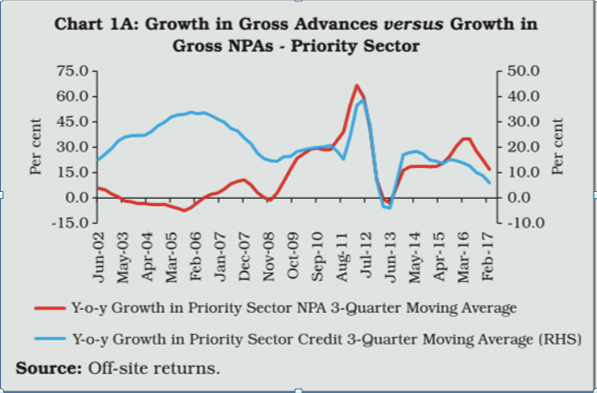
The NPA growth cycle affects credit growth cycle negatively. The recent farm waivers announced by many state governments and the speculations of a nationwide farm loan waiver by the Central government do not augur well for the banks’ credit space in India.
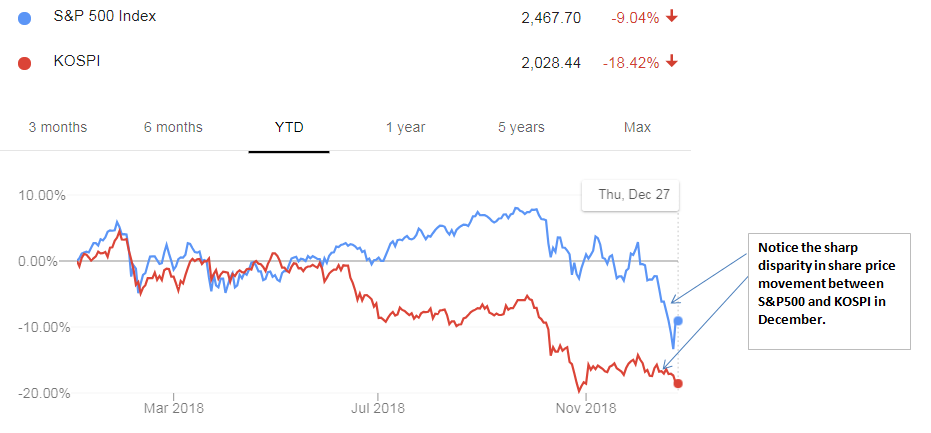
Korean stock market declined again in December. KOSPI was down 2.7% in December and completed 2018 with a decline of 18% this year. Investors remained cautious preferring to increase their capital allocation to defensive sectors such as utilities. However, December was a bit unusual in that KOSPI declined much less than the US market (S&P 500 was down 9% in December). In the past few months, there has been a noticeable outperformance of numerous emerging markets stocks relative to the US stock market.
Fool me once, fool me twice, fool me three times? It has been 10 years since the last Great Repression. Unlike in 2008, when the US Fed Fund rate plummeted from 4.1% in the beginning of the year to 0.09% at the end of the year, the US Fed Fund rate kept climbing throughout the year. The share price declines in global equity markets around the world this year are probably reflecting the concerns about a potential recession in the next two years.
Our model portfolio was down 2.0% in December (cash is 30% of model portfolio), outperforming KOSPI which was down 2.8% in December. Starting January 2019, we are increasing the cash portion to 35% of the model portfolio, to become more defensive in capital allocation.
The top 10 events impacting the Korean stock market, economy, & politics in December were as follows:
Global markets volatility
Growing concerns about the declining memory prices on the semiconductor sector
Investors trying to find next HanjinKal
Hyundai Motor Group and Korean Government’s Big Push into Hydrogen Fuel Cell Vehicles
The year 2018 has proven tumultuous for global markets. Rapidly changing geopolitical priorities of the US, an erstwhile hegemon, have played a role no less significant than the withdrawal of liquidity by leading central banks or US monetary policy tightening. The US has openly declared that it is in a state of “cold war” with China. Despite the recent truce, signs are abundant that the confrontation between the two global superpowers will continue into 2019 and beyond. In 2019, we expect more countries to find themselves in a position where they must choose who they want to side with, the US or China. There are other tectonic shifts, too, which are causing re-alignment of global geopolitical alliances.
Direct income transfers to farmers are likely to become reality as competitive loan waivers are fast becoming a norm than an exception and every party is offering a larger waiver.
Direct income transfers have been quite successful in the South Indian state of Telangana with KCR promising one at the national level if the Federal front (that he is proposing) is voted to power in the general elections.
Cost of each of the measures (from loan waivers to universal basic income for all Indians) is between 0.7% to 2.7% of GDP with Universal Basic Income (Rs 7620/individual for 75% of Indians) costing the highest.
Even as initial fiscal costs are alarming, a gradual scale up (like in the Rural Employment Guarantee Scheme) and transfer of reserves from RBI in tranches could mitigate some fiscal impact. We expect the expert committee of the govt and the RBI to identify transferable reserves between Rs 1.0trn – 3.0trn.
Overall, the freebies to Rural India will certainly power the consumption story strongly in 2019 with products sold in rural areas like FMCG, tractors and motorcycles expected to gain.
The hyper-competitive Indian payments industry is changing. New regulations are increasing the cost operations, NPCI (National Payments Corporation of India) & Reserve Bank of India (RBI) are breaking all barriers to entry enabling a level playing field that ensures no competitive moats exist. Although there are volumes, profitability remains a distant dream and likely to remain so making Indian payments a bad business to be invested in.
Japanese policymakers are panicking. Economic activity contracted in 3Q. Inflation is slowing, up 0.8% YoY in December vs 1.4% YoY previously. Exports are flat lining. Unsurprisingly the BoJ left monetary policy unchanged this month while Abe’s cabinet, taking no chances approved a record initial budget for fiscal 2019 this week. We see few real signs of the economy slowing yet though. We remain overweight Japanese equities and are forecasting 1% nominal GDP growth in 2019, the same as the first three quarters of 2018.
The MPC voted unanimously for no policy change in December, as widely expected.
Near-term GDP growth and inflation forecasts were both trimmed, but the extent may have been exaggerated by missing some recent news.
Judging the appropriate policy stance was deemed to depend on the data in light of Brexit clarity. That should have occurred in time for a May-19 hike, in my view.
UK retail sales surged by 1.2% m-o-m in Nov-18, which takes the level well above trend. Black Friday sales helped but discounting is not responsible.
Sales in December have had a strong positive correlation with November since 2014. I pencil in +0.5% m-o-m before sales normalise lower in the new year.
The latest rise raises my Nov-18 monthly GDP forecast to 0.2% m-o-m and removes the downside risk to my 0.3% q-o-q forecast for 4Q18.
The key operational and strategic themes relevant to investors in CVS in Japan:
The Japanese convenience store sector may have reached saturation but this has just encouraged the top three operators to speed up their quest to take over the remaining smaller chains while pushing into regions where they have fewer stores.
At the same time, all are looking at new forms of retailing to expand further:
All of the top three had previously failed to come up with coherent e-commerce strategies, but this year Seven Eleven and Lawson have launched new ideas that make better use of their existing store networks and could reach national coverage quite soon.
Diversification is another strategy to overcome saturation, and Familymart, in particular, is tying with all manner of partners to try and come up with a hit hybrid format to find new growth.
While competition from drugstores and discount food retailers is a threat, convenience stores will continue to find new sources of growth from e-commerce, hybrid stores and innovative products.
Sri Lanka’s economy/stock market have been plagued by issues associated with politics and its external position this year, which resulted in poor stock market performance relative to its frontier market peers. Select pockets of value can be found in some areas but there are no major positive catalysts for the stock market in the coming years, even though growth is poised to rebound significantly during 2019-2020. I retain preference for other markets with stronger economic fundamentals such as Vietnam, Egypt and Uzbekistan (initiation note coming soon).
The seat sharing formula announced over the weekend by BJP and its partners in Bihar is a clear sign of a more flexible and accommodating BJP leadership (Prime Minister and party president). There are total 40 Lok Sabha seats in Bihar and 17 seats each for two parties (JDU and BJP) which had won 2 (JDU) and 22 (BJP) in the 2014 elections from Bihar is a sign of BJP’s great pragmatism and willingness to concede more space to allies. This is not only required for BJP to deal with a more formidable challenge from Opposition, it is also very important to assuage concerns of allies which are getting more demanding.
This decision of BJP also has larger implications, for pre-elections approach of BJP on contentious issues with its existing and potential allies and also for its ability to attract more parties to NDA post elections. Realizing they are dealing with a more difficult political challenge in 2019, the BJP leadership of Narendra Modi and Amit Shah is now willing to change its previously aggressive operating model. It is both good and bad. Because while this might impact the pace of decision making and make it slower, it will also to a large extent eliminate the risk of policy misadventures such as demonetization.
The silver lining is that previous experience of Atal Bihari Vajpayee era (when in 1998-2004, the BJP was leading the Central Govt with only 182 seats in Lok Sabha) suggests that even coalition Govt can work effectively. The process at the Govt will be more consultation based and robust because BJP will be less combative when weaker, which might help. Some of the recent examples like departure of ex-RBI Governor Urjit Patel have proven that these issues could have disastrous consequences and are extremely damaging for markets and the image of Govt. If that changes and is reformed at the top, it will be positive for building up the right investment climate in the country.
Shaktikanta Das has been appointed as the new governor of India’s central bank. The new appointment comes as a major boost to the economy and has driven a rebound in the financial markets as well as the Indian rupee. The country’s current account deficit remains a major concern, although these recent developments further affirm India’s attractiveness as an investment destination.
As the year closes, developers from giant AP to SC Asset have been warning markets about a downturn in the property market in 2019, and the world is no stranger to the interlinks between economic crisis and property sector. There are four reasons why they might be right to be so bearish:
Banks Rejection rates for mortgages have been on the rise. Yet, few credible developers get rejected, because banks have a preference for corporate loans. This means they are effectively supporting the supply side without demand.
New financing methods. In recent years, REIT IPOs have become very popular, increasing the amount of financing available to developers. But what of the demand side? Slower wage growth, wealth concentration at the top, rising unemployment.
Higher interest rates. While the BOT has resisted rate hikes, they have finally capitulated this month. High rates, lower affordability.
Regulations. A cap on loans-to-value ratio at 80% further limits the mortgage availability, but who’s limiting supply?
2018 is a watershed year for renewable energy in India, a) the growth has turned negative in capacity additions after several years of huge capacity addition increase in Solar, b) the wind power generation capacity additions is depressed once again after a very poor 2017. The apparent reason is significant delays in commissioning of projects because of execution challenges but there are structural issues as well and this means that there is not much certainty on how things will evolve in future.
The current financial year has seen a big change in general sentiment towards renewables in India and there were instances of cancelled bids and project disputes. More importantly, we think there are important changes we will see in 2019, a) the tariffs may not be increasing in bids but the level on decline we had observed in 2017 is now firmly in the past and this trend will get stronger and tariff bids will be stabilizing, b) Financing will be a major challenge and banks are not interested in power sector with not many alternatives available.
After Indian renewable energy space generated massive interest among power companies as developers and also from investors, we in all likelihood will see a more rational approach in future. It is not certain but hopefully, Govt expectation of continuously declining tariffs will become more reasonable. After a serious decline of more than 80% in solar tariffs over ten years, Govt expectation on per unit prices is continuously getting lower which is an unrealistic assumption because of change in cost dynamics.
Waymo CEO John Krafcik made some bold decisions after taking the helm at Alphabet‘s self-driving project in September 2015. Chief among them was the fact that the company abandon its plans for Level 3 automated driving and focus exclusively on levels 4 & 5. Furthermore, he decreed that Waymo would no longer manufacture its own vehicles but would instead integrate their technology into those of other automakers. Three years later, those decisions would appear to be finally paying off.
On October 10 2018, Waymo reached a significant milestone having completed 10 million self-driving miles across 25 cities in the US. While their first million self-driving miles took 18 months to complete, Waymo now clocks up over a million self-driving miles per month. The company also recently announced the launch of its robo taxi service in Phoenix, Arizona and looks set to quickly follow suit in California. Plans to extend its self-driving technology beyond robotaxis, most notably for trucks and last-mile transportation solutions are also in the works. Furthermore, the company has begun laying down a framework of innovative B2B revenue models which should help accelerate the speed with which they can eventually monetize their technology.
It hasn’t been smooth sailing all the way for Waymo however. Earlier this year, the company was derided for the driving style of its autonomous vehicles and faced the criticism that its driverless cars continue to have safety drivers. There was also an embarrassing incident where one of those very safety drivers caused the self-driving car he was monitoring to hit a motorcyclist when he attempted to take control of the vehicle. According to Waymo’s own analysis of the vehicle log files, the accident would not have happened had he not intervened.
With ten million self-driving miles under their belt and a thoughtful, strategic approach to monetizing their technology beginning to emerge, Waymo remains firmly ahead of their peers in leading the autonomous driving charge.
This past Festive week’s offering of Insights across ASEAN@Smartkarmais filled with another eclectic mix of differentiated, substantive and actionable insights from across South East Asia and includes macro, top-down and thematic pieces, as well as actionable equity bottom-up pieces. Please find a brief summary below, with a fuller write up in the detailed section.
The top Macro Insight this week comes from Dr Jim Walkerwho zeros in on Thailand, where he sees an economy that is about to take off. In the equity bottom-up space, Daniel Tabbush revisits DBS GroupHoldings (DBS SP) in light of falling oil prices, which he sees as potentially leading to higher credit costs. I would also highlight Nicolas Van Broekhoven ‘s overview of his winners and losers over the past year, as well as his top picks for 2019.
Macro Insights
In Thailand: The Sandbox Economic Insight provider Dr Jim Walker circles back to the Thai economy, which he suggests is about to take off.