Risk asset markets are driven by rising Global Liquidity and falling inflation. Low inflation in 2024 will be sufficient to justify a significant change in direction by the US Fed
Cyclical analysis points to a further sizeable improvement in Global Liquidity conditions over the next 12-18 months
Investment regime is heading towards its next phase of Calmwhich favors equities and sees steeper yield curves ahead
Global equities are surging, led by growth stocks. Stay with the current leadership until year-end as hedge funds are likely to engage in a beta chase for performance.
U.S. stocks are still the leaders, especially the megacap growth stocks.
Set-Ups for a new leadership are emerging in Europe and EM ex-China. Wait until early 2024 to re-evaluate the evolution of leadership before making any decisions on rotation.
Hello everyone, and welcome back to our weekly positioning watch, where we as always try to dig down into the latest positioning data and give you an overview of what’s moving narrative currently.
Sentiment and positioning are still skewed towards hopes of a soft landing, with bets being placed on lower yields, a weaker dollar, booming equities and almost non-existent credit spreads – ironically a prime condition for an upcoming recession (which is still our base case for H1 2024).
General media and story counts are also all about the soft landing vs recession, with the mentionings of “recession” back at pre-COVID levels, while soft landing counts are on the rise, although pulling a bit back from recent highs.
Geo-Politics are tense. Monetary policies are in contraction. Rates are on hawkish pause. Inflation is far from tamed. Financial conditions remain tight. VIX should be anything but sanguine.
Any misjudgment across politicians, central bankers or businesses could send equities tanking or soaring. Yet the VIX is sending a calming signal.
VIX isn’t broken. It has been diluted by rise of Zero DTE (0DTE) options which have shifted risk pricing windows away from VIX target expiry range.
We start off this week’s 5 Things We Watch by having a look at the reactions of CBs.
This is followed by talking about EURflation and the upcoming OPEC meeting and we then move on to talking about the Ifo numbers released last week while lastly finishing off with Dutch politics.
We wouldn’t go as far as to call the current circumstance a generational buying opportunity, but a rare “fat pitch” that comes along only once or twice per decade.
The current episode of strong breadth thrust off the market bottom in late October is a rare and clear, and extraordinary, trading signal of a major market bottom.
We believe investors should, at a minimum, embrace the likely melt-up into year-end and re-evaluate market conditions in January.
Vietnam’s economy is regaining its footing after a difficult first half in 2023. Industrial activity and trade picking up, complementing still-healthy growth in the services sector. y.
Despite the cyclical difficulties, foreign investments into Vietnam are on the up. Advantageous economic geography and diplomacy are powerful pull factors.
However, defective infrastructure, including in transport and utilities, limits the scope of Hanoi’s economic ambitions. These must be fixed if investments are to remain in Vietnam.
We have used the 2007 = 2023 analogy a few times already this year and we continue to find coincidental evidence that looks a lot like the emerging pressures built up in the quarters preceding the financial crisis.
The outcome of 2024 is still up in the air, but credit indicators do not look pretty ahead of next year when we combine the impulse in China, the US and the Euro area in an aggregate model and judging from the central bank behavior, we see a lot of similarities to 2007 across the BoJ, the Fed and the ECB.
Let’s briefly explain why in this central bank watch piece!
Weekly Top Ten Macro and Cross Asset Strategy
Receive this weekly newsletter keeping 45k+ investors in the loop
Global semiconductor sales have increased MoM for seven months in a row. PC & Smartphone unit shipments have bottomed and are on the rise. Memory has bottomed.
Silicon wafer inventories are piled high, ASML, TEL facing down zero growth in 2024, foundry utilisations are (mostly) in the doldrums with further ASP cuts looming on the horizon.
Multiple data points suggest we’ll still be talking about this downturn well into 2024
We believe TSMC represents defensive exposure to AI for investors concerned that many other AI-related stocks’ valuations may be too high.
While one may think TSMC seems too obvious as a play, we note that the stock is up only 4.5% over the last six months.
We view TSMC as trading at an inexpensive valuation; even a cheap valuation should our hypothesis that the stock is structurally re-rating upwards turn out to be true.
Memory names have rallied strongly, with Nanya Tech outperforming since the start of November.
DRAM bottomed and NAND flash prices have jumped. Micron says that 2025E could be a record year for the Memory industry.
High valuations make near-term upside for Memory names uncertain. For Long/Shorts one can consider Long Micron vs. Short SK Hynix or Long Micron vs. Short Nanya Tech.
Improving outlook with Q1F24 revenue forecast slightly above the high end of the guided range
2024 is being positioned as a “recovery year”, helping reset investor expectations about the nature and speed of the recovery
Micron’s share price typically rallies strongest into record revenue years. 2024 will not be a record revenue year. As such, we think the present rally is premature.
Although it is still early to determine the extent of the utilization rate that could be reached in UMC for 2Q24F, there is a greater chance for a rebound.
UMC’s high-end technology, specifically 28nm, has a utilization rate of over 80% in 4Q23F.
MediaTek is UMC’s largest client, dominating in WiFi, TV SoC, Bluetooth, and other areas.
Tata Technologies (TATATECH IN), the largest India-based ER&D service provider, seeks to raise gross proceeds up to US$366 million in a pure secondary offering.
WuXi XDC’s shares surged since IPO. Obviously, ADC industry is in a “honeymoon period”. The market is optimistic about ADC due to high certainty and growth visibility in short term.
Pharmaceutical companies believe this platform would produce blockbuster products continuously. However, if there’s any “persuasive event” to change optimistic expectations on ADC, it’s time for investors to reconsider WuXi XDC.
“Positive sentiment + non-falsifiable short-term logic” would indeed push WuXi XDC’s shares to a new high. As long as sales of major ADCs are in line with expectations, party continues.
Many months ago I suggested the JIC Tender Offer JSR Corp (4185 JP) was not overwhelmingly high-priced, but that it would be “heavy” for months to come.
FUD and Flows would widen the spread. And they did.
Now the time decay to expected approvals and tender offer start are getting steep. Time to Fight The FUD.
Futures backwardation resulting from the short selling ban will persist. Also, the contraction of market making will lead to more widespread and frequent occurrences of extreme spreads.
The straightforward sell arbitrage (reverse cash and carry) is no longer viable. We must pay attention to the emergence of new price and trading patterns driven by these market conditions.
One potential pattern is the possibility of spot buying centered around those that exhibited extreme spreads at expiration. This has already been observed to some extent in this month’s expiration.
Back on the 25 May, when Medtronic Plc (MDT US) enter into a SPA with EOFlow (294090 KS)‘s CEO, with a follow-on Tender Offer, the whole construct looked pretty clean.
Then in August Insulet Corp (PODD US) launched its lawsuit, which in hindsight, should have been expected. Then earlier this month, news surfaced concerning a stock-backed loan to the CEO.
Now the CEO is selling, presumably to repay his collateralized loan. Shares are down 38% since the resumption of trading, and are now at a whopping 122% spread to terms.
The day the basis spread disappears is this Friday, the 24th of November. This mirrors a comparable pattern observed during Korean Air’s rights offering in 2020.
If the spot price does not fall below the futures price of our entry until this Friday, we could potentially be in a profitable range.
There has been a notable pattern where the spread continues to exist until just before the moment when new share selling becomes feasible.
Keep (3650 HK) will be added to Southbound Stock Connect from the open on 4 December while Tuhu Car (9690 HK) will only be added to Stock Connect in April.
There are lock-up expiries on both stocks, prior to or after inclusion in Stock Connect, and trading strategies will need to take that into account.
The Origin Energy (ORG AU) scheme vote is on 23 November. Brookfield/EIG’s best and final offer is A$6.59 and US$1.86 per share, currently worth A$9.45.
With AusSuper reportedly increasing its stake past 17% on Friday, the scheme vote remains too close to call. Brookfield/EIG will need a large YES vote turnout for a successful vote.
If the scheme is voted down, there are mainly three Plan Bs – Brookfield/EIG’s alternate transaction structure, Board-initiated strategic review or maintaining the status quo.
Existing Tata Technologies (TATATECH IN) shareholders are looking to sell 60.85m shares and raise between INR 28.9-30.4bn (US$347-365m) giving the company a market cap of between US$2.31-2.44bn.
Tata Technologies (TATATECH IN) will have a float of around 10% at the time of listing and that will increase close to 30% after the pre-IPO lock-up ends.
Tata Technologies (TATATECH IN) could be added to global indices in May and June, but inclusion in local indices with meaningful tracking assets will take longer.
Back on 30 October, Daito Trust Construct (1878 JP) announced a large earnings, a new Shareholder Return policy, a higher payout this year, and a big buyback.
There could be 3 changes for the S&P/ASX 200 (AS51 INDEX) in December. There are unlikely to be any changes for indices higher up the hierarchy.
Passive trackers will need to buy between 7-11 days of ADV in the inclusions while the impact on the deletions will be larger at between 11-23 days of ADV.
Short interest has decreased on the potential inclusions and increased on the potential deletions. There is significant pre-positioning on some of the stocks.
Weekly Top Ten Event-Driven and Index Rebalance
Receive this weekly newsletter keeping 45k+ investors in the loop
Nvidia reports/guides a better than expected 3Q/4Q23 sales, margin, and EPS on stronger AI GPU sales growth of nearly 3x.
Nvidia reports a healthy 3.04 MOI, down 5% q/q and down 37% y/y and contributes nicely to account for 9% of TSMC sales.
In spite of concerns on good news priced in, seasonal weaker 1Q24, and MI300X/ASIC alternative AI solutions, we expect more raise to come in 2024-2025E.
By offering 15k and 30k/m 3nm capacity by 4Q24/4Q25 to Intel, TSMC will see Intel becoming one of its top 3 customers by accounting for 12% of TSMC 2025 sales
By leveraging 3nm outsourcing, Intel will have incremental sales/capacity growth of 19-20% per year by accounting for 28%/44% of sales in 2024/2025, beating consensus’ 14%/9% y/y sales growth for 2024/2025.
We estimate 30-35% 5 years EPS CAGR for Intel, driven by TSMC’s 2/3nm foundry support, lower cost and process R&D, lower capex and depreciation cost, and AI PC CPU launch.
Nvidia’s street-beating results indicate strong growth to continue; Generative AI demand will next expand from startups, consumer internet, and cloud service providers increasingly to enterprise AI-linked demand.
Nvidia is not expensive despite recent market concerns. We believe Nvidia can meet or even beat its current calendar year 2024 earnings expectations and forward PE is cheap.
Short a basket of Taiwan AI concept stocks vs. a core Nvidia long position rather than take profits in Nvidia. We have swapped one Taiwan stock in our short basket.
Nvidia Results Today U.S. Time — Taiwan Market Surged Recently on Improving AI/Semiconductor Expectations and Potential for Easing U.S.-China Tensions.
Taiwan: Underowned, Yet Gaining on Peers. Our Fellow Insight Provider Analyzes Why Taiwan Might Still Be Underowned.
Asia Geopolitics: Following Biden-Xi Meeting, Asia Is a Safer Place For Now.
SEMI reports Oct front/back end equipment billings decline of 14% and 18% y/y, respectively, which was improved from 18% and 24% y/y decline in September, implying early signs of recovery.
WSTS/SIA earlier reported September sales of US$44.89bn, up 1.9% m/m and down only 4% y/y (vs. 16% decline in June), suggesting semi sales y/y improvement and pass the cycle trough.
We are positive on SOX INDEX likely to break new high of over 4,000 in six months and expect PC/smartphone/training AI semi and DRAM semi/equipment vendors to outperform in short.
Weekly Top Ten Tech Hardware and Semiconductor
Receive this weekly newsletter keeping 45k+ investors in the loop
The sharp move in USDJPY and other USD pairs towards the end of last week has caught our attention and it arrives on the back of Powell letting go of the steering wheel on USD real rates.
The weekly credit data from the US economy keeps weakening and we are en route for a credit contraction in the US during Q1/Q2 next year.
Powell is probably right to let go of the tightness in USD real rates, but the question is whether he could be tempted to take back control in December in a final policy error?
Korea Exchange announced KOSPI 200 rebalance additions and deletions today. There were 14 new additions and deletions (7 each).
Some surprises in KOSPI 200 rebalance included addition of Seah Besteel and deletion of HDC Hyundai Development.
There were a lot more additions and deletions in KOSDAQ 150 (34 total additions and deletions). Among the KOSDAQ 150 additions included Neowiz, JNTC, Lunit, and Jeio.
Japan faces a raft of economic headwinds which shows up in Yen’s underperformance. BoJ’s job is not one to be envied given near-term issues plus structural challenges.
Since the start of Sep, the Yen has underperformed the most among currency majors declining to a 33-year low relative to the USD.
A frail outlook warrants continued loose monetary policy. However, that creates other problems forcing BoJ intervention to support the Yen.
Available data through October implies that prevailing GDP growth is possibly tracking weaker than the prior quarter
A proxy of household saving propensity seems to be hovering around elevated levels partly because of greater uncertainty
Notwithstanding the recent disinflationary prints, the most persistent category of HICP inflation appears to be sticky at roughly twice the pre-pandemic average level
The poor results from the US Treasury’s latest 30-year bond auction highlights limited private investor appetite. Pressure on the Treasury to persist with high levels of short-term borrowing has increased.
Aggressive quantitative easing and interest on reserves have significantly lowered trading in the federal funds market by US banks, while Federal Home Loan Banks currently dominate lending.
The Fed’s policy rate could shift to the Secured Overnight Funding Rate. Functionality could be impacted by shifting perceptions about the collateral quality of Treasury securities due to high borrowing.
The Biden-Xi meeting signals a positive phase for lower geopolitical risks in the Asia Pacific. Beijing and Washington are prioritising handling its domestic challenges over ratcheting up competitive activity.
Taiwan’s presidential polls also motivate China’s “wait-and-see” approach as the Sinoskeptic DPP faces headwinds in maintaining its grip on power.
Japan’s more nuanced strategy has gained it traction with Asian nations. It is why it is emerging as a real winner in the geo-political game in Asia.
We start off this week’s 5 Things We Watch by having a look at the Ifo survey coming up this Friday in the midst of the Schwarze Null ruling.
This is followed by talking about US rates and Nvidia earnings and we then move on to talking about the USD while lastly finishing off with gasoline demand.
This week we are watching out for the following 5 topics within Global macro: IFO, US Rates, Earnings revisions, The USD, Gasoline.
Happy Monday to everybody from a cold and rainy Copenhagen.
We are now long crude oil again as we find the narrative too bearish given the fundamentals.
Before we start to talk about our crude oil case, we would like to highlight the volatility in post covid energy markets and how these have benefitted sellers in the futures markets more than buyers keeping storage costs constant.
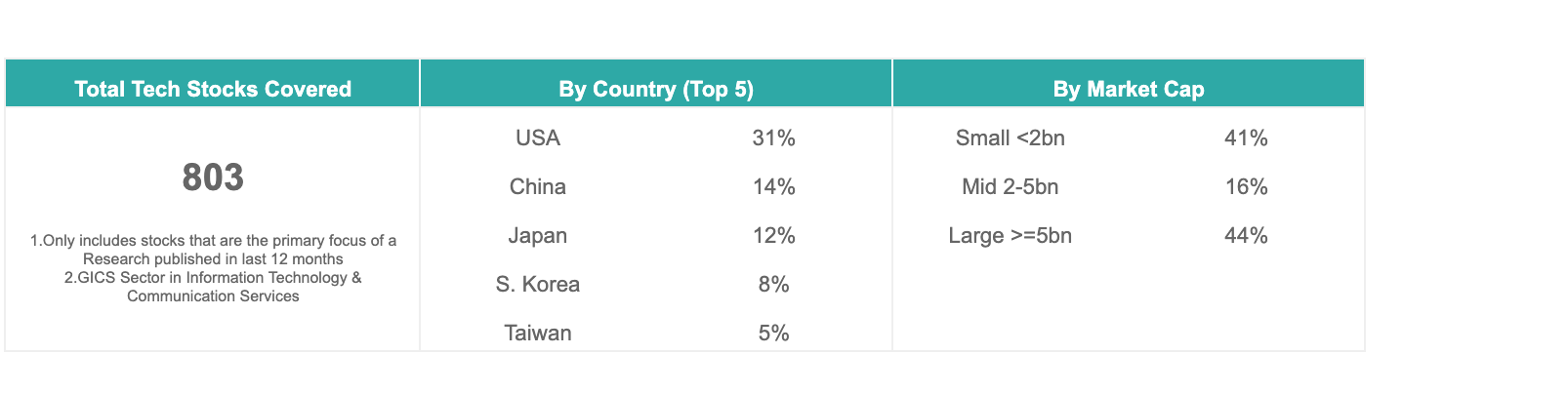
SINGAPORE, 22 November 2023: Smartkarma has rapidly scaled its bench of Tech Hardware & Semiconductor Focused Independent Research Providers to complement existing strengths in Tech, Internet & Communication Services.
With this, Smartkarma now hosts the foremost assembly of independent analysts specialising in technology — a testament to our commitment to providing unparalleled institutional-grade expertise.
Shortlist of Top Tech Hardware & Semiconductor Analysts on Smartkarma:
Smartkarma’s Platform Subscription will include written research from all analysts; further reinforcing our value proposition as a “single subscription service” to access the best minds in markets
Smartkarma will also provide add-on premium data and high-touch access subscriptions to allow specialists to engage at a deeper level.
About Smartkarma
Smartkarma is the independent investment research network that provides differentiated, independent analysis on companies, markets, and industries across the world. Smartkarma’s online platform empowers asset managers and private accredited investors who want to access market-moving, differentiated intelligence; corporates who need to maximise their outreach; and analysts who wish to reach global investors with their written reports and bespoke services. In 2021, Smartkarma received the Knowledge Enterprise Award at the Singapore FinTech Festival Global FinTech Awards. Smartkarma is backed by notable investors such as Sequoia Capital, SGX, Wavemaker Partners, Jungle Ventures, and Enterprise Singapore. Learn more at smartkarma.com
A group of shareholders are looking to raise US$1.3bn (JPY197.8bn) by selling their respective stakes in Asahi Group Holdings (2502 JP) via an extended secondary follow-on.
The deal would represent 23 days of Asahi’s three month ADV. Its latest extended large primary deal has done very well.
While the deal isn’t particularly well flagged, it is an extended one allowing the market to price in the impact of the share sale.
A group of shareholders are looking to raise US$444m by trimming their respective stakes in Ajinomoto Co (2802 JP) via an extended secondary follow-on.
While the selldown doesn’t seem particularly well flagged, it won’t be a very large one to digest at just eight days of three month ADV.
In a bid to cushion the selldown, Ajinomoto plans to buyback its stock to the tune of 10m shares, which would amount to 80% of the base shares on offer.
WuXi XDC Cayman (WXDC) is a CRDMO focused on the global antibody drug conjugates (ADC) and broader bioconjugate market providing integrated and end-to-end services.
In our previous notes, we looked at the company’s past performance and valuations. In this note, we talk about the trading dynamics.
Steadfast (SDF AU) is looking to raise around A$280m (US$180m) to fund the acquisition of Sure Insurance, and provide headroom for potentially additional acquisitions over the year.
SDF has undertaken a number of capital raises in the past to similarly fund its active acquisition strategy. Overall, the firm’s past deal record has been strong.
In this note, we will talk about the acquisition and run the deal through our ECM framework.
Wuxi XDC priced its IPO at HK$20.60 per share (upper-end of range), and raised HK$3.5bn (US$417m) at a market capitalisation of HK$24.3bn and post-money EV of HK$20.4bn.
Both HK offering and the international offering of the company were significantly oversubscribed by 49.96x and 19.6x respectively.
Our DCF value per share is still at a significant premium to the final IPO price, and we expect Wuxi XDC’s IPO to have a strong debut.
WuXi XDC Cayman (1877628D HK) priced its IPO at HK$20.60 per share to raise the gross proceeds of US$470 million. The shares will start trading tomorrow.
The market sentiment on the sector has modestly weakened. However, the IPO price is attractive, with our DCF valuation of HK$22.89 per share, 11.1% above the IPO price.
EcoPro Materials (ECO123 KS) raised around US$320m, after downsizing the deal and pricing its IPO at the low end of the range at KRW36,200/share.
Ecopro Materials (EPM) manufactures and sells high-nickel precursors, one of the key materials for high-nickel cathode materials for secondary (rechargeable) batteries.
In this note, we will talk about the demand for the deal and other trading dynamics.
ZEEKR (ZK US), a premium Chinese BEV manufacturer and a subsidiary of Geely Auto (175 HK), has filed for a US$500 million IPO to list on the NYSE.
ZEEKR has launched three models – the luxury shooting brake coupe ZEEKR 001, the luxury pure electric MPV – ZEEKR 009 and the new luxury versatile SUV – ZEEKR X.
The bull case rests on bestselling premium BEVs, rapid vehicle sales growth, rising gross margin, debt-free balance sheet and a favourable cash conversion cycle.
Weekly Top Ten Equity Capital Markets
Receive this weekly newsletter keeping 45k+ investors in the loop
Today after the close with Benefit One Inc (2412 JP) reporting earnings, M3 Inc (2413 JP) announced a Partial Tender Offer to buy 81.21-83.31mm shares of Benefit One at ¥1600/share.
That cleans out Pasona, which owns 81.21mm shares. Or does it… Shareholder structure dynamics and the problems they cause later bear some detailed examination.
The FRTIB has decided to switch its benchmark for the International Stock Index Investment Fund from the EAFE Index to the ACWI IMI ex-USA ex-China ex-Hong Kong Index.
With around US$68bn invested in the I Fund, this will set off churn among the constituent stocks in 2024. One-way trade is around US$28bn with DM outflows and EM inflows.
The benchmark shift could be done over a 4 month period with higher trading during periods where liquidity opportunities arise.
Mizuho raised full-year NP guidance by ~5%, passing the Street. SMFG raised its FY NP guidance 12.2%, also beating the Street. MUFG didn’t raise guidance but H1 saw 71% progress.
Today, SMFG raised its div, and both SMFG (¥150bn) and MUFG (¥400bn) announced buybacks. Cross-holding unwind progress is waaay lower than we’d like, but capital stronger as a result.
As discussed here in a piece about the Partial Tender Offer, Pasona Group (2168) has agreed to sell its controlling stake in Benefit One (2412) to M3 (2413).
That will leave Pasona Group with a fair chunk of cash and possibly a residual stake in Benefit One, depending on the results.
Though we don’t know what the future holds, Pasona now is the wrong price for its future.
We estimate one-way turnover of 1.94% at the December rebalance leading to a one-way trade of CNY 6.98bn. There are a lot of stocks with over 1x ADV to trade.
Over the last 6 months, the potential adds and potential deletes have tracked each other and underperformed the index. Positioning has led to outperformance in the last week.
With the review period complete, we expect one change for the STAR50 INDEX in December if the index committee continues to use a 6-month minimum listing history.
With net inflows to mainland China ETFs over the last few months, passive trackers will need to trade between 9-25 days of ADV on the potential add and delete.
SMIC (688981 CH) will be capped and there will be reverse funding flows on the index constituents. One-way turnover is estimated at 1.8% resulting in a one-way trade of CNY2,580m.
Last week, Zhejiang Expressway Co H (576 HK) announced its rights offering on both its H-Shares and its A-Shares, previously mooted on 23 May, and the Circular on 26 June.
The company applied, got CSRC approval on 5 Nov, announced the issuance on 6 Nov, and shares went ex- on 10 November. It’s probably unneeded, but it’s there.
The stock is cheap. The company will boost its payout ratio. And it isn’t that “heavy” a deal. The Rights Trading Dynamics may be interesting.
The transaction facilitates Pasona Group (2168 JP)‘s exit. The offer is for a minimum of 81.2 million shares (51.16% ownership ratio) and a maximum of 87.3 million shares (55.00%).
Irrevocables from Pasona represent a 51.16% ownership ratio, satisfying the minimum acceptance condition. The offer is light vs. historical multiples and share prices.
It can be considered that the suspension of EOFlow’s trading and, furthermore, the risk of delisting have been completely eliminated at this point.
EOFlow emphasizes the possibility of circumventing sales of EOPatch by supplying EOPump to a JV in China. The key factors that initially sparked Medtronic’s interest in EOFlow are still valid.
If CEO Kim fails to repay a stock collateral loan of ₩20B or secure additional loans, approximately 4% of the total issued shares could be sold in the market.
Weekly Top Ten Event-Driven and Index Rebalance
Receive this weekly newsletter keeping 45k+ investors in the loop